Legislative Activity
Track Jamie's sponsored bills, co-sponsored legislation, and voting record
The George Floyd Justice in Policing Act of 2025 comprehensively reforms policing by increasing accountability, mandating transparency through data collection, restricting dangerous tactics, and prohibiting sexual misconduct by officials acting under color of law.
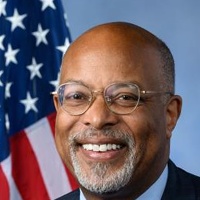
Glenn Ivey
Representative
MD
Glenn Ivey
Representative
MD
The George Floyd Justice in Policing Act of 2025 is a comprehensive bill designed to increase police accountability and transparency nationwide through federal mandates and funding incentives. It reforms standards for prosecuting civil rights violations, eliminates qualified immunity, and establishes national registries for police misconduct and use-of-force data. Furthermore, the Act bans specific dangerous police tactics like chokeholds and restricts the transfer of military equipment to local departments.
This bill establishes a regulated process for pension plan fiduciaries to transfer eligible unclaimed retirement distributions to state unclaimed property programs, protecting them from liability if proper search and notification procedures are followed.
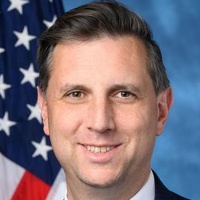
Seth Magaziner
Representative
RI
Seth Magaziner
Representative
RI
The Unclaimed Retirement Rescue Plan establishes a process for pension plan administrators to transfer forgotten retirement funds to state unclaimed property programs via a national clearinghouse. Before transferring distributions of $50 or more, plans must attempt to locate the owner using databases and send a warning notice if new contact information is found. This act protects plan fiduciaries from liability for following these new transfer rules and mandates confidential reporting of all transfers to the Department of Labor.
This bill posthumously awards a Congressional Gold Medal to honor the groundbreaking civil rights achievements of Constance Baker Motley and authorizes the production and sale of bronze duplicates.

Rosa DeLauro
Representative
CT
Rosa DeLauro
Representative
CT
This bill, the Congressional Tribute to Constance Baker Motley Act of 2025, posthumously awards the Congressional Gold Medal to the pioneering civil rights attorney and federal judge, Constance Baker Motley. The legislation recognizes her historic achievements, including her role in *Brown v. Board of Education* and her service as the first African-American woman appointed as a federal judge. The Secretary of the Treasury is authorized to strike the medal, and provisions are made for selling bronze duplicates to cover production costs.
The FLAME Act establishes notification and reimbursement procedures for significant cancellations of training courses offered by the National Academy for Fire Prevention and Control and mandates a GAO study on the impact of such cancellations.
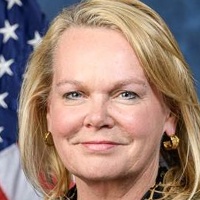
April McClain Delaney
Representative
MD
April McClain Delaney
Representative
MD
The Firefighter Learning And Management Education (FLAME) Act establishes new notification requirements for the Administrator of the U.S. Fire Administration when large-scale cancellations of National Academy for Fire Prevention and Control courses occur. It mandates timely notification to Congress and affected students regarding any significant course reductions. Furthermore, the bill allows fire departments to seek reimbursement for incurred expenses if a course is cancelled for reasons other than "good cause" and requires a GAO study on the impact of these cancellations.
This Act establishes sanctions against Pakistani officials undermining democracy and human rights, while urging the U.S. government to promote democratic institutions in Pakistan until September 30, 2030.
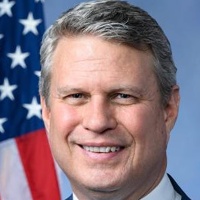
Bill Huizenga
Representative
MI
Bill Huizenga
Representative
MI
The Pakistan Freedom and Accountability Act expresses strong U.S. support for democracy and human rights in Pakistan, citing concerns over military influence and recent election interference. This legislation directs the President to identify and impose sanctions on Pakistani officials responsible for undermining democratic processes or committing serious human rights abuses. The Act emphasizes the need for civilian control over the military and sets an expiration date for its provisions in September 2030.
This bill formally integrates Puerto Rico into the federal Supplemental Nutrition Assistance Program (SNAP) structure, outlining a transition plan away from its current block grant system.
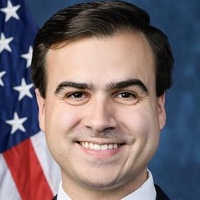
Pablo José Hernández Rivera
Representative
PR
Pablo José Hernández Rivera
Representative
PR
The Puerto Rico Nutrition Assistance Fairness Act aims to integrate Puerto Rico into the federal Supplemental Nutrition Assistance Program (SNAP) structure, aligning it with other territories like Guam. The bill mandates a transition period where Puerto Rico must submit a plan of operation to the Secretary of Agriculture for approval to join SNAP. During this transition, existing block grant funding may continue for up to five years while the territory moves toward full participation under federal SNAP rules.
This bill establishes and reauthorizes federal and pilot programs for detecting, tracking, and mitigating unauthorized drones near critical sites and airports, while also updating drone safety information requirements.
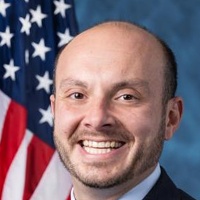
Andrew Garbarino
Representative
NY
Andrew Garbarino
Representative
NY
The Counter-UAS Authority Security, Safety, and Reauthorization Act significantly expands federal authority to detect, track, and neutralize unauthorized drones posing threats to critical infrastructure and national airspace. The bill establishes new coordination requirements between the Department of Homeland Security, the FAA, and the Department of Justice for deploying counter-drone technology, including restrictions on foreign-made equipment. It also creates pilot programs allowing state and local law enforcement to use drone mitigation technology at specific sites and events. Finally, the legislation mandates new safety reporting requirements for drone manufacturers and sets an expiration date of October 1, 2030, for most of the new authorities granted.
This Act bans Members of Congress and their immediate families from trading or owning specific investments while in office, requiring divestment within 90 to 180 days or facing significant financial penalties.
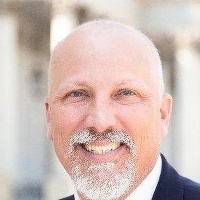
Chip Roy
Representative
TX
Chip Roy
Representative
TX
The Restore Trust in Congress Act establishes strict new rules prohibiting Members of Congress and their immediate families from owning or trading specific financial assets, referred to as "covered investments," while in office. Covered individuals must divest existing prohibited holdings within a set timeframe or face significant financial penalties, including fines and forfeiture of profits. The legislation aims to eliminate conflicts of interest arising from personal financial trading while serving in federal office.
This Act transfers command authority of the District of Columbia National Guard from the President of the United States to the Mayor of the District of Columbia and makes corresponding technical amendments across federal military codes.

Eleanor Norton
Representative
DC
Eleanor Norton
Representative
DC
This bill, the District of Columbia National Guard Home Rule Act, transfers full command authority of the D.C. National Guard from the President of the United States to the Mayor of the District of Columbia. It updates numerous federal statutes to reflect this shift in leadership for appointments, discipline, and calling the Guard into service. The Act also makes conforming amendments across U.S. Code titles to ensure the Mayor is recognized as the definitive authority over the D.C. National Guard.
The MORE Act seeks to federally decriminalize cannabis, expunge past non-violent federal cannabis convictions, establish reinvestment programs, and open up SBA access for cannabis-related businesses.
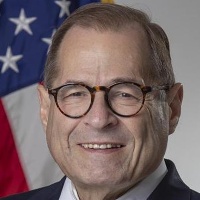
Jerrold Nadler
Representative
NY
Jerrold Nadler
Representative
NY
The Marijuana Opportunity Reinvestment and Expungement (MORE) Act seeks to federally decriminalize cannabis by removing it from the Controlled Substances Act, which will retroactively apply to past offenses. The bill establishes an Opportunity Trust Fund, financed by new cannabis taxes, to reinvest in communities harmed by prohibition. Furthermore, it mandates the expungement of non-violent federal cannabis convictions and opens up Small Business Administration (SBA) programs to legitimate cannabis businesses.
This Act establishes a multi-sector Task Force, led by the Treasury Secretary, to study, recommend strategies for, and report on preventing evolving electronic payment scams.
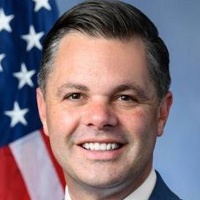
Zachary (Zach) Nunn
Representative
IA
Zachary (Zach) Nunn
Representative
IA
The Taskforce for Recognizing and Averting Payment Scams Act (TRAPS Act) establishes a new Task Force led by the Secretary of the Treasury. This diverse group, including federal agencies, industry experts, and consumer advocates, will study evolving payment scams. The Task Force is charged with developing cross-sector prevention strategies and submitting comprehensive recommendations for new laws and improved coordination to combat these fraudulent activities.
This bill establishes a competitive grant program to fund the creation and operation of pet-friendly interim and permanent housing for unhoused individuals, ensuring access to necessary supportive and veterinary care for both people and their companion animals.
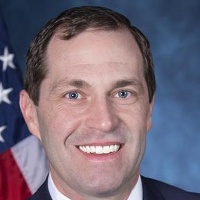
Jason Crow
Representative
CO
Jason Crow
Representative
CO
The Providing for Unhoused People and Pets Act of 2025 (PUPP Act) establishes a grant program to fund the creation and upgrading of interim and permanent housing that accommodates unhoused individuals along with their pets. Managed jointly by the Secretaries of Agriculture and HUD, these grants support construction, renovation, and essential pet-related operating costs. Grantees must ensure housing provides necessary supportive services for occupants and basic veterinary care for their companion animals.
This bill updates voting rights requirements by expanding language assistance definitions, creating incentive grants for voluntary translation services, and mandating a study on lowering language assistance thresholds.
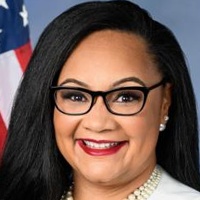
Nikema Williams
Representative
GA
Nikema Williams
Representative
GA
The Expanding the VOTE Act updates language assistance requirements under the Voting Rights Act by modernizing the definition of "voting materials" to include digital information. It also establishes new state responsibilities for providing language assistance and creates a grant program to incentivize voluntary language support beyond current mandates. Furthermore, the bill includes special provisions for unwritten American Indian and Alaska Native languages and mandates a study on lowering thresholds for language assistance coverage.
This act repeals the prohibition on Medicaid payments to certain healthcare entities and mandates retroactive payment for services already rendered under the repealed ban.
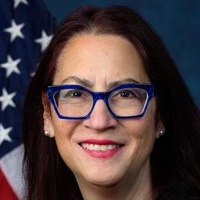
Laura Friedman
Representative
CA
Laura Friedman
Representative
CA
The Restoring Essential Healthcare Act repeals an outdated ban that prevented Medicaid from making payments to certain healthcare providers. This legislation ensures that these previously prohibited entities will now be reimbursed for medical services rendered between the enactment of the original ban and the passage of this Act. In short, it restores payment eligibility and retroactively covers past services.
The EATS Act of 2025 expands eligibility for SNAP benefits by removing previous restrictions for students enrolled at least half-time in recognized educational programs.
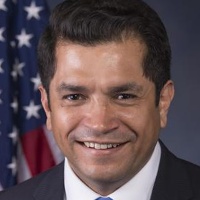
Jimmy Gomez
Representative
CA
Jimmy Gomez
Representative
CA
The EATS Act of 2025 significantly updates eligibility for the Supplemental Nutrition Assistance Program (SNAP) by removing previous restrictions that often disqualified students. This legislation explicitly includes bona fide students enrolled at least half-time in recognized educational programs as eligible participants for food assistance. These changes take effect on January 2, 2026.
This bill mandates that former candidates' campaign committees and PACs must spend down remaining funds within two years after an election, unless the candidate runs again, and requires former candidates who become lobbyists or foreign agents to certify compliance with these disbursement rules.

Kathy Castor
Representative
FL
Kathy Castor
Representative
FL
The Honest Elections and Campaign, No Gain Act mandates that candidates' leftover campaign funds must be spent down within two years after an election, unless the candidate immediately runs again. Remaining funds must be used to pay debts or donated to specific political or charitable organizations. Furthermore, former candidates who become registered lobbyists or foreign agents must certify that their past campaign committees complied with these new disbursement rules. These provisions take effect starting with the general federal elections in November 2026.
The Protected Time Off Act establishes a federal minimum accrual rate of one hour of paid annual leave for every 25 hours worked, while protecting employees' rights to use and enforce this earned time off.
Seth Magaziner
Representative
RI
Seth Magaziner
Representative
RI
The Protected Time Off Act establishes a federal minimum standard for earned paid annual leave, requiring employers to grant employees at least one hour of paid time off for every 25 hours worked, up to 80 hours annually. This law specifies how leave is accrued, used, and rolled over, while protecting employees from retaliation for exercising these rights. It also ensures that existing state laws or agreements that provide more generous leave benefits remain in effect. Enforcement mechanisms are established, largely mirroring those under the Fair Labor Standards Act, allowing both government investigation and direct employee lawsuits.
This Act mandates the National Fire Academy Administrator to submit an annual report to Congress detailing course attendance, firefighter demographics, program statistics, and funding allocations.
April McClain Delaney
Representative
MD
April McClain Delaney
Representative
MD
This bill, the National Fire Academy Reporting Act, mandates that the Administrator of the National Academy for Fire Prevention and Control submit an annual report to Congress. This report must detail the courses and programs offered, including attendance breakdowns by department type and firefighter status. It also requires specific reporting on course cancellations and the allocation of financial assistance and student aid.
The Hands Off Our Social Security Act prohibits unauthorized tampering with benefits, data mining, privatization, workforce reductions, and office closures without explicit Congressional approval.
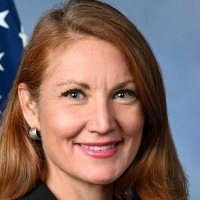
Melanie Stansbury
Representative
NM
Melanie Stansbury
Representative
NM
The Hands Off Our Social Security Act is designed to safeguard the functionality and integrity of the Social Security Administration (SSA). This bill prohibits the SSA from tampering with benefits, engaging in unauthorized data mining, or privatizing services. Furthermore, it prevents the agency from closing local offices or reducing staff without explicit approval from Congress. Ultimately, the Act ensures that essential services and communication channels remain accessible to beneficiaries.
This resolution affirms the Federal Government's duty to lead global biomedical research, criticizing past undermining actions while calling for a doubling of NIH investment over the next decade to tackle major health challenges.

Diana DeGette
Representative
CO
Diana DeGette
Representative
CO
This resolution affirms the federal government's duty to lead the world in biomedical research, primarily through robust funding of the National Institutes of Health (NIH). It argues that this foundational research yields massive economic and health returns, which the previous administration actively undermined. The bill calls for doubling federal investment over the next decade to tackle major health crises and ensure scientific independence guides policy.