Legislative Activity
Track Jamie's sponsored bills, co-sponsored legislation, and voting record
The End Driving While Intoxicated Act of 2025 establishes a national standard requiring states to mandate ignition interlock devices for DWI offenders or face federal highway funding penalties.
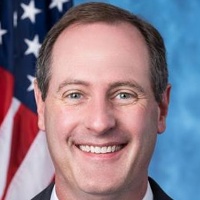
Tracey Mann
Representative
KS
Tracey Mann
Representative
KS
The End Driving While Intoxicated Act of 2025 aims to combat rising drunk driving fatalities by establishing a national standard for ignition interlock devices (IIDs). This bill mandates that states require DWI offenders to use IIDs for a minimum of 180 days or face penalties involving the withholding of federal highway funds. The legislation seeks to leverage the proven effectiveness of IIDs in reducing repeat offenses across the country.
The Raise the Wage Act of 2025 gradually increases the federal minimum wage to \$17.00, phases out subminimum wages for tipped employees and workers with disabilities, and eliminates the subminimum wage for young workers.
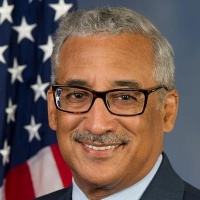
Robert Scott
Representative
VA
Robert Scott
Representative
VA
The Raise the Wage Act of 2025 establishes a phased increase of the federal minimum wage, culminating in a \$17.00 per hour rate five years after enactment, followed by automatic annual adjustments tied to median wage growth. This bill also phases out the lower minimum wage for tipped employees and workers under 20, ensuring they eventually earn the standard federal minimum wage. Furthermore, it sets a schedule to eliminate subminimum wages for individuals with disabilities and prohibits the issuance of new special certificates allowing for lower pay.
This Act establishes federal minimum standards for public employee collective bargaining rights, allowing states to maintain their own laws if they meet or exceed these standards, otherwise the Federal Labor Relations Authority will enforce federal rules.
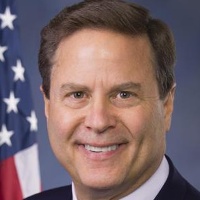
Donald Norcross
Representative
NJ
Donald Norcross
Representative
NJ
The Public Service Freedom to Negotiate Act of 2025 establishes federal minimum standards for collective bargaining rights for public employees across the nation. It requires the Federal Labor Relations Authority (FLRA) to review state laws to ensure they substantially provide these minimum rights, including the right to organize and bargain collectively. If a state fails to meet these standards, the FLRA will administer federal labor relations rules for the uncovered employees. The Act also prohibits strikes or lockouts that would measurably disrupt emergency or public safety services.
This act authorizes $20 million annually through fiscal year 2030 for the NINDS to supplement research specifically focused on unruptured brain aneurysms across diverse populations.
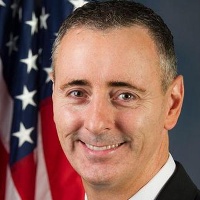
Brian Fitzpatrick
Representative
PA
Brian Fitzpatrick
Representative
PA
The Ellie Helton, Lisa Colagrossi, Kristen Shafer Englert, Teresa Anne Lawrence, and Jennifer Sedney Focused Research Act, or "Ellies Law," addresses the high incidence and devastating impact of brain aneurysms in the U.S. The bill authorizes $20 million annually from Fiscal Year 2026 through 2030 for the National Institute of Neurological Disorders and Stroke (NINDS). This dedicated funding is specifically intended to supplement existing research efforts focused on unruptured intracranial aneurysms across diverse populations.
The IDEA Full Funding Act establishes mandatory, increasing funding levels for the Individuals with Disabilities Education Act (IDEA) from 2026 through 2035, contingent upon offsetting budget cuts.
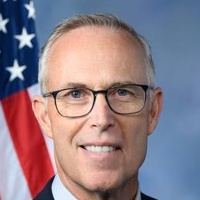
Jared Huffman
Representative
CA
Jared Huffman
Representative
CA
The IDEA Full Funding Act establishes mandatory, increasing funding levels for the Individuals with Disabilities Education Act (IDEA) programs through fiscal year 2035. This legislation sets specific appropriation targets based on student counts and national average spending to ensure greater financial support for special education services. Furthermore, the bill requires that these new IDEA appropriations adhere to "cut-as-you-go" budget offset rules.
This Act mandates the Department of Labor to establish and enforce comprehensive workplace violence prevention standards for healthcare and social service workers, while also tying compliance to Medicare funding for certain facilities.
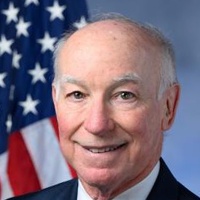
Joe Courtney
Representative
CT
Joe Courtney
Representative
CT
This Act mandates the Secretary of Labor to establish an interim and then a final standard requiring comprehensive workplace violence prevention plans for employers in the healthcare and social service sectors. These plans must be developed with employee input and detail risk assessments, hazard controls, reporting procedures, and annual training. Furthermore, the bill amends the Social Security Act to require Medicare-funded hospitals and skilled nursing facilities not covered by OSHA to comply with these new federal workplace violence prevention standards. The legislation also establishes clear definitions for workplace violence and includes strong anti-retaliation protections for employees who exercise their rights under the Act.
This Act establishes a program, managed by the Librarian of Congress, to create and disseminate educational resources countering denial of the Armenian Genocide.
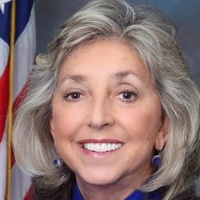
Dina Titus
Representative
NV
Dina Titus
Representative
NV
The Armenian Genocide Education Act establishes a program managed by the Librarian of Congress to develop and share educational resources combating denial of the 1915-1923 Armenian Genocide. This initiative will create online materials, train educators, and encourage the integration of accurate history into school curricula. The Act authorizes $2 million annually for five years to support these educational efforts aimed at promoting awareness and preventing future atrocities.
This bill raises the resource limits for Supplemental Security Income (SSI) eligibility starting in 2025 and ties future limits to inflation adjustments.
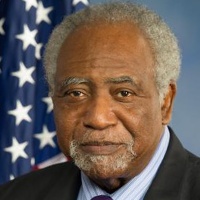
Danny Davis
Representative
IL
Danny Davis
Representative
IL
The SSI Savings Penalty Elimination Act significantly raises the resource limits for individuals and couples applying for Supplemental Security Income (SSI), starting in 2025. This legislation also mandates that these new resource limits will be automatically adjusted annually to keep pace with inflation. The goal is to allow SSI applicants to save more money without losing eligibility for benefits.
The Arts Education for All Act mandates the integration, reporting, and research of arts education across early childhood, K-12, and correctional systems to ensure comprehensive access and measure its impact on student development and offender reentry.
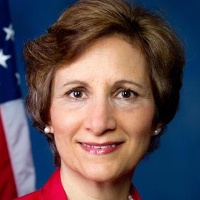
Suzanne Bonamici
Representative
OR
Suzanne Bonamici
Representative
OR
The Arts Education for All Act aims to elevate the status and accessibility of arts education across the entire educational spectrum. It mandates evidence-based training for early childhood providers, requires states to integrate arts education into core academic planning and public reporting, and authorizes the use of the arts in juvenile and adult offender reentry programs. Furthermore, the bill directs federal research agencies to study the impact of the arts and restores arts assessment to the national testing schedule.
This resolution formally recognizes and supports the goals and ideals of the International Transgender Day of Visibility to honor the achievements and acknowledge the ongoing struggles of the transgender community.
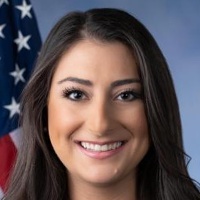
Sara Jacobs
Representative
CA
Sara Jacobs
Representative
CA
This resolution formally recognizes and celebrates the International Transgender Day of Visibility. Congress acknowledges the achievements of transgender individuals while highlighting the ongoing discrimination and violence they face. The resolution encourages appropriate ceremonies and activities to observe the day and celebrate the community's leadership and fight for equality.
The Nutrition CARE Act of 2025 expands Medicare coverage to include medical nutrition therapy services provided by registered dietitians for beneficiaries diagnosed with an eating disorder, effective January 1, 2026.
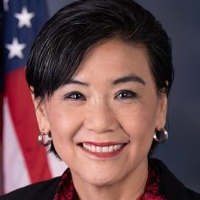
Judy Chu
Representative
CA
Judy Chu
Representative
CA
The Nutrition CARE Act of 2025 addresses the critical need for comprehensive eating disorder treatment under Medicare. This bill expands Medicare coverage to include essential medical nutrition therapy services for beneficiaries diagnosed with an eating disorder, starting January 1, 2026. It establishes initial and ongoing annual coverage limits for these crucial dietitian-led services, requiring a referral from a physician or psychologist. By covering this vital component of care, the Act aims to improve health outcomes and reduce the significant economic burden associated with these serious mental illnesses.
The COMPLETE Care Act increases Medicare payments to primary care providers for integrating behavioral health services between 2027 and 2029 and provides technical assistance to support these practices.
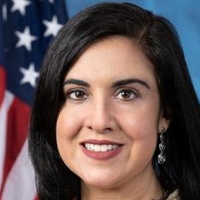
Nicole Malliotakis
Representative
NY
Nicole Malliotakis
Representative
NY
The COMPLETE Care Act aims to improve mental healthcare access by providing Medicare incentives for primary care providers to integrate behavioral health services into their practices between 2027 and 2029. This legislation offers increased Medicare payments for specific integrated services during those years, ensuring these bonuses do not trigger cuts elsewhere in the Medicare budget. Additionally, the bill mandates technical assistance to help primary care offices successfully adopt these new integrated care models.
This Act establishes federal grant programs to improve medical education, expand community health center capacity, and increase rural provider training in gender-affirming care for transgender individuals.
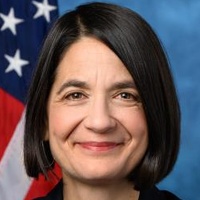
Becca Balint
Representative
VT
Becca Balint
Representative
VT
The Transgender Health Care Access Act aims to improve access to gender-affirming care by addressing critical gaps in medical education and provider capacity. The bill establishes grant programs to develop and implement comprehensive training curricula for medical professionals across various settings, including rural areas. Furthermore, it provides funding to expand the ability of community health centers to deliver culturally competent and necessary care to transgender individuals. Ultimately, this legislation seeks to ensure that healthcare providers are adequately trained and equipped to meet the medical needs of the transgender population.
This Act restores immediate U.S. funding to UNRWA contingent upon the agency's commitment to increased accountability and transparency reforms following an independent review.
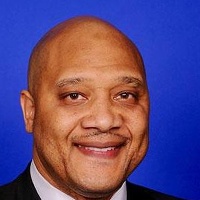
André Carson
Representative
IN
André Carson
Representative
IN
The UNRWA Funding Emergency Restoration Act of 2025 aims to immediately restart U.S. funding for the UN agency assisting Palestinian refugees, which was previously frozen. This bill mandates the cancellation of existing restrictions and requires the Secretary of State to resume aid payments while ensuring accountability based on an independent review. Furthermore, it urges Israel to cooperate with UNRWA investigations to maintain agency neutrality.
This act requires federal agencies to conduct detailed cost-benefit analyses for significant job relocations, which are then reviewed by the Inspector General and reported to Congress to ensure transparency.
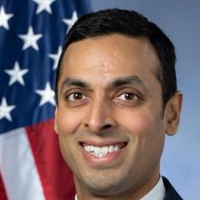
Suhas Subramanyam
Representative
VA
Suhas Subramanyam
Representative
VA
The COST of Relocations Act mandates that Federal agencies conduct a detailed, OMB-guided cost-benefit analysis before executing any "covered relocation" of jobs. Agencies must submit this analysis to their Inspector General (OIG), who then reviews the methodology and findings before reporting directly to Congress. This process ensures transparency and rigorous economic justification for significant federal job moves.
The Northern Rockies Ecosystem Protection Act of 2025 permanently protects vast tracts of public land, wildlife corridors, and rivers across five Western states while mandating ecological restoration and establishing rigorous monitoring protocols.
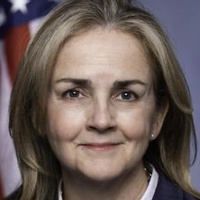
Madeleine Dean
Representative
PA
Madeleine Dean
Representative
PA
The Northern Rockies Ecosystem Protection Act of 2025 seeks to permanently safeguard vast public lands across five Western states by designating new wilderness areas, establishing critical wildlife corridors, and protecting numerous rivers as Wild and Scenic. The bill also mandates extensive ecological restoration in designated recovery zones and establishes rigorous scientific monitoring for the entire region. Furthermore, it explicitly protects existing Tribal rights and ensures that federal water claims remain unaffected by these new conservation mandates.
This Act raises the minimum age for Federal Firearms Licensees to sell certain semiautomatic rifles and shotguns to 21, with exceptions for qualified individuals aged 18-20, and mandates an FBI report on its public access line operations.
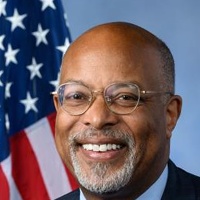
Glenn Ivey
Representative
MD
Glenn Ivey
Representative
MD
The Raise the Age Act of 2025 generally prohibits Federal Firearms Licensees from selling certain semiautomatic centerfire rifles or shotguns capable of holding magazines over five rounds to anyone under 21, with exceptions for qualified military or government personnel. The bill also maintains the existing minimum age of 18 for general firearm purchases, excluding the newly restricted categories. Finally, it mandates that the FBI Director report on the operational procedures of its public access line within 90 days of enactment.
This resolution formally recognizes the persistent gender wage gap and reaffirms Congress's commitment to achieving pay equity.
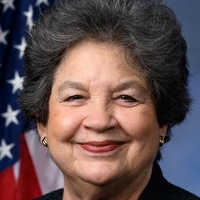
Lois Frankel
Representative
FL
Lois Frankel
Representative
FL
This resolution formally recognizes the significant and persistent wage gap between men and women in the United States, highlighting statistics that show women earn substantially less. It serves as a strong public statement reaffirming Congress's commitment to achieving pay equity. The measure does not enact new laws but emphasizes the economic harm caused by unequal pay for women and their families.
The Paycheck Fairness Act strengthens equal pay enforcement by tightening defenses against pay discrimination, expanding protections against retaliation, increasing penalties for violations, and requiring comprehensive data collection and training initiatives.
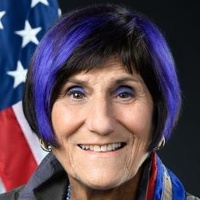
Rosa DeLauro
Representative
CT
Rosa DeLauro
Representative
CT
The Paycheck Fairness Act significantly strengthens federal equal pay protections by broadening definitions of sex discrimination, tightening employer defenses against pay disparities, and increasing penalties for violations. It also prohibits employers from using salary history in hiring decisions and mandates new data collection by the EEOC to better enforce anti-discrimination laws. Furthermore, the bill establishes new training and outreach programs to combat systemic wage bias.
This bill officially ratifies the Equal Rights Amendment, validating its inclusion in the Constitution regardless of any prior ratification deadlines.
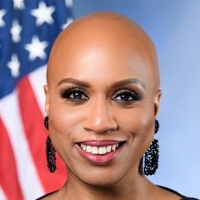
Ayanna Pressley
Representative
MA
Ayanna Pressley
Representative
MA
This bill officially ratifies the Equal Rights Amendment, declaring it a valid part of the U.S. Constitution. It specifically removes any previously imposed deadlines for state ratification. If three-fourths of the states have approved the amendment, this law confirms its official status regardless of past time constraints.