Legislative Activity
Track Deborah's sponsored bills, co-sponsored legislation, and voting record
This Act strengthens protections for domestic violence and stalking survivors by expanding the definition of an intimate partner, clarifying dating relationships, protecting children of dating partners, and prohibiting firearm possession for those convicted of misdemeanor stalking.

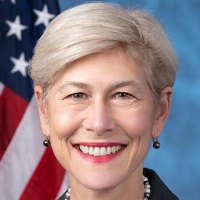
Debbie Dingell
Representative
MI
Debbie Dingell
Representative
MI
The Strengthening Protections for Domestic Violence and Stalking Survivors Act of 2025 updates federal law to broaden protections against intimate partner violence by expanding the definition of an "intimate partner" to explicitly include dating relationships. This bill also introduces a new federal prohibition on firearm possession for individuals convicted of a misdemeanor crime of stalking. These changes aim to close loopholes and ensure comprehensive safety measures for survivors of abuse and harassment.
The Safe Storage Saves Lives Act mandates that compatible gun locks be provided with every firearm transfer, clarifies secure storage definitions, and requires sellers to have compatible safety devices available for all firearms offered for sale.
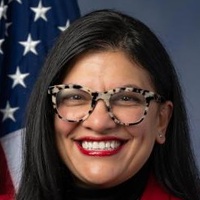
Rashida Tlaib
Representative
MI
Rashida Tlaib
Representative
MI
The Safe Storage Saves Lives Act expands federal requirements to ensure a compatible gun lock is provided with the sale of **every** firearm, not just handguns. It clarifies the definition of secure storage devices and mandates that sellers must have a compatible safety device available for every firearm offered for sale. Finally, the bill suggests that fines collected from violations should fund programs to distribute free or low-cost gun safety devices or public awareness campaigns.
The CONNECT for Health Act of 2025 permanently expands Medicare telehealth access by removing geographic restrictions, increasing practitioner flexibility, bolstering program integrity, and mandating supports for quality remote care delivery.
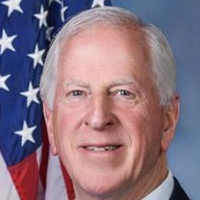
Mike Thompson
Representative
CA
Mike Thompson
Representative
CA
The CONNECT for Health Act of 2025 significantly expands and permanently secures access to Medicare telehealth services by eliminating outdated geographic restrictions and allowing more practitioners to offer remote care. The bill also strengthens program integrity by dedicating funds for telehealth oversight while clarifying rules around providing necessary technology to patients. Finally, it mandates the creation of tailored educational resources and public reporting to improve quality measurement and transparency in remote care delivery.
This bill updates federal law to prohibit and increase penalties for giving or receiving bribes of $\$1,000$ or more related to government transactions exceeding $\$5,000$ when federal funds are involved.

Dan Goldman
Representative
NY
Dan Goldman
Representative
NY
The No Gratuities for Governing Act of 2025 updates federal law regarding illegal gifts involving government agents who manage federal funds. It establishes new criminal penalties for giving or accepting gifts valued at \$1,000 or more in connection with official transactions worth \$5,000 or more. The Act also increases the maximum prison sentence for existing offenses under this statute from 10 to 15 years.
This Act mandates that federal officers involved in border security or immigration enforcement must clearly display identification, wear visible uniforms or badges, and not conceal their faces during detentions or arrests.
Dan Goldman
Representative
NY
Dan Goldman
Representative
NY
The No Secret Police Act of 2025 mandates that federal officers engaged in border security or immigration enforcement must clearly display identification, wear visible badges or uniforms, and refrain from wearing face coverings during detentions or arrests. This ensures accountability by requiring clear identification from Department of Homeland Security (DHS) personnel. The bill also requires the Secretary of Homeland Security to report on current tactical gear policies and research methods to improve officer visibility.
This bill makes technical corrections and clarifications to the Camp Lejeune Justice Act of 2022, including adjusting venue options, setting standards of proof, and capping attorney fees, all retroactively applied to August 10, 2022.
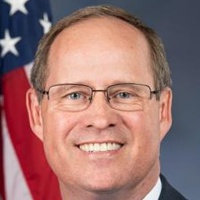
Gregory Murphy
Representative
NC
Gregory Murphy
Representative
NC
The Ensuring Justice for Camp Lejeune Victims Act of 2025 makes technical corrections to the 2022 Camp Lejeune Justice Act to clarify standards for proving harm and venue for trials. This legislation sets specific caps on attorney fees and retroactively applies these changes to all existing and future claims filed under the original 2022 Act. The bill ensures that existing statutes of limitations for filing claims remain unchanged.
This act allows drug manufacturers to provide required prescribing information digitally, provided they maintain an option for healthcare professionals to receive paper copies upon request.
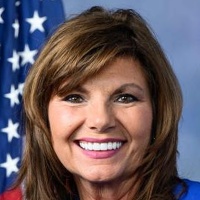
Diana Harshbarger
Representative
TN
Diana Harshbarger
Representative
TN
The Prescription Information Modernization Act of 2025 allows drug manufacturers to provide required prescribing information to healthcare providers digitally. This shift is contingent upon manufacturers offering providers the option to receive paper copies upon request, free of charge. The Secretary of HHS must establish final rules for this digital transition within one year of enactment.
This resolution recognizes the right to peaceful protest while condemning violence and criticizing the federal government's controversial deployment of military forces during recent Los Angeles demonstrations.
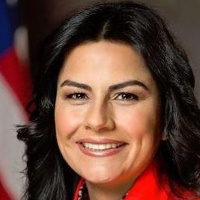
Nanette Barragán
Representative
CA
Nanette Barragán
Representative
CA
This resolution formally recognizes the constitutional right to peaceful protest while strongly condemning violence and illegal acts committed during demonstrations. It criticizes the federal government's deployment of military forces during recent events, arguing the actions were an overreach that bypassed proper legal and state authority. Ultimately, the bill asserts the importance of transparency in law enforcement and denounces rhetoric that escalates community tensions.
This Act increases the federal matching rate for Medicaid expenditures made by states on expanded maternal health services provided by qualified providers.
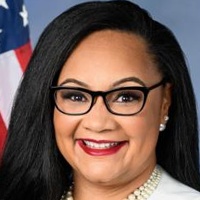
Nikema Williams
Representative
GA
Nikema Williams
Representative
GA
The Advancing Maternal Health Equity Under Medicaid Act aims to increase federal funding for states that expand Medicaid coverage for maternal health services. This bill provides a higher Federal Medical Assistance Percentage (FMAP) to cover 90% of a state's increased expenditures on qualifying prenatal, postpartum, and related support services. To qualify, states must use these funds to supplement existing spending and improve the quality and capacity of care delivered by designated maternity providers and perinatal health workers.
This Act prohibits states from interfering with or penalizing individuals who provide, receive, or facilitate abortion services that are legal in the state where the service occurs, including interstate travel for such care.

Lizzie Fletcher
Representative
TX
Lizzie Fletcher
Representative
TX
The Ensuring Women’s Right to Reproductive Freedom Act prohibits states from interfering with or retaliating against individuals who provide or receive abortion services that are legal in the state where the service occurs. This protection extends to interstate travel for legal abortion care and the movement of FDA-approved abortion-related drugs across state lines. Individuals harmed by violations can sue in federal court for damages and legal fees.
This Act requires group health plans to ensure that patient cost-sharing for medically necessary oral cancer drugs is comparable to that for intravenously administered cancer drugs.
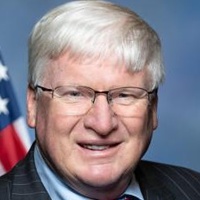
Glenn Grothman
Representative
WI
Glenn Grothman
Representative
WI
The Cancer Drug Parity Act of 2025 mandates that group health plans treat the cost-sharing for oral (take-at-home) anticancer drugs the same as they treat cost-sharing for intravenously administered cancer drugs. This ensures patients do not face higher out-of-pocket expenses for necessary oral chemotherapy medications. The Act also requires the GAO to study the financial impact of this new parity requirement on patients.
The Break the Cycle of Violence Act establishes federal frameworks within HHS and the Department of Labor to fund community-based violence intervention programs and provide job training for opportunity youth in high-violence areas.
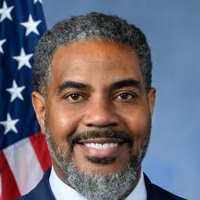
Steven Horsford
Representative
NV
Steven Horsford
Representative
NV
The Break the Cycle of Violence Act establishes federal frameworks within HHS and the Department of Labor to address community violence through prevention and economic opportunity. Title I creates grants for community-based violence intervention programs focused on evidence-based, trauma-responsive care, while Title II funds job training for opportunity youth in high-violence areas. Overall, the bill aims to reduce violence by investing in local services and creating pathways to employment rather than relying solely on incarceration.
The Women’s Health Protection Act of 2025 establishes a federal right to access abortion services before fetal viability and protects the right to travel for care, overriding state restrictions that place burdens on abortion access not imposed on comparable medical procedures.
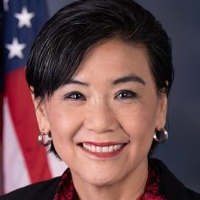
Judy Chu
Representative
CA
Judy Chu
Representative
CA
The Women’s Health Protection Act of 2025 establishes a federal statutory right to access abortion services, prohibiting medically unnecessary restrictions that impede care before fetal viability. This Act protects the right of patients to travel across state lines to receive reproductive healthcare and allows providers to offer services free from state interference that conflicts with established medical standards. It preempts conflicting state and local laws and provides robust enforcement mechanisms for individuals and the Attorney General to challenge violations.
The Pro Codes Act establishes rules requiring copyright holders of technical standards incorporated by reference into law to make those standards publicly accessible online while preserving their underlying copyright protections.
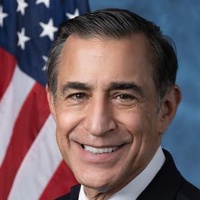
Darrell Issa
Representative
CA
Darrell Issa
Representative
CA
The Pro Codes Act aims to balance public access with the financial sustainability of organizations that create vital technical standards referenced in U.S. law. It establishes new copyright rules requiring Standards Development Organizations (SDOs) to make standards incorporated by reference into federal, state, or local law publicly accessible online for free. This ensures the public can view the codes they must follow while preserving the SDOs' ability to fund future standard development through copyright protection.
This Act directs the Secretary of HHS to issue guidance on Medicaid/CHIP coverage for postpartum pelvic health services and establishes a national education campaign on the topic.
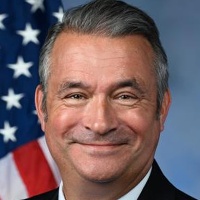
Don Bacon
Representative
NE
Don Bacon
Representative
NE
The Optimizing Postpartum Outcomes Act of 2025 aims to improve women's health after childbirth by clarifying Medicaid/CHIP coverage for essential pelvic health services. It mandates federal guidance for states on covering services like pelvic floor exams and physical therapy, alongside establishing a national education campaign for both providers and new mothers. The bill also directs the GAO to study existing coverage gaps for postpartum women under Medicaid.
This bill establishes a strict, last-resort framework requiring explicit Congressional approval for the President to deploy U.S. Armed Forces domestically to suppress insurrection or quell severe domestic violence.

Chris Deluzio
Representative
PA
Chris Deluzio
Representative
PA
The Insurrection Act of 2025 completely rewrites the rules governing when the President can deploy the U.S. Armed Forces domestically to suppress insurrection or quell severe domestic violence. This deployment is strictly limited to being a last resort, requiring specific triggers such as overwhelming local failure or the denial of constitutional rights. Before acting, the President must issue a proclamation and provide a detailed report to Congress, whose approval is required to extend military authority beyond seven days. The Act also establishes expedited congressional procedures for reviewing and approving the deployment and allows for judicial review of the President's legal basis for action.
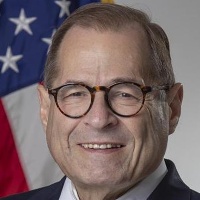
The American Royalties Too Act of 2025 establishes a mandatory 5% resale royalty for visual artists on commercial resales of their work over \$5,000, administered by collecting societies, and removes mandatory copyright notice requirements for visual art.
Jerrold Nadler
Representative
NY
Jerrold Nadler
Representative
NY
The American Royalties Too Act of 2025 establishes a federal resale royalty right for visual artists, granting them a 5% royalty (capped annually) on commercial resales of their artwork valued at \$5,000 or more. This new right will be managed by designated Visual Artists Collecting Societies, which will collect and distribute the funds to the artist or their successor. Furthermore, the Act exempts visual art from standard copyright notice requirements and mandates a study on the law's implementation five years after enactment.
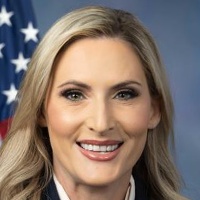
The SALONS Stories Act increases federal crime control grants for states that mandate domestic violence awareness training for cosmetologists and barbers.
Laurel Lee
Representative
FL
Laurel Lee
Representative
FL
The SALONS Stories Act incentivizes states to train cosmetologists and barbers on recognizing and responding to domestic violence. States that mandate this specialized training for licensing become eligible for a grant increase of up to 10% on existing federal crime control funds. This funding boost is available for a maximum of three years to support these vital community-based prevention efforts.
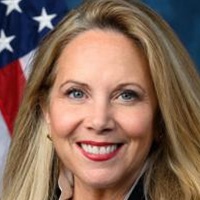
Gio's Law establishes a grant program to fund law enforcement agencies in purchasing epinephrine and training officers to treat severe allergic reactions, while also requiring public reporting on its use and launching an awareness campaign.
Laura Gillen
Representative
NY
Laura Gillen
Representative
NY
Gio's Law establishes a grant program allowing law enforcement agencies to purchase emergency epinephrine products and receive necessary training. The bill mandates the development of standardized training for officers on recognizing and treating anaphylaxis. Furthermore, it requires annual reporting on epinephrine administration by officers and launches a public awareness campaign about severe allergic reactions.
The Pro Codes Act establishes that copyright protection for technical standards incorporated by reference into law remains intact, provided the standards development organization makes those specific referenced standards publicly accessible online for free.
Darrell Issa
Representative
CA
Darrell Issa
Representative
CA
The Pro Codes Act aims to balance public access with the funding needs of organizations that create essential technical standards incorporated into law. It amends copyright law to require that standards referenced in federal, state, or local regulations be made publicly accessible online for free by the copyright holder. Furthermore, the Act mandates a study by the Comptroller General to assess the financial impact of these referenced standards on government budgets.