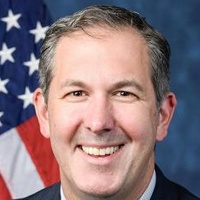
Legislative Activity
Track Johnny's sponsored bills, co-sponsored legislation, and voting record
This Act resets the probationary period for certain federal employees unfairly separated between January 20, 2025, and January 20, 2029, by crediting them for time already served.
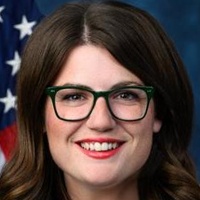
Sarah Elfreth
Representative
MD
Sarah Elfreth
Representative
MD
The Protect Our Probationary Employees Act resets the probationary period for certain federal employees who were involuntarily separated between January 20, 2025, and January 20, 2029. If these employees are rehired into a similar role at the same agency, their new probationary period will be reduced by the time they already served previously. This provision is temporary and will expire on January 20, 2029.
The Farewell to Foam Act of 2025 bans the sale and distribution of expanded polystyrene food service ware, loose fill packaging, and coolers starting January 1, 2028, with escalating fines for non-compliance.

Lloyd Doggett
Representative
TX
Lloyd Doggett
Representative
TX
The Farewell to Foam Act of 2025 bans the sale and distribution of expanded polystyrene (Styrofoam) food service ware, loose fill packaging, and coolers starting January 1, 2028. The bill clearly defines these targeted foam products and the roles of manufacturers, distributors, and retailers involved in their supply chain. Enforcement begins with a written warning for first-time violations, followed by escalating fines for repeat offenses. The Administrator of the EPA is granted the authority to issue necessary regulations to implement the Act.
This bill increases the annual stipend for educational costs for veterans under the Post-9/11 Educational Assistance Program and adjusts it annually for inflation.
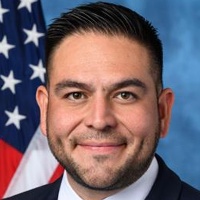
Gabriel (Gabe) Vasquez
Representative
NM
Gabriel (Gabe) Vasquez
Representative
NM
The Veteran Education Assistance Adjustment Act increases the annual stipend for books, supplies, and equipment for veterans under the Post-9/11 Educational Assistance Program from $1,000 to $1,400. Beginning in 2026, this stipend will be subject to annual increases based on the Consumer Price Index.
The "U.S. Engagement in Sudanese Peace Act" aims to address the crisis in Sudan by authorizing sanctions on those involved in human rights abuses and conflict, establishing a comprehensive strategy for peace, and empowering Sudanese women and youth in conflict resolution.
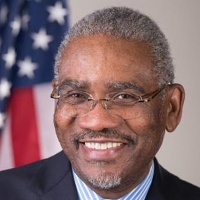
Gregory Meeks
Representative
NY
Gregory Meeks
Representative
NY
The U.S. Engagement in Sudanese Peace Act aims to address the crisis in Sudan by mandating the President to investigate and sanction those involved in human rights abuses and obstruction of humanitarian aid. It requires a comprehensive strategy to protect civilians, provide humanitarian aid, and foster peace, with an emphasis on empowering Sudanese women and youth in conflict resolution. The act also seeks to prevent the flow of weapons to conflict parties and ensures accountability for human rights abuses. Ultimately, the goal is to promote a sustainable peace through diplomatic and multilateral efforts.
The Richard L. Trumka Protecting the Right to Organize Act of 2025 strengthens protections for workers' rights to organize and collectively bargain by modernizing labor laws, addressing unfair labor practices, and enhancing enforcement mechanisms.
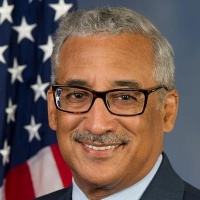
Robert Scott
Representative
VA
Robert Scott
Representative
VA
This bill, the Richard L. Trumka Protecting the Right to Organize Act of 2025, seeks to amend the National Labor Relations Act and other labor laws to strengthen protections for workers' rights to organize and collectively bargain. It aims to modernize labor regulations by clarifying definitions, addressing unfair labor practices, enhancing enforcement, and increasing transparency in labor-management relations. The bill introduces measures such as electronic voting in union elections, strengthens whistleblower protections, and mandates studies on collective bargaining practices. Ultimately, the goal is to ensure fair treatment of workers and promote equitable labor practices.
The TAP Promotion Act mandates a standardized, one-hour presentation on available VA benefits during mandatory preseparation counseling for service members.
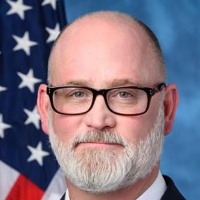
Derrick Van Orden
Representative
WI
Derrick Van Orden
Representative
WI
The TAP Promotion Act mandates a standardized, one-hour presentation on available VA benefits during mandatory preseparation counseling for service members. This presentation must be developed and approved by the Secretary of Veterans Affairs in consultation with recognized Veterans Service Organizations (VSOs). The goal is to ensure separating service members are fully informed of their entitlements and how VSOs can assist with filing claims.
The Fighter Force Preservation and Recapitalization Act of 2025 aims to increase and modernize the Air Force's fighter aircraft fleet, ensuring a strong national defense through the year 2030.
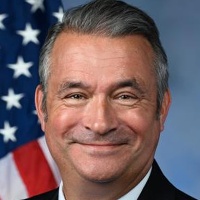
Don Bacon
Representative
NE
Don Bacon
Representative
NE
The Fighter Force Preservation and Recapitalization Act of 2025 aims to modernize and maintain the Air Force's fighter aircraft fleet by increasing the minimum number of fighter aircraft, requiring detailed reports on the fleet's status, prioritizing the assignment of new aircraft to existing squadrons, and preserving the Air National Guard's fighter capabilities. The act mandates the Air Force to assign at least three out of every four new advanced fighter aircraft to existing Air Force fighter squadrons and maintain at least 25 Air National Guard fighter aircraft squadrons. Additionally, it requires the Secretary of the Air Force to develop and submit an annual modernization plan for the Air National Guard's fighter fleet to Congress. The Act defines specific categories of fighter aircraft to clarify modernization efforts.
The John R. Lewis Voting Rights Advancement Act of 2025 aims to strengthen and update the Voting Rights Act of 1965 by addressing vote dilution and denial, establishing updated criteria for federal oversight of states and political subdivisions with a history of voting rights violations, and promoting transparency in election-related changes.
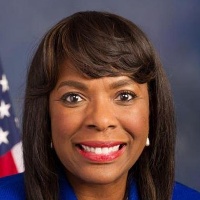
Terri Sewell
Representative
AL
Terri Sewell
Representative
AL
The John R. Lewis Voting Rights Advancement Act of 2025 amends the Voting Rights Act of 1965 to address vote dilution, denial, and abridgment claims, and to update which states and political subdivisions are subject to federal oversight based on a history of voting rights violations. It broadens the types of violations that allow a court to retain jurisdiction over a case, clarifies the Attorney General's authority to assign observers, and ensures transparency in voting-related changes. The Act also authorizes the Attorney General to demand documents and information to enforce voting rights and provides grants to small jurisdictions to assist with notification requirements.
The MERIT Act mandates the reinstatement of federal probationary employees affected by mass terminations occurring between January 20, 2025, and the Act's enactment, providing back pay and benefits.

LaMonica McIver
Representative
NJ
LaMonica McIver
Representative
NJ
The MERIT Act requires federal agencies to reinstate probationary employees who were terminated as part of a mass termination event between January 20, 2025, and the Act's enactment date, providing them with back pay and benefits. The Act also mandates reports on government employee terminations and the reinstatement process. It defines key terms such as "affected probationary employee" and "mass termination" to clarify the scope and applicability of the Act. This act ensures that affected employees are treated as involuntarily separated without cause and outlines the process for determining back pay and providing notice to eligible employees.
The "Fair Grocery Pricing Act" aims to prevent anti-competitive practices among food producers by prohibiting coordination to manipulate food prices and empowering regulators and individuals to take action against violations.

Maxwell Frost
Representative
FL
Maxwell Frost
Representative
FL
The "Fair Grocery Pricing Act" aims to prevent anti-competitive practices in the food industry by prohibiting food producers from colluding on pricing and supply through third-party coordinators. It empowers the FTC, Attorney General, and State Attorneys General to enforce the Act, allowing for civil penalties and legal action against violators. The Act also enables individuals harmed by violations to seek damages and invalidate certain pre-dispute agreements. This law supplements existing antitrust laws and does not override stricter state or local regulations.
The "Safe Schools Improvement Act" amends the Elementary and Secondary Education Act of 1965, requiring states to establish policies that prevent and prohibit bullying and harassment in schools based on protected characteristics, ensuring a safe and inclusive learning environment for all students.

Linda Sánchez
Representative
CA
Linda Sánchez
Representative
CA
The Safe Schools Improvement Act aims to reduce bullying and harassment in schools by requiring states to establish policies prohibiting such conduct based on various characteristics, including race, sex, religion, and disability. It mandates annual notifications, data collection on incidents, biennial evaluations of programs, and regular reports to Congress to ensure accountability and effectiveness. This act does not infringe on existing nondiscrimination laws or freedom of speech but seeks to create a safer, more inclusive learning environment for all students.
The SAFE Act of 2025 amends existing law to include equines (horses) in the prohibition of slaughtering animals for human consumption.

Vern Buchanan
Representative
FL
Vern Buchanan
Representative
FL
The SAFE Act of 2025 amends existing legislation to explicitly prohibit the slaughter of horses for human consumption, reinforcing protections for these animals. This bill seeks to prevent the inhumane treatment of American equines by closing loopholes that allow their slaughter and export for human consumption.
This resolution reaffirms the Twenty-second Amendment’s two-term limit and explicitly declares that Donald Trump is constitutionally prohibited from serving a third term as president.

Dan Goldman
Representative
NY
Dan Goldman
Representative
NY
This resolution reaffirms the Twenty-second Amendment’s constitutional mandate that limits any individual to two terms as President of the United States. It specifically cites a series of public statements made by Donald Trump as evidence of a disregard for these term limits and formally declares that he is prohibited from seeking or serving an additional term.
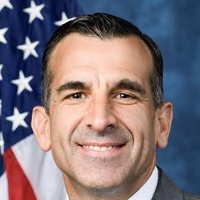
The MEME Act prohibits elected and high-ranking federal officials, as well as their families, from using their positions for personal financial gain by promoting or benefiting from financial instruments like stocks, commodities, and digital assets, with penalties including fines, imprisonment, and civil lawsuits.
Sam Liccardo
Representative
CA
Sam Liccardo
Representative
CA
The MEME Act prohibits elected and other high-ranking federal officials, as well as their families, from promoting financial assets, including securities, commodities, and digital assets, for personal gain. It allows the Attorney General, private parties, and others to sue violators. Violators may face civil penalties up to $250,000, be required to return profits to the Treasury, and may face criminal penalties including fines and imprisonment. The Act aims to prevent public officials from using their positions for personal financial benefit, addressing bribery, insider trading, and corrupt foreign influence.
This bill expands income-driven repayment options for parents who have federal student loans.

Maxine Waters
Representative
CA
Maxine Waters
Representative
CA
The "Affordable PLUS Repayment Options for Parents Act of 2025" expands income-contingent and income-based repayment options to parents who have taken out PLUS loans for their children's education. It removes restrictions that previously made PLUS loan borrowers ineligible for income-based repayment plans. The bill defines "partial financial hardship" based on a borrower's income and family size, ensuring more families can qualify for reduced payments. These changes apply to borrowers with outstanding PLUS loans or consolidation loans used to pay off PLUS loans, who are repaying their loans through income-driven repayment plans on or after the enactment date.
This act reinstates criminal penalties for individuals who charge unauthorized fees to veterans for assisting with claims for VA benefits.

Chris Pappas
Representative
NH
Chris Pappas
Representative
NH
The GUARD VA Benefits Act establishes criminal penalties for individuals who charge veterans unauthorized fees for assisting with claims for benefits administered by the Department of Veterans Affairs. This legislation amends existing law to prohibit soliciting, contracting for, or receiving compensation for preparing or prosecuting VA benefit claims, except where explicitly authorized by other statutes.
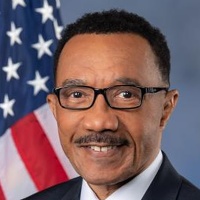
This bill establishes the Justice Thurgood Marshall National Historic Site at his former elementary school in Baltimore, MD, to preserve and interpret his legacy, while the school will continue to be owned and operated by the Beloved Community Services Corporation with support from the National Park System.
Kweisi Mfume
Representative
MD
Kweisi Mfume
Representative
MD
The "Justice Thurgood Marshall National Historic Site Establishment Act of 2025" establishes Justice Thurgood Marshall's elementary school, Public School 103 in Baltimore, Maryland, as the Justice Thurgood Marshall National Historic Site, affiliated with the National Park System. The Beloved Community Services Corporation will continue to own and manage the site, while the Secretary of the Interior may provide technical and financial assistance. This act aims to preserve and interpret Justice Marshall's historic contributions without authorizing the federal acquisition of the property or assuming financial responsibility for its operation. Necessary funds are authorized to be appropriated for the implementation of this Act.
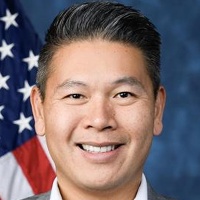
The "Protect Veteran Jobs Act" allows wrongly terminated veteran civil service employees to be reinstated and requires executive agencies to report to Congress on veteran employee terminations.
Derek Tran
Representative
CA
Derek Tran
Representative
CA
The Protect Veteran Jobs Act allows wrongly fired or dismissed veterans in civil service jobs between January 20, 2025, and the Act's enactment date to be reinstated to their previous position or a similar one. It mandates executive branch agencies to report to Congress every three months on all veteran employees who were fired or dismissed and the reasons for their termination, effective until January 20, 2029. The Act relies on existing U.S. Code definitions for key terms like "veteran" and "civil service."
This resolution condemns the Iranian regime’s terrorism and human rights abuses while affirming support for the Iranian people’s right to establish a democratic, secular, and non-nuclear republic.

Tom McClintock
Representative
CA
Tom McClintock
Representative
CA
This resolution condemns the Iranian regime for its ongoing human rights abuses, state-sponsored terrorism, and regional instability. It expresses strong support for the Iranian people's struggle for a democratic, secular, and non-nuclear republic. Furthermore, the bill advocates for international accountability for the regime's crimes and calls for the protection of Iranian political refugees.
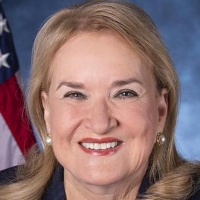
The American Dream and Promise Act of 2025 provides a pathway to permanent residency for eligible individuals who came to the U.S. as children, or who have Temporary Protected Status (TPS) or Deferred Enforced Departure (DED) status.
Sylvia Garcia
Representative
TX
Sylvia Garcia
Representative
TX
The American Dream and Promise Act of 2025 provides a pathway to permanent residency for eligible individuals who entered the United States as children and those with Temporary Protected Status (TPS) or Deferred Enforced Departure (DED). Title I, the Dream Act of 2025, establishes conditional permanent residency for eligible individuals who entered the U.S. as children. Title II, the American Promise Act of 2025, allows the Secretary of Homeland Security or the Attorney General to grant permanent resident status to eligible individuals from TPS or DED countries. Title III outlines general provisions, such as background checks, application processes, and fee exemptions, applicable to all seeking to adjust their status under this Act.