Legislative Activity
Track Jay's sponsored bills, co-sponsored legislation, and voting record
This Act grants limited liability protection to manufacturers of critical infrastructure equipment against lawsuits related to wildfire losses unless willful misconduct in design or production is proven.
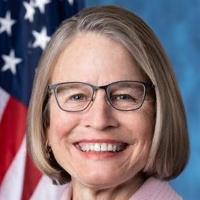
Mariannette Miller-Meeks
Representative
IA
Mariannette Miller-Meeks
Representative
IA
This bill grants limited legal immunity to manufacturers of essential critical infrastructure equipment against lawsuits stemming from wildfire-related losses. This protection applies unless a plaintiff can prove the manufacturer engaged in willful misconduct during the design or production of the equipment. The legislation aims to bolster the security and resilience of vital national systems by supporting their manufacturers.
This Act provides tax relief by excluding income received for wildfire prevention work and allowing a new above-the-line deduction for landowner expenditures on certified hazardous fuel reduction activities.
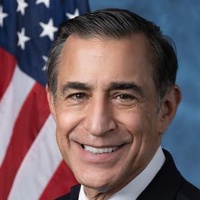
Darrell Issa
Representative
CA
Darrell Issa
Representative
CA
The Wildfire Infrastructure and Landowner Tax Relief Act of 2025 (WILTR Act) aims to incentivize wildfire prevention efforts by landowners. This bill excludes certain federal grants received for hazardous fuel reduction activities from gross income, making them tax-free. Additionally, it creates a new above-the-line tax deduction for qualified expenditures landowners make on certified fire mitigation work on their property.
This act allows drug manufacturers to provide required prescribing information digitally, provided they maintain an option for healthcare professionals to receive paper copies upon request.

Diana Harshbarger
Representative
TN
Diana Harshbarger
Representative
TN
The Prescription Information Modernization Act of 2025 allows drug manufacturers to provide required prescribing information to healthcare providers digitally. This shift is contingent upon manufacturers offering providers the option to receive paper copies upon request, free of charge. The Secretary of HHS must establish final rules for this digital transition within one year of enactment.
This Act mandates a study by the FAA to assess the readiness of major U.S. airports to safely and efficiently handle future supersonic and hypersonic aircraft.
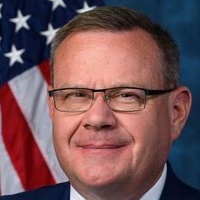
Tim Moore
Representative
NC
Tim Moore
Representative
NC
The National Airport Supersonic Readiness Act of 2025 mandates the FAA to conduct a comprehensive study assessing whether major U.S. airports are prepared for the arrival of next-generation supersonic and hypersonic aircraft. This assessment will evaluate runway capacity, ground support infrastructure, air traffic control, and environmental regulations. The resulting report will provide Congress with necessary recommendations and cost estimates for future infrastructure upgrades to support high-speed air travel.
This Act establishes new quality improvement measures, feedback mechanisms, and training programs to reduce errors and delays in the Department of Veterans Affairs' claims and appeals process.
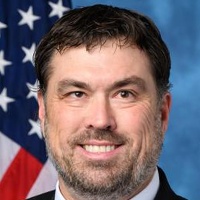
Morgan Luttrell
Representative
TX
Morgan Luttrell
Representative
TX
The Veterans Claims Quality Improvement Act of 2025 aims to enhance the accuracy and efficiency of the VA benefits claims process. It mandates internal feedback for employees causing unnecessary claim delays and requires a study of past legal opinions to ensure consistent decision-making. Furthermore, the bill establishes new quality assurance programs and mandatory training at the Board of Veterans Appeals to reduce errors and improve the quality of decisions sent back for rework.
This joint resolution disapproves the EPA's rule allowing California to implement its Advanced Clean Cars II vehicle pollution control standards.
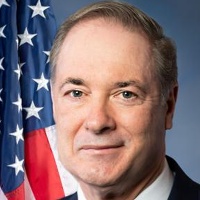
John Joyce
Representative
PA
John Joyce
Representative
PA
This joint resolution expresses Congressional disapproval of the Environmental Protection Agency's (EPA) rule regarding California's "Advanced Clean Cars II" vehicle pollution standards. By rejecting this rule, Congress is effectively canceling the EPA's decision to grant California a waiver allowing it to set stricter emission standards than federal law typically permits. Consequently, the approved California standards will not take effect.
This bill formally rejects the Environmental Protection Agency's recently issued rule concerning California's heavy-duty vehicle and engine pollution control standards.
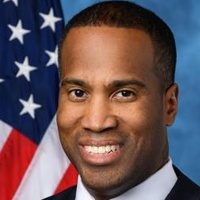
John James
Representative
MI
John James
Representative
MI
This resolution expresses the disapproval of Congress regarding a recent rule issued by the Environmental Protection Agency (EPA) concerning California's motor vehicle and engine pollution control standards. Specifically, it rejects the EPA's proposed regulations covering heavy-duty vehicle emissions, warranties, maintenance, and zero-emission vehicle provisions. By disapproving the rule under the Congressional Review Act, Congress effectively nullifies the EPA's action.
The Nuclear REFUEL Act amends the definition of a "production facility" under the Atomic Energy Act to exempt spent nuclear fuel reprocessing that does not separate plutonium from other transuranic elements.
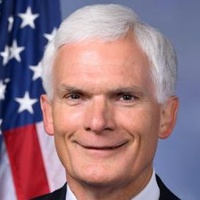
Robert Latta
Representative
OH
Robert Latta
Representative
OH
The Nuclear REFUEL Act amends the Atomic Energy Act to clarify regulations surrounding nuclear fuel processing. Specifically, it excludes the reprocessing of spent nuclear fuel from the definition of a "production facility" if the process does not separate plutonium from other transuranic elements. This change aims to streamline regulatory oversight for certain fuel recycling activities.
This Act waives the deadline for awarding military decorations to service members whose eligibility was obscured by classified or restricted records since January 1, 1940.
Darrell Issa
Representative
CA
Darrell Issa
Representative
CA
The Valor Has No Expiration Act removes the time limits for recommending military decorations for service members whose records were classified or restricted. This allows the Secretaries of the military branches to review and award decorations earned by veterans dating back to January 1, 1940. The bill establishes a formal review process and reporting requirements for these delayed award considerations.
This resolution condemns the violent June 2025 riots in Los Angeles, praises law enforcement, and urges cooperation to restore peace.

Young Kim
Representative
CA
Young Kim
Representative
CA
This resolution formally condemns the violent riots that occurred in Los Angeles in June 2025, which escalated from protests following immigration enforcement actions. It details the widespread arson, vandalism, and attacks against law enforcement officers during the disorder. Furthermore, the bill praises the actions of law enforcement and urges state and local officials to cooperate with federal authorities to restore peace.
The SKIM Act mandates stricter sentencing guidelines for credit card and identity misuse crimes and requires a report on federal and local cooperation to combat access device fraud.
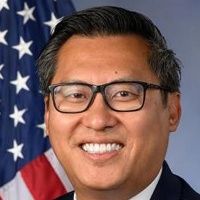
Vince Fong
Representative
CA
Vince Fong
Representative
CA
The SKIM Act, or Stopping Klepto-card and Identity Misuse Act, mandates stricter sentencing guidelines for crimes involving counterfeit or stolen credit and debit cards, ensuring a minimum offense level for such offenses. It also requires the Attorney General and Secretary of Homeland Security to report to Congress on federal and local cooperation in combating access device fraud. This legislation aims to increase penalties and improve coordination against identity and payment card misuse.
This resolution formally recognizes the significant and growing economic contributions of independent workers and contractors to the American economy while expressing concern over potential legislative restrictions on their flexibility.
Darrell Issa
Representative
CA
Darrell Issa
Representative
CA
This resolution officially recognizes the significant and growing contributions of independent workers, freelancers, and sole proprietors to the American economy. It highlights the substantial economic impact of this sector, which provides flexibility and opportunity for millions of Americans. Furthermore, the resolution expresses concern over potential legislation that could restrict the freedom and flexibility enjoyed by these independent workers.
This act mandates that FHA loan disclosures include comparable VA loan information and requires lenders to ask about military service on standard loan applications.

Brittany Pettersen
Representative
CO
Brittany Pettersen
Representative
CO
The VA Loan Informed Disclosure Act of 2025 (VALID Act) aims to increase awareness of VA loan options among homebuyers. It requires lenders to include comparative information about potential VA loan terms on standard FHA disclosure forms. Furthermore, the Act mandates that the Uniform Residential Loan Application include a prominent question regarding the applicant's military service.
This resolution designates May 2025 as National Wildfire Preparedness Month to raise awareness and promote proactive measures against the growing threat of wildfires.

Norma Torres
Representative
CA
Norma Torres
Representative
CA
This resolution officially designates May 2025 as "National Wildfire Preparedness Month" to address the growing threat of intense and frequent wildfires nationwide. The goal is to raise public awareness about the increasing risks and encourage proactive steps for mitigation and readiness. This designation supports efforts across all levels of government and communities to promote home hardening, responsible land management, and effective evacuation planning. Ultimately, it seeks to educate the public on lifesaving actions to protect lives, property, and health from wildfire dangers.
This resolution recognizes the vital economic and educational contributions of California's public higher education systems—UC, CSU, and CCC—and reaffirms commitment to their support.
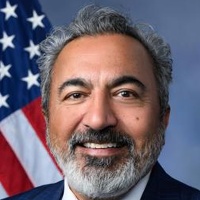
Ami Bera
Representative
CA
Ami Bera
Representative
CA
This resolution formally recognizes the critical importance of California's three public higher education systems—UC, CSU, and CCC—to the state's economy and workforce development. It highlights the massive scale of these institutions and their vital role in providing access and economic mobility for millions of students. Ultimately, the measure reaffirms the United States' commitment to supporting these essential public educational pillars.
This bill establishes a temporary special immigrant visa pathway for up to 3,000 highly educated Russian STEM professionals annually to immigrate to the U.S. for work.
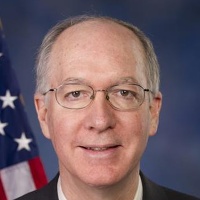
Bill Foster
Representative
IL
Bill Foster
Representative
IL
The Countering Russian Innovation and Safeguarding Individual Scientists Act of 2025 (CRISIS Act) establishes a new special immigrant pathway for highly educated Russian nationals holding doctoral degrees in critical STEM fields. This program allows up to 3,000 eligible scientists and their families annually to immigrate to the U.S. to work in their expertise, bypassing standard visa caps. The Act mandates expedited processing and rigorous security vetting for all applicants.
This bill mandates the creation of a comprehensive plan to upgrade the cybersecurity, networking, and hardware capabilities of the U.S. Academic Research Fleet to better support oceanic research and crew well-being.
Vince Fong
Representative
CA
Vince Fong
Representative
CA
The ANCHOR Act directs the National Science Foundation to develop a comprehensive plan to significantly upgrade the cybersecurity and telecommunications infrastructure for the U.S. Academic Research Fleet. This plan must assess necessary network capabilities, identify security risks, estimate costs, and propose a funding strategy involving multiple stakeholders. The goal is to ensure research vessels have the necessary high-speed connectivity to support advanced science, crew well-being, and remote expertise.
This act increases the penalty-free withdrawal limit from retirement accounts for first-time homebuyers from $\$10,000$ to $\$50,000$.

Beth Van Duyne
Representative
TX
Beth Van Duyne
Representative
TX
The Uplifting First-Time Homebuyers Act of 2025 significantly increases the penalty-free withdrawal limit from retirement accounts for first-time homebuyers. This legislation raises the maximum allowable distribution from $\$10,000$ to $\$50,000$. This change is designed to provide greater financial flexibility for individuals purchasing their first home, taking effect for tax years beginning after December 31, 2024.
This bill mandates an independent review of VA claimant forms to ensure clarity and establishes a timeline for implementing necessary improvements, while also slightly extending a current limit on certain pension payments.
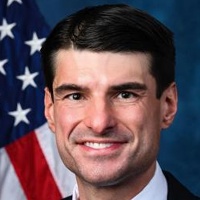
Robert Bresnahan
Representative
PA
Robert Bresnahan
Representative
PA
The Simplifying Forms for Veterans Claims Act mandates an independent review of all Department of Veterans Affairs (VA) forms sent to claimants to ensure they are clear and easy to understand. The VA Secretary must hire an outside entity to assess these forms and implement recommendations for improvement within a set timeline. Additionally, this bill slightly extends the expiration date for certain limits on veterans' pension payments.
This Act mandates that the VA inform veterans filing initial claims about free representation options and improve the online search tool for accredited representatives.

Scott Peters
Representative
CA
Scott Peters
Representative
CA
The Veterans Claims Education Act of 2025 aims to better inform veterans about their right to free representation from recognized Veterans Service Organizations (VSOs) when filing initial VA claims. It mandates that the VA maintain and regularly update an accessible online tool for finding accredited representatives. Furthermore, the bill extends the expiration date for certain limitations on veteran pension payments.