Legislative Activity
Track Zachary's sponsored bills, co-sponsored legislation, and voting record
The HEALTH for MOM Act of 2025 allows states the option to establish "maternity health homes" to provide coordinated, comprehensive Medicaid care for pregnant and postpartum women for one year after delivery.
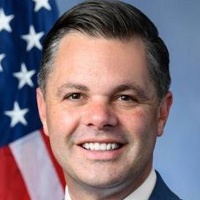
Zachary (Zach) Nunn
Representative
IA
Zachary (Zach) Nunn
Representative
IA
The HEALTH for MOM Act of 2025 allows states the option to establish "maternity health homes" to provide enhanced, coordinated care for pregnant and postpartum women enrolled in Medicaid. These health homes must offer comprehensive, patient-centered care planning that links medical services with crucial social and behavioral supports for one year after delivery. To encourage adoption, the bill provides temporary enhanced federal funding for states that choose to implement this coordinated care model.
This Act updates federal assistance programs to prioritize and provide new competitive grants for the development and demonstration of advanced biorefineries producing renewable chemicals and biobased products alongside biofuels.
Zachary (Zach) Nunn
Representative
IA
Zachary (Zach) Nunn
Representative
IA
The Agricultural Biorefinery Innovation and Opportunity Act of 2025 updates federal assistance programs to specifically promote the development of advanced biofuels, renewable chemicals, and biobased product manufacturing. This legislation introduces competitive grants for pilot and demonstration-scale biorefineries while streamlining loan guarantee processes. The bill establishes detailed scoring criteria for grant applicants, prioritizing innovation, private investment, and environmental impact, and sets annual funding levels through fiscal year 2030.
This bill establishes a permanent advisory committee to study and report on the financial market fallout from potential Chinese military aggression toward Taiwan, requiring regular reports and recommendations to bolster U.S. market resilience.
Zachary (Zach) Nunn
Representative
IA
Zachary (Zach) Nunn
Representative
IA
This bill establishes a permanent advisory committee focused on studying and reporting on the severe financial market fallout that could result from Chinese military aggression toward Taiwan. The committee, composed of market experts and regulators, will advise the Financial Stability Oversight Council on potential economic vulnerabilities. The Council must then issue an annual public report detailing market risks, potential losses, and specific recommendations for regulators to fortify U.S. financial systems against such geopolitical shocks.
This bill establishes a point of order in the House to prevent reconciliation measures from reducing benefits for children, seniors, pregnant women, or disabled individuals under Medicaid or SNAP during the 119th Congress.
Zachary (Zach) Nunn
Representative
IA
Zachary (Zach) Nunn
Representative
IA
This bill establishes a point of order in the House of Representatives to prevent reconciliation measures from reducing benefits or eligibility for Medicaid or SNAP for protected groups, including children, seniors, pregnant women, and people with disabilities. This rule applies for the duration of the 119th Congress. However, provisions aimed at reducing fraud or improper payments are exempt from this restriction.
The ReConnecting Rural America Act of 2025 overhauls federal funding to prioritize grants and loans for building high-speed, 100/100 Mbps broadband infrastructure in underserved rural areas.
Zachary (Zach) Nunn
Representative
IA
Zachary (Zach) Nunn
Representative
IA
The ReConnecting Rural America Act of 2025 significantly overhauls federal funding to expand high-speed internet access in underserved rural areas. This legislation prioritizes grants and loans for projects delivering at least 100 Mbps symmetrical speeds, focusing heavily on communities currently lacking adequate service. The bill sets strict buildout timelines, mandates participation in affordability programs, and establishes specific priority criteria for funding distribution through 2030.
This Act mandates comprehensive mental health education within the military's Transition Assistance Program and the VA's Solid Start Program to better support servicemembers leaving the military and reduce veteran suicide.
Zachary (Zach) Nunn
Representative
IA
Zachary (Zach) Nunn
Representative
IA
This Act mandates improvements to the mental health components of the Department of Defense's Transition Assistance Program (TAP) and the Department of Veterans Affairs' Solid Start Program. It ensures transitioning service members and new veterans receive comprehensive information on available mental health services, suicide risk, and related support resources. The Secretaries of Defense and Veterans Affairs must jointly report to Congress on these updates within one year of enactment.
This bill drastically tightens and expands U.S. sanctions against Iran across its leadership, military, and economy while severely restricting the President's authority to lift these restrictions.
Zachary (Zach) Nunn
Representative
IA
Zachary (Zach) Nunn
Representative
IA
The Maximum Pressure Act dramatically tightens and expands U.S. sanctions against Iran across its military, missile, and economic sectors, codifying existing restrictions and severely limiting the President's authority to grant sanctions relief. It mandates immediate sanctions on top Iranian officials and increases penalties for international parties aiding Iran's weapons programs. Furthermore, the bill enhances oversight by requiring numerous detailed reports to Congress regarding Iran's terrorism financing, nuclear timeline, and economic influence, while also redirecting certain frozen Iranian funds to victims of state-sponsored terrorism.
The Fight for Families Act of 2025 makes the federal tax credit for qualified special needs adoption expenses partially refundable, allowing eligible taxpayers to receive money back even if they owe no tax.
Zachary (Zach) Nunn
Representative
IA
Zachary (Zach) Nunn
Representative
IA
The Fight for Families Act of 2025 makes a portion of the federal tax credit for adopting children with special needs refundable. This means eligible families can receive money back as a refund, even if they owe no taxes. The refundability applies specifically to the amount of the credit tied to their special needs adoption expenses.
This bill establishes significant tax credits to incentivize and reward companies for investing in and producing infant formula domestically within the United States.
Zachary (Zach) Nunn
Representative
IA
Zachary (Zach) Nunn
Representative
IA
The Infant Formula Made in America Act of 2025 establishes significant tax incentives to boost domestic infant formula production. It creates an investment credit for taxpayers building or expanding U.S. manufacturing facilities, alongside a per-pound production credit for formula sold domestically. These incentives are subject to caps and require certification to ensure a substantial portion of the formula is sold within the United States.
The "Delivering for Rural Seniors Act of 2025" establishes a pilot program providing grants to states for home delivery of commodities to low-income elderly people, especially in rural areas, from 2026-2028.
Zachary (Zach) Nunn
Representative
IA
Zachary (Zach) Nunn
Representative
IA
The "Delivering for Rural Seniors Act of 2025" aims to improve food access for low-income elderly individuals in rural areas by establishing a pilot program for home delivery of commodities. The program will award grants to state agencies, prioritizing those serving rural areas, to cover costs associated with transportation, staffing, and outreach. This act authorizes $10 million annually from 2026 to 2028 for these initiatives.
The "Safeguarding Social Security and Medicare Act" mandates a study on the impact of inflation and cost of living increases on Social Security and Medicare, providing Congress with recommendations to protect these vital benefits.
Zachary (Zach) Nunn
Representative
IA
Zachary (Zach) Nunn
Representative
IA
The "Safeguarding Social Security and Medicare Act" orders a study to assess the effects of inflation and cost of living increases on Social Security and Medicare. The goal is to provide Congress with recommendations on legislative actions needed to maintain full benefits under these programs. This is important because millions of Americans rely on these benefits, and increased cost of living and inflation are putting a financial strain on them.
This bill extends the beneficial ownership information reporting deadline for pre-existing small businesses to January 1, 2026, to reduce their administrative burden.
Zachary (Zach) Nunn
Representative
IA
Zachary (Zach) Nunn
Representative
IA
The Protect Small Businesses from Excessive Paperwork Act of 2025 provides regulatory relief by extending the filing deadline for beneficial ownership information reports. Under this legislation, companies formed before January 1, 2024, now have until January 1, 2026, to comply with Corporate Transparency Act requirements.
The Train More Primary Care Doctors Act of 2025 increases authorized federal funding for primary care medical training and enhancement programs through 2030.
Zachary (Zach) Nunn
Representative
IA
Zachary (Zach) Nunn
Representative
IA
The Train More Primary Care Doctors Act of 2025 increases federal funding for primary care training and enhancement programs. This legislation authorizes $49.9 million annually from 2025 through 2030 to help expand and improve the training of primary care physicians across the country.
This bill mandates a Treasury Department report evaluating and recommending improvements for public-private coordination in preventing and responding to ransomware attacks on financial institutions.
Zachary (Zach) Nunn
Representative
IA
Zachary (Zach) Nunn
Representative
IA
The Public and Private Sector Ransomware Response Coordination Act of 2025 mandates that the Secretary of the Treasury conduct a comprehensive study on how public and private entities collaborate to prevent and respond to ransomware attacks on financial institutions. This report will evaluate the effectiveness of current information-sharing practices and provide policy recommendations to strengthen cybersecurity partnerships. Ultimately, the legislation aims to identify potential legislative improvements to ensure government agencies have timely access to critical incident data.
This Act mandates detailed and timely reporting from the Treasury Department to Congress regarding the use, costs, and duration of special accounting measures taken to avoid a government shutdown when the national debt limit is reached.
Zachary (Zach) Nunn
Representative
IA
Zachary (Zach) Nunn
Representative
IA
The Extraordinary Measures Transparency Act mandates increased public accountability regarding the Treasury Department's use of special accounting tools to manage the national debt limit. This legislation requires the Treasury Secretary to provide advance notice and detailed daily updates to Congress whenever these "extraordinary measures" are implemented or utilized. Furthermore, the Act requires a final report detailing the total administrative costs associated with these temporary funding actions once the debt limit crisis has passed.
The No Corruption in Government Act prohibits members of Congress and their spouses from trading individual stocks, extends post-employment lobbying bans, and eliminates automatic congressional pay raises.
Zachary (Zach) Nunn
Representative
IA
Zachary (Zach) Nunn
Representative
IA
The "No Corruption in Government Act" aims to increase accountability and transparency by banning Members of Congress and their spouses from trading individual stocks and financial instruments. The bill also extends post-employment lobbying "cooling-off" periods for former lawmakers and eliminates automatic cost-of-living pay adjustments for Congress. These measures are designed to reduce conflicts of interest and ensure that legislative actions remain focused on the public interest.
The Back to Work Act limits federal telework to 40 percent of work days, mandates increased oversight, and ties telework participation to reduced locality-based pay adjustments.
Zachary (Zach) Nunn
Representative
IA
Zachary (Zach) Nunn
Representative
IA
The Back to Work Act limits federal employees to teleworking no more than 40 percent of their work days and mandates increased monitoring of remote work. The bill also ties telework participation to pay restrictions by limiting locality-based pay adjustments for those with telework agreements. Additionally, it requires executive agencies to submit annual reports to Congress regarding telework productivity, enforcement, and potential negative impacts.
This bill proposes a constitutional amendment mandating a balanced federal budget, requiring congressional supermajorities to raise the debt limit or increase revenue, and tasking the President with submitting a balanced budget to Congress annually. These rules can be waived during declared wars or serious military conflicts.
Zachary (Zach) Nunn
Representative
IA
Zachary (Zach) Nunn
Representative
IA
This bill proposes a constitutional amendment mandating a balanced federal budget, requiring that government spending not exceed income unless a supermajority in Congress approves. It also necessitates a supermajority to increase the national debt and a majority vote to raise revenue. The amendment includes exceptions for declared wars or serious military threats and would take effect five years after ratification, tasking Congress with its enforcement.