Legislative Activity
Track Zachary's sponsored bills, co-sponsored legislation, and voting record
This Act formalizes the commitment to strengthen trilateral cooperation between the US, Japan, and South Korea and establishes a formal Inter-Parliamentary Dialogue to deepen engagement.
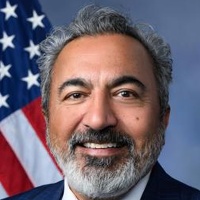
Ami Bera
Representative
CA
Ami Bera
Representative
CA
This Act formalizes and strengthens the trilateral partnership between the United States, Japan, and the Republic of Korea to promote a free and open Indo-Pacific. It expresses Congressional support for continuing the strategic alignment established at the Camp David summit. Crucially, it mandates the establishment of a formal US-Japan-ROK Inter-Parliamentary Dialogue to deepen legislative engagement between the three nations.
This bill mandates the development of strategies across the Commerce, State, and Defense Departments to prevent the export of transatlantic technology used in Iranian-made drones.
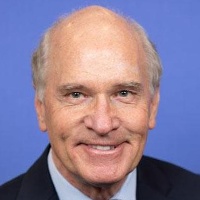
William Keating
Representative
MA
William Keating
Representative
MA
This bill aims to block the use of transatlantic technology in Iranian-made drones, which are supplied to U.S. adversaries like Russia and terrorist groups. It directs the Departments of Commerce, State, and Defense to develop strategies to stop the export of critical drone components, such as specific microelectronics, to Iran. The legislation emphasizes preventing U.S. technology from supporting Russia's war in Ukraine and attacks on Israel.
This bill mandates the State Department to train foreign officials in South and Central Asia on evaluating and mitigating risks associated with investments from adversarial foreign actors.
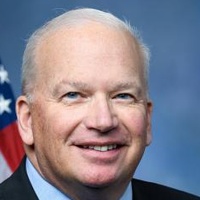
Scott Fitzgerald
Representative
WI
Scott Fitzgerald
Representative
WI
The Thwarting Regional Adversary Investments Now (TRAIN) Act mandates the Department of State to provide technical training to officials in friendly South and Central Asian nations. This training is designed to help them identify and mitigate legal and financial risks associated with accepting investments or loans from foreign adversaries. Furthermore, the Secretary of State must submit an annual report to Congress detailing the training provided and analyzing any new agreements signed by these countries with regional adversaries.
This bill, the BRIDGE Act, mandates a comprehensive report and strategy detailing the scope of China's Belt and Road Initiative to undermine the U.S.-led world order and outlining the U.S. government's plan to counter it.
Scott Fitzgerald
Representative
WI
Scott Fitzgerald
Representative
WI
This bill, the "BRIDGE Act," mandates a comprehensive report detailing how the People's Republic of China uses its Belt and Road Initiative to undermine the U.S.-led world order. It requires the administration to develop and submit a detailed, government-wide strategy for effectively countering China's economic and political reach through the BRI. The legislation aims to ensure a unified U.S. response coordinated with allies to promote shared economic growth within a free and open international system.
This bill establishes the Smithsonian American Women's History Museum, designates its site on the National Mall, and sets requirements for its mission, construction, and diverse representation of viewpoints.
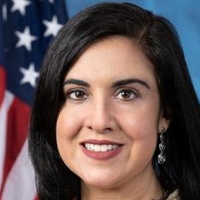
Nicole Malliotakis
Representative
NY
Nicole Malliotakis
Representative
NY
This act officially establishes the Smithsonian American Women’s History Museum and designates its location on the National Mall, requiring the transfer of land jurisdiction to the Smithsonian Institution. The museum is mandated to preserve and present the history and achievements of biological women in the United States. Furthermore, the legislation requires that exhibits and programs reflect diverse political viewpoints and authentic experiences of women, as guided by a broad array of knowledgeable sources.
This bill extends the Rural Community Hospital Demonstration Program for an additional five years and modifies extension criteria for participating hospitals.
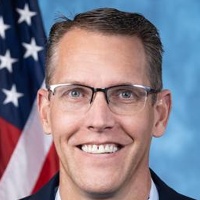
Randy Feenstra
Representative
IA
Randy Feenstra
Representative
IA
This bill, the "Rural Community Hospital Demonstration Program Reauthorization," extends the existing rural community hospital demonstration program for an additional five years, making it a 20-year program. It also updates the criteria for an additional extension period to cover certain hospitals that join the program between late 2024 and early 2027.
This bill expands Medicare Part B coverage to reimburse for specific pharmacist services related to testing and treatment for certain public health threats, effective January 1, 2026.
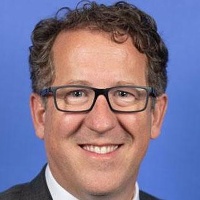
Adrian Smith
Representative
NE
Adrian Smith
Representative
NE
The Ensuring Community Access to Pharmacist Services Act expands Medicare Part B coverage to include services provided by pharmacists starting January 1, 2026. This coverage is specifically for testing or treatment related to COVID-19, the flu, RSV, strep throat, or during a declared public health emergency. The bill outlines payment structures, generally covering 80% of the cost, and prohibits pharmacists from balance billing Medicare patients for these covered services.
This bill authorizes the minting and sale of commemorative gold and silver coins to honor the 25th anniversary of the September 11, 2001, terrorist attacks, with surcharges supporting the National September 11 Memorial and Museum.

Dan Goldman
Representative
NY
Dan Goldman
Representative
NY
This bill authorizes the Secretary of the Treasury to mint and issue commemorative gold and silver coins marking the 25th anniversary of the September 11, 2001, terrorist attacks. The coins will honor the victims, first responders, and survivors, with designs selected in consultation with the National September 11 Memorial and Museum. All surcharges from the sale of these coins will be paid directly to the Memorial and Museum to support its operations and maintenance.
This bill ensures rural hospitals can maintain Critical Access Hospital status by excluding labor and delivery beds from the acute care inpatient bed count for Medicare purposes.
Randy Feenstra
Representative
IA
Randy Feenstra
Representative
IA
The Rural MOMS Act of 2026 aims to support maternity care in small rural hospitals. This bill amends Medicare rules to exclude beds used only for labor and delivery from the acute care inpatient bed count for Critical Access Hospitals. This change allows these vital rural facilities to maintain their special status while continuing to offer essential maternity services.
This bill mandates that federal agencies adopt the National Institute of Standards and Technology's Artificial Intelligence Risk Management Framework for their use of artificial intelligence systems.
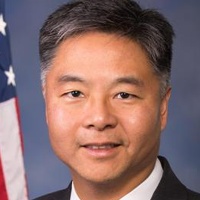
Ted Lieu
Representative
CA
Ted Lieu
Representative
CA
This bill, the "Federal Artificial Intelligence Risk Management Act of 2026," mandates that federal agencies adopt the National Institute of Standards and Technology (NIST) Artificial Intelligence Risk Management Framework for their AI systems. It directs NIST to develop comprehensive federal standards, guidelines, and minimum requirements for managing AI risks, authenticating synthetic content, and testing AI acquisitions across government operations. These standards must be consistent with the existing NIST AI Risk Management Framework and will be formally submitted for adoption once mature.
This bill supports designating May 14, 2026, as "National Scam Survivor Day" to raise awareness about the growing threat of scams and encourage prevention efforts.
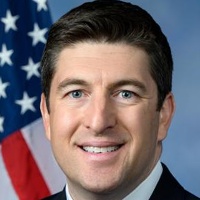
Bryan Steil
Representative
WI
Bryan Steil
Representative
WI
This bill supports the designation of May 14, 2026, as "National Scam Survivor Day" to recognize the growing threat of scams across the United States. It highlights the significant financial losses and the increasing sophistication of fraud targeting all age groups. The legislation encourages greater public awareness, improved prevention resources, and stronger law enforcement efforts to combat scam operations. Ultimately, it calls for a collaborative approach to support survivors and prevent future victimization.
This bill allows for year-round sales of E15 gasoline and restructures the Renewable Fuel Standard program by phasing out small refinery exemptions in favor of a 75% compliance obligation reduction starting in 2028.
Adrian Smith
Representative
NE
Adrian Smith
Representative
NE
This bill, the Nationwide Consumer and Fuel Retailer Choice Act of 2025, makes two major changes: it allows for the year-round sale of E15 gasoline and reforms the Renewable Fuel Standard (RFS) for small refineries. The RFS reform phases out existing small refinery exemptions starting in 2028, replacing them with a 75% compliance obligation reduction. The Act also directs the EPA to update fuel infrastructure rules for E15 distribution.
This bill affirms the strong U.S.-South Korea alliance, emphasizing its importance for security, economic growth, and shared values, while also recognizing the contributions of Korean Americans. It supports stronger ties and celebrates Korean culture.
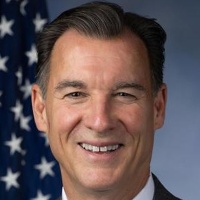
Thomas Suozzi
Representative
NY
Thomas Suozzi
Representative
NY
This bill reaffirms the strong alliance between the United States and the Republic of Korea, emphasizing its importance for security, economic growth, and shared values. It recognizes the deep economic ties, the contributions of Korean Americans, and continued commitment to the Mutual Defense Treaty. The bill also supports strengthening security, economic, and cultural bonds between the two nations, and celebrates Korean Culture-Kimchi Day.
This bill establishes the Combating Organized Retail Crime Act of 2025 to enhance federal prosecution tools against organized retail and supply chain crime and create a DHS-led coordination center to align law enforcement efforts.
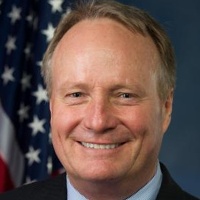
David Joyce
Representative
OH
David Joyce
Representative
OH
The Combating Organized Retail Crime Act of 2025 aims to combat sophisticated, cross-jurisdictional organized retail and supply chain theft. It achieves this by strengthening federal laws regarding money laundering and stolen property offenses, including lowering monetary thresholds for prosecution. Furthermore, the bill establishes a dedicated Center within the Department of Homeland Security to coordinate federal, state, and local enforcement efforts against these criminal organizations.
This Act prohibits the sale or importation of connected vehicles and components containing hardware or software from covered adversarial countries like China, Russia, Iran, and North Korea, starting in 2027.
John Moolenaar
Representative
MI
John Moolenaar
Representative
MI
The Connected Vehicle Security Act of 2026 prohibits the sale or importation of connected vehicles, hardware, or software originating from or controlled by designated "covered countries" (North Korea, China, Russia, or Iran). This measure aims to safeguard U.S. economic and national security against risks like espionage and cyber intrusion posed by foreign adversaries exploiting vehicle connectivity technology. The Secretary of Commerce is tasked with issuing regulations to enforce these bans, which begin phasing in starting in 2027, though waivers may be granted under specific national security conditions.
This bill expands the Committee on Foreign Investment in the United States (CFIUS) authority to review and presume national security risks from real estate transactions involving foreign adversaries near sensitive sites and on agricultural land.
John Moolenaar
Representative
MI
John Moolenaar
Representative
MI
This Act strengthens national security by expanding the Committee on Foreign Investment in the United States (CFIUS) review of real estate transactions involving foreign adversaries. It specifically targets purchases of farmland and property near sensitive national security sites. The legislation introduces a presumption that such "elevated risk" transactions pose unresolvable risks, placing a high burden on CFIUS to prove otherwise. Furthermore, it mandates consideration of U.S. food security during transaction reviews and ensures state laws restricting foreign adversary land ownership remain in effect.
This bill establishes federal tax credits to incentivize developers to build or rehabilitate rental housing affordable to middle-income workers earning between 60% and 120% of the area median income.
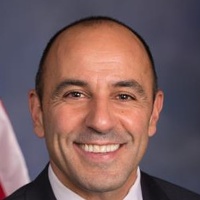
Jimmy Panetta
Representative
CA
Jimmy Panetta
Representative
CA
This bill establishes two new federal tax credits to incentivize the development and rehabilitation of rental housing for middle-income workers. The Workforce Housing Tax Credit targets those earning between 60% and 120% of the area median income, while the Middle-Income Housing Credit focuses on units for those at 100% of the area median income or less. These credits aim to address the housing gap for essential workers who often cannot afford market-rate rents or qualify for existing low-income housing programs.
This bill mandates reasonable efforts to keep siblings together in foster care and establishes a grant program to support specialized placements for large or complex sibling groups.
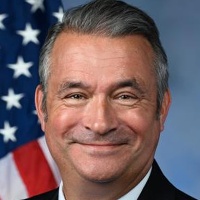
Don Bacon
Representative
NE
Don Bacon
Representative
NE
This bill mandates that state child welfare agencies make reasonable efforts to keep siblings together in foster care and ensure ongoing contact if they are separated. It also establishes a competitive grant pilot program to fund specialized foster care programs designed to successfully place large, widely-aged, or complex-needs sibling groups together. The goal is to prioritize and improve sibling connections while in state care.
This Act mandates a comprehensive report to Congress detailing emerging military, cyber, and political threats to the Baltic states and recommending strategies to enhance their security and U.S. partnership.
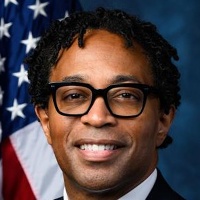
Wesley Bell
Representative
MO
Wesley Bell
Representative
MO
The Baltic Security Assessment Act of 2025 affirms the critical importance of Estonia, Latvia, and Lithuania to U.S. national security amidst Russian aggression. This bill mandates that the Secretary of State and Secretary of Defense deliver a comprehensive report to Congress detailing emerging military, cyber, and political threats to the Baltic states. The report must also recommend specific actions to enhance U.S. and NATO defense cooperation and bolster Baltic resilience.
This Act repeals the federal beneficial ownership information reporting requirements for domestic persons and entities, limiting them only to foreign individuals and foreign-connected companies, and mandates the deletion of existing domestic data.
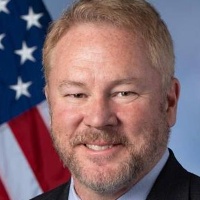
Warren Davidson
Representative
OH
Warren Davidson
Representative
OH
The Repealing Big Brother Overreach Act significantly narrows the federal beneficial ownership information reporting requirements. This legislation limits reporting obligations exclusively to foreign individuals and foreign-connected companies. Furthermore, it mandates the deletion of all previously collected data pertaining to domestic persons and entities.