Legislative Activity
Track Bernie's sponsored bills, co-sponsored legislation, and voting record
The Leveling the Playing Field 2.0 Act strengthens U.S. trade laws to combat unfair trade practices, prevent duty evasion, and protect domestic industries.

Todd Young
Senator
IN
Todd Young
Senator
IN
The Leveling the Playing Field 2.0 Act enhances U.S. trade laws to counteract unfair trade practices by foreign countries. It strengthens the ability of the International Trade Commission to address successive instances of unfair trade, expands countervailing duty authority, and prevents duty evasion. The Act also counters currency undervaluation and sets clear guidelines for implementation and applicability.
The "Stop Dangerous Sanctuary Cities Act" aims to enhance cooperation between federal and local law enforcement on immigration matters by allowing state and local officers to act as federal agents, defines "sanctuary jurisdictions," and restricts these jurisdictions from receiving certain federal funds.
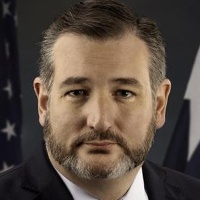
Ted Cruz
Senator
TX
Ted Cruz
Senator
TX
The "Stop Dangerous Sanctuary Cities Act" aims to enhance cooperation between federal and local law enforcement by allowing state and local officers to act as agents of the Department of Homeland Security and protecting them from liability when complying with immigration detainers. It defines "sanctuary jurisdictions" as those that restrict information sharing or compliance with federal detainment requests, and it makes these jurisdictions ineligible for certain federal grants, reallocating those funds to non-sanctuary jurisdictions. This act does not protect individuals who knowingly violate civil or constitutional rights.
To combat the fentanyl crisis, this bill suspends the entry of undocumented individuals attempting to cross the U.S. border from Canada or Mexico.

Tim Scott
Senator
SC
Tim Scott
Senator
SC
The Alan T. Shao II Fentanyl Public Health Emergency and Overdose Prevention Act aims to prevent fentanyl from entering the U.S. by suspending the entry of individuals illegally crossing the border from Canada or Mexico who do not have the required travel documents. These individuals will be returned to their country of origin or the country they entered from. The Department of Homeland Security is authorized to transport these individuals.
The "One Flag for All Act" mandates that only the United States flag can be flown on the exterior and publicly accessible areas of federal buildings, with specific exceptions for certain flags like those of POW/MIAs, visiting diplomats, branches of the Armed Forces, and historical or commemorative significance.

Roger Marshall
Senator
KS
Roger Marshall
Senator
KS
The "One Flag for All Act" generally prohibits the display of flags other than the United States flag on the exterior and publicly accessible areas of federal buildings, military installations, and U.S. embassies. It includes exceptions for flags such as the POW/MIA flag, flags of visiting diplomats, state flags displayed by Members of Congress, flags representing branches of the Armed Forces, flags of historical significance, and flags representing religious organizations or churches during religious events at military installations. Additional exceptions are made for flags representing public safety, special national observances, a Federal agency, an Indian Tribe, and the State, territory, county, city, or local jurisdiction where the covered public building is located.
The "Death Tax Repeal Act of 2025" eliminates estate and generation-skipping transfer taxes, modifies gift tax calculations, and adjusts lifetime gift exemptions.
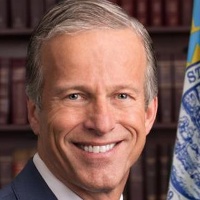
John Thune
Senator
SD
John Thune
Senator
SD
The "Death Tax Repeal Act of 2025" eliminates both estate and generation-skipping transfer taxes, while also modifying gift tax laws. It adjusts gift tax calculations, addresses transfers in trust, sets an initial $10,000,000 amount for calculating tentative tax, and adjusts for inflation. These changes apply to estates of decedents dying, generation-skipping transfers occurring, and gifts made on or after the enactment date of this Act.
The "Protect Small Businesses from Excessive Paperwork Act of 2025" extends the filing deadline to January 1, 2026, for pre-existing reporting companies formed before January 1, 2024.
Tim Scott
Senator
SC
Tim Scott
Senator
SC
The "Protect Small Businesses from Excessive Paperwork Act of 2025" amends the filing deadline for pre-existing reporting companies. Companies in existence before January 1, 2024, now have until January 1, 2026, to file their reports.
The "Credit Union Board Modernization Act" amends the Federal Credit Union Act to reduce the frequency of required board meetings for well-managed federal credit unions from monthly to at least six times per year after the first five years of operation.
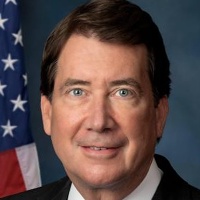
Bill Hagerty
Senator
TN
Bill Hagerty
Senator
TN
The "Credit Union Board Modernization Act" amends the Federal Credit Union Act to reduce the frequency of board of directors meetings for well-managed federal credit unions. New federal credit unions are required to meet monthly for the first five years, while those with strong ratings must meet at least six times annually after the initial period. Credit unions with lower ratings will still be required to meet monthly.
Reauthorizes funding for the Great Lakes Restoration Initiative at $500 million per year from 2027 through 2031.
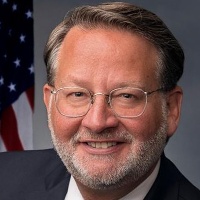
Gary Peters
Senator
MI
Gary Peters
Senator
MI
The GLRI Act of 2025 reauthorizes the Great Lakes Restoration Initiative, allocating $500 million annually from 2027 through 2031. This initiative aims to protect and restore the Great Lakes ecosystem.
The CAREER Act of 2025 reauthorizes and modifies grant programs supporting employment, treatment, and recovery services for individuals with substance use disorders, and extends the Recovery Housing Pilot Program through 2030.
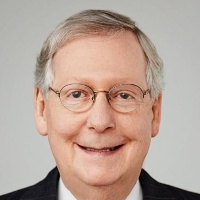
Mitch McConnell
Senator
KY
Mitch McConnell
Senator
KY
The CAREER Act of 2025 reauthorizes and modifies key grant programs aimed at supporting individuals recovering from substance use disorders through workforce development and recovery housing. It extends funding for treatment, recovery, and workforce support grants, allowing funds to be used for transportation services and prioritizing data collection on employment outcomes. The act also reauthorizes the Recovery Housing Pilot Program, updating data collection methods and extending the program through 2030 to provide stable housing for individuals in recovery.
The Regulations from the Executive in Need of Scrutiny Act of 2025 (REINS Act) would require congressional approval for major executive branch rules with significant economic impacts before they can take effect.

Rand Paul
Senator
KY
Rand Paul
Senator
KY
The "Regulations from the Executive in Need of Scrutiny Act of 2025" aims to increase transparency and accountability in federal agency rulemaking by requiring congressional approval for major rules with significant economic impact (over $100 million). It establishes procedures for congressional review and approval or disapproval of both major and non-major rules, mandates the publication of guidance documents, and sets expiration dates for major rules. The Act also requires agencies to conduct retrospective reviews of existing rules and includes a regulatory budget to control the costs of regulations. Additionally, the Government Accountability Office must study the number and economic impact of existing rules.
The GRID Power Act aims to expedite and improve the process of connecting new power projects to the electric grid, prioritizing those that enhance grid reliability and resilience.
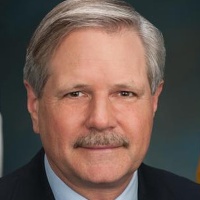
John Hoeven
Senator
ND
John Hoeven
Senator
ND
The GRID Power Act aims to improve the process for connecting new power projects to the electric grid, prioritizing those that enhance grid reliability and resilience. It directs the Federal Energy Regulatory Commission (FERC) to establish rules that allow transmission providers to propose adjustments to their interconnection queue, giving priority to projects that improve grid reliability. These proposals must demonstrate the need for prioritization, explain how it will improve grid reliability or resilience, and be subject to public comment. FERC is required to review and update these regulations regularly to address evolving grid challenges.
Prohibits the Department of Veterans Affairs from sending veterans' personal information to the national instant criminal background check system based only on the fact that the veteran requires assistance managing their benefits, unless a court determines the veteran is a danger to themselves or others.
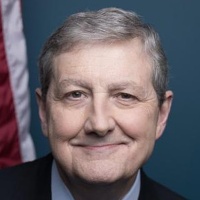
John Kennedy
Senator
LA
John Kennedy
Senator
LA
The "Veterans 2nd Amendment Protection Act of 2025" prevents the Department of Veterans Affairs from sharing veterans' personal information with the national instant criminal background check system (NICS) based solely on the appointment of a fiduciary to manage their benefits. Information can only be shared if a judicial authority determines the veteran poses a danger to themselves or others.
This resolution honors the 67 victims of the January 29, 2025, mid-air collision between American Airlines Flight 5342 and a U.S. Army helicopter while commending the first responders who managed the recovery efforts.
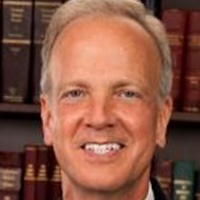
Jerry Moran
Senator
KS
Jerry Moran
Senator
KS
This resolution honors the memory of the 67 victims who lost their lives in the tragic mid-air collision between American Airlines Flight 5342 and a U.S. Army helicopter on January 29, 2025. It extends heartfelt condolences to the grieving families and expresses profound gratitude to the numerous first responder organizations that provided dedicated rescue and recovery efforts.
This Act mandates that new passenger vehicles sold in the U.S. must include standard equipment capable of receiving AM broadcast radio signals for emergency alerts and programming.
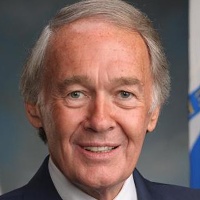
Edward Markey
Senator
MA
Edward Markey
Senator
MA
The AM Radio for Every Vehicle Act of 2025 mandates that new passenger vehicles sold in the U.S. must include standard equipment capable of receiving AM broadcast signals within a few years of the law's enactment. This requirement aims to ensure drivers retain access to crucial emergency alerts, overriding conflicting state or local laws. The bill also directs the GAO to study the reliability of AM radio versus other emergency alert technologies in vehicles.
The Fair Access to Banking Act aims to prevent financial institutions from denying services to individuals or businesses based on subjective or political reasons, ensuring fair and impartial access to financial services.

Kevin Cramer
Senator
ND
Kevin Cramer
Senator
ND
The Fair Access to Banking Act aims to ensure equal access to financial services by preventing banks and credit unions from denying services to individuals or entities engaged in lawful activities based on subjective or politically motivated reasons. It sets requirements for banks with over $10 billion in assets, prohibiting them from denying services based on reputational risk and requiring them to justify denials with documented, risk-based standards. The act also allows individuals to sue financial institutions that violate these requirements, with the potential for treble damages and attorney fees awarded to successful plaintiffs. Furthermore, it restricts access to Federal Reserve lending programs and the Automated Clearing House Network for institutions that fail to comply with the Act.
This bill eliminates diversity, equity, and inclusion (DEI) programs and initiatives within the federal government, federal training, federal contracting, federal grants and cooperative agreements, federal advisory committees, and higher education accreditation standards.
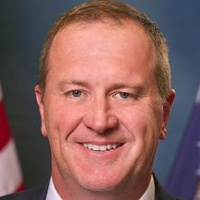
Eric Schmitt
Senator
MO
Eric Schmitt
Senator
MO
**Title I:** This bill seeks to eliminate diversity, equity, and inclusion (DEI) programs within the federal government by revoking prior directives, terminating DEI offices, and restricting DEI-related training and activities. **Title II:** This bill restricts federal training programs from including topics related to diversity, equity, and inclusion, and protects employees from mandatory training on these subjects. **Title III:** This bill modifies federal contracting practices by prohibiting the use of federal funds for DEI-related activities and ensuring non-discrimination in federal programs. **Title IV:** This bill restricts the use of federal grant and cooperative agreement funds for diversity, equity, inclusion, and accessibility (DEIA) initiatives, while exempting certain offices and institutions. **Title V:** This bill aims to eliminate diversity, equity, and inclusion (DEI) practices within federal advisory committees by outlining specific prohibitions, enforcement mechanisms, and responsibilities for agency administrators and heads to ensure compliance. **Title VI:** This bill addresses accreditation standards for higher education institutions and restricts the use of federal funds by the Secretary of Education related to diversity, equity, and inclusion (DEI) initiatives. **Title VII:** This bill eliminates certain diversity, equity, and inclusion (DEI) programs and related requirements across various federal agencies and acts. **Title VIII:** This bill focuses on the enforcement and legal standing of the Act, ensuring individuals have the right to seek justice if they believe the law has been violated, and clarifies that the law remains effective even if parts of it are deemed unconstitutional.
The RECOGNIZING Judea and Samaria Act mandates that all official United States government documents and federal communications use the historical terms "Judea and Samaria" instead of "West Bank."
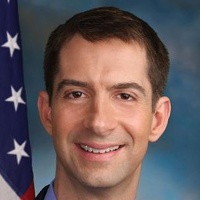
Tom Cotton
Senator
AR
Tom Cotton
Senator
AR
The RECOGNIZING Judea and Samaria Act mandates that the United States government use the historical terms "Judea and Samaria" in all official documents and communications instead of the term "West Bank." The bill prohibits the use of federal funds to produce materials that refer to the region as the "West Bank" and amends existing federal statutes to reflect this change in terminology.
The STOP MADNESS Act authorizes the President to impose economic sanctions on foreign governments and individuals that facilitate unlawful immigration or refuse to cooperate with U.S. repatriation efforts.
Tim Scott
Senator
SC
Tim Scott
Senator
SC
The STOP MADNESS Act authorizes the President to impose economic sanctions on foreign governments that refuse to accept the repatriation of their citizens who have entered the United States unlawfully. Additionally, the bill targets foreign governments and individuals that knowingly facilitate unlawful immigration by blocking their access to the U.S. financial system. The legislation also establishes reporting requirements for the executive branch regarding the implementation and enforcement of these sanctions.
This bill amends the Social Security Act to provide Medicare coverage for FDA-approved multi-cancer early detection screening tests starting in 2028.

Michael Crapo
Senator
ID
Michael Crapo
Senator
ID
The Nancy Gardner Sewell Medicare Multi-Cancer Early Detection Screening Coverage Act amends the Social Security Act to provide Medicare coverage for FDA-approved multi-cancer early detection (MCED) screening tests starting in 2028. This legislation establishes a formal coverage and payment framework for these innovative blood-based tests while ensuring they complement, rather than replace, existing cancer screening protocols.
The Educational Choice for Children Act of 2025 establishes a federal tax credit for donations to scholarship-granting organizations to help eligible students cover a wide range of K-12 educational expenses while protecting the autonomy of participating schools and families.
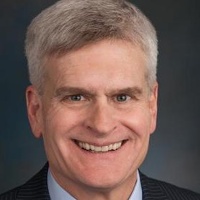
Bill Cassidy
Senator
LA
Bill Cassidy
Senator
LA
The Educational Choice for Children Act of 2025 establishes a federal tax credit for individuals and corporations that donate to scholarship-granting organizations. These organizations provide scholarships to help eligible students cover a wide range of K-12 educational expenses, including private school tuition, tutoring, and educational therapies. The bill includes a $10 billion annual volume cap on these credits and contains robust protections to ensure the autonomy of participating schools and the rights of parents to direct their children's education.