Legislative Activity
Track April's sponsored bills, co-sponsored legislation, and voting record
The Alice Cogswell and Anne Sullivan Macy Act amends IDEA to mandate comprehensive, specialized services, qualified personnel, and clear identification protocols for children who are deaf, hard of hearing, deafblind, or blind or visually impaired.
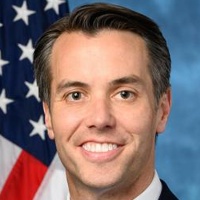
Morgan McGarvey
Representative
KY
Morgan McGarvey
Representative
KY
The **Alice Cogswell and Anne Sullivan Macy Act** amends the Individuals with Disabilities Education Act (IDEA) to significantly improve services for children who are deaf, hard of hearing, blind, visually impaired, or deafblind. The bill mandates better identification, specialized instruction—including access to American Sign Language and Braille—and increased training for qualified personnel across all three disability areas. It ensures these students receive comprehensive support tailored to their unique communication and access needs from early intervention through school age.
The Helen Keller Education Act amends IDEA to strengthen identification, evaluation, and specialized services for deafblind children across all educational and early intervention stages, including mandating intervener services and improved communication supports.
Morgan McGarvey
Representative
KY
Morgan McGarvey
Representative
KY
The Helen Keller Education Act amends the Individuals with Disabilities Education Act (IDEA) to significantly improve services for children who are deafblind across their lifespan. It mandates better identification, ensures specialized instruction and related services like intervener support, and strengthens early intervention for infants and toddlers. The bill also expands federal funding to train more professionals and interveners to meet the unique communication and learning needs of this population.
The Ukraine Support Act strengthens U.S. diplomatic, military, and economic support for Ukraine while imposing comprehensive sanctions on Russia to counter its ongoing aggression and war crimes.
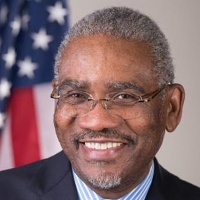
Gregory Meeks
Representative
NY
Gregory Meeks
Representative
NY
The Ukraine Support Act strengthens U.S. diplomatic, military, and economic support for Ukraine while intensifying pressure on Russia through comprehensive sanctions and export controls. The bill establishes long-term reconstruction and security programs, bolsters independent media, and mandates strategies to reduce European reliance on Russian energy. Additionally, it reinforces NATO’s collective defense and imposes strict oversight on the use of U.S. aid to ensure accountability and strategic impact.
This bill expresses support for designating June 5, 2026, as "National Gun Violence Awareness Day" and June 2026 as "National Gun Violence Awareness Month" to honor victims and promote awareness of gun violence.
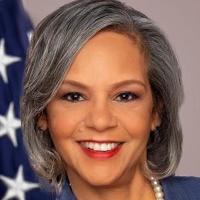
Robin Kelly
Representative
IL
Robin Kelly
Representative
IL
This bill expresses support for designating June 5, 2026, as "National Gun Violence Awareness Day" and the entire month of June 2026 as "National Gun Violence Awareness Month." The designations aim to honor the nearly 47,000 people killed by gunfire each year and raise public awareness about the devastating impact of gun violence. The resolution encourages the public to wear orange on that day and focus on community efforts to promote gun safety.
This act prohibits the construction of triumphal arches in Lady Bird Johnson Park and restricts arches over 50 feet tall on other National Park Service land in the capital region to protect the viewshed of Arlington National Cemetery.
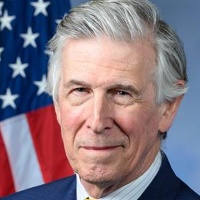
Donald Beyer
Representative
VA
Donald Beyer
Representative
VA
This act, the Arlington National Cemetery Viewshed Protection Act, prohibits the construction of any new triumphal arches in Lady Bird Johnson Park. It also restricts the building of any triumphal arch over 50 feet tall on other National Park Service land within the capital region unless explicitly authorized by Congress. The legislation aims to protect the visual landscape surrounding Arlington National Cemetery.
This bill establishes the Smithsonian American Women's History Museum, designates its site on the National Mall, and sets requirements for its mission, construction, and diverse representation of viewpoints.
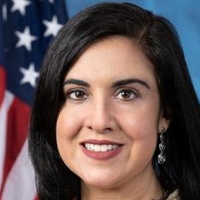
Nicole Malliotakis
Representative
NY
Nicole Malliotakis
Representative
NY
This act officially establishes the Smithsonian American Women’s History Museum and designates its location on the National Mall, requiring the transfer of land jurisdiction to the Smithsonian Institution. The museum is mandated to preserve and present the history and achievements of biological women in the United States. Furthermore, the legislation requires that exhibits and programs reflect diverse political viewpoints and authentic experiences of women, as guided by a broad array of knowledgeable sources.
This act prohibits a sitting President from filing civil lawsuits against the United States and voids the settlement agreement in *Trump v. Internal Revenue Service*, banning federal funds for such settlements.

Lizzie Fletcher
Representative
TX
Lizzie Fletcher
Representative
TX
This Act prohibits a sitting President from filing civil lawsuits against the United States. It also voids the settlement agreement in the specific case of *Trump v. Internal Revenue Service*. Furthermore, the bill bans the use of federal funds to establish any compensation fund to settle civil actions brought by a President or former President against the U.S.
The Provider Reimbursement Stability Act of 2026 reforms Medicare physician payment policies by updating budget neutrality thresholds, establishing a correction process for utilization estimates, mandating periodic updates to practice expense data, and limiting annual conversion factor fluctuations.
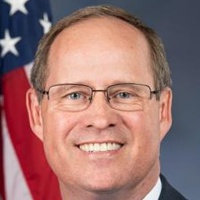
Gregory Murphy
Representative
NC
Gregory Murphy
Representative
NC
The Provider Reimbursement Stability Act of 2026 aims to improve the accuracy and predictability of Medicare physician payments. The bill reforms budget neutrality calculations, mandates periodic updates to practice expense cost data, and establishes a 2.5% cap on annual conversion factor fluctuations. These measures are designed to ensure more stable reimbursement rates for healthcare providers.
This bill authorizes the minting and sale of commemorative gold and silver coins to honor the 25th anniversary of the September 11, 2001, terrorist attacks, with surcharges supporting the National September 11 Memorial and Museum.

Dan Goldman
Representative
NY
Dan Goldman
Representative
NY
This bill authorizes the Secretary of the Treasury to mint and issue commemorative gold and silver coins marking the 25th anniversary of the September 11, 2001, terrorist attacks. The coins will honor the victims, first responders, and survivors, with designs selected in consultation with the National September 11 Memorial and Museum. All surcharges from the sale of these coins will be paid directly to the Memorial and Museum to support its operations and maintenance.
This bill prohibits using federal funds for specific settlement payments, particularly those related to the *Trump, et al. v. IRS, et al.* case, and restricts certain compromise settlements from the Judgment Fund to high-ranking officials and specific types of claims.
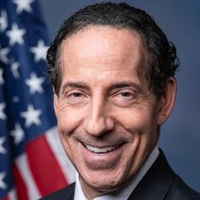
Jamie Raskin
Representative
MD
Jamie Raskin
Representative
MD
This Act prohibits the use of federal funds for specific settlement payments, including those related to the *Trump, et al. v. IRS, et al.* case. It places new restrictions on the Judgment Fund, barring payments to high-ranking officials, their relatives, and certain entities for specific types of claims. The bill also establishes strict reporting and notification requirements for large government compromise settlements.
This bill supports designating May 29, 2026, as "Mental Health Awareness in Agriculture Day" to raise awareness and reduce stigma surrounding mental health in the agricultural industry.
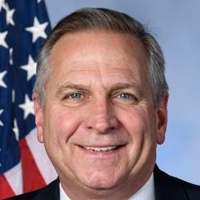
Mike Bost
Representative
IL
Mike Bost
Representative
IL
This bill supports designating May 29, 2026, as "Mental Health Awareness in Agriculture Day." The goal is to raise awareness about the unique mental health challenges faced by the agricultural industry and workforce. It also aims to continue reducing the stigma associated with mental illness in this vital sector.
This resolution affirms that U.S. policy on mifepristone access must respect over 25 years of scientific evidence proving its safety and ensure equitable access based on the best available science.

Diana DeGette
Representative
CO
Diana DeGette
Representative
CO
This resolution expresses the sense of the House that policies governing access to mifepristone for medication abortion must be based on over 25 years of proven safety and effectiveness data. It affirms that access to this time-sensitive care should be equitable, transparent, and guided by the best available, peer-reviewed science, not political interference. The bill supports the FDA's authority to regulate based on evidence, including telemedicine and pharmacy dispensing.
The **Protecting Our Democracy Act** imposes sweeping restrictions on presidential power, enhances congressional oversight, strengthens ethics and anti-corruption laws, and bolsters accountability for federal officials.
Jamie Raskin
Representative
MD
Jamie Raskin
Representative
MD
The **Protecting Our Democracy Act** imposes sweeping reforms across the executive branch to strengthen accountability and restore checks and balances. It restricts presidential pardon power, closes loopholes to ensure no President is above the law, and enforces constitutional emoluments clauses to prevent self-enrichment. Furthermore, the Act enhances congressional oversight by strengthening subpoena enforcement, increasing transparency around White House visitors and tax returns, and protecting federal whistleblowers from retaliation.
This bill allows for year-round sales of E15 gasoline and restructures the Renewable Fuel Standard program by phasing out small refinery exemptions in favor of a 75% compliance obligation reduction starting in 2028.

Adrian Smith
Representative
NE
Adrian Smith
Representative
NE
This bill, the Nationwide Consumer and Fuel Retailer Choice Act of 2025, makes two major changes: it allows for the year-round sale of E15 gasoline and reforms the Renewable Fuel Standard (RFS) for small refineries. The RFS reform phases out existing small refinery exemptions starting in 2028, replacing them with a 75% compliance obligation reduction. The Act also directs the EPA to update fuel infrastructure rules for E15 distribution.
This act establishes universal free breakfast and lunch programs in schools, eliminates meal debt, and updates poverty metrics across various federal education and nutrition programs.

Ilhan Omar
Representative
MN
Ilhan Omar
Representative
MN
The Universal School Meals Program Act of 2026 establishes permanent, universal free breakfast and lunch programs for all enrolled students at participating schools, eliminating income tests and meal debt collection. The bill significantly updates federal funding mechanisms by replacing reliance on free and reduced-price lunch data with new measures for identifying economically disadvantaged students across various education and social programs. Furthermore, it expands access to summer and afterschool meals while making technical amendments across several federal education and nutrition laws.
This Act establishes a fund administered by a Special Master to compensate law enforcement officers injured or killed while defending the U.S. Capitol on January 6, 2021.
Jamie Raskin
Representative
MD
Jamie Raskin
Representative
MD
This Act establishes the January 6th Law Enforcement Heroes Compensation Fund to provide financial compensation for injuries and deaths sustained by law enforcement officers defending the U.S. Capitol on January 6, 2021. The program will be administered by a Special Master appointed by the Attorney General, who will review claims for economic and noneconomic losses. The bill also mandates an additional, guaranteed payment for all eligible officers, funded in part by certain government settlement amounts related to the attack. Determinations made by the Special Master regarding compensation are final and not subject to judicial review.
This act prohibits the use of federal funds for military action in or against Iran through 2026 unless Congress formally declares war or authorizes such force.
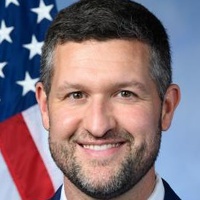
Patrick Ryan
Representative
NY
Patrick Ryan
Representative
NY
The No Funds for Iran War Act prohibits the use of federal funds for military action in or against Iran through the end of 2026. This ban remains in effect unless Congress formally declares war or passes a specific authorization for military force. Exceptions are made only for actions consistent with the War Powers Resolution or necessary self-defense against an imminent attack.
This resolution recognizes National Postpartum Awareness Week for Communities of Color to highlight and address the disproportionate maternal health crisis and disparities faced by women of color during the postpartum period.
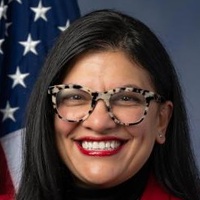
Rashida Tlaib
Representative
MI
Rashida Tlaib
Representative
MI
This resolution officially recognizes the week of May 3-9, 2026, as "National Postpartum Awareness Week for Communities of Color." It highlights the disproportionate maternal health crisis faced by communities of color and the critical need for respectful, culturally competent postpartum care. The bill supports efforts to eliminate racial disparities in maternal health outcomes by improving access to necessary resources and mental health services.
This resolution designates the week of May 4 through May 8, 2026, as Teacher Appreciation Week while recognizing the critical role and priorities of the nation's public school teachers.
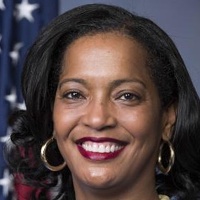
Jahana Hayes
Representative
CT
Jahana Hayes
Representative
CT
This resolution officially designates the week of May 4 through May 8, 2026, as Teacher Appreciation Week. It recognizes the vital role of public school teachers and highlights their key priorities, including support for existing federal protections and funding. Furthermore, the bill encourages leaders to engage directly with teachers to ensure their expertise informs education policy.
This resolution commends U.S. public servants for their dedication to defending the Constitution, delivering essential services, and supporting the economy, particularly during Public Service Recognition Week.
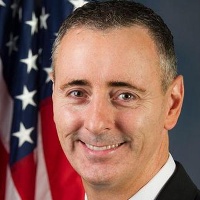
Brian Fitzpatrick
Representative
PA
Brian Fitzpatrick
Representative
PA
This resolution expresses the sense of the House of Representatives commending public servants for their dedication to defending the Constitution and delivering essential services to the American people. It specifically designates the week of May 3 through May 9, 2026, as Public Service Recognition Week. The bill honors the millions of federal, state, and local employees and uniformed service members who support the economy and democratic foundations of the nation.