
Legislative Activity
Track Roger's sponsored bills, co-sponsored legislation, and voting record
The Energy Choice Act prohibits state and local governments from enacting regulations that restrict residents' or businesses' access to energy sources transported across state lines.

Jim Justice
Senator
WV
Jim Justice
Senator
WV
The Energy Choice Act aims to prevent state and local governments from enacting regulations that restrict consumer access to various energy sources, including natural gas, hydrogen, and electricity, if those sources are transported across state lines. This legislation ensures that local codes cannot ban or limit the connection or expansion of services based on the energy type or source. In essence, it protects the ability of residents and businesses to choose from energy options available through interstate commerce.
This resolution formally establishes an annual "Life Month" to affirm the inherent value of all human life, especially the unborn, and to encourage legislative action and support for life-affirming resources.
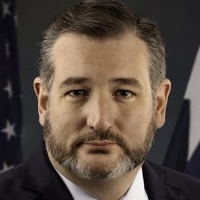
Ted Cruz
Senator
TX
Ted Cruz
Senator
TX
This resolution formally declares the nation's foundational belief in the inherent right to life for every human being, including the unborn. It recognizes the Supreme Court's decision to return authority over life protection laws to the people and their elected officials. Furthermore, the bill establishes an annual "Life Month" to commend organizations supporting life and urge lawmakers to enact protections for the unborn.
This bill creates an exception from Medicare drug price negotiation for qualifying small biotech manufacturers based on their level of investment in research and development.
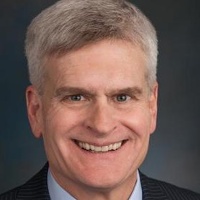
Bill Cassidy
Senator
LA
Bill Cassidy
Senator
LA
The Small Biotech Innovation Act creates an exception to the Medicare drug price negotiation program for small biotech manufacturers heavily invested in research and development. This exception shields certain "qualifying single source drugs" from negotiation for initial years, provided the company meets strict R&D spending thresholds relative to its number of qualifying drugs. To qualify, manufacturers must apply annually and certify their R&D expenditures, with provisions for appealing adverse decisions.
This resolution formally honors the life, achievements, and legacy of former United States Senator Christopher "Kit" Bond of Missouri.
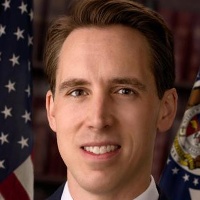
Joshua Hawley
Senator
MO
Joshua Hawley
Senator
MO
This resolution serves as a formal tribute honoring the life, achievements, and enduring legacy of former United States Senator Christopher "Kit" Bond of Missouri. It recognizes his decades of public service, including his terms as Missouri Governor and U.S. Senator, where he championed infrastructure, agriculture, and conservative values. The Senate expresses deep sadness over his passing and directs that official copies of this tribute be sent to his family.
This Act stabilizes the Crime Victims Fund by expanding its revenue sources to include certain non-conviction settlements and temporary deposits from False Claims Act recoveries.

Lisa Murkowski
Senator
AK
Lisa Murkowski
Senator
AK
The Crime Victims Fund Stabilization Act of 2025 aims to strengthen the Crime Victims Fund by expanding the sources of deposits. This includes allowing the Fund to receive money from certain legal settlements that do not result in a criminal conviction. Additionally, the bill temporarily allows certain recoveries from False Claims Act settlements to fund victim services through 2030, while protecting payments to whistleblowers and the government's direct recovery.
This act updates Small Business Investment Company (SBIC) leverage limits and expands exclusions for investments in underserved geographic areas, critical technology, and small manufacturers.

John Hickenlooper
Senator
CO
John Hickenlooper
Senator
CO
The Investing in All of America Act of 2025 updates the Small Business Investment Company (SBIC) program by increasing maximum leverage limits to \$175 million for individual companies and \$350 million for commonly controlled groups, adjusted annually for inflation. The bill also expands investment exclusions for leverage calculations to include investments in businesses located in low-income or rural areas, critical technology sectors, or small manufacturers. Furthermore, it clarifies the definition of investment sources for leverage approval, treating university-affiliated endowments similarly to pension funds.
This act establishes a tax credit for businesses that use digitally traced, domestically grown U.S. cotton in their final products.
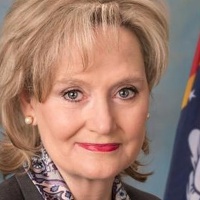
Cindy Hyde-Smith
Senator
MS
Cindy Hyde-Smith
Senator
MS
The Buying American Cotton Act of 2025 establishes a new tax credit to incentivize businesses to use cotton grown in the United States. This Domestic Cotton Consumption Credit is calculated based on the amount of qualified U.S. cotton in an eligible product sold, factoring in processing location and market price. The bill mandates strict digital tracing requirements to prove the origin of the cotton throughout the supply chain. Special enhanced credit multipliers are available for businesses that elect to claim the credit separately for qualified U.S. cotton yarn or fabric components.
This resolution expresses support for designating May 2025 as National Beef Month to recognize the significant economic, agricultural, and nutritional contributions of the U.S. cattle industry.
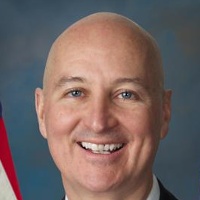
Pete Ricketts
Senator
NE
Pete Ricketts
Senator
NE
This resolution expresses the Senate's support for designating May 2025 as "National Beef Month." It recognizes the significant economic contributions of the U.S. cattle industry and highlights the nutritional value of beef. The bill serves as a formal acknowledgment of the importance of beef to American agriculture and consumers without enacting new laws.
This bill creates a new federal tax deduction for up to \$25,000 of reported employee tips and expands a tax credit for employer Social Security taxes paid on tips to include beauty service establishments.
Ted Cruz
Senator
TX
Ted Cruz
Senator
TX
The No Tax on Tips Act creates a new federal income tax deduction for qualified tips received by workers, capped at \$25,000 annually. This deduction can be claimed regardless of whether the taxpayer itemizes or takes the standard deduction. Additionally, the bill expands an existing tax credit for employers to include beauty service establishments that pay Social Security taxes on employee tips. These provisions are set to take effect for tax years beginning after December 31, 2024.
This resolution designates May 29, 2025, as "Mental Health Awareness in Agriculture Day" to highlight the severe mental health challenges faced by the agricultural workforce and reduce associated stigma.
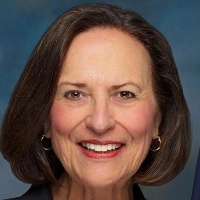
Deb Fischer
Senator
NE
Deb Fischer
Senator
NE
This resolution supports designating May 29, 2025, as "Mental Health Awareness in Agriculture Day." It aims to raise awareness about the significant mental health challenges faced by farmers and farmworkers, who experience disproportionately high rates of suicide. The day seeks to reduce the stigma associated with seeking mental health support within the agricultural industry.
The Honoring Our Fallen Heroes Act of 2025 establishes a presumption that certain cancers leading to death or disability in public safety officers are the result of on-duty exposure to carcinogens.

Amy Klobuchar
Senator
MN
Amy Klobuchar
Senator
MN
The Honoring Our Fallen Heroes Act of 2025 establishes a presumption that certain cancers leading to death or disability in public safety officers were caused by on-duty exposure to recognized carcinogens. This law defines specific exposure-related cancers and sets conditions, such as five years of service, for the presumption to apply. It also updates review processes for adding new cancers to the list and grants retroactive application and filing extensions for eligible past and present claims.
This resolution officially designates the week of May 11 through May 17, 2025, as National Police Week to honor law enforcement officers, remember those killed in the line of duty, and encourage public observance.
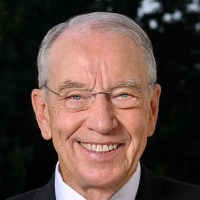
Charles Grassley
Senator
IA
Charles Grassley
Senator
IA
This resolution officially designates the week of May 11 through May 17, 2025, as "National Police Week." It serves to honor the valor and integrity of law enforcement officers across the nation. The resolution specifically remembers the officers killed in the line of duty during 2024 and encourages the public to observe this week to show appreciation for law enforcement personnel.
This Act establishes new federal requirements, including health documentation and age restrictions, for importing live dogs into the United States.
Charles Grassley
Senator
IA
Charles Grassley
Senator
IA
The Healthy Dog Importation Act establishes new federal requirements for bringing live dogs into the United States, mandating electronic health documentation, vaccinations, and permanent ID for most imports. It defines key roles like "importer" and "compensation" while outlining specific exceptions for returning pets or working dogs. The law requires the Secretary to create detailed regulations within 18 months, including establishing a central tracking database and the authority to charge necessary fees for verification.
This Act streamlines the process for developing, reviewing, and adopting conservation practice standards by prioritizing innovation, integrating new technologies, and increasing public input.

Joni Ernst
Senator
IA
Joni Ernst
Senator
IA
The Streamlining Conservation Practice Standards Act of 2025 aims to modernize and accelerate the process for developing and updating official conservation standards. It reforms grant programs to specifically fund the innovation and evaluation of new conservation technologies and management techniques. Furthermore, the bill mandates a regular, public review schedule for all existing standards, ensuring they integrate the latest advancements. Finally, it establishes a new, flexible administrative process to quickly approve interim standards that incorporate emerging technologies at the state level.
This bill establishes a four-year transitional Medicare coverage period for FDA-designated breakthrough medical devices to ensure prompt patient access while final coverage determinations are made.

Todd Young
Senator
IN
Todd Young
Senator
IN
This Act establishes a fast-track process to ensure Medicare coverage for medical devices officially designated as "breakthrough devices" by the FDA. Once designated, these devices receive a four-year transitional coverage period under Medicare Parts A and B. The legislation also mandates timely final coverage decisions and provides funding for the administrative oversight required by this new system.
This Act prohibits payment card networks and processors from forcing firearms retailers to use a unique merchant category code for credit or debit card transactions.
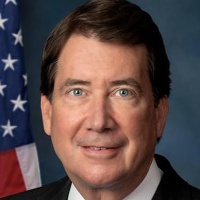
Bill Hagerty
Senator
TN
Bill Hagerty
Senator
TN
The Protecting Privacy in Purchases Act prohibits payment card networks and processors from requiring firearms retailers to use a unique Merchant Category Code (MCC) that singles them out. This ensures that credit and debit card transactions for firearms and ammunition are treated the same as general retail purchases. The Attorney General is tasked with enforcing this prohibition and reporting annually to Congress on compliance efforts.
The Vision Lab Choice Act of 2025 establishes new federal standards for vision plans, limiting contract lengths for optometrists and prohibiting plans from mandating specific labs or suppliers for doctors.

Kevin Cramer
Senator
ND
Kevin Cramer
Senator
ND
The Vision Lab Choice Act of 2025 aims to improve health care coverage under vision plans by setting limits on contract lengths between vision plans and optometrists. This bill also prevents vision plans from mandating which labs or suppliers optometrists must use for patient care. Furthermore, it clarifies state authority to enforce these new federal standards regarding vision benefit plans.
This bill strictly limits the TSA's use, collection, and storage of passenger biometric data via facial recognition technology, mandating opt-in consent and prohibiting surveillance outside of security checkpoints.

Jeff Merkley
Senator
OR
Jeff Merkley
Senator
OR
The Traveler Privacy Protection Act of 2025 strictly limits the Transportation Security Administration's (TSA) use of facial recognition technology during airport security screening. This bill establishes a default ban on collecting or storing passenger biometric data, requiring explicit opt-in consent for general passengers and clear opt-out rights for Trusted Traveler members. Furthermore, it imposes strict data minimization and storage limits, and prohibits the use of this technology for surveillance outside of the screening process.
The FARMER Act of 2025 modifies federal premium support for certain whole-farm crop insurance plans, increases the government subsidy for the supplemental coverage option, and mandates a study on expanding that supplemental coverage.
John Hoeven
Senator
ND
John Hoeven
Senator
ND
The FARMER Act of 2025 modifies federal crop insurance by increasing premium support for certain whole-farm revenue or yield protection plans. It also raises the government subsidy percentage for the Supplemental Coverage Option (SCO) and adjusts its coverage level calculations. Finally, the bill mandates a study on expanding the SCO to cover areas larger than 1,400 square miles.
This Act mandates that health plans cover medically necessary diagnosis and treatment for congenital anomalies or birth defects affecting the eyes, ears, teeth, mouth, or jaw, starting in 2026.

Tammy Baldwin
Senator
WI
Tammy Baldwin
Senator
WI
The Ensuring Lasting Smiles Act mandates that health plans cover medically necessary diagnosis and treatment for congenital anomalies or birth defects affecting the eyes, ears, teeth, mouth, or jaw. This coverage must apply to outpatient and inpatient care, including necessary dental and orthodontic support, unless the procedure is purely cosmetic. These new requirements take effect for plan years beginning on or after January 1, 2026.