Legislative Activity
Track Kweisi's sponsored bills, co-sponsored legislation, and voting record
This resolution urgently calls for the immediate delivery of humanitarian aid to address the severe hunger crisis in Gaza and demands the administration use all diplomatic means to secure hostage release and end the fighting.

Pramila Jayapal
Representative
WA
Pramila Jayapal
Representative
WA
This resolution formally expresses the House of Representatives' grave concern over the severe humanitarian crisis and widespread suffering of civilians in Gaza, alongside the plight of hostages. It urgently calls on the Administration to use all diplomatic tools to secure the release of all hostages. Furthermore, the bill demands the immediate delivery and secure distribution of essential humanitarian aid to address the catastrophic hunger crisis in Gaza.
This Act mandates that federal agencies provide clear reasons and future plans when cancelling small business contract solicitations and requires agency directors to assist affected small businesses in finding alternative opportunities.
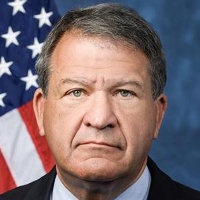
George Latimer
Representative
NY
George Latimer
Representative
NY
The Transparency and Predictability in Small Business Opportunities Act aims to provide small businesses with greater clarity when the government cancels a federal contract solicitation they bid on. The bill mandates that federal agencies must publicly disclose the reasons for cancellation and any plans to reissue the opportunity. Furthermore, it establishes a process where small businesses whose bids are cancelled without reissue will be referred to an agency director to help them find alternative contracting opportunities.
The Fair and Equal Housing Act of 2025 updates the Fair Housing Act to explicitly prohibit discrimination based on sexual orientation and gender identity, and expands protections against discrimination based on association or perceived identity.
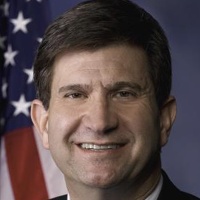
Bradley Schneider
Representative
IL
Bradley Schneider
Representative
IL
The Fair and Equal Housing Act of 2025 significantly updates existing fair housing laws to explicitly prohibit discrimination based on sexual orientation and gender identity. This legislation broadens protections to cover discrimination based on association or perceived association with protected groups. Furthermore, it strengthens anti-intimidation measures related to these newly defined protected characteristics in housing matters.
This resolution expresses strong support for designating June 6, 2025, as National Gun Violence Awareness Day and June 2025 as National Gun Violence Awareness Month to honor victims and promote awareness.
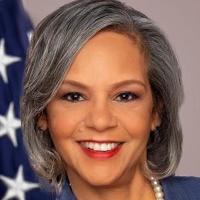
Robin Kelly
Representative
IL
Robin Kelly
Representative
IL
This resolution expresses strong support for designating June 6, 2025, as "National Gun Violence Awareness Day" and June 2025 as "National Gun Violence Awareness Month." It highlights the devastating scale of gun violence in the U.S., recognizing the thousands of annual deaths and injuries across all demographics. The bill encourages Americans to wear orange on the designated day to honor victims and promote increased awareness and community action regarding gun safety.
This Act restores the right to sue over disparate impact discrimination under Title VI, mandates equity compliance officers in federally funded schools, and establishes a Special Assistant for Equity and Inclusion within the Department of Education.
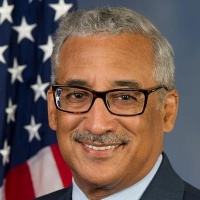
Robert Scott
Representative
VA
Robert Scott
Representative
VA
The Equity and Inclusion Enforcement Act of 2025 restores the right to sue for disparate impact violations under Title VI of the Civil Rights Act of 1964. It also mandates that all federally funded educational institutions designate an employee to coordinate Title VI compliance and publicly share their contact information. Finally, the Act establishes a new Special Assistant for Equity and Inclusion within the Department of Education to oversee and promote compliance efforts.
This act establishes fixed, non-renewable 18-year terms for future Supreme Court Justices and outlines a staggered appointment schedule, while also creating a temporary mechanism for filling vacancies below the nine-justice quorum.

Henry Johnson
Representative
GA
Henry Johnson
Representative
GA
The Supreme Court Tenure Establishment and Retirement Modernization Act of 2025 establishes fixed, non-renewable 18-year terms for all future Supreme Court Justices, with appointments staggered every two years. This legislation also outlines a process for phasing out current Justices upon the confirmation of new appointees. Finally, it grants the Chief Justice the authority to temporarily fill sudden vacancies below the standard nine-justice level using a randomly selected retired Justice.
This bill reauthorizes and increases mandatory funding for the Healthy Food Financing Initiative through fiscal year 2030 and beyond to support healthy food projects.

Shontel Brown
Representative
OH
Shontel Brown
Representative
OH
The Healthy Food Financing Initiative Reauthorization Act of 2025 ensures continued federal support for projects that improve access to healthy food options. This bill reauthorizes the initiative by significantly increasing mandatory funding levels, starting at \$25 million in FY 2026 and rising to \$50 million annually by FY 2030. These funds are drawn from the Commodity Credit Corporation to support healthy food infrastructure development.
This act increases the penalty-free withdrawal limit from retirement accounts for first-time homebuyers from $\$10,000$ to $\$50,000$.
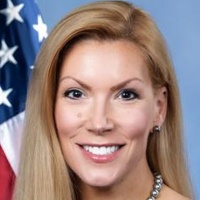
Beth Van Duyne
Representative
TX
Beth Van Duyne
Representative
TX
The Uplifting First-Time Homebuyers Act of 2025 significantly increases the penalty-free withdrawal limit from retirement accounts for first-time homebuyers. This legislation raises the maximum allowable distribution from $\$10,000$ to $\$50,000$. This change is designed to provide greater financial flexibility for individuals purchasing their first home, taking effect for tax years beginning after December 31, 2024.
This Act establishes a new federal grant program to provide operating support for high-quality public transit that prioritizes service improvements in underserved communities, while also increasing the federal share for rural transit operating costs.
Henry Johnson
Representative
GA
Henry Johnson
Representative
GA
The Stronger Communities through Better Transit Act establishes a new federal grant program to provide operating support for high-quality public transit services. This funding is specifically targeted to improve mobility and environmental outcomes, with a requirement that the majority of funds benefit underserved communities or areas of persistent poverty. The Act also increases the federal share for rural transit operating assistance up to 80%.
The Water Affordability, Transparency, Equity, and Reliability Act of 2025 establishes a dedicated trust fund financed by a corporate tax increase to improve water infrastructure, mandate affordability and equity reporting, and expand job training and assistance for underserved communities.
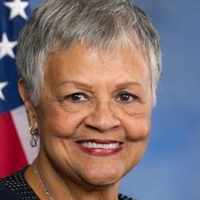
Bonnie Watson Coleman
Representative
NJ
Bonnie Watson Coleman
Representative
NJ
The Water Affordability, Transparency, Equity, and Reliability Act of 2025 establishes a dedicated federal Trust Fund, financed by an increase in the corporate tax rate, to support water infrastructure and affordability programs nationwide. The bill mandates a comprehensive EPA report analyzing water affordability, civil rights compliance, and public participation in water planning. It also significantly increases funding for household water well systems and revises state revolving loan fund rules to expand eligible projects, including lead line replacement and PFAS contamination cleanup. Finally, the Act creates new job training grants for the water sector and enhances drinking water assistance for colonias.
This resolution expresses the sense of the House of Representatives commending public servants and uniformed service members for their dedication throughout the year, particularly during Public Service Recognition Week.

Gerald Connolly
Representative
VA
Gerald Connolly
Representative
VA
This resolution expresses the sense of the House of Representatives commending public servants for their dedication and continued service to the United States. It officially designates the week of May 4 through May 10, 2025, as Public Service Recognition Week. The bill honors the vital contributions of federal, state, and local government employees and uniformed service members across the nation.
This bill expands the Family and Medical Leave Act (FMLA) to grant eligible employees up to 26 weeks of leave to care for a covered service member or for their own service-related injuries, while also broadening the definition of "family" for military leave purposes.
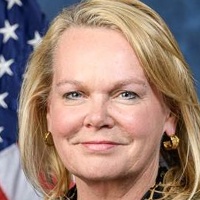
April McClain Delaney
Representative
MD
April McClain Delaney
Representative
MD
The MIL FMLA Act significantly expands existing family and medical leave protections under the FMLA for military families and veterans. It broadens the definition of covered family relationships to include domestic partners and other close relations when caring for a service member. The bill establishes a new entitlement of up to 26 workweeks of leave for caring for a covered service member or for a service member's own serious service-related injury or illness. These changes also apply to federal civilian employees, updating definitions and leave entitlements within Title 5 of the U.S. Code.
This Act mandates that health plans cover medically necessary treatment for congenital anomalies or birth defects affecting the eyes, ears, teeth, mouth, or jaw to restore normal function and appearance.
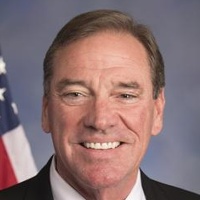
Neal Dunn
Representative
FL
Neal Dunn
Representative
FL
The Ensuring Lasting Smiles Act mandates that group health plans and insurance policies provide comprehensive coverage for medically necessary treatment related to congenital anomalies or birth defects affecting the eyes, ears, teeth, mouth, or jaw. This coverage must include services needed to restore normal function and appearance, including necessary dental and orthodontic support. Plans must apply cost-sharing rules no more restrictive than those for other medical benefits, excluding purely cosmetic procedures.
The Truth in Tariffs Act requires businesses, excluding small businesses, to clearly display the portion of a product's price attributable to covered tariffs imposed on or after January 20, 2025.
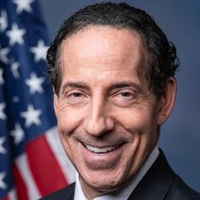
Jamie Raskin
Representative
MD
Jamie Raskin
Representative
MD
The Truth in Tariffs Act mandates that businesses clearly display the portion of a product's price attributable to "covered tariffs" imposed on or after January 20, 2025. This transparency requirement applies to sales made 30 days after enactment, excluding small business concerns. The Federal Trade Commission (FTC) is tasked with enforcement, treating non-compliance as an unfair or deceptive business practice.
The VA Employee Fairness Act of 2025 streamlines collective bargaining rules for Veterans Health Administration employees by modifying existing statutes while preserving the Secretary's authority regarding incentive pay and expedited hiring.
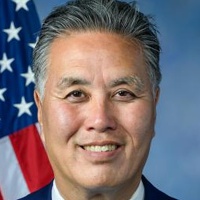
Mark Takano
Representative
CA
Mark Takano
Representative
CA
The VA Employee Fairness Act of 2025 modifies the collective bargaining rules for employees of the Veterans Health Administration (VHA) by streamlining existing statutes. This act removes outdated subsections related to bargaining and renumbers the remaining relevant section. Importantly, these changes do not affect the Secretary of Veterans Affairs' existing authority regarding incentive pay or expedited hiring processes.
This Act prohibits the advertising and provision of paid conversion therapy intended to change an individual's sexual orientation or gender identity, empowering the FTC and State Attorneys General to enforce these prohibitions.
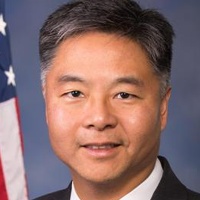
Ted Lieu
Representative
CA
Ted Lieu
Representative
CA
The Therapeutic Fraud Prevention Act of 2025 declares that practices attempting to change an individual's sexual orientation or gender identity for payment constitute an unfair and deceptive business practice. Citing professional consensus on the ineffectiveness and harm of such "conversion therapy," the bill prohibits its provision and advertising. Enforcement authority is granted to the Federal Trade Commission (FTC), and the law allows both the U.S. Attorney General and State Attorneys General to file civil actions against violators.
This Act expands the Occupational Safety and Health Act (OSHA) to explicitly cover all public employees of the United States, states, and local governments.

Chris Deluzio
Representative
PA
Chris Deluzio
Representative
PA
The Public Service Worker Protection Act expands the Occupational Safety and Health Act (OSHA) to explicitly cover all public employees, including those working for federal, state, and local governments. This change brings public sector workers under the general protections afforded by OSHA. While the expansion takes effect generally within 90 days, states without an existing OSHA plan are given a three-year transition period before federal oversight applies to their employees.
This bill bans the manufacture, sale, and transfer of specific semiautomatic assault weapons and large-capacity ammunition feeding devices while grandfathering existing possessions and establishing new transfer requirements.
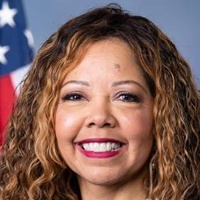
Lucy McBath
Representative
GA
Lucy McBath
Representative
GA
The Assault Weapons Ban of 2025 comprehensively defines and bans the manufacture, sale, and transfer of specific semiautomatic assault weapons and large capacity ammunition feeding devices. The bill grandfathers existing weapons but imposes new requirements for their secure storage and mandates dealer involvement for future private transfers. It also allows federal grant money to be used by states for buy-back programs targeting these banned items.
The Better CARE for Animals Act of 2025 strengthens the enforcement of the Animal Welfare Act by expanding investigative authority, establishing new civil penalties up to \$10,000 per day, and explicitly granting the Attorney General power to file civil actions, including seeking seizure and forfeiture of animals.
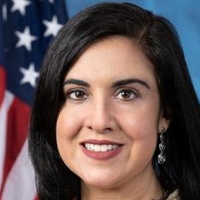
Nicole Malliotakis
Representative
NY
Nicole Malliotakis
Representative
NY
The Better CARE for Animals Act of 2025 significantly strengthens enforcement of the Animal Welfare Act by clarifying definitions and expanding the scope of investigations. It grants the Attorney General explicit authority to file civil actions seeking penalties up to $10,000 per day, and mandates that collected fines help cover temporary animal care costs. The bill also requires the Secretary of Agriculture and the Attorney General to establish a formal agreement for coordinated enforcement.
The Equality Act comprehensively prohibits discrimination based on sex, sexual orientation, and gender identity across key areas including public accommodations, employment, housing, credit, and jury service.
Mark Takano
Representative
CA
Mark Takano
Representative
CA
The Equality Act comprehensively expands federal civil rights protections against discrimination based on sex, sexual orientation, and gender identity across key areas of American life. It amends existing laws to prohibit discrimination in public accommodations, housing, credit, employment, and federal funding. The purpose of the bill is to provide consistent, explicit, and comprehensive remedies for individuals facing bias in these essential sectors.