Legislative Activity
Track Jim's sponsored bills, co-sponsored legislation, and voting record
This bill formally elects specific members to designated standing committees of the House of Representatives.
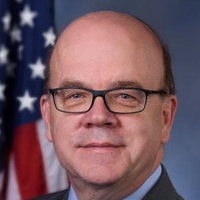
James McGovern
Representative
MA
James McGovern
Representative
MA
This bill formally establishes the appointments of specific members to various standing committees within the House of Representatives. It confirms the placement of Mr. Conaway, Mrs. Grijalva, and Mr. Walkinshaw onto committees such as Armed Services, Education and Workforce, Homeland Security, and Natural Resources.
This resolution immediately sets the expedited floor consideration process for House Bill 6039, waiving standard procedural objections and setting specific amendment and debate rules.
James McGovern
Representative
MA
James McGovern
Representative
MA
This resolution establishes the immediate consideration process for House Bill 6039, which aims to advance commonsense priorities. It waives standard procedural objections to expedite debate and a final vote on the bill. The process also includes specific rules for considering minority amendments and limits debate time before the final passage vote.
Here are one-sentence summaries for each bill described: **Commonsense Legislating Act (Small Business Funding):** This act extends support for small businesses seeking federal research funding by extending the FAST Program and mandating targeted assistance to increase participation from underrepresented regions and institutions. **Commonsense Legislating Act (Native Tourism Grants):** This legislation establishes new federal grant programs, funded at $35 million annually, to support and improve tourism and visitor experiences within Native American and Native Hawaiian communities. **Commonsense Legislating Act (Military Spouse Tax Credit):** This bill expands the Work Opportunity Tax Credit to include the spouses of active-duty military personnel as an eligible category for the tax incentive. **Commonsense Legislating Act (Veteran Mental Health Outreach):** This legislation mandates that the VA proactively offer annual mental health consultations and outreach to veterans already receiving disability compensation for a mental health condition. **Commonsense Legislating Act (Package Theft Protection):** This act strengthens federal protections by criminalizing the theft of packages handled by interstate carriers from the time of delivery until the recipient physically takes custody of the property. **Commonsense Legislating Act (Working Families Task Force):** This legislation creates an Interagency National Task Force on Working Families, chaired by the Secretary of Labor, to examine family challenges and develop concrete recommendations for improving living standards. **Commonsense Legislating Act (Fentanyl Disruption):** This bill establishes a high-level Fentanyl Disruption Steering Group within the National Security Council to coordinate and oversee all federal efforts aimed at stopping fentanyl trafficking across ten major government agencies. **Commonsense Legislating Act (House Review Hearing):** This legislation mandates that every standing committee in the House of Representatives must conduct a review hearing within one year to assess the implementation of this Act's provisions. **Commonsense Legislating Act (House Ethics Conduct):** This act amends the official conduct code for House personnel by prohibiting them from serving as an officer or director of any publicly traded company to prevent conflicts of interest. **Commonsense Legislating Act (PAYGO Budgetary Impact):** This legislation sets the procedural requirement for calculating the budgetary impact of the entire Act using the most recent official PAYGO statement, which must be published in the Congressional Record before the final vote. **Commonsense Legislating Act (Funding Allocations):** This act allocates specific additional funding amounts from unallocated Treasury funds for fiscal year 2026 to support diverse federal programs, including diabetes research, the Congressional Research Service, the Marine Corps, and HUD inspections.
James McGovern
Representative
MA
James McGovern
Representative
MA
This comprehensive bill addresses several distinct areas of federal policy, including extending support for small business research funding and increasing outreach to underserved institutions. It also establishes new grant programs to boost tourism in Native American and Native Hawaiian communities and expands the Work Opportunity Tax Credit to include military spouses. Furthermore, the Act mandates proactive mental health outreach for veterans with service-connected mental health disabilities and strengthens federal protections against interstate package theft.
This Act establishes a grant program to fund owners of intergenerational dwelling units for providing on-site services and support to grandfamilies.
James McGovern
Representative
MA
James McGovern
Representative
MA
The Grandfamily Housing Act of 2025 establishes a grant program to support owners of intergenerational dwelling units. These grants fund essential services like on-site coordinators, community outreach, and property maintenance for grandfamilies. The program aims to enhance housing stability and support services for grandparents raising grandchildren.
This bill, the Healthy Meals Help Kids Learn Act of 2025, increases federal reimbursement rates for school lunches and breakfasts starting in late 2025.
James McGovern
Representative
MA
James McGovern
Representative
MA
The Healthy Meals Help Kids Learn Act of 2025 aims to increase federal reimbursement rates for school meals. Specifically, it provides an additional 45 cents per lunch and 28 cents per breakfast served by school food authorities starting November 1, 2025. These adjusted rates will be subject to future inflation adjustments.
This Act mandates federal health programs like Medicare and Medicaid to cover medically necessary specialized foods and formulas prescribed for managing severe digestive or inherited metabolic disorders.
James McGovern
Representative
MA
James McGovern
Representative
MA
The Medical Foods and Formulas Access Act of 2025 mandates federal health programs, including Medicare and Medicaid, to cover medically necessary specialized foods and formulas prescribed for managing severe digestive or inherited metabolic disorders. This ensures patients with conditions like urea cycle disorders or short bowel syndrome receive essential, prescribed nutrition when standard food is insufficient. The bill aims to standardize access to these life-sustaining treatments across federal and state health plans.
This resolution establishes an expedited floor consideration process for H.R. 1834, waiving standard procedural hurdles to quickly bring the gridlock-breaking bill to a final vote.
James McGovern
Representative
MA
James McGovern
Representative
MA
This resolution immediately fast-tracks the consideration of H.R. 1834, waiving standard procedural hurdles to ensure a swift debate and vote. The bill is automatically considered with the text of H.R. 5450 and is subject to limited debate before a final vote. This streamlined process is designed to bypass typical legislative gridlock for this specific piece of legislation.
This bill establishes a six-year pilot program for selected hospitals to provide medically tailored, home-delivered meals and nutrition therapy to high-risk Medicare patients upon discharge to reduce hospital readmissions.
James McGovern
Representative
MA
James McGovern
Representative
MA
This bill establishes a six-year pilot program for hospitals to provide medically tailored, home-delivered meals and nutrition therapy to eligible Medicare patients upon discharge. The goal is to improve health outcomes and reduce hospital readmissions for individuals with diet-sensitive conditions who have difficulty with daily living activities. Participating hospitals will receive payment for these services, which must be provided at no out-of-pocket cost to the patient. The Secretary of Health and Human Services will evaluate the program's effectiveness using data collected from the participating sites.
This constitutional amendment proposes strict limits on individual and corporate spending in federal elections, mandates a public financing system for qualifying candidates, and reserves the right for states to regulate their own local campaign finance.
James McGovern
Representative
MA
James McGovern
Representative
MA
This proposed constitutional amendment seeks to fundamentally reform campaign finance for federal elections by setting strict contribution limits for individuals and banning all corporate political spending. It mandates Congress to establish a public financing system covering at least 80% of allowable campaign costs for qualifying candidates. Furthermore, the amendment explicitly reserves the authority for states to set their own reasonable limits on campaign finance for state and local elections.
This resolution recognizes the harm caused by the drug diethylstilbestrol (DES), designates a week for awareness, and calls for the FDA to apologize and restore funding for the DES Follow-Up Study.
James McGovern
Representative
MA
James McGovern
Representative
MA
This resolution recognizes the significant harm caused by the drug diethylstilbestrol (DES) to those exposed in utero. It officially designates a week in April 2025 as DES Awareness Week to bring attention to the ongoing health consequences. Furthermore, the bill supports restoring funding for the DES Follow-Up Study and urges the FDA to issue a formal apology to affected families.
This resolution urges the United States to lead global efforts to halt the nuclear arms race, reduce existing stockpiles, and implement verifiable measures to prevent nuclear war.
James McGovern
Representative
MA
James McGovern
Representative
MA
This resolution urges the United States to immediately prioritize global nuclear disarmament and lead the world back from the brink of nuclear war. It calls on the President to negotiate verifiable arms reduction treaties with all nuclear states to halt the arms race and prevent catastrophic conflict. Key actions include renouncing "first use," ending hair-trigger alert postures, and ceasing the development of new nuclear weapons. Furthermore, the bill demands comprehensive support, cleanup, and economic transition planning for communities and workers affected by past and present nuclear activities.
This resolution expedites the House vote on H.R. 185, which shields current Medicaid and SNAP benefits from cuts during budget reconciliation until 2029.
James McGovern
Representative
MA
James McGovern
Representative
MA
This resolution sets the expedited procedural path for the House to immediately consider and vote on H.R. 185, waiving standard rules to limit debate. The bill itself establishes a temporary safeguard preventing budget reconciliation legislation from cutting benefits or eligibility for current Medicaid or SNAP recipients until January 20, 2029. Once passed by the House, the bill will be promptly sent to the Senate for consideration.
This bill directs the Secretary of the Interior to study the suitability of the Deerfield River system and its tributaries for inclusion in the National Wild and Scenic Rivers System.
James McGovern
Representative
MA
James McGovern
Representative
MA
This Act officially designates the Deerfield River system, including its major branches and several key tributaries in Massachusetts and Vermont, for a formal study under the Wild and Scenic Rivers Act. The Secretary of the Interior must complete this comprehensive study and submit a report to Congress within three years of receiving the necessary funding. This process will determine the suitability of these waterways for potential inclusion in the National Wild and Scenic Rivers System.
This resolution establishes the procedural framework and rules for the immediate House floor consideration and final vote on H.R. 185.
James McGovern
Representative
MA
James McGovern
Representative
MA
This resolution establishes the procedural framework for the House of Representatives to immediately debate and vote on H.R. 185. It streamlines the legislative process by waiving standard procedural objections, setting specific time limits for debate, and allowing for the automatic adoption of a minority-submitted amendment. Ultimately, this measure clears the path for a final floor vote on the bill.
Here are the one-liner summaries for each bill: * **Responsible Legislating Act:** Extends the livestock mandatory reporting program through 2025 to ensure continued market transparency for the livestock industry. * **Veteran Apprenticeship Legislation:** Connects veterans to registered apprenticeship opportunities by integrating program information into transition counseling and creating a centralized search website. * **Disabled Federal Employee Retention Act:** Allows federal employees in high-risk roles who become disabled to transfer to administrative positions while retaining their enhanced retirement benefits. * **Retirement Savings Overhaul:** Expands retirement security by increasing automatic enrollment, boosting tax credits for small businesses, and providing greater flexibility for older workers and those with student debt. * **Boots to Business Program:** Provides comprehensive entrepreneurship training and resources to service members, veterans, and their families to help them launch small businesses. * **Human Trafficking Penalty Enhancement:** Increases prison sentences for human trafficking and sexual coercion crimes committed near schools or involving students. * **National Museum of Asian Pacific American History and Culture Commission:** Establishes a privately funded commission to study the feasibility of creating a National Museum of Asian Pacific American History and Culture in Washington, D.C. * **Semiconductor Foreign Investment Strategy:** Directs the SelectUSA program to develop strategies for attracting foreign investment into domestic semiconductor manufacturing to strengthen the U.S. supply chain. * **FEMA Equipment Grant Review:** Establishes a standardized federal review process for FEMA grant requests involving specialized or non-standardized equipment to ensure operational needs are met. * **NASA Property Leasing Extension:** Extends NASA’s authority to lease underutilized property to private entities for one year, generating revenue to support facility maintenance. * **House Oversight Rule:** Requires House committees to conduct oversight hearings on the implementation of this Act within one year of its passage. * **Whistleblower Protection Rule:** Amends House rules to prohibit the public disclosure of a whistleblower’s identity to ensure their safety and encourage reporting of misconduct. * **Port Foreign Ownership Study:** Mandates an independent study of foreign ownership at major U.S. container ports to assess economic security risks and recommend protective policies. * **PAYGO Budgetary Statement:** Requires the House Budget Committee Chairman to enter an official deficit impact statement into the Congressional Record before the bill’s final vote. * **Credit Union Board Meeting Reform:** Replaces the mandatory monthly board meeting requirement for federal credit unions with a tiered schedule based on the institution's age and financial performance. * **Fiscal Year 2026 Appropriations:** Provides targeted funding increases for specific federal programs, including telehealth, energy data analysis, and agency operations.
James McGovern
Representative
MA
James McGovern
Representative
MA
Here are the high-level summaries for each bill: **Responsible Legislating Act** This bill extends the Livestock Mandatory Reporting program through 2025, ensuring that meat packers continue to provide essential pricing and supply data to the USDA. This extension preserves market transparency, supporting fairer competition and informed decision-making for ranchers and industry analysts. **Veterans Apprenticeship Opportunities** This legislation improves veteran career transitions by integrating apprenticeship information into military employment counseling and creating a centralized, user-friendly website. By providing detailed program specifics, it helps veterans more easily identify and pursue skilled trade opportunities that match their professional goals. **Federal Disability Retirement Protections** This act allows federal employees in high-risk roles who suffer duty-related disabilities to transfer to administrative positions while retaining their enhanced retirement benefits. By preserving these benefits, the policy encourages agencies to retain experienced personnel and provides financial security for those injured in the line of duty. **Retirement Savings Modernization** This comprehensive reform aims to increase retirement security by expanding automatic 401(k) enrollment, boosting tax credits for small businesses, and offering new flexibility for student loan matching and penalty-free hardship withdrawals. It also introduces a national "lost and found" database to help workers recover forgotten retirement accounts from past employers. **Boots to Business Program** This program provides comprehensive entrepreneurship training and resources to service members, veterans, and their families to help them launch small businesses. By integrating these resources into existing transition assistance, the initiative aims to foster economic self-sufficiency within the military community. **Enhanced Penalties for Human Trafficking** This bill increases prison sentences by up to five years for human trafficking and sexual coercion crimes committed near schools or college campuses. By creating these "protected zones," the legislation aims to deter predators and provide stronger legal safeguards for students. **National Museum of Asian Pacific American History and Culture Commission** This legislation establishes an eight-member commission to study the feasibility of creating a National Museum of Asian Pacific American History and Culture in Washington, D.C. The commission is tasked with developing a comprehensive plan for the museum’s establishment and operation, with the requirement that all funding be sourced from private donations rather than federal tax dollars. **Semiconductor Foreign Investment Strategy** This bill directs the Department of Commerce to collaborate with states to identify and remove barriers to foreign investment in U.S. semiconductor manufacturing. By streamlining these efforts, the legislation seeks to strengthen the domestic supply chain and protect critical technology from foreign adversaries. **FEMA Equipment Grant Oversight** This act establishes a standardized review process for FEMA grant requests involving equipment that lacks national safety standards or is not on the agency’s pre-approved list. The policy aims to balance the need for local operational flexibility with federal oversight to prevent wasteful spending on unproven gear. **NASA Property Leasing Extension** This bill extends NASA’s authority to lease underutilized property to private and academic entities for one additional year. The revenue generated from these leases is reinvested into facility repairs, helping to address aging infrastructure without relying solely on taxpayer funding. **House Oversight Hearing Requirement** This internal House rule mandates that every standing committee conduct at least one oversight hearing within one year of the Act’s passage. This requirement ensures that the implementation of the law receives direct, public scrutiny from Congress. **Whistleblower Protection Rule** This rule prohibits House members and staff from publicly disclosing the identity of individuals who report government misconduct under whistleblower protection laws. By safeguarding these identities, the policy encourages transparency and accountability while maintaining limited exceptions for public interest. **Port Foreign Ownership Study** This legislation mandates an independent study of foreign ownership at the nation’s 15 largest container ports to assess potential risks to U.S. economic and national security. The findings will help lawmakers determine if new policies are needed to prevent foreign entities from gaining excessive control over critical trade infrastructure. **PAYGO Budgetary Transparency** This bill requires the House Budget Committee Chairman to enter an official "Budgetary Effects" statement into the Congressional Record before a final vote. This process ensures that lawmakers and the public have a clear, authoritative projection of the bill’s impact on the national deficit. **Credit Union Board Meeting Reform** This act replaces the monthly meeting requirement for federal credit union boards with a tiered schedule based on the institution's financial health. While new or lower-rated credit unions must continue to meet monthly, well-rated, established institutions may meet less frequently to reduce administrative burdens. **Fiscal Year 2026 Appropriations** This legislation provides targeted funding increases for specific federal programs, including telehealth support for nursing facilities, energy data analysis, and operational maintenance for the Army. These appropriations are narrowly focused to sustain essential agency activities and infrastructure.