Here are the one-liner summaries for each bill: * **Responsible Legislating Act:** Extends the livestock mandatory reporting program through 2025 to ensure continued market transparency for the livestock industry. * **Veteran Apprenticeship Legislation:** Connects veterans to registered apprenticeship opportunities by integrating program information into transition counseling and creating a centralized search website. * **Disabled Federal Employee Retention Act:** Allows federal employees in high-risk roles who become disabled to transfer to administrative positions while retaining their enhanced retirement benefits. * **Retirement Savings Overhaul:** Expands retirement security by increasing automatic enrollment, boosting tax credits for small businesses, and providing greater flexibility for older workers and those with student debt. * **Boots to Business Program:** Provides comprehensive entrepreneurship training and resources to service members, veterans, and their families to help them launch small businesses. * **Human Trafficking Penalty Enhancement:** Increases prison sentences for human trafficking and sexual coercion crimes committed near schools or involving students. * **National Museum of Asian Pacific American History and Culture Commission:** Establishes a privately funded commission to study the feasibility of creating a National Museum of Asian Pacific American History and Culture in Washington, D.C. * **Semiconductor Foreign Investment Strategy:** Directs the SelectUSA program to develop strategies for attracting foreign investment into domestic semiconductor manufacturing to strengthen the U.S. supply chain. * **FEMA Equipment Grant Review:** Establishes a standardized federal review process for FEMA grant requests involving specialized or non-standardized equipment to ensure operational needs are met. * **NASA Property Leasing Extension:** Extends NASA’s authority to lease underutilized property to private entities for one year, generating revenue to support facility maintenance. * **House Oversight Rule:** Requires House committees to conduct oversight hearings on the implementation of this Act within one year of its passage. * **Whistleblower Protection Rule:** Amends House rules to prohibit the public disclosure of a whistleblower’s identity to ensure their safety and encourage reporting of misconduct. * **Port Foreign Ownership Study:** Mandates an independent study of foreign ownership at major U.S. container ports to assess economic security risks and recommend protective policies. * **PAYGO Budgetary Statement:** Requires the House Budget Committee Chairman to enter an official deficit impact statement into the Congressional Record before the bill’s final vote. * **Credit Union Board Meeting Reform:** Replaces the mandatory monthly board meeting requirement for federal credit unions with a tiered schedule based on the institution's age and financial performance. * **Fiscal Year 2026 Appropriations:** Provides targeted funding increases for specific federal programs, including telehealth, energy data analysis, and agency operations.
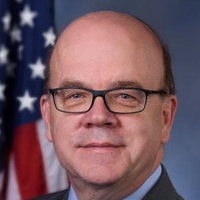
James "Jim" McGovern
Representative
MA-2
Here are the high-level summaries for each bill: **Responsible Legislating Act** This bill extends the Livestock Mandatory Reporting program through 2025, ensuring that meat packers continue to provide essential pricing and supply data to the USDA. This extension preserves market transparency, supporting fairer competition and informed decision-making for ranchers and industry analysts. **Veterans Apprenticeship Opportunities** This legislation improves veteran career transitions by integrating apprenticeship information into military employment counseling and creating a centralized, user-friendly website. By providing detailed program specifics, it helps veterans more easily identify and pursue skilled trade opportunities that match their professional goals. **Federal Disability Retirement Protections** This act allows federal employees in high-risk roles who suffer duty-related disabilities to transfer to administrative positions while retaining their enhanced retirement benefits. By preserving these benefits, the policy encourages agencies to retain experienced personnel and provides financial security for those injured in the line of duty. **Retirement Savings Modernization** This comprehensive reform aims to increase retirement security by expanding automatic 401(k) enrollment, boosting tax credits for small businesses, and offering new flexibility for student loan matching and penalty-free hardship withdrawals. It also introduces a national "lost and found" database to help workers recover forgotten retirement accounts from past employers. **Boots to Business Program** This program provides comprehensive entrepreneurship training and resources to service members, veterans, and their families to help them launch small businesses. By integrating these resources into existing transition assistance, the initiative aims to foster economic self-sufficiency within the military community. **Enhanced Penalties for Human Trafficking** This bill increases prison sentences by up to five years for human trafficking and sexual coercion crimes committed near schools or college campuses. By creating these "protected zones," the legislation aims to deter predators and provide stronger legal safeguards for students. **National Museum of Asian Pacific American History and Culture Commission** This legislation establishes an eight-member commission to study the feasibility of creating a National Museum of Asian Pacific American History and Culture in Washington, D.C. The commission is tasked with developing a comprehensive plan for the museum’s establishment and operation, with the requirement that all funding be sourced from private donations rather than federal tax dollars. **Semiconductor Foreign Investment Strategy** This bill directs the Department of Commerce to collaborate with states to identify and remove barriers to foreign investment in U.S. semiconductor manufacturing. By streamlining these efforts, the legislation seeks to strengthen the domestic supply chain and protect critical technology from foreign adversaries. **FEMA Equipment Grant Oversight** This act establishes a standardized review process for FEMA grant requests involving equipment that lacks national safety standards or is not on the agency’s pre-approved list. The policy aims to balance the need for local operational flexibility with federal oversight to prevent wasteful spending on unproven gear. **NASA Property Leasing Extension** This bill extends NASA’s authority to lease underutilized property to private and academic entities for one additional year. The revenue generated from these leases is reinvested into facility repairs, helping to address aging infrastructure without relying solely on taxpayer funding. **House Oversight Hearing Requirement** This internal House rule mandates that every standing committee conduct at least one oversight hearing within one year of the Act’s passage. This requirement ensures that the implementation of the law receives direct, public scrutiny from Congress. **Whistleblower Protection Rule** This rule prohibits House members and staff from publicly disclosing the identity of individuals who report government misconduct under whistleblower protection laws. By safeguarding these identities, the policy encourages transparency and accountability while maintaining limited exceptions for public interest. **Port Foreign Ownership Study** This legislation mandates an independent study of foreign ownership at the nation’s 15 largest container ports to assess potential risks to U.S. economic and national security. The findings will help lawmakers determine if new policies are needed to prevent foreign entities from gaining excessive control over critical trade infrastructure. **PAYGO Budgetary Transparency** This bill requires the House Budget Committee Chairman to enter an official "Budgetary Effects" statement into the Congressional Record before a final vote. This process ensures that lawmakers and the public have a clear, authoritative projection of the bill’s impact on the national deficit. **Credit Union Board Meeting Reform** This act replaces the monthly meeting requirement for federal credit union boards with a tiered schedule based on the institution's financial health. While new or lower-rated credit unions must continue to meet monthly, well-rated, established institutions may meet less frequently to reduce administrative burdens. **Fiscal Year 2026 Appropriations** This legislation provides targeted funding increases for specific federal programs, including telehealth support for nursing facilities, energy data analysis, and operational maintenance for the Army. These appropriations are narrowly focused to sustain essential agency activities and infrastructure.
Massive Policy Shift Targets Retirement Savings, Port Security, and Veteran Careers: The Responsible Legislating Act Breakdown
This sweeping legislation, known as the Responsible Legislating Act, touches everything from your 401(k) to the security of the ports where your online orders land. It’s a massive package that fundamentally changes how Americans save for the future, how veterans transition to civilian life, and how the government handles everything from high-risk employee injuries to semiconductor manufacturing. If you’ve ever felt like the system makes it too hard to save or too confusing to switch careers after military service, this bill is aiming to move the needle.
A Major Retirement Tune-Up
For most of us, the biggest impact hits our wallets and our future. The bill mandates automatic enrollment for new 401(k) and 403(b) plans, meaning you’re in by default unless you opt out. It also tackles the 'student loan vs. retirement' dilemma by letting employers match your student loan payments with retirement contributions. If you’re a small business owner with 50 or fewer employees, the bill more than doubles your tax credits for starting a plan. However, there’s a catch for high earners: catch-up contributions for those making significant income must now be made on a Roth (after-tax) basis, which means no immediate tax break on that extra savings. It also raises the age for forced withdrawals (RMDs) to 75 eventually, giving your money more time to grow.
Boots, Business, and Better Transitions
For the military community, the bill gets practical. It creates the 'Boots to Business' program, offering a roadmap for veterans and their spouses to start small businesses with SBA-backed training. It also fixes a major information gap by requiring the Department of Labor to build a dedicated website for registered apprenticeships. Imagine a veteran moving to a new city; they can now search by location and job type to find a trade program that actually values their service and lists out-of-pocket costs upfront. On the federal side, there’s a new safety net for high-risk workers like FBI agents or firefighters. If they’re injured on the job, they can move to a desk job without losing their specialized retirement benefits—though this only applies to injuries happening two years after the bill passes, leaving those injured sooner in the lurch.
Security from the Ports to the Classroom
Beyond the home front, the bill looks at national vulnerabilities. It orders a deep-dive study into foreign ownership—specifically by Chinese and Russian entities—at our 15 largest ports to see if they have the power to mess with our supply chains. It also tries to bring semiconductor manufacturing back to U.S. soil by directing SelectUSA to cut through the red tape for foreign investors. Closer to home, the bill gets tough on crime in educational settings, adding up to five years of prison time for human trafficking or sexual coercion if it happens within 1,000 feet of a school or university.
Accountability and the Fine Print
To make sure this isn't just more red tape, the bill forces House committees to hold oversight hearings within a year to prove the law is actually working. It also adds a layer of protection for whistleblowers, banning the House from publicly outing people who report misconduct unless a committee holds a high-bar two-thirds vote. For those who belong to a credit union, you might see fewer board meetings; healthy credit unions can now meet six times a year instead of twelve, potentially lowering costs for members. While the bill is packed with benefits, the medium level of vagueness in how we 'ensure' foreign investments don't help adversaries means we'll need to watch the rollout closely.