Legislative Activity
Track Laurel's sponsored bills, co-sponsored legislation, and voting record
The Enhanced Iran Sanctions Act of 2025 mandates broad economic and immigration sanctions on foreign individuals, entities, and financial institutions that support Iran’s nuclear, missile, drone, or terrorist activities, while specifically targeting the country's petroleum and petrochemical sectors.
Michael Lawler
Representative
NY
Michael Lawler
Representative
NY
The Enhanced Iran Sanctions Act of 2025 strengthens U.S. policy by imposing mandatory sanctions on foreign persons and financial institutions that support Iran’s nuclear, ballistic missile, drone, and terrorist activities. The bill specifically targets Iran’s petroleum and petrochemical sectors to cut off funding for these malign programs. Additionally, it expands the State Department’s "Rewards for Justice" program to incentivize the reporting of individuals who evade these sanctions.
This bill expresses support for the National FFA Organization by designating February 21-28, 2026, as National FFA Week and celebrating the 50th anniversary of the Alaska State FFA Association.
Tracey Mann
Representative
KS
Tracey Mann
Representative
KS
This resolution expresses support for the National FFA Organization and designates February 21–28, 2026, as National FFA Week. It recognizes the FFA's vital role in developing future leaders through agricultural education. The bill also celebrates the 50th anniversary of the chartering of the Alaska State FFA Association.
The Iran Human Rights, Internet Freedom, and Accountability Act of 2026 aims to support the Iranian people by expanding internet access, strengthening sanctions against regime officials, and establishing a Treasury initiative to combat Iranian government corruption and kleptocracy.
Michael Lawler
Representative
NY
Michael Lawler
Representative
NY
The Iran Human Rights, Internet Freedom, and Accountability Act of 2026 aims to support the Iranian people by expanding access to uncensored internet and communication technologies. The bill strengthens U.S. policy against regime repression by mandating investigations into human rights abuses and establishing a new Treasury initiative to combat corruption and money laundering by Iranian officials. Additionally, it enhances congressional oversight of sanctions and promotes independent media to counter state-sponsored censorship.
This bill exempts specific less-than-lethal projectile devices from federal firearm restrictions, excise taxes, and National Firearms Act regulations to promote de-escalation innovation in law enforcement.
Scott Fitzgerald
Representative
WI
Scott Fitzgerald
Representative
WI
The Law-Enforcement Innovate to De-Escalate Act aims to promote de-escalation by exempting specific, clearly defined less-than-lethal projectile devices from federal firearm restrictions and excise taxes. This legislation provides a formal process for determining which devices qualify for these exemptions under both federal law and the National Firearms Act. The bill also modernizes tax regulations by exempting qualifying less-than-lethal devices and their ammunition from federal excise taxes.
This bill mandates the creation of secure electronic communication systems for incarcerated individuals that prohibit the monitoring of attorney-client communications while establishing strict warrant requirements for accessing retained message content.
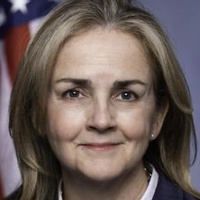
Madeleine Dean
Representative
PA
Madeleine Dean
Representative
PA
This bill mandates the creation of secure electronic communication systems for incarcerated individuals, ensuring that privileged communications with their attorneys cannot be monitored. It establishes strict rules for retaining and accessing the contents of these electronic messages, requiring a warrant for law enforcement access and prohibiting the review of privileged information by prosecutors. Ultimately, this Act aims to safeguard the attorney-client privilege in the digital age for those in federal custody.
The TEMP Act mandates the Federal Crop Insurance Corporation to research and develop a nationwide, index-based insurance policy to protect crops against frost or cold weather losses.
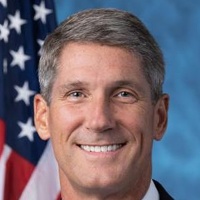
C. Franklin
Representative
FL
C. Franklin
Representative
FL
The TEMP Act mandates the Federal Crop Insurance Corporation to research and develop a new, nationwide index-based insurance policy to protect crops against losses caused by frost or severe cold weather. This research must evaluate the effectiveness of index-based risk management for catastrophic weather events. A report detailing the findings and recommendations is required one year after enactment.
This Act allows businesses in federally or state-declared disaster areas to transfer certain unused general business credits from prior years to cover eligible operating expenses incurred after the disaster.
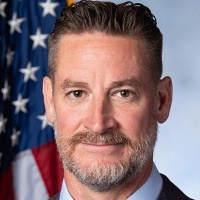
W. Steube
Representative
FL
W. Steube
Representative
FL
The Disaster Zone Energy Affordability and Investment Act allows businesses in federally or state-declared disaster areas to transfer certain unused general business tax credits from prior years. This provision is designed to help affected taxpayers by converting these credits into usable funds based on their eligible operating expenditures within the disaster zone. The credits apply to investments made following disasters declared after December 31, 2023.
The SELF DRIVE Act of 2026 establishes federal safety requirements, testing rules, and data reporting standards for the safe deployment and research of automated driving systems in vehicles.
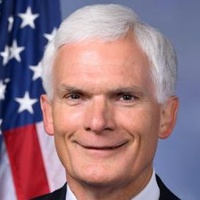
Robert Latta
Representative
OH
Robert Latta
Representative
OH
The SELF DRIVE Act of 2026 establishes a federal framework for the safe testing and deployment of automated driving systems (ADS) across the United States. It mandates that manufacturers submit a comprehensive "safety case" demonstrating their ADS will not pose an unreasonable risk before vehicles can be sold. Furthermore, the bill creates a national repository for automated vehicle crash data and clarifies federal preemption over state laws regarding ADS sales and reporting.
This Act prohibits the air transport of adult roosters, with an exemption for legitimate commercial agricultural purposes, to enhance aviation safety and combat illegal fighting operations.
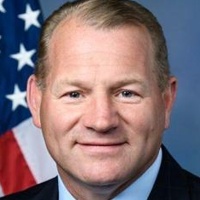
Troy Nehls
Representative
TX
Troy Nehls
Representative
TX
The No Flight, No Fight Act of 2026 restricts the air transportation of adult roosters to enhance aviation safety and combat illegal activities like cockfighting. The bill prohibits air carriers from knowingly transporting adult roosters as cargo, with an exemption for shipments related to certified commercial farms for legitimate agricultural purposes. Enforcement authority rests with the Secretary of Transportation, and violations are subject to civil penalties.
This bill mandates that unspent federal agency funds be split, with most going to debt reduction, some rolled over for one year, and a small portion used for employee retention bonuses, while also limiting future budget requests.
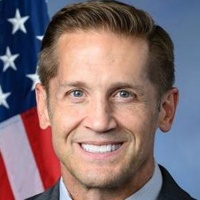
Rich McCormick
Representative
GA
Rich McCormick
Representative
GA
The Incentivize Savings Act mandates how federal agencies must handle unspent appropriations by dedicating the majority to debt reduction and allowing a portion for employee retention bonuses. This legislation also restricts future budget requests to only account for inflation unless the agency fully spends its prior allocation. Ultimately, the bill aims to encourage fiscal responsibility by linking unspent funds to debt reduction and limiting budget growth.
This bill establishes eligibility requirements for amateur athletic organizations based on biological sex, prohibiting individuals whose sex is male from competing in female-designated amateur athletic competitions.
W. Steube
Representative
FL
W. Steube
Representative
FL
This Act establishes specific definitions for "female," "male," and "sex" based on biological reproductive systems for amateur athletics. It mandates that organizations recognized by the U.S. Olympic & Paralympic Committee must prohibit individuals identified as male from competing in competitions designated for females. This aims to protect competitive opportunities specifically for biological females in amateur sports.
The TRAIN Act establishes a subpoena process allowing copyright owners to obtain records from generative AI developers regarding the use of their copyrighted works in AI training.
Madeleine Dean
Representative
PA
Madeleine Dean
Representative
PA
The TRAIN Act establishes a formal subpoena process allowing copyright owners to obtain information from generative AI developers. This mechanism enables copyright holders to request records regarding the use of their specific copyrighted works in training AI models. The bill aims to provide transparency and a means for copyright owners to protect their rights against unauthorized use in AI development.
The PRESS Act establishes a new federal crime and associated penalties for manufacturing or distributing drug-making equipment with the intent that it will be used to produce drugs illegally imported into the United States.
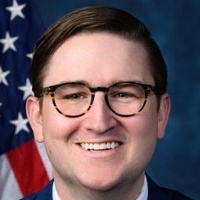
Addison McDowell
Representative
NC
Addison McDowell
Representative
NC
The PRESS Act establishes a new federal crime for manufacturing or distributing equipment used to make illegal drugs if that equipment is intended for substances that will be unlawfully imported into the United States. This legislation amends the Controlled Substances Act to create specific prison sentences for these supply chain offenses. The Act also directs the Sentencing Commission to update federal guidelines to reflect these new penalties.
This bill mandates that state Medicaid programs cover whole genome and whole exome sequencing for children with specific medical needs starting in 2027.
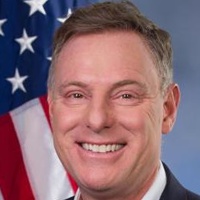
Scott Peters
Representative
CA
Scott Peters
Representative
CA
The Genomic Answers for Children’s Health Act of 2026 mandates that state Medicaid programs cover whole genome and whole exome sequencing for children with specific medical conditions, effective January 1, 2027. This sequencing is to be covered as a first-tier diagnostic test for genetic disorders, rare diseases, or conditions of unknown origin. The bill also directs the HHS Secretary to promote awareness and address implementation challenges for this new mandatory benefit.
This bill expresses support for the Iranian people protesting for a free and democratic Iran while condemning the Islamic Republic's violent repression.
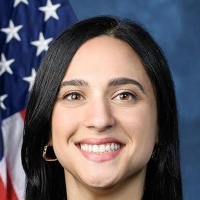
Yassamin Ansari
Representative
AZ
Yassamin Ansari
Representative
AZ
This resolution expresses strong support for the Iranian people protesting for freedom, democracy, and basic human rights against the repressive Islamic Republic. It condemns the regime's brutal crackdown on demonstrators and demands an end to violence and the release of political prisoners. Furthermore, it urges the U.S. government to work with allies to deter further lethal violence against protesters.
The PACK Act establishes federal standards to prevent deceptive environmental marketing by requiring third-party certification and clear, evidence-based labeling for all recyclable, compostable, and reusable consumer packaging claims.
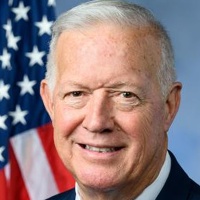
Randy Weber
Representative
TX
Randy Weber
Representative
TX
The Packaging and Claims Knowledge (PACK) Act of 2025 amends the Federal Trade Commission Act to prevent deceptive environmental marketing on consumer packaging. It establishes strict standards for "recyclable," "compostable," and "reusable" claims, requiring third-party certification and clear consumer disclosures. The bill aims to increase transparency by ensuring that environmental claims are backed by scientific evidence and actual infrastructure availability.
This bill establishes TRICARE coverage for fertility treatments, including IVF, for active duty service members and their dependents beginning October 1, 2027.
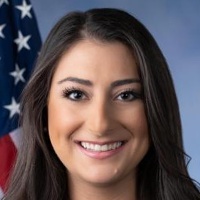
Sara Jacobs
Representative
CA
Sara Jacobs
Representative
CA
This bill, the Bipartisan IVF for Military Families Act, mandates that TRICARE provide coverage for fertility treatments, including IVF, for active duty service members and their dependents starting in late 2027. The legislation outlines specific coverage limits for egg retrievals and embryo transfers while prohibiting the use of DoD funds for certain procedures like preimplantation genetic screening. It also requires the establishment of a program to coordinate this specialized fertility care for military families.
This bill authorizes Congress to award Congressional Gold Medals to the 1980 U.S. Men's Olympic Ice Hockey team for their historic "Miracle on Ice" victory.
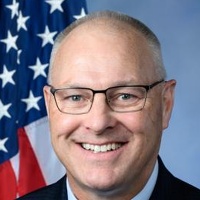
Pete Stauber
Representative
MN
Pete Stauber
Representative
MN
This bill, the Miracle on Ice Congressional Gold Medal Act, officially authorizes Congress to award Congressional Gold Medals to the 1980 U.S. Men's Olympic Ice Hockey Team for their historic "Miracle on Ice" victory. The medals will be struck by the Treasury and permanently displayed at specific national sports museums. The Act also permits the sale of duplicate bronze medals to cover production costs.
This bill establishes a new "family purpose" nonimmigrant visa category allowing relatives of U.S. citizens and LPRs to visit temporarily for up to 90 days annually, subject to financial and insurance requirements.
Scott Peters
Representative
CA
Scott Peters
Representative
CA
The Temporary Family Visitation Act establishes a new nonimmigrant visa category specifically for relatives of U.S. citizens and lawful permanent residents to visit the United States for family purposes. This visa limits stays to a maximum of 90 days per calendar year and requires financial support, medical insurance, and a sworn declaration of intent to depart. Individuals admitted under this category are prohibited from changing their status while in the U.S.
This act mandates the continued implementation of anti-trafficking programs for children based on specific GAO recommendations and requires a progress report to Congress.
Clarence Owens
Representative
UT
Clarence Owens
Representative
UT
The Preventing Child Trafficking Act of 2025 mandates the continuation and enhancement of federal anti-trafficking programs specifically for children. This law requires key Justice Department and Health and Human Services offices to implement recommendations from a 2023 Government Accountability Office report. Furthermore, the responsible office must establish measurable performance goals for these programs and report on their progress to Congress.