Legislative Activity
Track Mike's sponsored bills, co-sponsored legislation, and voting record
This act modernizes water infrastructure by defining and funding the adoption of intelligent technologies for improved water and wastewater management.
Robert Bresnahan
Representative
PA
Robert Bresnahan
Representative
PA
The Water Infrastructure Modernization Act of 2025 updates federal water pollution control grants to prioritize and fund "intelligent water infrastructure technology." This technology utilizes real-time monitoring, AI, and advanced sensors to improve the efficiency, reliability, and resilience of water and wastewater systems. The bill modifies grant uses to specifically cover the implementation of these smart technologies and increases the authorization of appropriations.
This act repeals specific sections of a prior reconciliation act to restore previous laws affecting American families and farmers.
Jahana Hayes
Representative
CT
Jahana Hayes
Representative
CT
The Restoring Food Security for American Families and Farmers Act of 2025 aims to strengthen domestic food security by repealing specific sections of a prior reconciliation act. This action effectively revives the original laws that were previously amended by the repealed provisions. The bill seeks to revert existing agricultural and food-related statutes to their pre-amendment status.
This bill establishes a permanent Special Envoy for the Human Rights of LGBTQI+ Peoples within the Department of State to advance U.S. policy countering global criminalization, violence, and discrimination against LGBTQI+ individuals.
Robert Garcia
Representative
CA
Robert Garcia
Representative
CA
This bill, the International Human Rights Defense Act of 2025, establishes a permanent Special Envoy for the Human Rights of LGBTQI+ Peoples within the Department of State. It codifies U.S. policy to actively combat international criminalization, violence, and discrimination against LGBTQI+ individuals worldwide. The legislation also mandates enhanced reporting on these abuses in annual human rights reports and authorizes assistance to support related protection efforts abroad.
This bill mandates the addition of the 74 crew members of the USS Frank E. Evans, killed in action on June 3, 1969, to the Vietnam Veterans Memorial Wall.
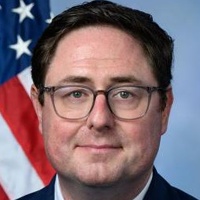
Mike Flood
Representative
NE
Mike Flood
Representative
NE
The USS Frank E. Evans Act mandates the Secretary of Defense to add the names of the 74 crew members lost when the USS Frank E. Evans sank on June 3, 1969, to the Vietnam Veterans Memorial Wall. This action must be completed within one year of the Act becoming law. The Secretary is required to consult with relevant authorities regarding space on the Memorial Wall for these additions.
This Act ensures uninterrupted funding and operation for the SNAP and WIC programs through fiscal year 2026, even if appropriations for the Department of Agriculture are delayed.
Jahana Hayes
Representative
CT
Jahana Hayes
Representative
CT
The Keep SNAP and WIC Funded Act of 2025 ensures that the Supplemental Nutrition Assistance Program (SNAP) and the Special Supplemental Nutrition Program for Women, Infants, and Children (WIC) continue to operate without interruption in fiscal year 2026 if standard appropriations are delayed. If funding lapses, the Secretary of Agriculture is authorized to use funds from the Treasury to provide benefits and reimburse state agencies. This special funding remains in effect until full appropriations are enacted or until September 30, 2026.
This Act establishes strict standards, training, and reporting requirements for federal immigration enforcement personnel regarding the use of force, identification, and equipment.
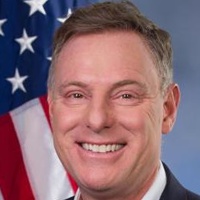
Scott Peters
Representative
CA
Scott Peters
Representative
CA
The Stop Excessive Force in Immigration Act of 2025 establishes strict new standards for the use of non-deadly force by federal immigration personnel, requiring proportionality and de-escalation efforts. The bill mandates identification requirements, restricts the use of certain crowd-control equipment, and imposes new body camera and detailed reporting mandates. Furthermore, it creates affirmative duties for officers to intervene against excessive force and requires annual training on these new policies.
This Act establishes new regulations and serial number requirements for tableting and encapsulating machines and their critical parts to combat illicit drug manufacturing.
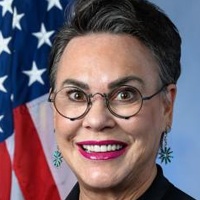
Harriet Hageman
Representative
WY
Harriet Hageman
Representative
WY
The Fight Illicit Pill Presses Act amends the Controlled Substances Act to regulate equipment used in illicit drug manufacturing. This legislation requires manufacturers and distributors of tableting and encapsulating machines, and their critical parts, to apply permanent serial numbers to these items. The bill also prohibits the removal or alteration of these required serial numbers.
The RESTRAIN Act prohibits the United States from conducting any explosive testing of nuclear weapons starting in fiscal year 2026, while still permitting subcritical nuclear tests.
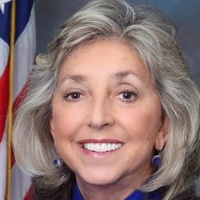
Dina Titus
Representative
NV
Dina Titus
Representative
NV
The RESTRAIN Act prohibits the United States from conducting any explosive testing of nuclear weapons or any other nuclear explosion, effective in fiscal year 2026 and beyond. This legislation specifically bans the use of authorized funds for such testing. However, the Act explicitly allows for the continuation of subcritical nuclear tests.
This bill extends and modifies various tax credits for energy production, efficiency improvements, and clean vehicle adoption to lower energy costs and support American energy leadership.
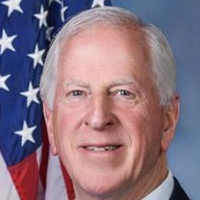
Mike Thompson
Representative
CA
Mike Thompson
Representative
CA
The American Energy Independence and Affordability Act is a comprehensive bill designed to lower energy costs by extending and adjusting key tax incentives across energy production, efficiency, and clean vehicle adoption. It stabilizes support for renewable energy manufacturing, extends deadlines for energy-efficient building credits, and ensures consumer incentives for electric vehicles remain available through 2032. Overall, the legislation aims to provide long-term certainty for energy investments and consumer adoption of cleaner technologies.
This bill implements the transfer and investment of frozen Russian sovereign assets into a dedicated Ukraine Support Fund, mandating regular aid disbursements and requiring diplomatic engagement with allies.
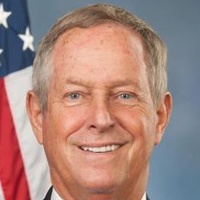
Joe Wilson
Representative
SC
Joe Wilson
Representative
SC
The REPO for Ukrainians Implementation Act of 2025 formally recognizes international calls to repurpose frozen Russian sovereign assets to aid Ukraine. This bill grants the President authority to transfer non-confiscated Russian assets into the Ukraine Support Fund, where they must be invested in U.S. government debt. Furthermore, the Secretary of State is mandated to obligate at least $250 million from the fund to Ukraine every quarter. The Act also requires the President to report on the location of these Russian assets globally and directs diplomatic efforts to encourage allies to contribute quarterly.
This resolution officially recognizes the religious and historical significance of the festival of Diwali for Indian-American communities across the United States.
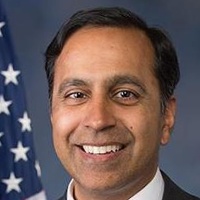
Raja Krishnamoorthi
Representative
IL
Raja Krishnamoorthi
Representative
IL
This resolution formally recognizes the significant religious and historical importance of the festival of Diwali to Indian-American communities across the nation. Congress acknowledges Diwali as the festival of lights, celebrated by Hindus, Sikhs, and Jains for its symbolism of knowledge, peace, and the triumph of good over evil. By passing this, the House expresses respect for the Indian diaspora and appreciates the strong partnership between the United States and India.
This bill mandates the designation of the Russian Federation as a state sponsor of terrorism if the Secretary of State cannot certify the safe return and reintegration of Ukrainian children abducted since the 2022 invasion.
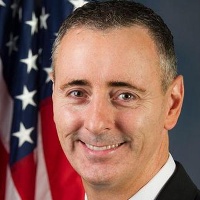
Brian Fitzpatrick
Representative
PA
Brian Fitzpatrick
Representative
PA
This bill mandates the Secretary of State to designate the Russian Federation as a state sponsor of terrorism if Russia fails to ensure the safe return and reintegration of Ukrainian children abducted since the 2022 invasion. The designation triggers existing sanctions unless the Secretary can certify that all forcibly deported children are safely reunited with their families. Removal of this designation requires Russia to cease terrorism support and meet strict criteria regarding the return of all displaced children.
This act stops paying Members of Congress if they fail to pass a budget resolution and all necessary appropriations bills by the start of the fiscal year on October 1st.
Scott Peters
Representative
CA
Scott Peters
Representative
CA
The No Budget, No Pay Act mandates that Members of Congress will not receive their salary if they fail to pass both the budget resolution and all regular appropriations bills by the start of the new fiscal year on October 1st. Pay will be withheld for every day after October 1st until both requirements are met. Furthermore, this legislation explicitly prohibits any retroactive pay for the period during which Congress was non-compliant. The provisions of this Act are set to take effect on February 1, 2027.
This resolution condemns the October 7th Hamas attacks, demands the immediate and unconditional surrender of Hamas and the release of all hostages, and reaffirms support for Israel's right to self-defense while condemning global antisemitism.
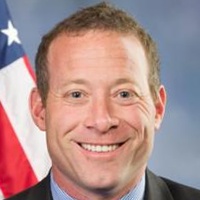
Josh Gottheimer
Representative
NJ
Josh Gottheimer
Representative
NJ
This resolution strongly condemns the brutal October 7th attacks by Hamas, demanding the immediate and unconditional surrender of the terrorist group and the release of all hostages, including Americans. It reaffirms Israel's right to self-defense while urging international action against Hamas and condemning the global surge in antisemitism. The measure serves as a formal statement of U.S. policy and support following the attacks.
This resolution supports designating September 30, 2025, as "Impact Aid Recognition Day" to celebrate the 75th anniversary of the federal program that financially supports school districts impacted by tax-exempt federal property and federally connected students.
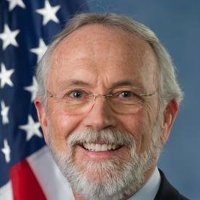
Dan Newhouse
Representative
WA
Dan Newhouse
Representative
WA
This resolution designates September 30, 2025, as "Impact Aid Recognition Day" to celebrate the 75th anniversary of the Impact Aid program. The program provides essential financial assistance to local school districts that educate students living on tax-exempt federal property. This recognition underscores Congress's continued commitment to ensuring quality education for federally connected students.
This resolution expresses the U.S. Congress's deep concern over the escalating threats and human rights abuses against Coptic Christians in Egypt while reaffirming the importance of the U.S.-Egypt partnership.
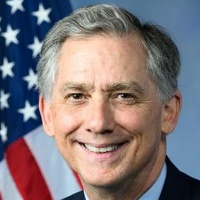
J. Hill
Representative
AR
J. Hill
Representative
AR
This resolution expresses the strong concern of Congress regarding the urgent threats and severe restrictions on religious freedom facing Coptic Christians in Egypt. It highlights issues including unfair arrests, violence, and the abduction of women and girls, urging the Egyptian government to ensure equal rights and end impunity for attacks. While acknowledging the vital U.S.-Egypt partnership on security, the bill stresses that protecting human rights is essential to that relationship.
The Co-Location Energy Act streamlines the process for developing solar and wind energy projects on federal lands already covered by existing energy leases, contingent upon the current leaseholder's consent.
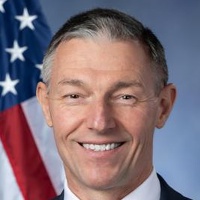
Mike Kennedy
Representative
UT
Mike Kennedy
Representative
UT
The Co-Location Energy Act aims to streamline the development of solar and wind energy projects by allowing them to be built on federal land already covered by existing energy leases. This process requires the explicit permission of the current leaseholder for both site evaluation and project permitting. Furthermore, the Act directs the Secretary of the Interior to expedite environmental reviews for certain renewable energy activities on these sites.
The Child Care for Every Community Act establishes a national framework to guarantee universal access to high-quality, regulated early learning programs with mandated national standards and comparable pay for staff.
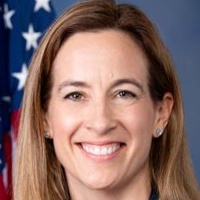
Mikie Sherrill
Representative
NJ
Mikie Sherrill
Representative
NJ
The Child Care for Every Community Act establishes a national framework to guarantee universal access to high-quality, regulated child care and early learning programs for every young child. It mandates federal standards for quality, ensures child care staff receive pay comparable to K-12 employees, and requires local coordination with school systems. Furthermore, the bill protects existing state funding levels and caps family fees based on income.
The Ejiao Act of 2025 prohibits the knowing trade of donkeys, donkey hides, and ejiao products within U.S. commerce to combat the devastating impact of ejiao production on global donkey populations.
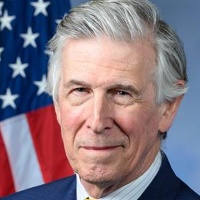
Donald Beyer
Representative
VA
Donald Beyer
Representative
VA
The Ejiao Act of 2025 prohibits the knowing trade, import, and export of donkeys, donkey hides, and ejiao products within U.S. commerce due to the devastating impact of the ejiao trade on global donkey populations. This legislation establishes significant civil and criminal penalties for violations, including substantial fines and imprisonment. Furthermore, the Act grants enforcement authority to agencies like U.S. Customs and Border Protection and mandates the forfeiture of illegal goods and related equipment.
This resolution condemns using federal regulatory power or litigation to suppress lawful political speech critical of a party or the President, warning against authoritarianism.

Yassamin Ansari
Representative
AZ
Yassamin Ansari
Representative
AZ
This resolution strongly condemns attempts to use federal regulatory power or litigation to suppress lawful speech critical of a political party or the President. It reaffirms the fundamental importance of the First Amendment and warns that such actions resemble tactics used by authoritarian regimes. The bill urges government agencies to protect free expression and ensure accountability, not political censorship.