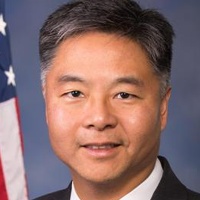
Legislative Activity
Track Ted's sponsored bills, co-sponsored legislation, and voting record
The Fairness, Inclusion, Rehabilitation, and Expungement for Incarcerated Firefighters Act (FIRE Act) extends workplace safety and wage protections to incarcerated firefighters, provides grants for state compliance and reentry programs, and establishes a process for expunging certain past convictions.
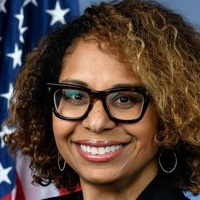
Sydney Kamlager-Dove
Representative
CA
Sydney Kamlager-Dove
Representative
CA
The Fairness, Inclusion, Rehabilitation, and Expungement for Incarcerated Firefighters Act (FIRE Act) ensures incarcerated firefighters receive workplace safety protections under OSHA and fair wage standards under the FLSA. The bill also establishes grant programs to help states implement these safety measures and support reentry services for former incarcerated firefighters. Finally, it creates a process for eligible individuals to petition the court to expunge certain past criminal convictions.
This Act mandates the National Park Service to establish a program to reduce and eliminate the sale and distribution of disposable plastic products, like single-use water bottles and utensils, across all national park units.

Mike Quigley
Representative
IL
Mike Quigley
Representative
IL
The Reducing Waste in National Parks Act mandates the National Park Service (NPS) to establish a program to significantly reduce or eliminate the sale and distribution of disposable plastic products, including single-use water bottles, across all park units. Regional directors must implement these changes while considering operational costs, visitor safety regarding water access, and vendor contracts. The law also requires proactive visitor education and biennial reviews to assess the program's effectiveness and public impact.
This resolution recognizes the vital economic and educational contributions of California's public higher education systems—UC, CSU, and CCC—and reaffirms commitment to their support.
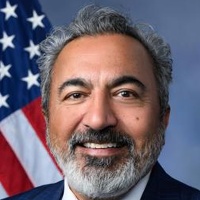
Ami Bera
Representative
CA
Ami Bera
Representative
CA
This resolution formally recognizes the critical importance of California's three public higher education systems—UC, CSU, and CCC—to the state's economy and workforce development. It highlights the massive scale of these institutions and their vital role in providing access and economic mobility for millions of students. Ultimately, the measure reaffirms the United States' commitment to supporting these essential public educational pillars.
The MARSHALS Act restructures the U.S. Marshals Service, moving its organization and leadership entirely under the judicial branch, overseen by the Chief Justice and a new Board.
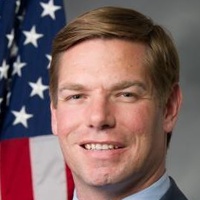
Eric Swalwell
Representative
CA
Eric Swalwell
Representative
CA
The MARSHALS Act fundamentally restructures the United States Marshals Service (USMS), moving its organization entirely into the judicial branch. This bill establishes that the Director and all U.S. Marshals will be appointed by the Chief Justice, subject to oversight from a new Board. The legislation also clarifies the USMS's authority to protect federal judicial personnel and outlines specific conditions under which the Service can assist the Department of Justice.
The College for All Act of 2025 establishes federal-state partnerships and grants to eliminate tuition and fees at public and tribal colleges, boosts Pell Grants, and increases funding for minority-serving institutions.

Pramila Jayapal
Representative
WA
Pramila Jayapal
Representative
WA
The College for All Act of 2025 establishes a Federal-State partnership to eliminate tuition and required fees at public and Tribal colleges for eligible students, while significantly increasing Federal Pell Grant maximum awards and expanding eligibility to include many "Dreamer students." The bill also creates new grant programs to cover tuition at private non-profit HBCUs and MSIs, and funds initiatives to improve student success and support for low-income and first-generation students. Finally, it increases overall appropriations for HBCUs, Tribal Colleges, and other Minority-Serving Institutions.
The DEFIANCE Act of 2025 establishes a federal civil right of action against the creation, possession with intent to share, or sharing of nonconsensual sexually explicit digital forgeries, or "deepfakes."

Alexandria Ocasio-Cortez
Representative
NY
Alexandria Ocasio-Cortez
Representative
NY
The DEFIANCE Act of 2025 establishes a federal civil cause of action against the creation, possession with intent to share, or sharing of nonconsensual intimate digital forgeries, often known as deepfakes. This legislation updates existing law to specifically address image-based sexual abuse created through AI or digital manipulation, regardless of whether the image is labeled as fake. Victims can sue for significant statutory damages, attorney's fees, and injunctive relief to stop the spread of the harmful content. The Act ensures that this new federal standard does not preempt or limit stronger existing State or Tribal laws.
This Act mandates the inclusion of Asian American, Native Hawaiian, and Pacific Islander history across federally supported K-12 American history and civics education programs and assessments.

Grace Meng
Representative
NY
Grace Meng
Representative
NY
This Act mandates the inclusion of Asian American, Native Hawaiian, and Pacific Islander (AANHPI) history across federally supported K-12 American history and civics education programs. It recognizes the vital, yet often omitted, contributions of AANHPI communities while addressing historical exclusion and systemic racism. The legislation directs educational programs to partner with the Smithsonian's Asian Pacific American Center to develop accurate and comprehensive curricula. This ensures AANHPI history is integrated into national assessments and teacher training.
The Fit to Serve Act prohibits discrimination against service members and recruits in the Armed Forces based on their gender identity.
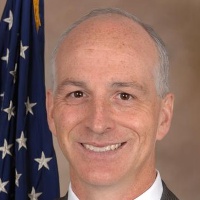
Adam Smith
Representative
WA
Adam Smith
Representative
WA
The Fit to Serve Act prohibits the U.S. Armed Forces from discriminating against service members based on their gender identity. This means military branches cannot set different standards, involuntarily discharge personnel, or deny medically necessary healthcare due to a service member's gender identity. The bill ensures equal opportunity for joining, serving, and receiving care regardless of one's internal sense of self.
This act establishes fixed, non-renewable 18-year terms for future Supreme Court Justices and outlines a staggered appointment schedule, while also creating a temporary mechanism for filling vacancies below the nine-justice quorum.
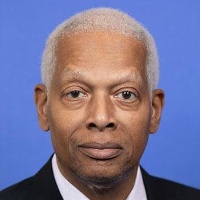
Henry Johnson
Representative
GA
Henry Johnson
Representative
GA
The Supreme Court Tenure Establishment and Retirement Modernization Act of 2025 establishes fixed, non-renewable 18-year terms for all future Supreme Court Justices, with appointments staggered every two years. This legislation also outlines a process for phasing out current Justices upon the confirmation of new appointees. Finally, it grants the Chief Justice the authority to temporarily fill sudden vacancies below the standard nine-justice level using a randomly selected retired Justice.
This act increases the penalty-free withdrawal limit from retirement accounts for first-time homebuyers from $\$10,000$ to $\$50,000$.
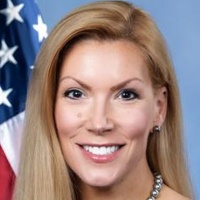
Beth Van Duyne
Representative
TX
Beth Van Duyne
Representative
TX
The Uplifting First-Time Homebuyers Act of 2025 significantly increases the penalty-free withdrawal limit from retirement accounts for first-time homebuyers. This legislation raises the maximum allowable distribution from $\$10,000$ to $\$50,000$. This change is designed to provide greater financial flexibility for individuals purchasing their first home, taking effect for tax years beginning after December 31, 2024.
This Act establishes mandatory ethics codes, recusal standards, and enhanced financial disclosure requirements for Supreme Court Justices and federal judges.
Henry Johnson
Representative
GA
Henry Johnson
Representative
GA
The Supreme Court Ethics, Recusal, and Transparency Act of 2025 establishes a mandatory, public code of conduct and a formal complaint process for Supreme Court Justices, modeled after procedures for lower federal judges. The bill also institutes stricter disclosure requirements for gifts and financial ties, and mandates judicial disqualification in cases involving recent lobbying contact or significant financial relationships with involved parties. Furthermore, it creates new review panels for disqualification motions and requires parties and *amici* to disclose financial supporters connected to the case.
This Act codifies the Six Assurances made to Taiwan and establishes a mandatory Congressional review process for any executive action that would alter U.S. policy regarding arms sales, mediation, or Taiwan's sovereignty status.
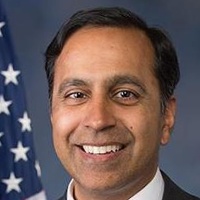
Raja Krishnamoorthi
Representative
IL
Raja Krishnamoorthi
Representative
IL
The Six Assurances to Taiwan Act codifies the historical U.S. commitments known as the Six Assurances, reinforcing the foundation of U.S. policy toward Taiwan. It explicitly states that the U.S. has not agreed to set a date for ending arms sales or to consult with Beijing on those sales. Furthermore, the Act establishes a mandatory Congressional review process before the President can pause arms sales or take actions that significantly alter the U.S. position on Taiwan's sovereignty. This legislation aims to ensure stability in the Taiwan Strait by upholding these long-standing policy guidelines.
This Act establishes a new federal grant program to provide operating support for high-quality public transit that prioritizes service improvements in underserved communities, while also increasing the federal share for rural transit operating costs.
Henry Johnson
Representative
GA
Henry Johnson
Representative
GA
The Stronger Communities through Better Transit Act establishes a new federal grant program to provide operating support for high-quality public transit services. This funding is specifically targeted to improve mobility and environmental outcomes, with a requirement that the majority of funds benefit underserved communities or areas of persistent poverty. The Act also increases the federal share for rural transit operating assistance up to 80%.
This Act establishes anti-retaliation protections for employees who report security vulnerabilities or violations related to artificial intelligence systems to government officials, Congress, or internally.
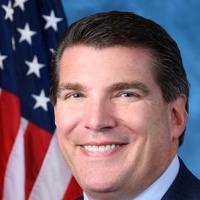
Jay Obernolte
Representative
CA
Jay Obernolte
Representative
CA
The AI Whistleblower Protection Act establishes clear definitions for AI-related security vulnerabilities and violations within the technology sector. This bill creates robust anti-retaliation protections for employees who report concerns about these issues to government officials, Congress, or internally. Individuals who face punishment for whistleblowing can file complaints with the Secretary of Labor or sue in federal court, with significant remedies available upon winning their case. Crucially, these protections cannot be waived by any employment contract or agreement.
This bill prohibits civilians from purchasing, owning, or possessing enhanced body armor, with exceptions for government entities and law enforcement personnel.
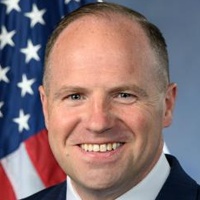
Timothy Kennedy
Representative
NY
Timothy Kennedy
Representative
NY
The Aaron Salter, Jr., Responsible Body Armor Possession Act prohibits civilians from purchasing, owning, or possessing "enhanced body armor," defined as gear meeting or exceeding NIJ RF1 protection standards. This ban includes exceptions for federal, state, and local government agencies, as well as covered law enforcement officers. Knowingly violating this new federal prohibition carries penalties including fines and up to five years in prison.
This resolution expresses the House's view that President Trump must immediately submit plans to Congress for accepting a jumbo jet gift from Qatar to comply with the Foreign Emoluments Clause.
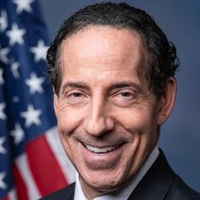
Jamie Raskin
Representative
MD
Jamie Raskin
Representative
MD
This resolution expresses the sense of the House that President Trump must comply with the Foreign Emoluments Clause regarding a reported gift of a jumbo jet from Qatar. It calls on the President to immediately submit all plans for accepting this significant gift to Congress. The bill emphasizes that the Constitution requires Congressional consent before the President can accept valuable items from foreign governments.
This bill establishes mandatory minimum registered nurse-to-patient staffing ratios in hospitals to enhance patient safety, enforces these standards across federal healthcare programs, and funds initiatives to support the nursing workforce.

Janice Schakowsky
Representative
IL
Janice Schakowsky
Representative
IL
The Nurse Staffing Standards for Hospital Patient Safety and Quality Care Act of 2025 establishes mandatory minimum registered nurse-to-patient ratios across various hospital units to enhance patient safety and care quality. This legislation requires hospitals to implement detailed staffing plans, ensures enforcement through federal programs like Medicare and Medicaid, and supports the nursing workforce through expanded financial aid and retention initiatives. Furthermore, the bill protects nurses who refuse unsafe assignments and establishes clear mechanisms for reporting violations.
This bill prohibits the use of federal funds to implement Executive Order 14160, which sought to limit birthright citizenship guaranteed by the Fourteenth Amendment.
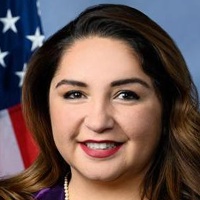
Delia Ramirez
Representative
IL
Delia Ramirez
Representative
IL
The Born in the USA Act of 2025 declares that Executive Order 14160, which attempted to restrict birthright citizenship, is unconstitutional and contrary to the 14th Amendment. This Act prohibits the use of any federal funds to implement or enforce that Executive Order. It affirms the established constitutional right to birthright citizenship for nearly everyone born on U.S. soil.
This Act establishes a comprehensive U.S. strategy for the Pacific Islands region, mandates regular strategy reports, extends diplomatic immunities to the Pacific Islands Forum, and requires coordination with allies on regional assistance.
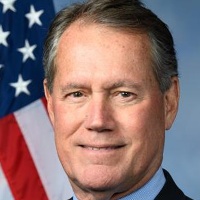
Ed Case
Representative
HI
Ed Case
Representative
HI
The Pacific Partnership Act formally establishes the U.S. commitment to strengthening its comprehensive policy toward the Pacific Islands region, emphasizing peace, security, and prosperity. It mandates the President to develop and submit a detailed "Strategy for Pacific Partnership" to Congress by 2026 and 2030, outlining diplomatic, economic, and security goals. Furthermore, the bill enhances coordination with allies on aid delivery and grants the Pacific Islands Forum diplomatic immunities. Finally, it requires enhanced reporting from the State Department on transnational issues affecting the region.
The Water Affordability, Transparency, Equity, and Reliability Act of 2025 establishes a dedicated trust fund financed by a corporate tax increase to improve water infrastructure, mandate affordability and equity reporting, and expand job training and assistance for underserved communities.
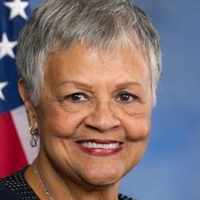
Bonnie Watson Coleman
Representative
NJ
Bonnie Watson Coleman
Representative
NJ
The Water Affordability, Transparency, Equity, and Reliability Act of 2025 establishes a dedicated federal Trust Fund, financed by an increase in the corporate tax rate, to support water infrastructure and affordability programs nationwide. The bill mandates a comprehensive EPA report analyzing water affordability, civil rights compliance, and public participation in water planning. It also significantly increases funding for household water well systems and revises state revolving loan fund rules to expand eligible projects, including lead line replacement and PFAS contamination cleanup. Finally, the Act creates new job training grants for the water sector and enhances drinking water assistance for colonias.