
Legislative Activity
Track John's sponsored bills, co-sponsored legislation, and voting record
The FIRE Act of 2025 establishes a NOAA-led program to enhance wildfire forecasting, detection, and warning systems through advanced technology and collaborative research testbeds.
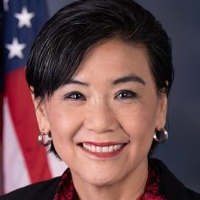
Judy Chu
Representative
CA
Judy Chu
Representative
CA
The FIRE Act of 2025 establishes a dedicated program within NOAA to enhance wildfire forecasting, detection, and risk communication. By leveraging advanced satellite technology, atmospheric modeling, and new research testbeds, the legislation aims to improve early response efforts and reduce the loss of life and property caused by wildfires.
This bill expresses the House of Representatives' desire to keep the United States Postal Service (USPS) as an independent entity within the Federal Government, protecting it from privatization. It emphasizes the USPS's importance to the mailing industry, its role in connecting communities, and the potential negative impacts of privatization on prices, services, and infrastructure.
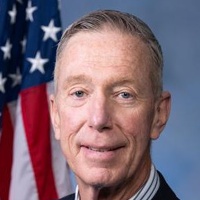
Stephen Lynch
Representative
MA
Stephen Lynch
Representative
MA
This bill expresses the House of Representatives' view that Congress should act to maintain the United States Postal Service (USPS) as an independent entity within the Federal Government. It emphasizes the USPS's role as a self-sustaining service vital to the economy and national connectivity. The resolution discourages privatization, citing concerns about increased costs, reduced services, and damage to critical infrastructure.
This bill recognizes the significant contributions of tax-exempt fraternal benefit societies to communities across the United States through charitable activities, volunteer work, and financial support for their members, and expresses Congressional support for their continued promotion.
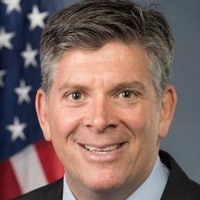
Darin LaHood
Representative
IL
Darin LaHood
Representative
IL
This bill recognizes the significant historical and ongoing contributions of tax-exempt fraternal benefit societies to communities across the United States through charitable activities, volunteer work, and financial support for members. It expresses the sense of Congress that these societies are a valuable support system that addresses unmet needs and generates substantial returns to the U.S. through their tax-exempt status. The bill also advocates for the continued promotion of fraternal benefit societies.
The Federal Firefighters Families First Act aims to improve pay equity, cap the regular workweek at 60 hours, and include scheduled overtime in retirement benefit calculations for federal firefighters.

Gerald Connolly
Representative
VA
Gerald Connolly
Representative
VA
The Federal Firefighters Families First Act aims to improve pay equity, recruitment, and retention for federal firefighters by modernizing pay computation and establishing a maximum 60-hour regular workweek. Additionally, the bill ensures that regularly scheduled overtime is included in the calculation of federal retirement annuities. These measures seek to align federal firefighter compensation more closely with municipal standards and provide greater financial security for their families.
The Global Health, Empowerment and Rights Act prevents the U.S. government from denying foreign aid to nongovernmental organizations based on the legal health services they provide or the advocacy they conduct using their own private funds.
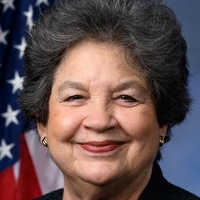
Lois Frankel
Representative
FL
Lois Frankel
Representative
FL
The Global Health, Empowerment and Rights Act prevents the U.S. government from denying foreign aid to nongovernmental organizations based on the legal health services they provide using their own private funds. It ensures that these organizations are not penalized for offering counseling or referrals that comply with local laws. Additionally, the bill prohibits the imposition of restrictive advocacy and lobbying requirements on these groups that exceed those applied to U.S.-based organizations.
Expresses the House of Representatives' disapproval of the President's decision to withdraw the United States from the Paris Agreement, urging the President to reverse his decision and Congress to prioritize climate change leadership.
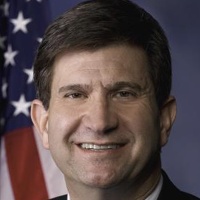
Bradley Schneider
Representative
IL
Bradley Schneider
Representative
IL
This bill expresses the House of Representatives' disapproval of the President's decision to withdraw the United States from the Paris Agreement, recognizing climate change as a threat and highlighting the increasing costs of extreme weather events. It commends entities supporting the Agreement, urges the President to reconsider, and encourages Congress to prioritize U.S. leadership on climate change.
This bill prohibits the use of federal funds for a first-use nuclear strike unless Congress has explicitly authorized such action through a declaration of war.
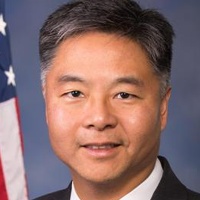
Ted Lieu
Representative
CA
Ted Lieu
Representative
CA
The Restricting First Use of Nuclear Weapons Act of 2025 prohibits the use of federal funds for a first-use nuclear strike unless Congress has explicitly authorized such an action through a declaration of war. This legislation aims to establish a constitutional check on presidential authority by ensuring that the decision to initiate nuclear conflict rests with the people’s representatives. The bill maintains the President's ability to authorize retaliatory nuclear strikes in response to an existing nuclear attack.
The Assuring Medicare’s Promise Act of 2025 strengthens the Medicare Hospital Insurance Trust Fund by expanding the net investment income tax and directing its revenue toward long-term program solvency.

Lloyd Doggett
Representative
TX
Lloyd Doggett
Representative
TX
The Assuring Medicare’s Promise Act of 2025 aims to strengthen the Medicare Hospital Insurance Trust Fund by redirecting revenue from the net investment income tax directly to the program. Additionally, the bill expands the scope of this tax for high-income earners by including certain trade or business income and foreign earnings in the tax base. These measures are designed to improve the long-term financial stability of Medicare starting in 2026.
This bill authorizes the presentation of a Congressional Gold Medal to Muhammad Ali in recognition of his extraordinary athletic achievements and humanitarian contributions to the United States.

André Carson
Representative
IN
André Carson
Representative
IN
The Muhammad Ali Congressional Gold Medal Act authorizes the presentation of a Congressional Gold Medal to Muhammad Ali in recognition of his extraordinary athletic achievements and lifelong humanitarian contributions. The bill directs the Secretary of the Treasury to design and strike the medal for presentation to his wife, Lonnie Ali, and authorizes the production and sale of bronze duplicates.
The Saving the Civil Service Act protects the merit-based federal workforce by restricting the ability of agencies to reclassify competitive service positions into the excepted service.
Gerald Connolly
Representative
VA
Gerald Connolly
Representative
VA
The Saving the Civil Service Act protects the merit-based federal workforce by restricting the ability of agencies to reclassify competitive service positions into the excepted service. The bill establishes strict oversight, limits the number of positions that can be transferred, and mandates employee consent for such reclassifications. These measures ensure that federal staffing remains professional and protected from arbitrary political interference.
This bill prohibits discrimination in the Armed Forces by requiring that military service eligibility and personnel policies be based solely on occupational standards rather than race, religion, sex, gender identity, or sexual orientation.
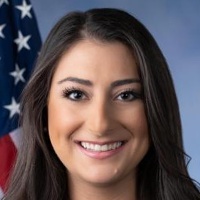
Sara Jacobs
Representative
CA
Sara Jacobs
Representative
CA
The Ensuring Military Readiness Not Discrimination Act mandates that military service eligibility and personnel policies be based solely on an individual's ability to meet occupational standards. It prohibits discrimination within the Armed Forces based on race, color, national origin, religion, or sex, explicitly including gender identity, sexual orientation, and sex characteristics. This legislation ensures equal treatment and opportunity for all service members.
The Medicare Hearing Aid Coverage Act of 2025 expands Medicare benefits to include coverage for hearing aids and related examinations while mandating a federal study to improve hearing loss support programs.

Debbie Dingell
Representative
MI
Debbie Dingell
Representative
MI
The Medicare Hearing Aid Coverage Act of 2025 expands Medicare benefits to include coverage for hearing aids and related examinations starting January 1, 2026. Additionally, the bill mandates a comprehensive GAO study to evaluate current hearing loss programs and provide recommendations for improving access and care for beneficiaries.
The Chiropractic Medicare Coverage Modernization Act of 2025 expands Medicare coverage to include all services provided by doctors of chiropractic that are within the scope of their state licensure.
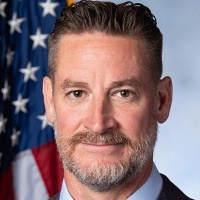
W. Steube
Representative
FL
W. Steube
Representative
FL
The Chiropractic Medicare Coverage Modernization Act of 2025 expands Medicare coverage to include all services legally authorized under a chiropractor’s state license, moving beyond the current restriction limited to manual spinal manipulation. This legislation aligns Medicare benefits with private insurance and other federal health programs to better reflect modern chiropractic practice. To provide these expanded services, chiropractors will be required to complete a one-time training program verified by the Secretary of Health and Human Services.
The Food Deserts Act establishes a federal grant program to help states provide low-interest loans for opening and operating grocery stores in underserved communities.
André Carson
Representative
IN
André Carson
Representative
IN
The Food Deserts Act establishes a federal grant program to help states create revolving loan funds for grocery stores in underserved communities. These funds provide affordable financing to support the opening and operation of stores that prioritize healthy, affordable food. By incentivizing local hiring and community-focused business practices, the Act aims to increase access to nutritious food in areas that need it most.
This bill prohibits the Department of Education from using appropriated funds to reorganize, decentralize, or reduce its current staffing and operational structure.
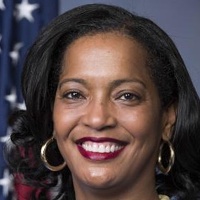
Jahana Hayes
Representative
CT
Jahana Hayes
Representative
CT
The Department of Education Protection Act prohibits the Department of Education from using federal funds to reorganize, decentralize, or reduce its staffing and operations. This legislation mandates that the Department must maintain the structure, authority, and functions that were in place as of January 1, 2025.
This bill amends the International Emergency Economic Powers Act to prohibit the President from using emergency authorities to impose import duties or quotas.

Suzan DelBene
Representative
WA
Suzan DelBene
Representative
WA
The Prevent Tariff Abuse Act amends the International Emergency Economic Powers Act to restrict the President's authority to impose import duties or quotas. This bill clarifies that emergency economic powers do not include the ability to levy trade restrictions on goods entering the United States.
The TRUST in Congress Act requires Members of Congress, their spouses, and their dependent children to place certain investment assets into qualified blind trusts to prevent conflicts of interest.
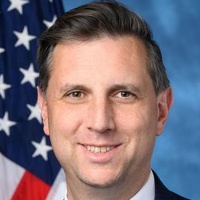
Seth Magaziner
Representative
RI
Seth Magaziner
Representative
RI
The TRUST in Congress Act requires Members of Congress, their spouses, and their dependent children to place covered financial investments into qualified blind trusts to prevent conflicts of interest. The bill establishes strict deadlines for asset transfers and mandates public certification of compliance. These measures ensure that lawmakers cannot influence or benefit from their personal investments while serving in office.
Allows Members of the House of Representatives, Delegates, and the Resident Commissioner to designate a proxy to vote on their behalf in the House, in committee, and in the Committee of the Whole for a period of 12 weeks following the birth of a child or in the event of a pregnancy-related serious medical condition.
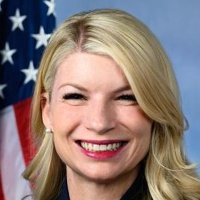
Brittany Pettersen
Representative
CO
Brittany Pettersen
Representative
CO
The "Proxy Voting for New Parents Resolution" allows Members of the House, Delegates, and the Resident Commissioner who have recently given birth or whose spouse has given birth to designate another Member to vote on their behalf in the House, in committee, and in the Committee of the Whole for a period of 12 weeks. This proxy voting authority can begin before the birth if a doctor advises that the pregnancy presents a serious medical condition or that she is unable to travel safely. The resolution outlines specific procedures for designating, changing, and revoking proxy designations, ensuring transparency and adherence to instructions. Members whose votes are cast by proxy will not be counted for quorum purposes.
The Health Care Affordability Act of 2025 expands access to premium tax credits by removing income eligibility caps and implementing a new sliding-scale contribution formula.

Lauren Underwood
Representative
IL
Lauren Underwood
Representative
IL
The Health Care Affordability Act of 2025 expands access to health insurance by removing the 400% federal poverty level income cap for premium tax credits. It also introduces a new sliding-scale contribution formula to ensure that insurance costs remain affordable for households across all income levels. These changes are set to take effect for taxable years beginning after December 31, 2025.
The Veterans Infertility Treatment Act of 2025 mandates that the VA provide comprehensive infertility treatments and fertility preservation services to enrolled veterans and their chosen partners.
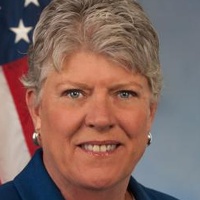
Julia Brownley
Representative
CA
Julia Brownley
Representative
CA
The Veterans Infertility Treatment Act of 2025 mandates that the VA provide comprehensive infertility treatments and fertility preservation services to enrolled veterans and their chosen partners. This legislation expands access to assisted reproductive technology, including IVF and gamete storage, regardless of marital status. It also provides coverage for partner travel expenses and establishes clear guidelines for consent and implementation.