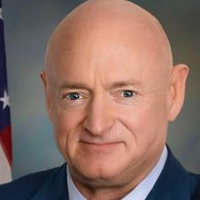
Legislative Activity
Track Mark's sponsored bills, co-sponsored legislation, and voting record
This resolution officially recognizes Hispanic Heritage Month (September 15 - October 15, 2025) while celebrating the immense and growing cultural, economic, and civic contributions of Latinos to the United States.
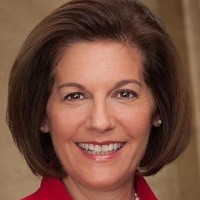
Catherine Cortez Masto
Senator
NV
Catherine Cortez Masto
Senator
NV
This resolution officially recognizes Hispanic Heritage Month, running from September 15 to October 15, 2025. It celebrates the immense and vital contributions of Latinos to the United States across culture, the economy, and civic life. The bill encourages all Americans to observe this month with appropriate programs and activities honoring this heritage.
The Pray Safe Act of 2025 establishes a Federal Clearinghouse within the Department of Homeland Security to share evidence-based safety and security best practices and grant information for nonprofit organizations, faith-based groups, and houses of worship.
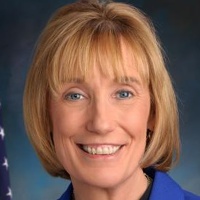
Margaret Hassan
Senator
NH
Margaret Hassan
Senator
NH
The Pray Safe Act of 2025 establishes a Federal Clearinghouse within the Department of Homeland Security to share evidence-based best practices for the safety and security of nonprofit organizations and houses of worship. This Clearinghouse will also serve as a central resource for identifying and accessing relevant federal security grant opportunities. The Act mandates that the Government Accountability Office (GAO) report to Congress on existing federal security funding for these organizations. This entire Act is set to expire four years after its enactment.
This resolution officially designates the week of September 14 through September 20, 2025, as National Truck Driver Appreciation Week to honor the vital role of the nation's truck drivers.
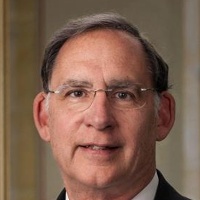
John Boozman
Senator
AR
John Boozman
Senator
AR
This resolution officially designates the week of September 14 through September 20, 2025, as "National Truck Driver Appreciation Week." It serves to recognize the vital role of the nation's 3.5 million truck drivers who move the vast majority of American freight. The bill honors their dedication and essential contributions to the economy, supply chain, and national security without enacting new laws or programs.
The SHINE for Autumn Act of 2025 aims to improve stillbirth research and data collection through federal grants to states while mandating the creation and publication of public educational guidelines on stillbirth risk factors.
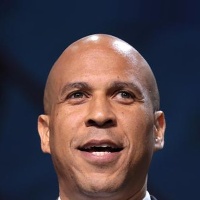
Cory Booker
Senator
NJ
Cory Booker
Senator
NJ
The SHINE for Autumn Act of 2025 aims to significantly improve the national understanding and prevention of stillbirths. It authorizes federal grants to help states enhance stillbirth surveillance, data collection, and analysis, ensuring all collected data remains de-identified. Furthermore, the Act mandates the creation of clear federal guidelines for standardized data collection and the development of public educational materials regarding stillbirth risk factors.
The Safe Step Act establishes mandatory exceptions processes and timelines for group health plans that use step therapy protocols for prescription drugs.

Lisa Murkowski
Senator
AK
Lisa Murkowski
Senator
AK
The Safe Step Act establishes mandatory exception processes for group health plans and insurance issuers that utilize step therapy protocols for prescription drugs. This ensures patients and doctors have a clear, timely pathway to request coverage for medically necessary alternatives when required initial treatments are inappropriate or ineffective. Plans must provide rapid decisions for urgent requests and adhere to specific reporting requirements detailing exception outcomes.
This bill reauthorizes a federal grant program to help student parents stay in college by providing funding to institutions for accessible and affordable on-campus child care services.

Tammy Duckworth
Senator
IL
Tammy Duckworth
Senator
IL
The CCAMPIS Reauthorization Act establishes a federal grant program to help student parents remain in college by making childcare accessible. The Secretary of Education can award five-year grants to eligible colleges and universities to provide on-campus or subsidized childcare services to student parents who qualify for Pell Grants. Grantees must ensure the funded programs meet specific quality benchmarks within three years and report annually on student outcomes. The Act authorizes $500 million annually for this program from Fiscal Years 2026 through 2031.
The Stop CMV Act of 2025 establishes a framework for state-led newborn screening for congenital Cytomegalovirus (CMV), provides federal funding and CDC support for implementation and education, and directs NIH to expand related research.
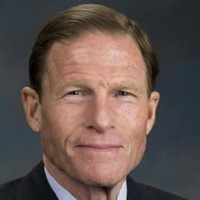
Richard Blumenthal
Senator
CT
Richard Blumenthal
Senator
CT
The Stop CMV Act of 2025 establishes a framework for voluntary newborn screening for congenital Cytomegalovirus (CMV) across the United States. It tasks states with developing testing procedures, while authorizing federal funding through HRSA grants to support implementation and CDC grants for data collection and education. The bill also directs the NIH to expand research into CMV screening, prevention, and treatment.
This Act nullifies specific executive orders related to federal labor relations and ensures that existing federal collective bargaining agreements remain in effect until their expiration date.
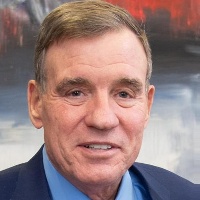
Mark Warner
Senator
VA
Mark Warner
Senator
VA
The Protect America’s Workforce Act nullifies two specific Executive Orders related to federal labor-management programs and prohibits the use of federal funds to enforce them. Furthermore, the Act ensures that all existing collective bargaining agreements between the federal government and labor organizations remain fully in effect until their original expiration dates. This legislation solidifies current federal union contracts while removing the authority of the voided orders.
The Child Care Modernization Act of 2025 overhauls federal child care funding by increasing state flexibility, expanding eligibility for assistance, mandating cost-based provider payments, and establishing new grants to boost facility supply and quality.
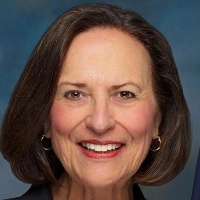
Deb Fischer
Senator
NE
Deb Fischer
Senator
NE
The Child Care Modernization Act of 2025 aims to significantly update federal child care funding by increasing state flexibility, broadening eligibility for assistance, and strengthening workforce support. The bill mandates that states develop plans ensuring child care payment rates cover actual costs, determined by new cost estimation models. Furthermore, it establishes new grant programs to fund the startup, expansion, and physical improvement of child care facilities.
This joint resolution proposes a constitutional amendment to grant Congress and the states clear authority to regulate campaign finance, including setting spending limits and establishing public financing systems, while protecting the freedom of the press.
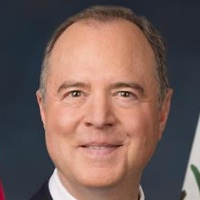
Adam Schiff
Senator
CA
Adam Schiff
Senator
CA
This joint resolution proposes a constitutional amendment to grant Congress and the states clear authority to regulate campaign contributions and expenditures. It explicitly allows for setting reasonable spending limits and establishing public financing systems for political campaigns. The amendment also permits banning spending by corporations and other legal entities while safeguarding the freedom of the press.
This resolution condemns the assassination of Charlie Kirk while honoring his life, legacy, and commitment to civil discourse on college campuses.
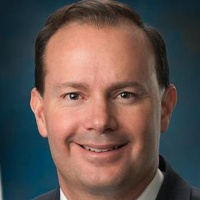
Mike Lee
Senator
UT
Mike Lee
Senator
UT
This resolution formally condemns the assassination of Charlie Kirk and honors his life and legacy as a devoted husband, father, and founder of Turning Point USA. It recognizes his commitment to encouraging civil discourse on college campuses across the nation. The Senate also extends its deepest sympathies to his surviving family.
The FAMILY Act establishes a federal paid family and medical leave insurance program administered by the Social Security Administration to provide wage replacement benefits for qualified caregiving.

Kirsten Gillibrand
Senator
NY
Kirsten Gillibrand
Senator
NY
The FAMILY Act establishes the Family and Medical Insurance Leave program, creating a new office within the Social Security Administration to manage paid benefits for qualified caregiving and serious health conditions. This law outlines eligibility requirements, a tiered formula for calculating monthly benefit payments, and protections against employer retaliation for taking leave. The Act also provides funding mechanisms for states that already have similar paid leave programs in place.
This resolution expresses support for designating November 16, 2025, as "National Warrior Call Day" to encourage vital peer-to-peer connection and support for members of the Armed Forces and veterans.
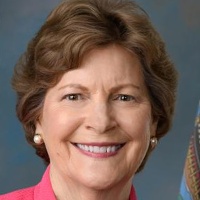
Jeanne Shaheen
Senator
NH
Jeanne Shaheen
Senator
NH
This resolution expresses support for designating November 16, 2025, as "National Warrior Call Day" to combat isolation and suicide among service members and veterans. It encourages all Americans to reach out and connect with those who have served to strengthen vital support structures. The day aims to foster peer-to-peer connection as a critical step in addressing the mental health challenges faced by our military community.
This bill establishes advance appropriations for the Bureau of Indian Affairs, Bureau of Indian Education, and Indian Health Service starting in fiscal year 2026, while also requiring more detailed, forward-looking budget justifications from these agencies.
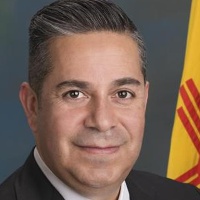
Ben Luján
Senator
NM
Ben Luján
Senator
NM
The Indian Programs Advance Appropriations Act of 2025 establishes advance funding mechanisms for the Bureau of Indian Affairs (BIA), Bureau of Indian Education (BIE), and the Indian Health Service (IHS), beginning in fiscal year 2026. This legislation requires these agencies to provide Congress with detailed budget estimates looking one year ahead of the proposed budget year. Additionally, the bill mandates annual consultation with Tribal nations and reporting on resource sufficiency for the upcoming fiscal year.
This act exempts small businesses from import duties imposed under a national emergency declaration and mandates refunds for duties already paid.
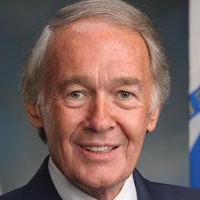
Edward Markey
Senator
MA
Edward Markey
Senator
MA
The Small Business RELIEF Act exempts qualifying small businesses from import duties imposed under Executive Order 14257 due to a national emergency declaration. This legislation also mandates refunds for any such duties already paid by these small businesses. The goal is to provide immediate financial relief to small businesses impacted by these specific emergency tariffs.
This bill directs the conveyance of 3,400 acres of federal land in La Paz County, Arizona, to the County for solar energy development, requiring payment for the land and mandating revenue use for local workforce development and education.
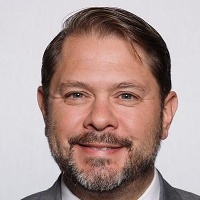
Ruben Gallego
Senator
AZ
Ruben Gallego
Senator
AZ
This bill directs the Secretary of the Interior to convey approximately 3,400 acres of federal land in La Paz County, Arizona, to the County. The land must be used for solar energy development, with a portion of the revenue supporting local workforce development and education. The transfer requires the County to pay fair market value and adhere to strict protections for Tribal artifacts.
This Act mandates FCC reporting improvements after disaster system activations, reclassifies 911 dispatchers as protective service occupations, and requires a report on enforcing multi-line phone system safety rules.

Amy Klobuchar
Senator
MN
Amy Klobuchar
Senator
MN
The Enhancing First Response Act mandates the FCC to hold annual hearings and issue reports following major disaster communications outages to identify areas for improvement. It also requires the Office of Management and Budget to officially classify 911 dispatchers as a protective service occupation. Furthermore, the bill directs the FCC to report on the enforcement and effectiveness of existing laws regarding multi-line phone system compliance for emergency calls.
This Act recaptures unused employment-based immigrant visas from past years to expedite the immigration of up to 40,000 professional nurses and physicians.
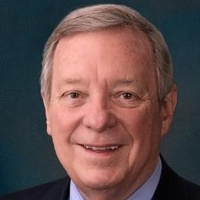
Richard Durbin
Senator
IL
Richard Durbin
Senator
IL
The Healthcare Workforce Resilience Act aims to address healthcare staffing shortages by recapturing unused employment-based immigrant visas from previous years. These recaptured visas are specifically reserved for professional nurses (25,000) and physicians (15,000) to expedite their entry into the U.S. The bill also mandates premium processing for these petitions without imposing extra fees and includes worker protection attestations to prevent displacement of U.S. workers.
The RAISE Act of 2025 mandates that states incorporate specific academic standards for artificial intelligence and emerging technologies when developing or revising K-12 curriculum guidelines.
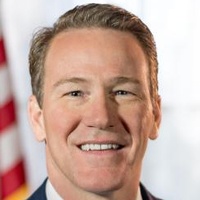
Jon Husted
Senator
OH
Jon Husted
Senator
OH
The RAISE Act of 2025 mandates that states incorporate specific academic standards for artificial intelligence and emerging technologies when developing or revising their K-12 curriculum guidelines. This ensures that AI literacy becomes a required component of state academic standards under federal education law.
This Act extends key clean energy tax credits for homeowners and producers while adjusting the phase-out timeline for electricity production credits based on emissions targets.
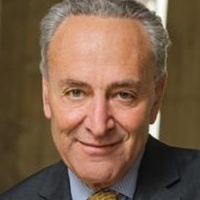
Charles Schumer
Senator
NY
Charles Schumer
Senator
NY
The Lowering Electric Bills Act extends crucial tax credits for residential clean energy installations until 2034. It also modifies the phase-out schedule for the Clean Electricity Production and Investment Credits, tying their continuation to achieving specific emissions reduction targets or the year 2032. These changes aim to provide long-term stability for clean energy investments.