
Legislative Activity
Track Amy's sponsored bills, co-sponsored legislation, and voting record
This bill mandates that the Supreme Court provide written explanations and disclose individual justice votes for all emergency orders granting, denying, or vacating preliminary injunctive relief or stays thereof.
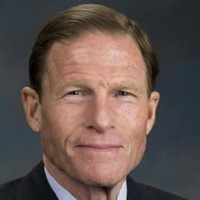
Richard Blumenthal
Senator
CT
Richard Blumenthal
Senator
CT
The Shadow Docket Sunlight Act of 2025 mandates that the Supreme Court provide written explanations and disclose the votes of participating justices for emergency orders concerning preliminary injunctive relief or stays thereof. These explanations must address key legal standards, such as the likelihood of success on the merits and irreparable harm. The bill also establishes a reporting requirement for the Federal Judicial Center to assess compliance with these new transparency measures.
This resolution recognizes the significant threat climate change poses to U.S. home values and the stability of the mortgage market.

Sheldon Whitehouse
Senator
RI
Sheldon Whitehouse
Senator
RI
This resolution recognizes that climate change poses a significant and measurable threat to the U.S. mortgage market and overall home values. It details the substantial financial losses already incurred and projected due to sea-level rise and increased natural disasters. The bill further declares that these climate-related risks could trigger broader economic instability, similar to past housing crises.
This resolution recognizes that climate change is intensifying wildfires and calls for fully funding federal wildfire prevention and response efforts.
Sheldon Whitehouse
Senator
RI
Sheldon Whitehouse
Senator
RI
This resolution formally recognizes that climate change is significantly increasing the frequency, intensity, and destructiveness of wildfires across the nation. It highlights the documented evidence linking rising global temperatures and drought to longer, more severe fire seasons. The resolution further acknowledges the immense economic costs and human toll of these events, such as the 2025 Los Angeles fires. Ultimately, it calls for fully funding and staffing federal efforts to prevent and respond to this growing wildfire risk.
The Trade Cheating Restitution Act of 2025 expands eligibility for the distribution of antidumping and countervailing duty interest by retroactively extending the qualifying date to October 1, 2000, and mandating a special one-time payout to eligible claimants.
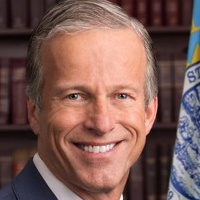
John Thune
Senator
SD
John Thune
Senator
SD
The Trade Cheating Restitution Act of 2025 expands the eligibility criteria for the distribution of interest collected from antidumping and countervailing duties by shifting the qualifying date back to October 1, 2000. This legislation mandates a one-time, pro-rata special distribution of these accumulated funds to eligible parties who previously received offsets under the Continued Dumping and Subsidy Offset Act of 2000.
This resolution recognizes that solar, storage, and wind power are the quickest and cheapest solutions to meet growing U.S. electricity demand.
Sheldon Whitehouse
Senator
RI
Sheldon Whitehouse
Senator
RI
This resolution recognizes that solar, storage, and wind power are the fastest and most cost-effective solutions to meet the United States' rapidly growing electricity demand. It highlights that these renewable sources currently dominate new power capacity additions and are essential for avoiding future power shortages. The Senate resolution calls for accelerating the deployment of solar, storage, and wind energy across the country.
The Sunset Section 230 Act proposes the full repeal of Section 230 of the Communications Act of 1934, effectively removing the liability protections for online service providers two years after enactment.
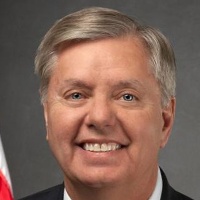
Lindsey Graham
Senator
SC
Lindsey Graham
Senator
SC
The Sunset Section 230 Act mandates the full repeal of Section 230 of the Communications Act of 1934, effectively removing the liability protections currently afforded to online service providers for user-generated content. The bill includes comprehensive conforming amendments to various federal laws to account for this change. These provisions are set to take effect two years after the date of enactment.
This act empowers state attorneys general to sue on behalf of residents for damages resulting from Sherman Act violations.
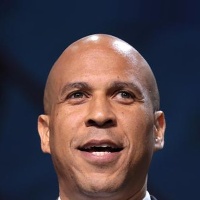
Cory Booker
Senator
NJ
Cory Booker
Senator
NJ
The Fair Competition for Small Business Act of 2025 empowers state attorneys general to file lawsuits on behalf of their residents for damages resulting from violations of antitrust laws. This amendment to the Clayton Act strengthens enforcement by allowing states to seek redress for harm caused by Sherman Act violations.
This resolution formally recognizes that human-caused climate change is a reality supported by sound science and calls for the protection of mandated climate research programs.
Sheldon Whitehouse
Senator
RI
Sheldon Whitehouse
Senator
RI
This resolution formally recognizes that climate change is a reality supported by sound science, not a hoax. It details the historical scientific understanding and current overwhelming consensus that human activity, primarily burning fossil fuels, is causing global warming. The bill further finds that climate change is already causing severe impacts and calls for Congress to protect legally mandated climate research programs.
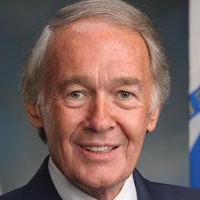
This bill prohibits the use of federal funds to implement or enforce the Executive Order concerning a national policy framework for artificial intelligence regulation.
Edward Markey
Senator
MA
Edward Markey
Senator
MA
This Act, titled the "States' Right to Regulate AI Act," prohibits the use of federal funds to implement or enforce a specific Executive Order concerning a national policy framework for Artificial Intelligence. Essentially, it prevents the federal government from using its money to enforce that particular AI regulation order.
This Act establishes the right for residents in certain long-term care facilities to designate and maintain access to an essential caregiver, particularly when general visitation is restricted during emergencies.
Richard Blumenthal
Senator
CT
Richard Blumenthal
Senator
CT
The Essential Caregivers Act of 2025 establishes a resident's right to designate at least one "essential caregiver" who must be granted in-person access to the resident in healthcare facilities, even during periods of restricted visitation. This right is designed to prevent the isolation and decline seen during the COVID-19 pandemic by ensuring family support remains available. Facilities can only deny access under strict, time-limited conditions if the caregiver violates agreed-upon safety protocols.
This bill formally revokes the charter of incorporation for the Lower Sioux Indian Community in Minnesota at their own request.

Tina Smith
Senator
MN
Tina Smith
Senator
MN
This bill formally accepts the request from the Lower Sioux Indian Community in Minnesota to revoke its existing charter of incorporation. The legislation officially dissolves the charter originally issued in 1937 under the Indian Reorganization Act.
This bill amends the Leech Lake Reservation Restoration Act to transfer additional federal land within the Chippewa National Forest to the Leech Lake Band of Ojibwe and modifies the land transfer process.
Tina Smith
Senator
MN
Tina Smith
Senator
MN
The Leech Lake Reservation Restoration Amendments Act of 2025 updates existing law to facilitate the transfer of additional federal land within the Chippewa National Forest to the Leech Lake Band of Ojibwe for trust status. This bill expands the definition of transferable federal land and allows for acre-for-acre land substitutions agreed upon by the Secretary of Agriculture and the Tribe. Crucially, the Act reaffirms that the hunting, fishing, and recreation rights of non-Tribal members will remain unchanged by these transfers.
The FAAN Act establishes a billion-dollar grant program to support nursing schools in increasing faculty and student numbers, modernizing education, and expanding capacity to address workforce shortages and public health emergencies.

Jeff Merkley
Senator
OR
Jeff Merkley
Senator
OR
The FAAN Act establishes a new grant program to support nursing schools in addressing critical workforce shortages and modernizing education. These funds aim to increase faculty and student capacity, enhance preparedness for public health emergencies, and improve educational infrastructure. Priority is given to schools serving medically underserved, rural, or minority-serving areas.
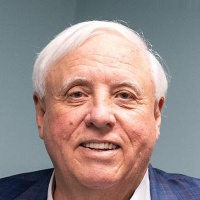
This resolution designates December 6, 2025, as National Miners Day to honor the contributions, sacrifices, and risks faced by miners in the United States.
Jim Justice
Senator
WV
Jim Justice
Senator
WV
This resolution designates December 6th of each year as "National Miners Day." The day will honor the contributions and sacrifices of miners across the United States. It also commemorates the tragic Monongah mining disaster of 1907, which spurred significant improvements in miner safety.
This act mandates the completion of a federal background check before any firearm transfer can occur, eliminating the previous three-day default transfer provision.
Richard Blumenthal
Senator
CT
Richard Blumenthal
Senator
CT
The Background Check Completion Act of 2025 mandates that a completed background check must occur before any firearm transfer can take place. This law removes the previous "default proceed" provision that allowed transfers after three business days if the check was incomplete. It also updates related federal laws to align with this new, stricter requirement.
This resolution commemorates the 50th anniversary of Southeast Asian refugee resettlement and honors the immense contributions, sacrifices, and resilience of Southeast Asian Americans.

Mazie Hirono
Senator
HI
Mazie Hirono
Senator
HI
This resolution commemorates the 50th anniversary of Southeast Asian refugee resettlement in the United States. It honors the immense sacrifices and significant contributions of Southeast Asian Americans across all sectors of American life. The bill also acknowledges the challenges these communities have faced since arriving. Finally, it reaffirms the nation's commitment to supporting these vibrant communities.
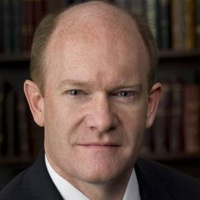
This bill establishes a federal grant program to help state, local, territorial, and tribal governments hire, retain, and train prosecutors and support staff.
Christopher Coons
Senator
DE
Christopher Coons
Senator
DE
The Helping Improve Recruitment and Retention Efforts for Prosecutors Act of 2025 establishes a federal grant program administered by the Department of Justice. This program aims to help state, local, territorial, and tribal governments hire, retain, and train prosecutors and support staff. Grants will be awarded competitively, with preference given to proposals focusing on new hiring or serving tribal, remote, or rural areas. The federal government will cover up to 75% of project costs, requiring a non-federal match.
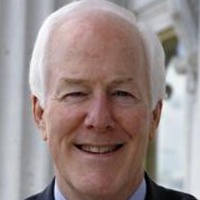
This act establishes a mandatory \$5,000 special assessment for non-indigent individuals or entities convicted of certain trafficking offenses.
John Cornyn
Senator
TX
John Cornyn
Senator
TX
The Enduring Justice for Victims of Trafficking Act introduces a mandatory **\$5,000 special assessment** for non-indigent individuals or entities convicted of specific federal offenses related to trafficking. This additional fee is intended to provide further resources or support for victims.
The ECCHO Act establishes a new federal crime for coercing minors under 18, through threats or manipulation, to commit serious harm to themselves, others, animals, or engage in specific criminal acts like swatting or arson.
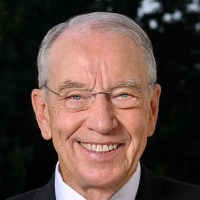
Charles Grassley
Senator
IA
Charles Grassley
Senator
IA
The ECCHO Act establishes a new federal crime for intentionally coercing a minor under 18 to commit harmful acts, including self-harm, violence against others or animals, arson, or specific online offenses like swatting. This legislation defines coercion broadly to include manipulation, threats, and intimidation used to force a child into these prohibited actions. Penalties vary based on the severity of the coerced act, with life imprisonment possible for coercing suicide or homicide. The Act also updates existing federal laws to incorporate this new offense and ensure comprehensive enforcement.
Ally's Act mandates that private health insurance plans cover auditory implant devices, related services, and necessary maintenance for qualifying individuals starting in 2026.
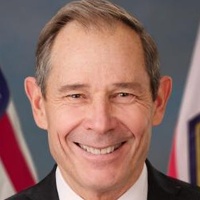
John Curtis
Senator
UT
John Curtis
Senator
UT
Ally's Act mandates that private health insurance plans cover essential hearing devices, including auditory implants and their related services, for qualifying individuals. This coverage must begin for plan years starting January 1, 2026. The law ensures that cost-sharing and treatment limitations for these hearing benefits are no more restrictive than those for other medical services. Furthermore, coverage cannot be denied if a physician or qualified audiologist determines the device is medically necessary.