
Legislative Activity
Track Marcy's sponsored bills, co-sponsored legislation, and voting record
Partisan Hack-O-Meter
This resolution immediately brings the bill to speed up contract formation under the National Labor Relations Act to a final vote in the House, bypassing normal procedural hurdles.
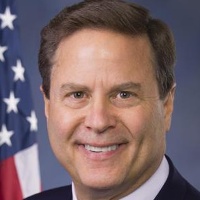
Donald Norcross
Representative
NJ
Donald Norcross
Representative
NJ
This resolution immediately brings the bill (H.R. 5408) to the House floor for consideration, aiming to accelerate the process of reaching a contract under the National Labor Relations Act. It waives standard procedural hurdles to facilitate a swift debate and final vote. The process allows for only one hour of debate before the final vote.
This measure sets the rules for the House to consider multiple bills and a resolution focused on establishing fraud prevention measures, pausing federal payments, condemning government fraud, and considering a reconciliation bill.
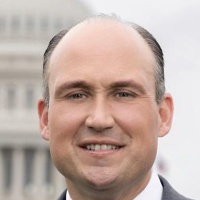
Nicholas Langworthy
Representative
NY
Nicholas Langworthy
Representative
NY
This procedural action sets the stage for the House to consider multiple bills aimed at combating government fraud and improving program integrity. Key measures include establishing new fraud prevention functions within the Treasury and creating a permanent governmentwide Inspector General for Fraud, Accountability, and Recovery. The process also allows for debate on legislation to pause and segment federal payments and a resolution condemning fraud against the U.S. Government.
This act authorizes a major medical facility project for the Department of Veterans Affairs in St. Louis, Missouri, for fiscal year 2026, with a maximum cost of \$1.76 billion.
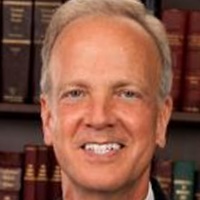
Jerry Moran
Senator
KS
Jerry Moran
Senator
KS
This bill authorizes a major medical facility project for the Department of Veterans Affairs in St. Louis, Missouri, for Fiscal Year 2026. The project includes significant construction and expansion efforts, such as a new bed tower and clinical building expansion. It authorizes a total project cost not to exceed \$1,762,668,000.
This Act establishes a mandatory, government-wide training program to equip federal employees with the skills to prevent fraud and improper payments in federal programs.
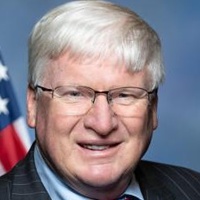
Glenn Grothman
Representative
WI
Glenn Grothman
Representative
WI
The Federal Fraud Prevention Workforce Training Act establishes a mandatory, government-wide training program to equip federal employees with the skills needed to identify, assess, and prevent fraud and improper payments in federal programs. This program will cover best practices, relevant federal resources, and internal control mechanisms. Agency heads must ensure covered employees complete initial training within 180 days and renew it biennially, with the Treasury Department also making the training available to state, local, and tribal partners.
This bill requires federal agencies to establish pre-planned internal controls, guided by OMB, to prevent fraud and improper payments when receiving emergency supplemental appropriations.

Andy Biggs
Representative
AZ
Andy Biggs
Representative
AZ
The Taxpayer Resources Used in Emergencies Accountability Act (TRUE Accountability Act) requires federal agencies to develop and maintain internal control plans specifically designed to prevent fraud and improper payments when using emergency supplemental appropriations. The Office of Management and Budget (OMB) will issue guidance, collect these plans, and report them to Congress. Agencies must also conduct after-action reviews following emergency spending to assess control effectiveness and recommend improvements.
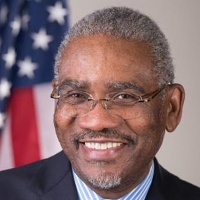
The Ukraine Support Act strengthens U.S. diplomatic, military, and economic support for Ukraine while imposing comprehensive sanctions on Russia to counter its ongoing aggression and war crimes.
Gregory Meeks
Representative
NY
Gregory Meeks
Representative
NY
The Ukraine Support Act strengthens U.S. diplomatic, military, and economic support for Ukraine while intensifying pressure on Russia through comprehensive sanctions and export controls. The bill establishes long-term reconstruction and security programs, bolsters independent media, and mandates strategies to reduce European reliance on Russian energy. Additionally, it reinforces NATO’s collective defense and imposes strict oversight on the use of U.S. aid to ensure accountability and strategic impact.
This resolution sets expedited floor consideration for H.R. 2913, the bill authorizing support for Ukraine, by waiving procedural objections and limiting debate.
Gregory Meeks
Representative
NY
Gregory Meeks
Representative
NY
This resolution sets the stage for the House of Representatives to immediately consider H.R. 2913, a bill authorizing support for Ukraine. It streamlines the process by waiving procedural objections, limiting debate to one hour, and allowing only a single motion to recommit before a final vote. This ensures a swift path to a vote on providing aid to Ukraine.
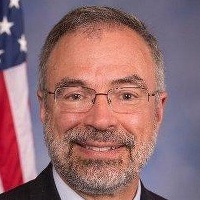
This bill appropriates fiscal year 2027 funding for the Department of Agriculture, the Food and Drug Administration, and related agencies to support agricultural research, rural development, food safety, and domestic nutrition programs.
Andy Harris
Representative
MD
Andy Harris
Representative
MD
The Agriculture, Rural Development, Food and Drug Administration, and Related Agencies Appropriations Act, 2027, provides comprehensive funding for the Department of Agriculture, the FDA, and various rural development and nutrition programs. The bill allocates resources for agricultural research, food safety, and farm support while establishing strict congressional oversight and spending caps to ensure fiscal accountability. Additionally, it sets new policy directives for food labeling, public health enforcement, and rural infrastructure to support both producers and consumers.
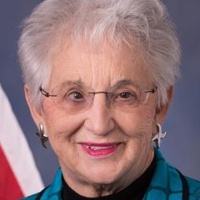
This bill waives the two-thirds vote requirement for considering certain Rules Committee reports related to reconciliation measures reported through June 5, 2026.
Virginia Foxx
Representative
NC
Virginia Foxx
Representative
NC
This bill temporarily waives a House rule requiring a two-thirds vote to consider a Rules Committee report on the same day it is presented. This waiver specifically applies to resolutions related to budget reconciliation measures reported through June 5, 2026.
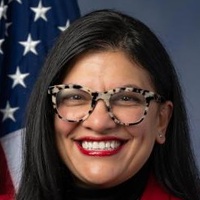
This resolution directs the President to remove all United States Armed Forces from Lebanon within seven days of its adoption.
Rashida Tlaib
Representative
MI
Rashida Tlaib
Representative
MI
This resolution invokes the War Powers Resolution to mandate the withdrawal of all United States Armed Forces from Lebanon. It directs the President to complete this removal within seven days of the resolution's adoption.
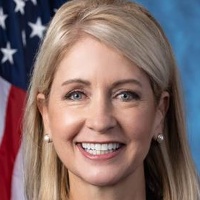
The Stop Child Care Scams Act of 2026 strengthens federal oversight and mandates stricter penalties, including permanent debarment and mandatory fund withholding, to combat fraud and improve accountability within the Child Care and Development Block Grant program.
Mary Miller
Representative
IL
Mary Miller
Representative
IL
The Stop Child Care Scams Act of 2026 aims to combat fraud and strengthen accountability within federal child care assistance programs. It mandates federal withholding of funds from states that fail to repay misspent money and requires states to detail robust internal controls for preventing and investigating fraud. Furthermore, the bill institutes permanent debarment for child care providers found guilty of fraud and establishes strict corrective action plans and potential funding ineligibility for states with high improper payment rates.
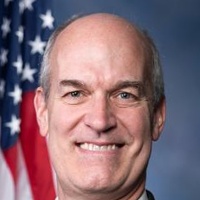
This bill reauthorizes the Northwest Straits Marine Conservation Initiative, updating its structure and goals for protecting and restoring the marine ecosystem of the region through 2032.
Rick Larsen
Representative
WA
Rick Larsen
Representative
WA
This bill reauthorizes the Northwest Straits Marine Conservation Initiative Act, updating its structure and goals for another seven years. It establishes a diverse 14-member Commission to protect and restore the marine waters, habitats, and species of the Northwest Straits region. The Commission will focus on science-based projects, collaboration with local and Tribal governments, and advising on ecosystem health without issuing regulations.
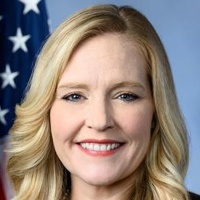
This resolution sets the expedited floor procedures for considering four separate bills concerning agriculture appropriations, child care funding compliance, FAFSA identity fraud checks, and reforms to the TANF program.
Erin Houchin
Representative
IN
Erin Houchin
Representative
IN
This resolution sets the rules for the House to consider four separate bills concerning appropriations for Agriculture and related agencies, withholding child care funds from noncompliant states, strengthening FAFSA identity fraud checks, and reforming the TANF block grant program. It establishes strict debate limits and amendment procedures for each of the four bills to expedite their passage. The rules waive most procedural objections to ensure these specific legislative items can be brought to a vote quickly.
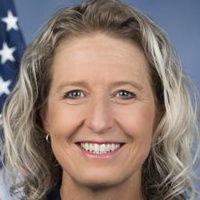
This bill reauthorizes and expands battlefield protection grant programs while directing studies for sites related to the French and Indian War and the Mexican-American War.
Jennifer Kiggans
Representative
VA
Jennifer Kiggans
Representative
VA
This bill amends the American Battlefield Protection Program to extend and modify key grant programs for battlefield preservation through 2036. It also makes the battlefield interpretation modernization grant program permanent. Furthermore, the legislation directs the Secretary of the Interior to conduct or certify studies on nationally significant sites related to the French and Indian War and the Mexican-American War.
The Sharri Briley and Eric Edmundson Veterans Benefits Expansion Act of 2026 increases disability compensation, enhances Dependency and Indemnity Compensation adjustments, extends certain VA home loan fee structures, and broadens VA home loan eligibility for National Guard and Reserve members.
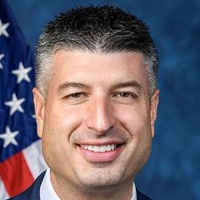
Tom Barrett
Representative
MI
Tom Barrett
Representative
MI
The Sharri Briley and Eric Edmundson Veterans Benefits Expansion Act of 2026 significantly enhances benefits for veterans and service members. It increases disability compensation with a new monthly allowance for certain veterans and ties future Dependency and Indemnity Compensation (DIC) adjustments to Social Security cost-of-living increases plus an extra percentage. The bill also expands VA home loan eligibility to include National Guard and Reserve members with at least 14 days of qualifying service, though these borrowers will pay a higher loan fee. Finally, it extends the current VA home loan fee structure and modifies definitions of active duty for Guard and Reserve components.
This bill prohibits the VA from reporting veterans to the NICS background check system solely because a fiduciary has been appointed to manage their benefits, unless a judicial authority deems them a danger to themselves or others.
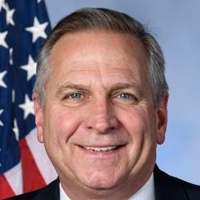
Mike Bost
Representative
IL
Mike Bost
Representative
IL
The Veterans 2nd Amendment Protection Act prohibits the VA from reporting veterans to the NICS background check system solely because a fiduciary was appointed to manage their benefits. This legislation ensures that a VA finding of mental incompetence or the appointment of a fiduciary alone is not used to treat a veteran as a "mental defective" for gun control purposes. Furthermore, the VA must notify the Attorney General about past transmissions of this information that lacked a proper legal basis.
This bill establishes the Smithsonian American Women's History Museum, designates its site on the National Mall, and sets requirements for its mission, construction, and diverse representation of viewpoints.
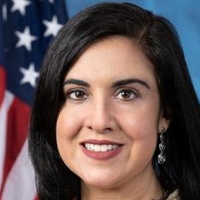
Nicole Malliotakis
Representative
NY
Nicole Malliotakis
Representative
NY
This act officially establishes the Smithsonian American Women’s History Museum and designates its location on the National Mall, requiring the transfer of land jurisdiction to the Smithsonian Institution. The museum is mandated to preserve and present the history and achievements of biological women in the United States. Furthermore, the legislation requires that exhibits and programs reflect diverse political viewpoints and authentic experiences of women, as guided by a broad array of knowledgeable sources.
This resolution establishes the expedited House procedures for considering bills related to VA information sharing, increased veterans' benefits, the Smithsonian American Women's History Museum location, and waives certain Rules Committee report requirements.
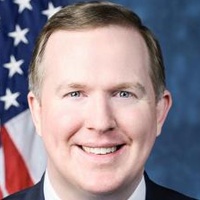
Brian Jack
Representative
GA
Brian Jack
Representative
GA
This resolution establishes the expedited House procedures for considering several bills, including one to restrict the VA from sharing certain data with the DOJ for background checks. It also sets the rules for debating and voting on legislation that would increase VA disability and indemnity compensation payments. Finally, the resolution addresses the location of the Smithsonian American Women’s History Museum and waives certain procedural rules for specific reports.
This bill requires parental consent for public schools to alter a minor student's gender marker, pronouns, or preferred name on school forms or change sex-based accommodations, and prohibits using federal education funds to teach gender ideology.
Tim Walberg
Representative
MI
Tim Walberg
Representative
MI
The Stopping Indoctrination and Protecting Kids Act requires public schools to obtain parental consent before changing a minor student's gender marker, pronouns, or preferred name, or altering sex-based accommodations. Additionally, the bill prohibits the use of federal education funding to teach or advance concepts related to gender ideology. This legislation aims to ensure parental involvement in significant decisions regarding their children's records and school environment.
This bill authorizes the minting and sale of commemorative gold and silver coins to honor the 25th anniversary of the September 11, 2001, terrorist attacks, with surcharges supporting the National September 11 Memorial and Museum.

Dan Goldman
Representative
NY
Dan Goldman
Representative
NY
This bill authorizes the Secretary of the Treasury to mint and issue commemorative gold and silver coins marking the 25th anniversary of the September 11, 2001, terrorist attacks. The coins will honor the victims, first responders, and survivors, with designs selected in consultation with the National September 11 Memorial and Museum. All surcharges from the sale of these coins will be paid directly to the Memorial and Museum to support its operations and maintenance.