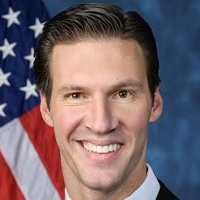
Legislative Activity
Track Pat's sponsored bills, co-sponsored legislation, and voting record
This bill extends the maximum holding period for certain real estate assets for Federal credit unions from 15 to 20 years and clarifies loan eligibility language.
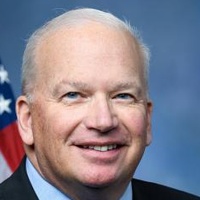
Scott Fitzgerald
Representative
WI
Scott Fitzgerald
Representative
WI
The Expanding Access to Lending Options Act directs the National Credit Union Administration (NCUA) to prioritize the safety and soundness of federally chartered credit unions. This legislation primarily amends the Federal Credit Union Act by extending the maximum holding period for certain real estate assets from 15 to 20 years. It also clarifies the eligibility language for property involved in these real estate loans.
The CONNECT for Health Act of 2025 permanently expands Medicare telehealth access by removing geographic restrictions, increasing practitioner flexibility, bolstering program integrity, and mandating supports for quality remote care delivery.
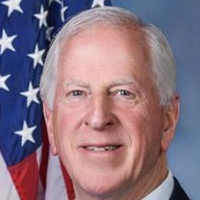
Mike Thompson
Representative
CA
Mike Thompson
Representative
CA
The CONNECT for Health Act of 2025 significantly expands and permanently secures access to Medicare telehealth services by eliminating outdated geographic restrictions and allowing more practitioners to offer remote care. The bill also strengthens program integrity by dedicating funds for telehealth oversight while clarifying rules around providing necessary technology to patients. Finally, it mandates the creation of tailored educational resources and public reporting to improve quality measurement and transparency in remote care delivery.
This bill makes technical corrections and clarifications to the Camp Lejeune Justice Act of 2022, including adjusting venue options, setting standards of proof, and capping attorney fees, all retroactively applied to August 10, 2022.
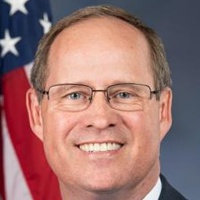
Gregory Murphy
Representative
NC
Gregory Murphy
Representative
NC
The Ensuring Justice for Camp Lejeune Victims Act of 2025 makes technical corrections to the 2022 Camp Lejeune Justice Act to clarify standards for proving harm and venue for trials. This legislation sets specific caps on attorney fees and retroactively applies these changes to all existing and future claims filed under the original 2022 Act. The bill ensures that existing statutes of limitations for filing claims remain unchanged.
The PAPA Act of 2025 restricts the use of ADS-B tracking data, limits government access to it, and establishes new public disclosure and spending requirements for airports imposing fees on general aviation aircraft.
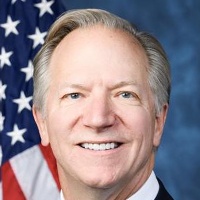
Robert Onder
Representative
MO
Robert Onder
Representative
MO
The Pilot and Aircraft Privacy Act of 2025 (PAPA Act) restricts the use of Automatic Dependent Surveillance-Broadcast (ADS-B) data to prevent unauthorized revenue collection and limits access by federal, state, and local government officials. The bill also establishes new public disclosure and oversight requirements for airports wishing to impose landing or takeoff fees specifically on general aviation aircraft. Any fees collected must be dedicated solely to airside safety projects.
The GOLDEN DOME Act of 2025 establishes a comprehensive, rapidly deployable, next-generation missile defense shield by creating a powerful Program Manager, accelerating technology acquisition, and authorizing over $23 billion for integrated air, sea, land, and space defense systems.
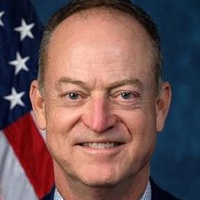
Mark Messmer
Representative
IN
Mark Messmer
Representative
IN
The GOLDEN DOME Act of 2025 establishes a comprehensive, next-generation missile defense shield to counter rapidly evolving threats from adversaries like China and Russia. It creates a powerful, direct-reporting Program Manager with broad authority to accelerate the development, acquisition, and deployment of integrated air and missile defense systems across all domains. This funding prioritizes space-based sensors, advanced interceptors, and modernized command and control capabilities to ensure the defense of U.S. citizens against all aerial and missile attacks. The Act also includes provisions to streamline procurement processes and protect the competitive space industrial base.
This bill mandates a report on the Polisario Front's ties to terrorism and foreign actors, and requires the Secretary of State and Treasury to determine if sanctions should be imposed against the group.
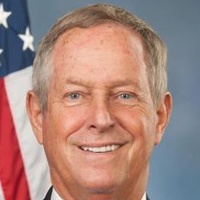
Joe Wilson
Representative
SC
Joe Wilson
Representative
SC
The Polisario Front Terrorist Designation Act mandates a comprehensive report from the Secretary of State detailing the group's foreign ties, especially concerning Iran and designated terrorist organizations. It also requires the Secretaries of State and Treasury to determine within 90 days whether the Polisario Front meets the criteria for designation as a Foreign Terrorist Organization and subsequent sanctions. The President retains the authority to waive these potential penalties if the group engages in good-faith negotiations regarding Morocco's 2007 autonomy plan for Western Sahara.
The Protect RAIL Act makes non-citizens inadmissible to the U.S. and deportable if they commit or conspire to commit crimes involving theft or tampering with goods shipped across state or international lines.

Paul Gosar
Representative
AZ
Paul Gosar
Representative
AZ
The Protect RAIL Act amends immigration law to prevent non-citizens convicted of or admitting to crimes involving the theft or tampering of goods shipped across state or international lines from entering the United States. Furthermore, this bill makes non-citizens already in the U.S. deportable if they have committed such offenses related to interstate or foreign shipments.
The STATES Act requires a state to reimburse the federal government for the full cost of deploying its National Guard if the deployment was necessitated by that state's negligence or action, effective retroactively to June 1, 2025.
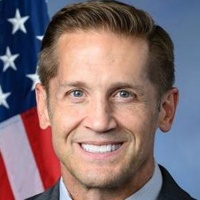
Rich McCormick
Representative
GA
Rich McCormick
Representative
GA
The STATES Act changes how the President can federalize the National Guard during specific national emergencies. If a state's negligence necessitates this federal deployment, the Act requires that state to reimburse the federal government for 100% of the incurred costs by reducing its federal funding. This provision applies retroactively to actions taken on or after June 1, 2025.
This proposed constitutional amendment grants Congress the explicit power to prohibit the physical desecration of the United States flag.
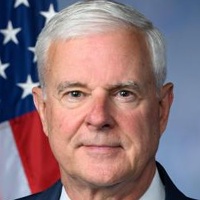
Steve Womack
Representative
AR
Steve Womack
Representative
AR
This proposed constitutional amendment seeks to grant Congress the explicit power to prohibit the physical desecration of the United States flag. If ratified by three-fourths of the states within seven years, this would allow Congress to enact federal laws protecting the flag from physical damage or destruction.
This Act invalidates Somalia's claims over Somaliland and authorizes the U.S. President to formally recognize the Republic of Somaliland as an independent nation.
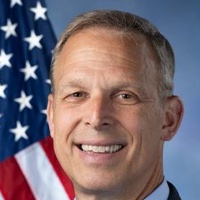
Scott Perry
Representative
PA
Scott Perry
Representative
PA
The Republic of Somaliland Independence Act establishes the official U.S. policy invalidating any claims by the Federal Republic of Somalia over the region of Somaliland. This legislation grants the President the authority to formally recognize Somaliland as an independent nation based on this stated policy.
The SAFE Cities Act establishes a process for identifying and restricting federal funding to local jurisdictions that refuse to take reasonable steps to stop violence and property destruction.
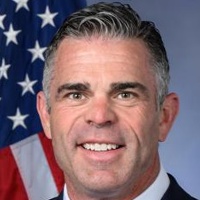
Tony Wied
Representative
WI
Tony Wied
Representative
WI
The SAFE Cities Act establishes a process for the Attorney General to officially designate certain state or local governments as "anarchist jurisdictions" based on their failure to take reasonable steps to stop violence and property destruction. Once designated, these jurisdictions will face restrictions or unfavorable treatment regarding the distribution of federal grants. The criteria focus on local policies that hinder law enforcement's ability to restore order or that involve significant cuts to police funding.
This bill mandates the deportation and permanent inadmissibility of non-citizens who commit acts of violence against law enforcement or public property during civil unrest, with enhanced enforcement during declared emergencies.

Dan Crenshaw
Representative
TX
Dan Crenshaw
Representative
TX
The Returning Illegals over Turmoil Act establishes new grounds for the deportation and permanent inadmissibility of non-citizens who incite or participate in violent acts against law enforcement or public property during civil unrest. This legislation mandates strict enforcement during declared emergencies and grants the Secretary of Homeland Security expedited removal authority under those conditions. Furthermore, individuals removed under these provisions are permanently barred from receiving any form of immigration relief or future DACA eligibility.
This Act penalizes jurisdictions that restrict cooperation between local law enforcement and federal immigration officials by making them ineligible for certain federal development funds.
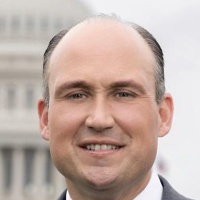
Nicholas Langworthy
Representative
NY
Nicholas Langworthy
Representative
NY
The Stop Dangerous Sanctuary Cities Act aims to penalize jurisdictions that limit cooperation with federal immigration enforcement. It defines "sanctuary jurisdictions" as those that refuse to honor detainer requests or share immigration information, with an exception for protecting crime victims and witnesses. Furthermore, the bill makes these designated sanctuary jurisdictions ineligible for specific federal development and community improvement funds, such as EDA grants and CDBG funds. Cooperating local officers are granted liability protection when honoring valid federal detainer requests.
This bill repeals the Freedom of Access to Clinic Entrances (FACE) Act, effectively removing federal criminal penalties for obstructing access to reproductive health clinics.

Chip Roy
Representative
TX
Chip Roy
Representative
TX
The FACE Act Repeal Act of 2025 seeks to eliminate federal protections that currently prohibit the obstruction of reproductive health clinic entrances, the use of force or threats against patients and providers, and the intentional damage of clinic property. If enacted, this legislation would immediately repeal these federal criminal prohibitions and apply to all pending or future prosecutions.
This resolution strongly condemns the rise in ideologically motivated attacks against Jewish individuals in the U.S., including the recent Boulder assault, and reaffirms the House's commitment to combating antisemitism and political violence.
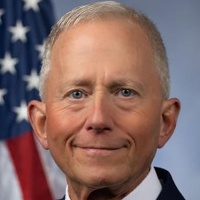
Jefferson Van Drew
Representative
NJ
Jefferson Van Drew
Representative
NJ
This resolution strongly condemns the recent rise in ideologically motivated attacks targeting Jewish individuals and institutions across the United States, including the violent assault in Boulder, Colorado. The House of Representatives reaffirms its commitment to combating antisemitism and politically motivated violence in all its forms. It calls for thorough investigation and prosecution of such incidents and urges all sectors of society to speak out against hate.
This Act prohibits the retirement or fuel source conversion of certain dispatchable power plants in areas deemed at high or elevated risk of electricity supply shortfalls, while providing a pathway for financial relief or exemptions under specific reliability and financial hardship criteria.
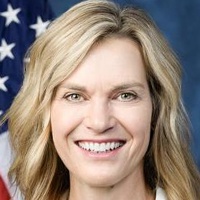
Julie Fedorchak
Representative
ND
Julie Fedorchak
Representative
ND
The Baseload Reliability Protection Act prohibits owners of certain dispatchable power plants in areas facing high or elevated risk of electricity shortages from retiring those units or switching their fuel source. Owners can seek an exemption from this ban from FERC, which must grant it if continued operation causes financial hardship or if retirement does not harm grid reliability. The Department of Energy may offer financial assistance to keep essential, money-losing plants operational.
This resolution officially recognizes and honors the 250th anniversary of the United States Army, celebrating its history, valor, and enduring commitment to national defense.
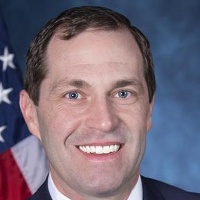
Jason Crow
Representative
CO
Jason Crow
Representative
CO
This resolution formally recognizes and honors the 250th birthday of the United States Army, celebrating its 250 years of service, valor, and dedication to defending American freedom. Congress expresses deep appreciation for the Army's history, its commitment to core values, and its current readiness to meet any future global challenge. The resolution encourages the American public to observe this significant anniversary with appropriate ceremonies.
The Reliable Grid Act halts the enforcement of certain EPA power plant regulations until grid reliability is confirmed to be at a "normal risk" level.
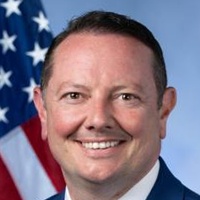
Eric Burlison
Representative
MO
Eric Burlison
Representative
MO
The Reliable Grid Act prioritizes the stability and dependability of the U.S. electric grid over environmental regulations that could force the premature retirement of essential power sources. It directs the EPA Administrator to halt the enforcement of recent rules affecting the power sector until reliability is confirmed, especially concerning dispatchable units like coal and natural gas plants. The bill mandates that new reliability standards must account for the intermittent nature of solar and wind power. Ultimately, this legislation seeks to prevent power shortages by ensuring reliable capacity remains online to meet current and future electricity demands.
This resolution formally declares the inherent value of every human life, recognizes the *Dobbs* decision, and establishes an annual "Life Month" to support policies and resources that protect the unborn and assist new families.
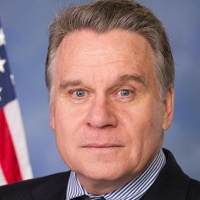
Christopher Smith
Representative
NJ
Christopher Smith
Representative
NJ
This joint resolution formally establishes "Life Month" to affirm the fundamental value and inherent dignity of every human life as an unalienable right. It recognizes the Supreme Court's *Dobbs* decision and urges Congress to enact laws protecting unborn life. Furthermore, the resolution commends organizations and individuals who support pregnant women and new families.
The Patriots Over Politics Act creates a special 90-day window for service members separated solely for refusing the COVID-19 vaccine between August 2021 and January 2023 to transfer their VA education benefits to an eligible dependent.
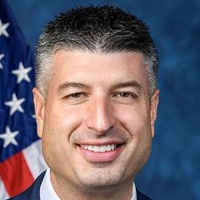
Tom Barrett
Representative
MI
Tom Barrett
Representative
MI
The Patriots Over Politics Act creates a special, limited window for certain service members separated for refusing the COVID-19 vaccine between August 2021 and January 2023 to transfer their unused VA education benefits to an eligible dependent. This transfer option is available for 90 days following the bill's enactment. If transferred to a child, the benefit use is contingent upon the service member having completed at least six years of service.