
Legislative Activity
Track Mazie's sponsored bills, co-sponsored legislation, and voting record
This Act increases the maximum financial assistance available to disabled veterans for necessary home modifications as part of their VA home health services and ties future benefit amounts to inflation.

Catherine Cortez Masto
Senator
NV
Catherine Cortez Masto
Senator
NV
The Autonomy for Disabled Veterans Act modifies the maximum funding the Department of Veterans Affairs (VA) can provide for necessary home improvements and structural alterations for disabled veterans receiving home health services. This bill increases the maximum benefit amount to $\$10,000$ for new applicants and establishes an automatic annual adjustment based on construction cost inflation. The law also limits any single veteran to a total of three such structural alterations under this specific benefit.
This Act bans paid conversion therapy practices aimed at changing an individual's sexual orientation or gender identity, treating violations as unfair and deceptive business practices enforceable by the FTC and Attorneys General.
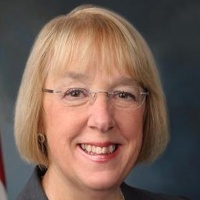
Patty Murray
Senator
WA
Patty Murray
Senator
WA
The Therapeutic Fraud Prevention Act of 2025 bans the practice of paid conversion therapy aimed at changing an individual's sexual orientation or gender identity, deeming it ineffective and harmful. This Act treats the provision or advertisement of such therapy as an unfair or deceptive business practice under the FTC Act. Enforcement authority is granted to the Federal Trade Commission, the U.S. Attorney General, and State Attorneys General. The law includes a severability clause ensuring that the invalidation of one provision does not void the entire Act.
The End Crypto Corruption Act of 2025 bans high-ranking government officials and their families from issuing, sponsoring, or endorsing digital assets while in office and for one year after leaving, with civil and criminal penalties for knowing violations.

Jeff Merkley
Senator
OR
Jeff Merkley
Senator
OR
The End Crypto Corruption Act of 2025 prohibits high-ranking government officials and their immediate families from issuing, sponsoring, or endorsing specific digital assets while in office and for one year after leaving. This legislation establishes both civil penalties, including fines based on financial gain, and criminal penalties, including imprisonment, for knowing violations involving digital assets like cryptocurrencies and NFTs. The Act specifically targets conflicts of interest by treating these prohibited financial transactions as unofficial acts, removing official immunity protections.
The PATCH Act establishes a minimum geographic index floor of 1.5 for physician services furnished in Hawaii starting in 2026.
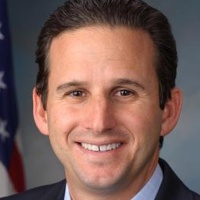
Brian Schatz
Senator
HI
Brian Schatz
Senator
HI
The PATCH Act, or Protecting Access To Care in Hawaii Act, establishes a minimum geographic work index of 1.5 for calculating physician payment rates in Hawaii, effective January 1, 2026. This ensures that doctors practicing in Hawaii receive at least this level of additional compensation to account for local costs. This adjustment will not be budget-neutral, meaning it will not require offsetting cuts elsewhere.
This resolution condemns former President Trump's attacks on the free press and reaffirms the United States' commitment to protecting freedom of the press as a cornerstone of democracy.

Sheldon Whitehouse
Senator
RI
Sheldon Whitehouse
Senator
RI
This resolution strongly condemns recent actions by President Donald J. Trump that targeted and undermined the freedom of the press. It reaffirms the United States' foundational commitment to a free and independent media as essential for a functioning democracy. Furthermore, the resolution calls for the executive branch to respect journalistic rights and urges continued efforts to secure the release of imprisoned U.S. Agency for Global Media journalists abroad.
This resolution expresses support for designating May 5, 2025, as the National Day of Awareness for Missing and Murdered Indigenous Women and Girls while urging updated federal study and continued action against this crisis.
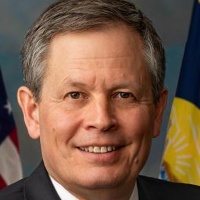
Steve Daines
Senator
MT
Steve Daines
Senator
MT
This resolution expresses support for designating May 5, 2025, as the "National Day of Awareness for Missing and Murdered Indigenous Women and Girls." It highlights the severe crisis of violence, homicide, and human trafficking disproportionately affecting American Indian and Alaska Native women and girls. The bill calls for national recognition of this day to honor victims and urges the Department of Justice to conduct an updated study on the crisis. Ultimately, it acknowledges ongoing efforts while emphasizing that more action is urgently needed to address this national tragedy.
This resolution officially designates April 2025 as Community College Month to recognize the vital role over 1,000 community colleges play in providing accessible education, workforce training, and economic prosperity across the United States.
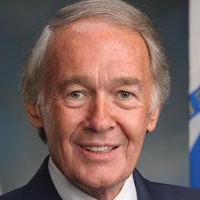
Edward Markey
Senator
MA
Edward Markey
Senator
MA
This resolution officially designates April 2025 as Community College Month to celebrate the vital role of over 1,000 community colleges nationwide. These institutions are recognized for providing accessible, affordable higher education and essential workforce training. The bill emphasizes their significant contribution to advancing local economies and overall U.S. prosperity.
This act exempts small business concerns from specific import duties or requirements imposed by presidential declarations of a national emergency.
Edward Markey
Senator
MA
Edward Markey
Senator
MA
The Small Business Liberation Act exempts qualifying small business concerns from certain import duties or requirements imposed by the President under a national emergency declaration. This provision ensures that small businesses are shielded from specific trade restrictions enacted during national emergencies.
This bill establishes new federal crimes and penalties for assaulting journalists while they are engaged in newsgathering activities.
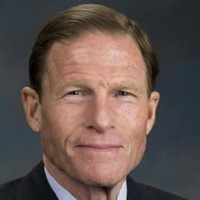
Richard Blumenthal
Senator
CT
Richard Blumenthal
Senator
CT
The Journalist Protection Act establishes new federal crimes for intentionally assaulting journalists engaged in newsgathering activities. This legislation defines who qualifies as a journalist and sets specific penalties based on the severity of the injury inflicted. The law aims to protect reporters by penalizing those who attack them to stop or intimidate them from reporting.
This resolution expresses support for designating the week of May 4-10, 2025, as National Small Business Week to celebrate the vital contributions of small businesses and entrepreneurs nationwide.

Joni Ernst
Senator
IA
Joni Ernst
Senator
IA
This resolution expresses strong support for designating the week of May 4 through May 10, 2025, as National Small Business Week. It aims to celebrate the vital contributions of the over 34.5 million small businesses that support tens of millions of jobs nationwide. The bill honors the hard work and entrepreneurial spirit of small business owners in every community.
The Patent Eligibility Restoration Act of 2025 eliminates judge-made exceptions to patent eligibility, broadly allowing patents for useful processes, machines, manufactures, or compositions of matter, while retaining specific exclusions for abstract ideas and natural phenomena.
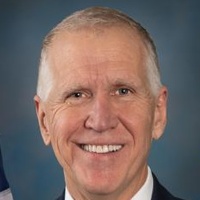
Thom Tillis
Senator
NC
Thom Tillis
Senator
NC
The Patent Eligibility Restoration Act of 2025 aims to simplify and broaden what inventions qualify for patent protection by eliminating judge-made exceptions to current law. It establishes that any useful process, machine, manufacture, or composition of matter is eligible, provided it meets a new "specific and practical utility" standard. While core exclusions like pure mathematical formulas and abstract business methods remain, the bill clarifies that human genes and natural materials are patentable if modified or used in a new invention. This legislation ensures that eligibility is determined by examining the entire claim, independent of existing novelty or obviousness standards.
The PREVAIL Act reforms patent trial procedures, tightens rules for challenging patents, dedicates USPTO fees solely to the agency, and expands support for small businesses and universities within the patent system.
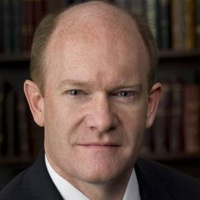
Christopher Coons
Senator
DE
Christopher Coons
Senator
DE
The PREVAIL Act aims to strengthen the U.S. patent system to better protect American innovation and national security against foreign competition. It introduces significant procedural reforms to the Patent Trial and Appeal Board (PTAB) and patent review processes, including stricter conduct rules and limitations on duplicative legal challenges. Furthermore, the bill ensures that all fees collected by the USPTO are dedicated solely to its operations and expands fee reductions for academic and small business innovators.
This Senate resolution urges the Secretary of Health and Human Services to withdraw any proposal that reduces public notice and comment opportunities for new regulations.
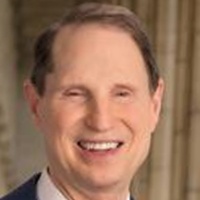
Ron Wyden
Senator
OR
Ron Wyden
Senator
OR
This Senate resolution urges the Secretary of Health and Human Services (HHS) to withdraw a proposed rule that would reduce opportunities for public notice and comment on new regulations. The Senate emphasizes that robust public input is essential for creating fair and effective policies that impact millions of Americans. It calls for HHS to maintain the established 54-year practice of allowing stakeholders to provide feedback before finalizing significant rule changes.
The Better CARE for Animals Act of 2025 strengthens the Animal Welfare Act by clarifying definitions, expanding enforcement powers for the Secretary of Agriculture and the Attorney General, imposing stricter penalties for violations, and ensuring seized animal care costs are covered.
Richard Blumenthal
Senator
CT
Richard Blumenthal
Senator
CT
The Better CARE for Animals Act of 2025 significantly strengthens the enforcement of the Animal Welfare Act by clarifying definitions and expanding inspection powers. It grants the Attorney General direct authority to sue violators, seek injunctions, and impose substantial daily civil penalties. Furthermore, the bill allows for the seizure of animals involved in violations and mandates that collected penalty funds be used to reimburse temporary animal care costs.
This bill bans the manufacture, sale, and transfer of specified semiautomatic assault weapons and large-capacity ammunition feeding devices while grandfathering existing possession and requiring background checks for future transfers of those grandfathered items.
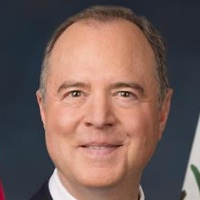
Adam Schiff
Senator
CA
Adam Schiff
Senator
CA
The Assault Weapons Ban of 2025 comprehensively defines and bans the manufacture, sale, and transfer of specific semiautomatic assault weapons and large-capacity ammunition feeding devices. It grandfathers existing possessions but requires background checks for all future private transfers of these previously owned weapons. The bill also permits the use of federal Byrne grant funds for state-run buy-back programs targeting these banned items.
This resolution formally demands that North Korea immediately release all abducted Japanese citizens, return remains, provide reparations, and apologize for past abductions.
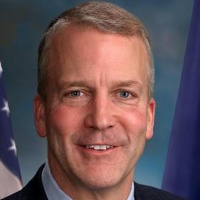
Dan Sullivan
Senator
AK
Dan Sullivan
Senator
AK
This resolution formally condemns North Korea's decades-long abduction of Japanese citizens, emphasizing that these acts violate fundamental human rights. Congress urges North Korea to immediately release all foreign nationals, return the remains of those deceased, and provide reparations and an apology. Furthermore, it calls on the President to consistently raise these demands in all future engagements with North Korean officials.
The Equality Act comprehensively expands federal non-discrimination protections across public accommodations, employment, housing, credit, and jury service to explicitly include sexual orientation and gender identity.
Jeff Merkley
Senator
OR
Jeff Merkley
Senator
OR
The Equality Act comprehensively amends federal civil rights laws to explicitly prohibit discrimination based on sexual orientation and gender identity across key areas of American life. This legislation expands existing protections in public accommodations, employment, housing, credit access, and jury service. Its purpose is to ensure consistent and clear nationwide enforcement of non-discrimination principles for LGBTQ individuals and women.
This comprehensive bill establishes a universal, single-payer "Medicare for All" national health insurance program, eliminating most private insurance duplication while expanding benefits, eliminating most cost-sharing, and restructuring provider payments under a national budget.
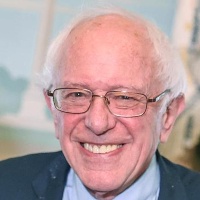
Bernard Sanders
Senator
VT
Bernard Sanders
Senator
VT
The Medicare for All Act establishes a comprehensive, universal national health insurance program to cover all U.S. residents, eliminating most private insurance duplication and nearly all out-of-pocket costs for covered services. The bill mandates extensive benefits, including long-term care, and institutes a strict National Health Budget to control overall spending through global payments for facilities and negotiated drug prices. It also includes a transition period that immediately enhances current Medicare by eliminating deductibles and adding dental, vision, and hearing benefits.
The Affordable Housing Credit Improvement Act of 2025 overhauls state allocation formulas, reforms tenant eligibility and credit determination rules, and enhances assistance for Native American and rural housing projects under the Low-Income Housing Tax Credit program.

Todd Young
Senator
IN
Todd Young
Senator
IN
The Affordable Housing Credit Improvement Act of 2025 comprehensively reforms the Low-Income Housing Tax Credit program by updating state allocation formulas based on population and inflation, and by modifying tenant eligibility rules to protect vulnerable residents. The bill also introduces significant changes for property owners regarding casualty loss, acquisition costs, and incentives for serving extremely low-income households. Finally, it directs efforts toward increasing program transparency and encouraging local governments to reform restrictive housing policies.
The SEER Act of 2025 reforms ethics enforcement by increasing transparency, clarifying conflict of interest rules, and creating a public database for special government employees.
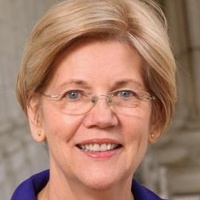
Elizabeth Warren
Senator
MA
Elizabeth Warren
Senator
MA
The SEER Act of 2025 aims to strengthen ethics enforcement and transparency for "special Government employees" (part-time or temporary federal workers). This bill clarifies conflict of interest rules, mandates public disclosure for certain financial waivers, and establishes a public database tracking these temporary employees. Ultimately, it seeks to close loopholes that allow some part-time workers to avoid the same financial scrutiny as full-time staff.