Legislative Activity
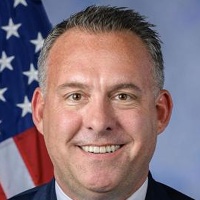
Track Adam's sponsored bills, co-sponsored legislation, and voting record
This bill designates the United States Postal Service facility at 4640 Cass Street in San Diego, California, as the "Mary Wilding Memorial Post Office Building."
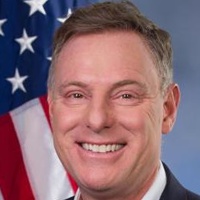
Scott Peters
Representative
CA
Scott Peters
Representative
CA
This bill designates the United States Postal Service facility located at 4640 Cass Street in San Diego, California, as the "Mary Wilding Memorial Post Office Building." All official federal references to this facility will be updated to reflect this new name.
The Public Safety Officers’ Benefits Enhancement Act of 2026 simplifies the claims process for survivors by expanding the qualifying window for heart-related duty deaths and removing barriers to benefit eligibility.
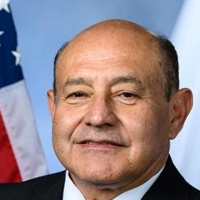
J. Correa
Representative
CA
J. Correa
Representative
CA
The Public Safety Officers’ Benefits Enhancement Act of 2026 simplifies the process for survivors to receive death benefits following an officer's heart attack or stroke. It removes barriers by eliminating the use of pre-existing health conditions as a basis for claim denial and extends the qualifying window for duty-related events from 24 to 72 hours. These changes ensure that families receive support more efficiently by strengthening the presumption that such medical events are connected to an officer's service.
The CHILE Act of 2026 establishes a permanent $5 billion emergency assistance framework to provide direct financial support to specialty crop growers impacted by adverse agricultural events.
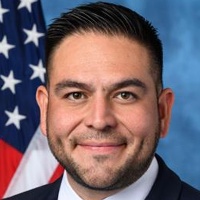
Gabriel (Gabe) Vasquez
Representative
NM
Gabriel (Gabe) Vasquez
Representative
NM
The CHILE Act of 2026 establishes a permanent emergency assistance framework to provide direct financial support to specialty crop growers impacted by adverse events. By authorizing $5 billion in funding, the bill ensures that producers receive aid tailored to the unique high-value and high-input nature of specialty crops. This legislation streamlines the delivery of federal support to help stabilize local agricultural economies during times of crisis.
This bill clarifies that a franchisor is only considered a joint employer of a franchisee's workers if it exercises substantial, direct, and immediate control over essential terms of employment.
Kevin Hern
Representative
OK
Kevin Hern
Representative
OK
The American Franchise Act aims to protect the traditional franchise business model by clarifying the definition of a "joint employer." This legislation establishes that a franchisor is only considered a joint employer if it exercises "substantial direct and immediate control" over the essential terms of employment for a franchisee's workers. This change specifically targets liability risks associated with maintaining brand standards, ensuring franchisors are not automatically held responsible for local labor practices. The new standard applies prospectively to future legal proceedings.
The "Combating Illicit Xylazine Act" aims to combat the misuse of xylazine by adding it to Schedule III of the Controlled Substances Act, tracking its distribution, and ensuring appropriate penalties for related offenses, while also protecting legitimate veterinary use.
Jimmy Panetta
Representative
CA
Jimmy Panetta
Representative
CA
The "Combating Illicit Xylazine Act" aims to combat the illegal use of xylazine by adding it to Schedule III of the Controlled Substances Act, which would allow for increased regulation and tracking of the substance. The bill includes exemptions and delayed effective dates for certain requirements to ease the transition for legitimate users, such as veterinarians and animal handlers. It also directs the Sentencing Commission to review sentencing guidelines for xylazine-related offenses and mandates reports to Congress on the prevalence and impact of illicit xylazine use. Finally, it will include xylazine in Arcos tracking.
This bill designates the Department of Veterans Affairs community-based outpatient clinic in San Jose, California, as the "Corporal Patrick D. Tillman VA Clinic."
Jimmy Panetta
Representative
CA
Jimmy Panetta
Representative
CA
This bill designates the Department of Veterans Affairs community-based outpatient clinic in San Jose, California, as the "Corporal Patrick D. Tillman VA Clinic." This renaming honors the legacy of Pat Tillman, a San Jose native and former NFL player who left his professional career to serve as an Army Ranger and made the ultimate sacrifice for his country.
This bill mandates electronic prior authorization, increases transparency through required data reporting, and establishes faster decision timelines for Medicare Advantage plans to improve timely access to care for seniors.
Mike Kelly
Representative
PA
Mike Kelly
Representative
PA
The Improving Seniors’ Timely Access to Care Act of 2025 aims to streamline and modernize the prior authorization process within Medicare Advantage plans. This bill mandates the adoption of electronic prior authorization systems and significantly increases transparency regarding approval rates and decision times starting in 2027. Furthermore, it establishes new enrollee protections and grants the Secretary authority to enforce faster decision timeframes for medical services.
This bill designates the United States Postal Service facility located at 6444 San Fernando Road in Glendale, California, as the "Paul Ignatius Post Office."
Laura Friedman
Representative
CA
Laura Friedman
Representative
CA
This bill designates the United States Postal Service facility located at 6444 San Fernando Road in Glendale, California, as the "Paul Ignatius Post Office." All official references to this location will henceforth bear this name.
This bill renames and revises the Great American Outdoors Act's maintenance fund, increases dedicated funding through new, higher fees for foreign visitors, and sets spending priorities for deferred maintenance across public lands agencies.
Bruce Westerman
Representative
AR
Bruce Westerman
Representative
AR
This bill, the Great American Outdoors Act 250, significantly reforms and renames the existing public lands restoration fund to the America’s Legacy Restoration Fund. It secures dedicated funding streams, primarily from energy revenues and new fees on foreign visitors, to address critical deferred maintenance across the National Park Service, Forest Service, and other public land agencies. The legislation establishes strict spending priorities for infrastructure repair while also creating pilot programs for enhancing outdoor recreation and sportsmen's access. Finally, it mandates increased transparency and accountability through standardized metrics and public reporting on all funded projects.
This bill expresses support for designating June as Portuguese National Heritage Month to recognize the significant contributions of Portuguese Americans to the United States.
David Valadao
Representative
CA
David Valadao
Representative
CA
This resolution expresses the House of Representatives' support for designating June as Portuguese National Heritage Month. It recognizes the significant and diverse contributions of Portuguese Americans throughout U.S. history across various fields. The bill encourages Americans to observe the month with activities celebrating this rich heritage.
This bill directs the President to remove U.S. Armed Forces from hostilities against Iran within 30 days, pursuant to the War Powers Resolution.
Josh Gottheimer
Representative
NJ
Josh Gottheimer
Representative
NJ
This bill directs the President to remove all U.S. Armed Forces from hostilities against Iran within 30 days, utilizing the authority granted by the War Powers Resolution. Congress asserts this action is necessary as it has not formally declared war or authorized military force against Iran. The resolution explicitly preserves the ability of the U.S. to defend itself, its allies, and its facilities from imminent attack, and does not interfere with intelligence-gathering activities.
This bill expands the Bureau of Reclamation’s authority to develop hydropower projects at its facilities while modernizing regulatory processes and terminology to support rural economic growth.
Lauren Boebert
Representative
CO
Lauren Boebert
Representative
CO
The Rural Jobs and Hydropower Expansion Act modernizes the Reclamation Project Act of 1939 to broaden the Bureau of Reclamation’s authority to develop hydropower across its facilities. By updating regulatory terminology and streamlining Federal Energy Regulatory Commission oversight, the bill aims to facilitate new energy projects and support economic growth in rural communities.
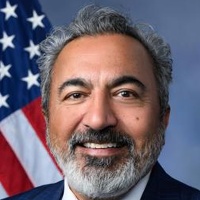
This bill officially designates the United States Postal Service facility at 3817 Marysville Boulevard in Sacramento, California, as the "Grantland Johnson Post Office."
Ami Bera
Representative
CA
Ami Bera
Representative
CA
This bill officially designates the United States Postal Service facility located at 3817 Marysville Boulevard in Sacramento, California, as the "Grantland Johnson Post Office." This action ensures the building is officially recognized by its new name in all records and documentation.
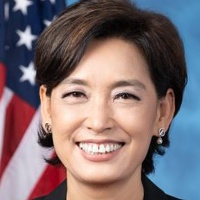
The HEATS Act streamlines geothermal energy development on certain lands by eliminating the federal drilling permit requirement when state permits are obtained and federal subsurface interest is below 50%.
Young Kim
Representative
CA
Young Kim
Representative
CA
The Harnessing Energy At Thermal Sources Act of 2026 (HEATS Act) streamlines geothermal energy development by eliminating the federal drilling permit requirement for activities on non-federal surface land when the U.S. ownership interest in the subsurface is less than 50%. This change exempts qualifying projects from major federal reviews under NEPA and the Endangered Species Act, allowing operations to commence shortly after state permit submission. The Act maintains federal oversight regarding royalty collection and excludes all activities on Indian lands.
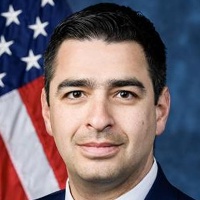
The FIRE Act establishes new, clearer criteria for the EPA to exclude air quality monitoring data caused by wildfires and prescribed burns from regulatory decisions under the Clean Air Act.
Gabe Evans
Representative
CO
Gabe Evans
Representative
CO
The FIRE Act reforms how the EPA handles air quality data affected by wildfires and prescribed burns under the Clean Air Act. It establishes clearer standards for states to exclude wildfire-related air quality data from regulatory decisions, focusing on causality rather than event predictability. The bill also updates regulations regarding air quality data influenced by actions taken to mitigate wildfire risk, such as prescribed fires.
This bill reauthorizes and funds the telehealth network and telehealth resource centers grant programs through fiscal year 2030.
David Valadao
Representative
CA
David Valadao
Representative
CA
This bill reauthorizes and provides funding for the telehealth network and telehealth resource centers grant programs under the Public Health Service Act. It secures funding of over \$42 million annually for these essential telehealth initiatives from fiscal year 2026 through 2030.
The CERTAIN Act establishes strict timelines for federal project authorizations, limits agency interference with existing permits, and mandates process coordination and capacity assessments to expedite infrastructure development.
Scott Peters
Representative
CA
Scott Peters
Representative
CA
The CERTAIN Act aims to accelerate infrastructure development by establishing strict timelines and processes for federal project authorizations and environmental reviews. It limits when agencies can revoke existing permits and mandates coordination across multiple agencies to ensure timely decisions. The bill also addresses staffing shortages within federal agencies responsible for these reviews to improve permitting capacity.
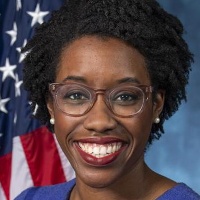
The Momnibus Act is a comprehensive legislative package designed to improve maternal health outcomes and reduce racial disparities by addressing social determinants, expanding nutritional and mental health support, diversifying the perinatal workforce, and investing in data-driven, community-based care.
Lauren Underwood
Representative
IL
Lauren Underwood
Representative
IL
The Momnibus Act is a comprehensive legislative package designed to end preventable maternal mortality and close racial and ethnic disparities in maternal health outcomes. By addressing social determinants of health, expanding nutritional and mental health support, and investing in a diverse, culturally competent workforce, the bill provides a holistic framework for improving care. Through targeted federal grants, enhanced data collection, and innovative technology, the Act aims to ensure that all pregnant and postpartum individuals receive the equitable, high-quality care they deserve.
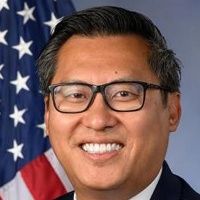
The Save Our Sequoias Act establishes a comprehensive federal framework to protect, restore, and manage giant sequoia groves through collaborative partnerships, emergency response programs, and long-term reforestation strategies.
Vince Fong
Representative
CA
Vince Fong
Representative
CA
The Save Our Sequoias Act establishes a comprehensive, multi-agency framework to protect and restore giant sequoia groves from the escalating threats of wildfire, insects, and drought. The legislation creates a collaborative coalition to assess grove health, streamlines emergency protection projects, and authorizes dedicated funding and strike teams to accelerate reforestation and forest management efforts. By fostering partnerships between federal, state, and Tribal entities, the Act aims to ensure the long-term resilience and survival of these iconic trees.
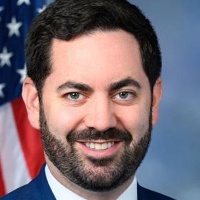
The Enhanced Iran Sanctions Act of 2025 mandates broad economic and immigration sanctions on foreign individuals, entities, and financial institutions that support Iran’s nuclear, missile, drone, or terrorist activities, while specifically targeting the country's petroleum and petrochemical sectors.
Michael Lawler
Representative
NY
Michael Lawler
Representative
NY
The Enhanced Iran Sanctions Act of 2025 strengthens U.S. policy by imposing mandatory sanctions on foreign persons and financial institutions that support Iran’s nuclear, ballistic missile, drone, and terrorist activities. The bill specifically targets Iran’s petroleum and petrochemical sectors to cut off funding for these malign programs. Additionally, it expands the State Department’s "Rewards for Justice" program to incentivize the reporting of individuals who evade these sanctions.