
Legislative Activity
Track Maggie's sponsored bills, co-sponsored legislation, and voting record
The Major Richard Star Act ensures that military retirees with combat-related disabilities can concurrently receive their full military retirement pay and VA disability compensation without reduction.

Gus Bilirakis
Representative
FL
Gus Bilirakis
Representative
FL
The Major Richard Star Act ensures that military retirees with combat-related disabilities can receive both their military retirement pay and VA disability compensation concurrently without reduction. This law removes previous restrictions that caused military retirement pay to be offset by VA disability payments for these specific cases. The changes take effect on the first day of the month following the Act's enactment.
This bill grants temporary guest status and immediate work authorization to Ukrainians paroled into the U.S. under the "Uniting for Ukraine" program until it is safe for them to return home.
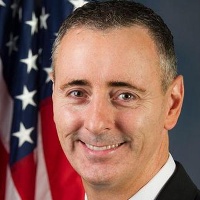
Brian Fitzpatrick
Representative
PA
Brian Fitzpatrick
Representative
PA
This Act establishes a special, temporary "Ukrainian guest status" for individuals paroled into the U.S. under the "Uniting for Ukraine" program. This status automatically grants immediate work authorization upon entry. The status will terminate 120 days after the Secretary of State certifies that hostilities in Ukraine have ceased and it is safe for civilians to return.
The Stop Comstock Act streamlines federal statutes by removing outdated and redundant language concerning "indecent" or "immoral" materials, focusing legal definitions on "obscene materials."
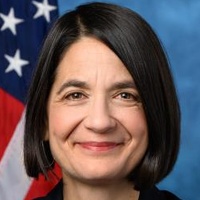
Becca Balint
Representative
VT
Becca Balint
Representative
VT
The Stop Comstock Act aims to modernize and streamline federal statutes concerning obscene materials. It revises several sections of federal law, including those related to crimes, transportation, and importation, by removing outdated or redundant language like "indecent" or "immoral." This legislative cleanup focuses the legal definitions to center specifically on "obscene materials."
The REDI Act allows medical and dental interns and residents to defer both principal and interest payments on their student loans while in training.
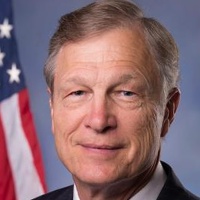
Brian Babin
Representative
TX
Brian Babin
Representative
TX
The Resident Education Deferred Interest (REDI) Act amends federal student loan regulations to provide a specific deferment for medical and dental residents. This allows borrowers currently serving in an internship or residency program to pause principal payments and prevent interest accrual on their student loans during that training period.
This bill allows investors to defer taxes on capital gain dividends from mutual funds when those dividends are automatically reinvested until the shares are sold or the investor passes away.
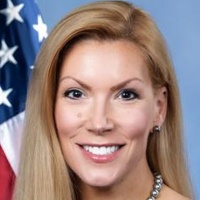
Beth Van Duyne
Representative
TX
Beth Van Duyne
Representative
TX
This bill, the Generating Retirement Ownership through Long-Term Holding Act, allows individual investors to defer paying taxes on capital gain dividends from mutual funds if those dividends are automatically reinvested into more fund shares. Taxes on these deferred gains are only due when the investor sells the shares or upon death. This provision aims to encourage long-term investment in mutual funds by providing immediate tax relief on reinvested earnings.
This Act eliminates the waiting periods for Social Security disability benefits and Medicare coverage for individuals diagnosed with metastatic breast cancer.
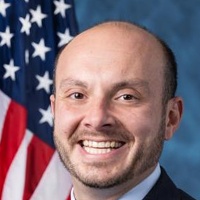
Andrew Garbarino
Representative
NY
Andrew Garbarino
Representative
NY
The Metastatic Breast Cancer Access to Care Act aims to improve support for individuals diagnosed with metastatic breast cancer. This bill eliminates the standard waiting period for receiving Social Security disability insurance benefits and waives the 24-month waiting period for Medicare coverage. These changes ensure immediate access to crucial financial and healthcare support upon diagnosis.
This Act establishes a Department of Veterans Affairs program to furnish eligible veterans with U.S.-made, secure firearm storage lockboxes or vouchers, alongside educational materials promoting suicide prevention.

Chris Deluzio
Representative
PA
Chris Deluzio
Representative
PA
The Saving Our Veterans Lives Act of 2025 establishes a new Department of Veterans Affairs (VA) program to provide eligible veterans and former service members with secure, U.S.-made firearm storage lockboxes or vouchers. This initiative aims to promote safe firearm storage as a suicide prevention measure through distribution and public awareness campaigns. The law explicitly states that participation will not affect an individual's legal right to own firearms or require any form of firearm registration.
This act automatically appropriates necessary funds to ensure the Supplemental Nutrition Assistance Program (SNAP) continues operating for the first 90 days of any fiscal year lapse in appropriations.

Emilia Sykes
Representative
OH
Emilia Sykes
Representative
OH
The Feed Our Families Act of 2025 ensures the continuity of the Supplemental Nutrition Assistance Program (SNAP) during the initial phase of a government shutdown. This bill automatically reserves necessary funding to operate SNAP for the first 90 days following a lapse in appropriations at the start of a fiscal year. These funds are held in reserve and released only as needed to maintain essential program services.
The American Teacher Act establishes federal grants to incentivize states to set a minimum annual teacher salary of $60,000 and provide inflation adjustments for teacher pay.

Frederica Wilson
Representative
FL
Frederica Wilson
Representative
FL
The American Teacher Act aims to address critical teacher shortages by establishing federal grants to help states raise the minimum annual salary for full-time teachers to \$60,000, adjusted for inflation. States must submit sustainability plans to ensure these minimums continue after the initial four-year grant period ends. The bill also provides funds for cost-of-living adjustments and a national campaign to enhance the value and diversity of the teaching profession.
This Act resets the probationary period for certain federal employees unfairly separated between January 20, 2025, and January 20, 2029, by crediting them for time already served.

Sarah Elfreth
Representative
MD
Sarah Elfreth
Representative
MD
The Protect Our Probationary Employees Act resets the probationary period for certain federal employees who were involuntarily separated between January 20, 2025, and January 20, 2029. If these employees are rehired into a similar role at the same agency, their new probationary period will be reduced by the time they already served previously. This provision is temporary and will expire on January 20, 2029.
This bill mandates salary reductions for Members of Congress when the national debt limit is reached or during a government shutdown, with special temporary rules applying to the 119th Congress.

Eugene Vindman
Representative
VA
Eugene Vindman
Representative
VA
This bill mandates automatic pay reductions for Members of Congress if the nation hits the public debt limit or experiences a government shutdown. The pay cut is calculated based on one day's salary multiplied by the number of days the crisis lasts. Special, temporary escrow rules apply to the 119th Congress to address constitutional concerns, with general rules taking full effect after the November 2026 election. The Secretary of the Treasury is required to assist congressional payroll offices in implementing these provisions.
This act allows State homes caring for veterans to choose between direct reimbursement or direct furnishing of high-cost medications.
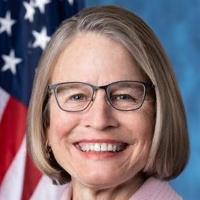
Mariannette Miller-Meeks
Representative
IA
Mariannette Miller-Meeks
Representative
IA
The Providing Veterans Essential Medications Act allows State homes caring for veterans to choose how they receive reimbursement for very high-cost medications. State homes can opt to be reimbursed directly for the medication's cost or have the Secretary of the VA furnish the drug directly. This provision applies only when the cost of a specific medication exceeds a defined threshold relative to the standard monthly payment for that veteran's care.
The FARMLAND Act of 2025 aims to protect U.S. agriculture by restricting foreign investment, increasing oversight, and enforcing regulations against foreign entities of concern.
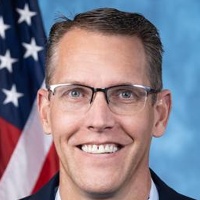
Randy Feenstra
Representative
IA
Randy Feenstra
Representative
IA
The FARMLAND Act of 2025 aims to protect U.S. agriculture and national security by modernizing and enforcing laws against malign foreign investments in U.S. agricultural land and businesses, particularly from countries of concern. It increases penalties for non-compliance with reporting requirements, mandates detailed reports on foreign land ownership and potential threats, and enhances the Committee on Foreign Investment in the United States (CFIUS) authority to review real estate transactions involving foreign entities. The act also directs the creation of a comprehensive database of foreign-owned agricultural land and prohibits foreign individuals/entities from participating in Farm Service Agency programs. Finally, the act authorizes appropriations for secure workspace construction, database development, and other activities related to enforcing the act.
Reauthorizes and amends the Rural Cooperative Development Grant program to support cooperative development through outreach, education, and technical assistance, particularly in underserved communities, and extends the program's authorization through 2029.

Josh Riley
Representative
NY
Josh Riley
Representative
NY
The "Strengthening Rural Cooperatives and Communities Act" reauthorizes and amends the Rural Cooperative Development Grant program. It prioritizes assistance to underserved communities and requires more thorough reporting and analysis of the program's impact. The act extends the program's authorization through 2029.
This bill increases the annual stipend for educational costs for veterans under the Post-9/11 Educational Assistance Program and adjusts it annually for inflation.
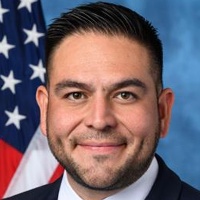
Gabriel (Gabe) Vasquez
Representative
NM
Gabriel (Gabe) Vasquez
Representative
NM
The Veteran Education Assistance Adjustment Act increases the annual stipend for books, supplies, and equipment for veterans under the Post-9/11 Educational Assistance Program from $1,000 to $1,400. Beginning in 2026, this stipend will be subject to annual increases based on the Consumer Price Index.
The BAH Restoration Act ensures that uniformed service members receive a basic housing allowance that covers the full cost of adequate housing based on location, pay grade, and dependency status.

Marilyn Strickland
Representative
WA
Marilyn Strickland
Representative
WA
The BAH Restoration Act aims to restore the Basic Allowance for Housing (BAH) to cover 100% of service members' housing costs. This will be done by amending title 37 of the United States Code, ensuring that the monthly BAH is equivalent to the determined monthly cost of adequate housing based on pay grade, dependency status, and location. The Secretary of Defense will determine the specific housing costs in each area.
The John R. Lewis Voting Rights Advancement Act of 2025 aims to strengthen and update the Voting Rights Act of 1965 by addressing vote dilution and denial, establishing updated criteria for federal oversight of states and political subdivisions with a history of voting rights violations, and promoting transparency in election-related changes.
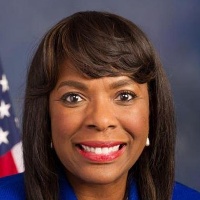
Terri Sewell
Representative
AL
Terri Sewell
Representative
AL
The John R. Lewis Voting Rights Advancement Act of 2025 amends the Voting Rights Act of 1965 to address vote dilution, denial, and abridgment claims, and to update which states and political subdivisions are subject to federal oversight based on a history of voting rights violations. It broadens the types of violations that allow a court to retain jurisdiction over a case, clarifies the Attorney General's authority to assign observers, and ensures transparency in voting-related changes. The Act also authorizes the Attorney General to demand documents and information to enforce voting rights and provides grants to small jurisdictions to assist with notification requirements.
The Richard L. Trumka Protecting the Right to Organize Act of 2025 strengthens protections for workers' rights to organize and collectively bargain by modernizing labor laws, addressing unfair labor practices, and enhancing enforcement mechanisms.
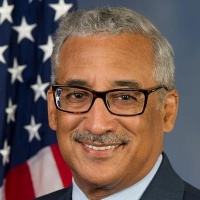
Robert Scott
Representative
VA
Robert Scott
Representative
VA
This bill, the Richard L. Trumka Protecting the Right to Organize Act of 2025, seeks to amend the National Labor Relations Act and other labor laws to strengthen protections for workers' rights to organize and collectively bargain. It aims to modernize labor regulations by clarifying definitions, addressing unfair labor practices, enhancing enforcement, and increasing transparency in labor-management relations. The bill introduces measures such as electronic voting in union elections, strengthens whistleblower protections, and mandates studies on collective bargaining practices. Ultimately, the goal is to ensure fair treatment of workers and promote equitable labor practices.
The TAP Promotion Act mandates a standardized, one-hour presentation on available VA benefits during mandatory preseparation counseling for service members.
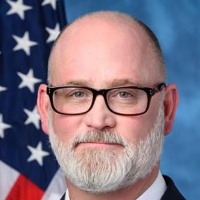
Derrick Van Orden
Representative
WI
Derrick Van Orden
Representative
WI
The TAP Promotion Act mandates a standardized, one-hour presentation on available VA benefits during mandatory preseparation counseling for service members. This presentation must be developed and approved by the Secretary of Veterans Affairs in consultation with recognized Veterans Service Organizations (VSOs). The goal is to ensure separating service members are fully informed of their entitlements and how VSOs can assist with filing claims.
The "Child Care Availability and Affordability Act" aims to make child care more accessible and affordable by expanding employer-provided child care credits, increasing tax-free dependent care assistance, and enhancing the household and dependent care tax credit.
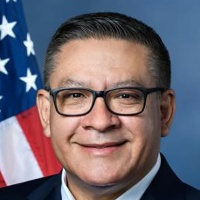
Salud Carbajal
Representative
CA
Salud Carbajal
Representative
CA
The Child Care Availability and Affordability Act aims to improve access to affordable child care by expanding employer-provided child care credits, increasing tax-free dependent care assistance, and creating a refundable household and dependent care tax credit. The employer provided child care credit is increased from 25% to 50% of qualified expenses, and the maximum credit amount is raised from $150,000 to $500,000. The amount of tax-free employer-provided dependent care assistance is increased from $5,000 to $7,500. A new tax credit is created for employment-related expenses paid for household and dependent care, with the applicable percentage starting at 50% and decreasing based on income, and the maximum creditable expenses are $5,000 for one qualifying individual and $8,000 for two or more.