
Legislative Activity
Track Marjorie's sponsored bills, co-sponsored legislation, and voting record
This bill proposes the full repeal of the National Firearms Act, eliminating federal taxes, registration requirements, and transfer restrictions on items such as silencers and short-barreled firearms.
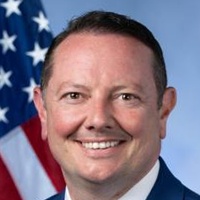
Eric Burlison
Representative
MO
Eric Burlison
Representative
MO
The "Repeal the NFA Act" proposes the complete elimination of the National Firearms Act (NFA). This legislation would remove federal taxes, registration requirements, and transfer restrictions currently imposed on items such as machine guns, short-barreled rifles, short-barreled shotguns, and silencers.
This bill honors the life, achievements, and legacy of President Jimmy Carter, recognizing his dedication to public service, human rights, and global peace. It acknowledges his lasting impact as a leader and statesman.

Nikema Williams
Representative
GA
Nikema Williams
Representative
GA
This bill honors the life, achievements, and legacy of Jimmy Carter, recognizing his service as a naval officer, farmer, state senator, Governor, and President. It also acknowledges his post-presidency work promoting peace, democracy, and human rights through the Carter Center, as well as his dedication to Habitat for Humanity. The bill expresses condolences to his family upon his passing and celebrates his lasting impact as a leader and statesman.
The Healthcare Freedom Act of 2025 expands tax-advantaged health savings options by replacing HSAs with universal "health freedom accounts" that feature higher contribution limits and broader eligibility for medical expenses.

Chip Roy
Representative
TX
Chip Roy
Representative
TX
The Healthcare Freedom Act of 2025 replaces traditional health savings accounts with expanded "health freedom accounts" (HFAs), allowing anyone to make tax-deductible contributions for a wider range of medical expenses. The bill increases annual contribution limits and provides greater flexibility for managing healthcare costs. Additionally, it establishes a long-term transition to shift employer-provided health benefits toward these HFA-based models for future hires.
The REMAIN in Mexico Act of 2025 mandates the implementation of the Migrant Protection Protocols, requiring asylum seekers to wait in Mexico while their claims are processed.

Brandon Gill
Representative
TX
Brandon Gill
Representative
TX
The REMAIN in Mexico Act of 2025 mandates that the Secretary of Homeland Security reinstate the Migrant Protection Protocols (MPP). This legislation requires that asylum seekers be returned to Mexico to await their U.S. immigration proceedings, effectively codifying the 2019 policy guidance into law.
The Laken Riley Act mandates the detention of certain undocumented immigrants charged with theft-related crimes and empowers state attorneys general to sue federal officials for failures in enforcing immigration laws.
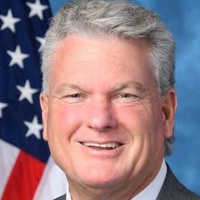
Mike Collins
Representative
GA
Mike Collins
Representative
GA
The Laken Riley Act mandates the detention of undocumented immigrants who are charged with or convicted of theft-related offenses. Additionally, the bill empowers state attorneys general to sue federal officials for failures in enforcing immigration detention, removal, and parole laws.
The "Keep Your Coins Act of 2025" prevents federal agencies from restricting individuals from using virtual currency for personal transactions or from self-custody of their digital assets. This ensures individuals retain control over their convertible virtual currency for lawful transactions.

Warren Davidson
Representative
OH
Warren Davidson
Representative
OH
The Keep Your Coins Act of 2025 prevents federal agencies from restricting individuals using convertible virtual currency (digital currency) for personal transactions. It ensures individuals can use self-hosted wallets or other methods to maintain control over their digital assets for any lawful transaction. This protects the right of individuals to use digital currencies to purchase goods and services for personal use.
The Federal Reserve Transparency Act of 2025 mandates a comprehensive audit of the Federal Reserve System by the Comptroller General, ensuring greater transparency and accountability. This act requires a detailed report to Congress with findings and recommendations, while also repealing audit limitations.

Thomas Massie
Representative
KY
Thomas Massie
Representative
KY
The Federal Reserve Transparency Act of 2025 mandates a comprehensive audit of the Federal Reserve System by the Comptroller General within one year. Following the audit, a detailed report must be submitted to Congress, including findings and recommendations. This act aims to increase transparency and accountability within the Federal Reserve System by repealing audit limitations.
The Regulations from the Executive in Need of Scrutiny (REINS) Act of 2025 increases congressional accountability by requiring federal agencies to obtain legislative approval for all "major" rules before they can take effect.

Katherine Cammack
Representative
FL
Katherine Cammack
Representative
FL
The Regulations from the Executive in Need of Scrutiny (REINS) Act of 2025 aims to increase federal regulatory accountability by requiring Congress to approve any "major" rule before it can take effect. Under this legislation, rules with a significant economic impact require a joint resolution of approval from both chambers of Congress to become law. By shifting this authority back to the legislative branch, the Act seeks to ensure greater transparency and oversight of the federal rulemaking process.
The First Amendment Accountability Act allows individuals to sue federal executive branch employees for civil damages when their First Amendment rights are violated under color of federal authority.

Harriet Hageman
Representative
WY
Harriet Hageman
Representative
WY
The First Amendment Accountability Act empowers individuals to sue federal executive branch employees for violating their First Amendment rights while acting under federal authority. This legislation allows victims to seek monetary damages and legal remedies, while explicitly excluding internal federal employment disputes from its scope. Additionally, it provides for the recovery of attorney’s fees for successful plaintiffs to ensure greater accountability for government actions.