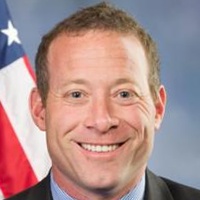
Legislative Activity
Track Josh's sponsored bills, co-sponsored legislation, and voting record
The "DOC Access Act of 2025" aims to improve dental and vision care coverage by ensuring fair payment practices, protecting providers' choices, and upholding state regulatory authority.
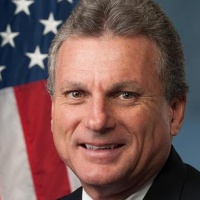
Earl Carter
Representative
GA
Earl Carter
Representative
GA
The "DOC Access Act of 2025" aims to enhance health care coverage under vision and dental plans by ensuring fair payment practices, protecting doctors' choices in labs and suppliers, and respecting state laws. It allows optometrists and dentists to charge their standard rate for non-covered services if the plan's payment is unreasonable, while ensuring they can only charge the contracted rate for dental cleanings. The bill also gives doctors more control over agreement extensions with limited benefit plans and allows them to opt out of certain provisions. Ultimately, this act seeks to balance federal guidelines with state oversight in regulating health insurance issuers and dental or vision benefit plans.
This bill ensures Medicare patients can continue receiving physical therapy services without interruption by allowing temporary substitute therapists ("locum tenens") to be covered when a physical therapist is temporarily unavailable.

Gus Bilirakis
Representative
FL
Gus Bilirakis
Representative
FL
The "Prevent Interruptions in Physical Therapy Act of 2025" ensures Medicare beneficiaries can continue receiving uninterrupted physical therapy services. It allows physical therapists to utilize temporary staffing arrangements, known as "locum tenens," when the regular therapist is temporarily unavailable. This ensures Medicare payments for services provided by qualified substitute physical therapists, maintaining consistent care for patients.
The "Medical Device Electronic Labeling Act" allows medical device manufacturers to provide labeling electronically, provided it is easily accessible and paper copies are available upon request, while maintaining device safety and effectiveness.
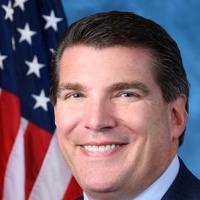
Jay Obernolte
Representative
CA
Jay Obernolte
Representative
CA
The "Medical Device Electronic Labeling Act" amends the Federal Food, Drug, and Cosmetic Act, permitting manufacturers to provide device labeling electronically, provided it is easily accessible. Paper copies must be available upon request without charge, and the device label itself must still comply with current regulations. The Secretary can implement additional requirements or exceptions for electronic labeling to ensure device safety and effectiveness.
The "Access Technology Affordability Act of 2025" creates a tax credit of up to $2,000 every three years for blind individuals who purchase qualified access technology.
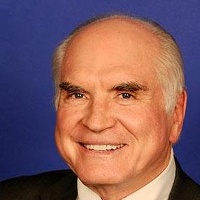
Mike Kelly
Representative
PA
Mike Kelly
Representative
PA
The "Access Technology Affordability Act of 2025" introduces a tax credit for blind individuals who purchase qualified access technology, such as hardware or software that converts visual information into accessible formats. The credit is capped at $2,000 per blind individual over any three consecutive tax years and will be adjusted for inflation after 2026. This credit is effective for tax years starting after December 31, 2025, and expires after December 31, 2030. It ensures that individuals cannot claim double benefits for the same expenses.
This House resolution clarifies that UN Resolution 2758 only addressed UN representation and does not validate the PRC's "One China Principle" regarding Taiwan's status, while supporting Taiwan's international participation.

Young Kim
Representative
CA
Young Kim
Representative
CA
This resolution clarifies that United Nations General Assembly Resolution 2758 only addressed seating arrangements and does not validate the People's Republic of China's "One China Principle" regarding Taiwan's status. It asserts that the U.S. "One China Policy" is distinct from Beijing's claims and does not endorse PRC sovereignty over Taiwan. The bill strongly opposes PRC efforts to use the resolution to exclude Taiwan from international organizations and supports Taiwan's meaningful participation globally.
The "PEER Mental Health Act of 2025" aims to improve mental health support in schools by providing grants for training in mental health first aid and awareness.
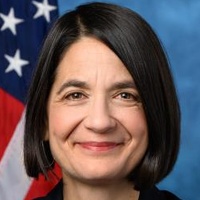
Becca Balint
Representative
VT
Becca Balint
Representative
VT
The "PEER Mental Health Act of 2025" aims to improve mental health support in schools by authorizing grants for training teachers, staff, students, parents, and caregivers in mental health first aid. These grants will help individuals recognize mental health symptoms, make appropriate referrals, and respond to immediate distress. A minimum of 25% of grant funds will be allocated to schools in rural areas, with the possibility of reallocation if unused. The Act allocates almost $25 million per year from 2026 to 2030 for these initiatives.
The Public Safety Employer-Employee Cooperation Act establishes collective bargaining rights for public safety officers nationwide, ensuring fair labor practices and cooperation between employers and employees.
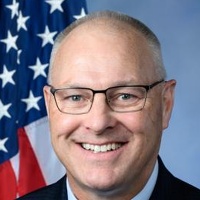
Pete Stauber
Representative
MN
Pete Stauber
Representative
MN
The Public Safety Employer-Employee Cooperation Act establishes a framework for collective bargaining rights for public safety officers (law enforcement, firefighters, and emergency medical services personnel) at the state level. It directs the Federal Labor Relations Authority to determine if states substantially protect these rights, and if not, the Authority will establish collective bargaining procedures. The Act aims to promote cooperation between public safety employers and employees while respecting existing state laws and prohibiting strikes and lockouts. This law does not override state laws that provide similar or stronger protections for public safety officers.
This bill requires the FAA to collaborate with the National Academies to produce a report detailing the health impacts of air traffic noise and pollution.
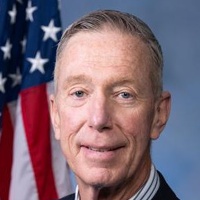
Stephen Lynch
Representative
MA
Stephen Lynch
Representative
MA
The "Air Traffic Noise and Pollution Expert Consensus Act of 2025" directs the FAA to collaborate with the National Academies to study and report on the health impacts of air traffic noise and pollution. This report will consolidate current scientific knowledge and be delivered to key government officials and congressional committees.
The "Rare Earth Magnet Security Act of 2025" introduces a tax credit for U.S. manufacturers of rare earth magnets, with increased incentives for magnets using domestically sourced materials, phasing out after 2034, and restrictions on materials from non-allied foreign nations.
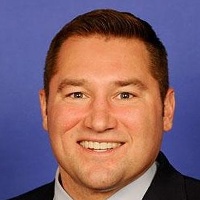
Guy Reschenthaler
Representative
PA
Guy Reschenthaler
Representative
PA
The "Rare Earth Magnet Security Act of 2025" introduces a tax credit for the production of rare earth magnets, incentivizing domestic manufacturing. The credit offers \$20 per kilogram for magnets made in the U.S. and \$30 per kilogram if 90% of the magnet's materials are U.S.-sourced. The credit phases out after 2034 and includes restrictions on sourcing materials from non-allied foreign nations, with some temporary exceptions. The act also allows manufacturers to elect to receive direct payments from the government in lieu of the tax credit.
This bill establishes a dedicated section within the Department of Justice to enforce federal animal cruelty laws, enhance investigations and prosecutions, and improve inter-agency coordination.
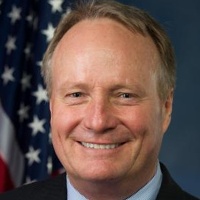
David Joyce
Representative
OH
David Joyce
Representative
OH
The Animal Cruelty Enforcement Act of 2025 establishes an Animal Cruelty Crimes Section within the Department of Justice to enforce federal animal cruelty laws, pursue investigations and prosecutions, and coordinate with other agencies. The section is required to submit an annual report to Congress regarding charges, convictions, and investigations. The bill recognizes the connection between animal cruelty and other crimes and aims to address the lack of dedicated enforcement of animal protection laws.
The "Accelerating Kids’ Access to Care Act of 2025" streamlines Medicaid and CHIP enrollment for out-of-state providers, increasing healthcare access for children.
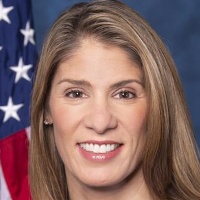
Lori Trahan
Representative
MA
Lori Trahan
Representative
MA
The "Accelerating Kids Access to Care Act of 2025" streamlines the enrollment process for out-of-state healthcare providers in Medicaid and CHIP, ensuring children under 21 have access to care from eligible providers across state lines. By reducing administrative burdens and unnecessary screening requirements, the Act aims to improve healthcare access for children while maintaining necessary safeguards against fraud and abuse. Participating providers will be enrolled for a 5-year period, and the changes will take effect three years after the Act's enactment.
The "Family-to-Family Reauthorization Act of 2025" extends funding for family-to-family health information centers through 2029.
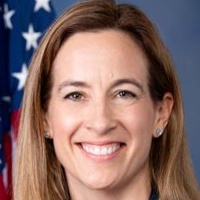
Mikie Sherrill
Representative
NJ
Mikie Sherrill
Representative
NJ
The "Family-to-Family Reauthorization Act of 2025" extends funding for family-to-family health information centers. It allocates \$6,000,000 for April 1, 2025, to September 30, 2025, and \$9,000,000 for each fiscal year from 2026 through 2029. This ensures continued support for families navigating healthcare for children with disabilities or special needs.
The bill modifies and extends funding for the World Trade Center Health Program, expands the types of healthcare providers who can certify mental health conditions, and requires a report to Congress on the program's budget.
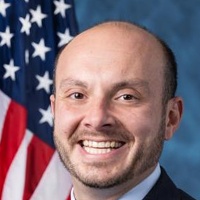
Andrew Garbarino
Representative
NY
Andrew Garbarino
Representative
NY
The 9/11 Responder and Survivor Health Funding Correction Act of 2025 amends the Public Health Service Act to improve the World Trade Center (WTC) Health Program by expanding the types of healthcare providers who can conduct mental health evaluations, modifying provider credentialing, clarifying enrollment calculations, and extending the time frame for adding health conditions for WTC responders. The act adjusts the funding formula for fiscal years 2026 through 2090 and requires the Secretary of Health and Human Services to report to Congress on the program's budget, including projected needs through 2090 and recommendations for changes to the funding formula. It also stipulates that remaining funds in the Supplemental Fund, Special Fund, and Pentagon-Shanksville Fund will revert to the Treasury.
This bill authorizes a Congressional Gold Medal for the Buffalo Soldier regiments, honoring their service and contributions to the U.S. military.
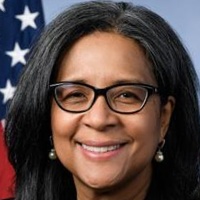
Marilyn Strickland
Representative
WA
Marilyn Strickland
Representative
WA
The Buffalo Soldiers Congressional Gold Medal Act of 2025 authorizes the Speaker of the House and the President pro tempore of the Senate to award a Congressional Gold Medal to the Buffalo Soldier regiments, recognizing their dedicated service to the United States. Following the award ceremony, the medal will be given to the Smithsonian Institution's National Museum of African American History and Culture for display and research. The Secretary of the Treasury is permitted to create and sell bronze duplicates of the gold medal. Funds from the sales will be deposited back into the Mint's Public Enterprise Fund.
The "Make American Flags in America Act of 2025" mandates that U.S. flags displayed on Federal property or bought by Federal agencies be made entirely in the U.S., and requires a study on country-of-origin labeling enforcement for flags.
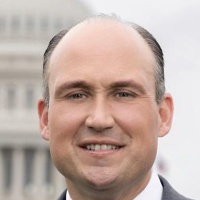
Nicholas Langworthy
Representative
NY
Nicholas Langworthy
Representative
NY
The "Make American Flags in America Act of 2025" mandates that U.S. flags displayed on Federal property or bought by Federal agencies be entirely manufactured in the U.S. using 100% U.S.-made materials, in accordance with international agreements. It also directs the Federal Trade Commission to study and report on country-of-origin labeling enforcement for U.S. flags, aiming to improve enforcement and deter violations.
This bill amends the Civilian Health and Medical Program of the Department of Veterans Affairs (CHAMPVA) to extend eligibility for medical care to children until their 26th birthday, regardless of marital status.
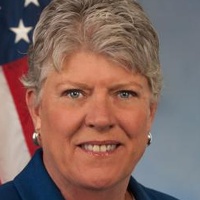
Julia Brownley
Representative
CA
Julia Brownley
Representative
CA
The CHAMPVA Children's Care Protection Act of 2025 amends the eligibility requirements for the Civilian Health and Medical Program of the Department of Veterans Affairs (CHAMPVA). This act increases the maximum age for eligible children to receive medical care under the program to 26 years old, regardless of their marital status. This change does not affect benefits for children incapable of self-support and takes effect for medical care provided on or after the enactment of this act.
The "Marriage Equality for Disabled Adults Act" removes barriers in Social Security and Medicaid that penalize disabled adults who choose to marry, ensuring equal access to benefits regardless of marital status.
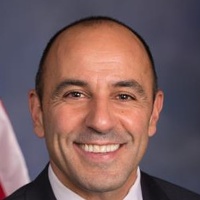
Jimmy Panetta
Representative
CA
Jimmy Panetta
Representative
CA
The "Marriage Equality for Disabled Adults Act" removes the marriage penalty for adult children with disabilities receiving Social Security benefits based on their parent's work record, ensuring equal treatment in marital relationship determinations across different titles of the Social Security Act. It also protects Medicaid eligibility for these individuals and ensures that one spouse's income or resources are not attributed to the other when determining benefit eligibility. The Act expresses Congress's intent to maintain Medicare, Medicaid, and Social Security benefits for married disabled adult children, regardless of state laws or marital status.
The Secure Rural Schools Reauthorization Act of 2025 extends federal funding and program authorities for states and counties containing national forest land through 2026.
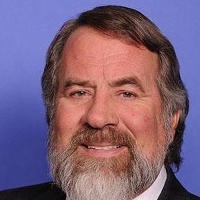
Doug LaMalfa
Representative
CA
Doug LaMalfa
Representative
CA
The Secure Rural Schools Reauthorization Act of 2025 extends critical federal funding for states and counties containing national forest land through 2026. This legislation ensures the continuation of essential community services and maintains the authority for resource advisory committees and local special projects.
This resolution urges the United Kingdom, France, and Germany to trigger the UN "snapback" mechanism to reimpose international sanctions on Iran for its nuclear and ballistic missile violations before the provision expires in October 2025.
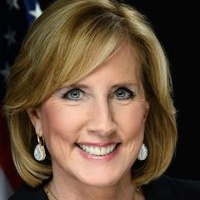
Claudia Tenney
Representative
NY
Claudia Tenney
Representative
NY
This resolution calls on the United Kingdom, France, and Germany to immediately trigger the "snapback" mechanism under UN Security Council Resolution 2231 to reimpose international sanctions on Iran. It condemns Iran’s ongoing nuclear violations and urges action before the snapback authority expires on October 18, 2025. The measure reaffirms the U.S. commitment to preventing Iran from acquiring nuclear weapons and holds the regime accountable for its destabilizing activities.
The "Measures for Safer School Districts Act" mandates emergency response and parental notification procedures for schools, establishes a committee to recommend reinforced school door standards, and allocates funding to improve school security.
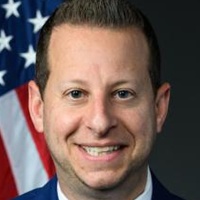
Jared Moskowitz
Representative
FL
Jared Moskowitz
Representative
FL
The Measures for Safer School Districts Act, or MSD Act, mandates that local educational agencies develop emergency response procedures, including parental notification protocols, for various threats and emergencies in schools. It also directs the Cybersecurity and Infrastructure Security Agency (CISA) Director to form a committee to create recommendations for installing or modifying interior and exterior doors in federally funded elementary and secondary schools. The CISA Director must then submit a report to Congress detailing the committee's findings and issue a final rule requiring the installation or modification of school doors to reinforce them. An additional $100,000,000 is authorized for the Homeland Security Grant Program for ten fiscal years to carry out this section.