Legislative Activity
Track Josh's sponsored bills, co-sponsored legislation, and voting record
This Act mandates the State Department to improve coordination and specialized training for overseas security personnel and report on those efforts to Congress.
Michael Lawler
Representative
NY
Michael Lawler
Representative
NY
The Secure Our Embassies Act emphasizes the critical need for enhanced security coordination among various State Department personnel responsible for protecting U.S. diplomatic missions abroad. It supports better integration between physical security, technology, and building operations staff to address complex threats. Furthermore, the bill mandates specific counterintelligence training for key security roles and requires the Secretary of State to report on plans to improve this coordination and training.
This bill repeals specific prior health reconciliation provisions and expands eligibility for the Premium Tax Credit by removing the 400% income cap and adjusting the subsidy calculation formula.
Adam Gray
Representative
CA
Adam Gray
Representative
CA
The Protecting Health Care and Lowering Costs Act of 2025 repeals specific prior reconciliation health provisions. This bill significantly expands eligibility for the Premium Tax Credit by eliminating the 400% Federal Poverty Level income cap. It also updates the subsidy calculation formula to ensure a smoother, linear adjustment of assistance across various income levels.
This bill establishes comprehensive reproductive and fertility preservation assistance for active-duty service members and expands fertility treatment and adoption assistance benefits for eligible veterans.
Rick Larsen
Representative
WA
Rick Larsen
Representative
WA
The Veteran Families Health Services Act of 2025 expands reproductive and fertility care for service members and veterans. Title I mandates comprehensive fertility preservation and treatment for active-duty personnel and their families. Title II formally establishes fertility treatment, counseling, and adoption assistance as covered benefits for eligible veterans through the VA. This bill aims to remove barriers and reduce financial burdens for military families seeking to start or expand their families.
The Wildfire Emergency Preparedness Act of 2025 establishes national training programs, creates a new Under Secretary for Fire Coordination, enhances firefighter health research, and provides supplemental funding and support for wildland fire response.
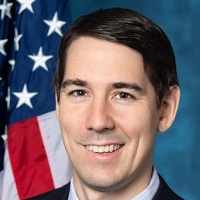
Josh Harder
Representative
CA
Josh Harder
Representative
CA
The Wildfire Emergency Preparedness Act of 2025 aims to significantly enhance national readiness for wildfires and wildland-urban interface fires. It establishes a national training plan and grant program for structural firefighters, creates a new high-level Under Secretary for Fire Coordination within the Department of Agriculture, and boosts firefighter health and safety research. Furthermore, the Act authorizes supplemental funding for local departments to purchase protective gear and receive specialized training.
The EATS Act of 2025 expands eligibility for SNAP benefits by removing previous restrictions for students enrolled at least half-time in recognized educational programs.
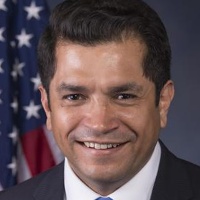
Jimmy Gomez
Representative
CA
Jimmy Gomez
Representative
CA
The EATS Act of 2025 significantly updates eligibility for the Supplemental Nutrition Assistance Program (SNAP) by removing previous restrictions that often disqualified students. This legislation explicitly includes bona fide students enrolled at least half-time in recognized educational programs as eligible participants for food assistance. These changes take effect on January 2, 2026.
This act restores previous state Medicaid provider tax rules by repealing Section 71115 of Public Law 11921.
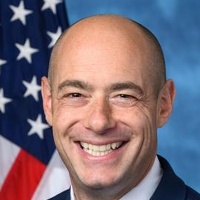
Greg Landsman
Representative
OH
Greg Landsman
Representative
OH
The Protect Our Hospitals Act aims to restore previous regulations concerning Medicaid provider taxes by repealing a specific section of Public Law 11921. This action effectively nullifies recent changes, returning the rules governing how states tax Medicaid providers to their original status.
The Blue Shield Privacy Act of 2025 expands the definition of restricted personal information to include location data, biometric information, and specific addresses like workplace and school.
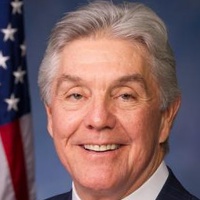
Roger Williams
Representative
TX
Roger Williams
Representative
TX
The Blue Shield Privacy Act of 2025 updates federal law to expand the definition of "restricted personal information." This expansion adds several new categories of sensitive data requiring enhanced privacy protection. Specifically, the bill now includes items like license plate numbers, biometric information, workplace/school addresses, and GPS coordinates.
This act repeals the prohibition on Medicaid payments to certain healthcare entities and mandates retroactive payment for services already rendered under the repealed ban.
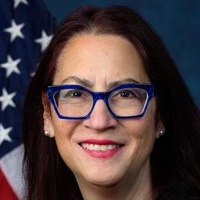
Laura Friedman
Representative
CA
Laura Friedman
Representative
CA
The Restoring Essential Healthcare Act repeals an outdated ban that prevented Medicaid from making payments to certain healthcare providers. This legislation ensures that these previously prohibited entities will now be reimbursed for medical services rendered between the enactment of the original ban and the passage of this Act. In short, it restores payment eligibility and retroactively covers past services.
This act authorizes $50 million annually from 2026 through 2031 for the CDC to conduct research on firearms safety and gun violence prevention.
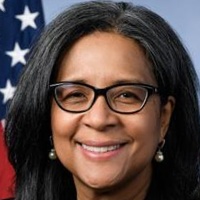
Marilyn Strickland
Representative
WA
Marilyn Strickland
Representative
WA
The Gun Violence Prevention Research Act of 2025 authorizes $50 million annually for the Centers for Disease Control and Prevention (CDC) to conduct or support research on firearms safety and gun violence prevention. This dedicated funding is authorized for each fiscal year from 2026 through 2031. This new allocation is separate from and in addition to any existing CDC research funding.
This resolution expresses the sense of Congress in supporting the designation of July as Disability Pride Month to recognize the contributions of people with disabilities and combat discrimination.
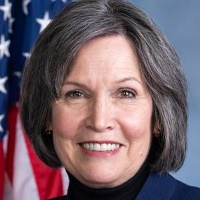
Betty McCollum
Representative
MN
Betty McCollum
Representative
MN
This resolution officially expresses the support of Congress for designating July as Disability Pride Month nationwide. It recognizes the significant contributions of people with disabilities while acknowledging ongoing discrimination. The bill encourages the public and organizations to observe the month through appropriate celebrations and by actively working to prevent exclusion.
This Act eliminates age restrictions and simplifies premium requirements for adult children covered under the TRICARE Young Adult program.
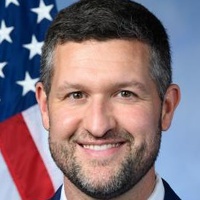
Patrick Ryan
Representative
NY
Patrick Ryan
Representative
NY
The Health Care Fairness for Military Families Act of 2025 significantly improves the TRICARE Young Adult (TYA) program for military dependents. This legislation eliminates the age restriction for TYA eligibility and removes the separate premium requirement for coverage. These changes aim to provide broader and simpler healthcare access for adult children of service members.
This Act mandates a comprehensive study by the Treasury Department and other agencies to assess and report on the risks posed by China's financial sector to the U.S. economy.
Roger Williams
Representative
TX
Roger Williams
Representative
TX
The China Financial Threat Mitigation Act of 2025 mandates a comprehensive study by the Treasury Department and other key agencies to assess U.S. exposure to risks within China's financial sector. This report must analyze potential global financial instability stemming from China and detail current U.S. mitigation efforts. Furthermore, the study will evaluate the trustworthiness of Chinese economic data and recommend further actions to protect American interests. The findings will be delivered to Congress and made publicly available within one year of enactment.
This Act prioritizes federal research and development funding for controlling the invasive Spotted Lanternfly and extends key agricultural research programs through 2030.
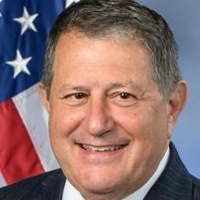
Joseph Morelle
Representative
NY
Joseph Morelle
Representative
NY
The Spotted Lanternfly Research and Development Act prioritizes federal funding for research and extension programs specifically aimed at controlling the invasive Spotted Lanternfly. This legislation ensures that developing effective tools and treatments against this pest becomes a high-priority initiative. Additionally, the Act extends the authorization for several existing high-priority agricultural research programs until 2030.
This bill establishes a grant program to foster collaborative PTSD research between the United States and Israel.
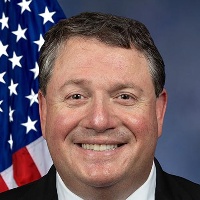
Randall Fine
Representative
FL
Randall Fine
Representative
FL
This bill establishes the United States-Israel PTSD Collaborative Research Act to foster scientific partnerships between the two nations. It creates a grant program, managed by the Secretary of Defense, to fund joint research projects between U.S. academic or non-profit entities and Israeli institutions specializing in PTSD treatment. The goal is to advance new and improved methods for diagnosing and treating post-traumatic stress disorder.
This Act increases penalties for health plans and insurers that violate surprise billing rules, imposes severe financial penalties for late payments after dispute resolution, and mandates more frequent and detailed transparency reporting on enforcement actions.
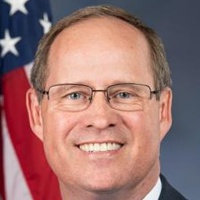
Gregory Murphy
Representative
NC
Gregory Murphy
Representative
NC
The No Surprises Act Enforcement Act significantly increases financial penalties for group health plans and insurance issuers that violate balance billing protections. It establishes steep fines, including up to $\$10,000$ per affected individual for serious non-compliance. Furthermore, the bill imposes severe penalties, including triple the disputed amount plus interest, for failing to make required payments promptly after an Independent Dispute Resolution (IDR) determination. Finally, it mandates more frequent and detailed transparency reporting on enforcement actions and violations.
This act establishes a grant program to fund local school districts in training staff on human trafficking, drug abuse prevention (including fentanyl), and gang activity intervention.
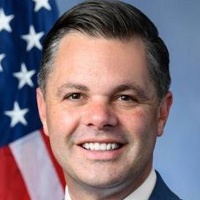
Zachary (Zach) Nunn
Representative
IA
Zachary (Zach) Nunn
Representative
IA
The Safe Schools and Communities Act of 2025 establishes a new federal grant program to fund local school districts. These competitive grants must be used to train school staff on identifying and preventing human trafficking, drug abuse (including fentanyl), and gang activity. This initiative aims to enhance safety protocols and awareness within elementary and secondary schools.
This bill amends the Foreign Assistance Act of 1961 to officially reclassify the provision of HIV pre-exposure prophylaxis (PrEP) and related prevention services as "core life-saving humanitarian assistance."
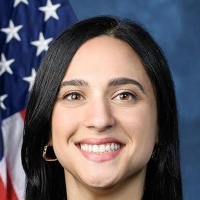
Yassamin Ansari
Representative
AZ
Yassamin Ansari
Representative
AZ
This bill amends the Foreign Assistance Act of 1961 to reclassify certain activities combating HIV/AIDS. Specifically, it mandates that providing HIV pre-exposure prophylaxis (PrEP) and related prevention services be formally recognized as "core life-saving humanitarian assistance." This change ensures these critical risk-reduction efforts are categorized as essential aid within U.S. foreign assistance programs.
The Community Mental Wellness and Resilience Act of 2025 establishes a federal grant program to fund local networks implementing public health strategies to strengthen community mental wellness and resilience, with a set-aside for rural areas.
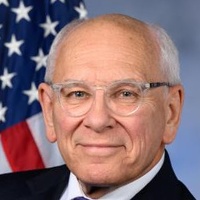
Paul Tonko
Representative
NY
Paul Tonko
Representative
NY
The Community Mental Wellness and Resilience Act of 2025 establishes a new federal grant program to fund local initiatives focused on strengthening community mental wellness and resilience. This program offers planning grants followed by larger competitive program grants to established coordinating networks utilizing a public health approach. A mandatory 20% of funds are set aside to ensure support reaches rural areas.
This bill reauthorizes key grant and education programs under the Virginia Graeme Baker Pool and Spa Safety Act for fiscal years 2025 through 2027.
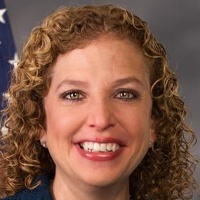
Debbie Wasserman Schultz
Representative
FL
Debbie Wasserman Schultz
Representative
FL
This bill reauthorizes key programs under the Virginia Graeme Baker Pool and Spa Safety Act. Specifically, it extends funding for state and community safety improvement grants and related education and awareness initiatives through fiscal year 2027. The purpose is to ensure continued support for vital pool and spa safety efforts.
This resolution expresses congressional disapproval of the United States Fish and Wildlife Service's submitted rule regarding the Barred Owl Management Strategy.
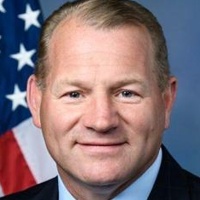
Troy Nehls
Representative
TX
Troy Nehls
Representative
TX
This joint resolution expresses the disapproval of Congress regarding the United States Fish and Wildlife Service's recently submitted rule on the "Barred Owl Management Strategy." By invoking the Congressional Review Act, this action nullifies the proposed management strategy, preventing it from taking legal effect. Essentially, Congress is rejecting the USFWS's plan for managing Barred Owls.