Legislative Activity
Track H.'s sponsored bills, co-sponsored legislation, and voting record
This bill restricts stock trading by Members of Congress and their families while establishing new federal requirements for voters to provide photo identification in federal elections.
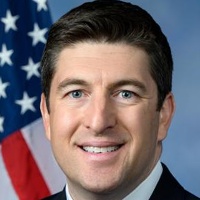
Bryan Steil
Representative
WI
Bryan Steil
Representative
WI
The Stop Insider Trading Act restricts Members of Congress, their spouses, and dependent children from purchasing or selling individual stocks to prevent conflicts of interest. Additionally, the bill mandates that voters provide valid photo identification when voting in person or by mail in federal elections.
This bill officially renames the United States Postal Service facility at 1225 Kempsville Road in Virginia Beach, Virginia, as the "Colonel Edward Shames Post Office Building."
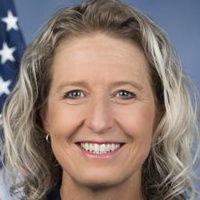
Jennifer Kiggans
Representative
VA
Jennifer Kiggans
Representative
VA
This bill officially renames the United States Postal Service facility located at 1225 Kempsville Road in Virginia Beach, Virginia. The facility will now be known as the "Colonel Edward Shames Post Office Building." This designation will be used in all future federal references to the building.
This bill directs the Department of Energy to assess how artificial intelligence and high-performance computing can enhance the capacity, reliability, and efficiency of the bulk-power system.
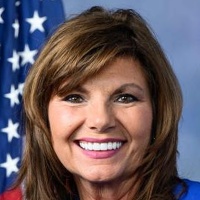
Diana Harshbarger
Representative
TN
Diana Harshbarger
Representative
TN
The Affordable Innovation for the Grid Act directs the Secretary of Energy to assess how artificial intelligence (AI) and high-performance computing can enhance the capacity and efficiency of the bulk-power system. This assessment will identify current uses, potential benefits, and existing barriers to adopting these advanced technologies. The resulting report will include recommendations for overcoming these barriers to promote grid modernization.
This bill mandates the Federal Energy Regulatory Commission to hold a technical conference and report on strategies to shield residential and small commercial utility customers from rising energy costs driven by large AI data centers.
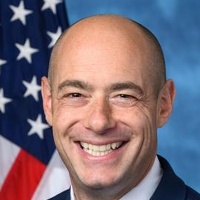
Greg Landsman
Representative
OH
Greg Landsman
Representative
OH
This bill, the Protecting Families from AI Data Center Energy Costs Act, directs the Federal Energy Regulatory Commission (FERC) to convene a technical conference on strategies to shield residential and small commercial utility customers from rising energy costs driven by large loads like AI data centers. Following the conference, FERC must submit a report to Congress detailing recommendations and best practices. The goal is to ensure utility costs remain manageable for everyday families and small businesses.
This bill prohibits the Department of Labor from finalizing, implementing, or enforcing the proposed rule regarding heat injury and illness prevention in outdoor and indoor work settings.
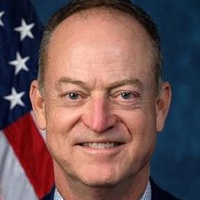
Mark Messmer
Representative
IN
Mark Messmer
Representative
IN
This act, the Heat Workforce Standards Act of 2025, prohibits the Secretary of Labor from finalizing, implementing, or enforcing the proposed rule regarding heat injury and illness prevention published in August 2024. This restriction extends to any future standard substantially similar to the one proposed.
This bill establishes a federal standard requiring large industrial electricity customers to fully cover the costs of necessary utility infrastructure upgrades and provide financial assurances before construction begins.
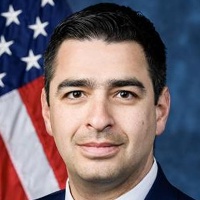
Gabe Evans
Representative
CO
Gabe Evans
Representative
CO
The Ratepayer Protection Act establishes a new federal standard requiring electric utilities to ensure large industrial customers (100 MW or more) fully cover the costs of necessary infrastructure upgrades. This mandates that large-load customers provide financial assurances before construction begins, protecting existing ratepayers from bearing the risk of future contract terminations. States must consider and adopt this standard within two years, unless they have already implemented similar requirements.
This bill establishes regional boards to study and report best practices for electric load forecasting, amends PURPA to mandate the incorporation of these practices, and requires states to update energy conservation plans accordingly.
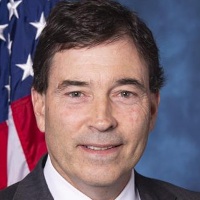
Troy Balderson
Representative
OH
Troy Balderson
Representative
OH
The Load Forecasting Enhancement Act establishes regional joint boards to study and identify best practices for electric load forecasting to improve grid reliability and affordability. It then mandates that electric utilities incorporate these best practices into their forecasting methods through an amendment to PURPA. Finally, the bill requires states to update their energy conservation plans to include procedures for improving load forecasting accuracy and transparency.
This bill amends the federal charter of the Daughters of the American Revolution to restrict membership eligibility to individuals who meet the organization's genealogical requirements and are defined as adult human females.
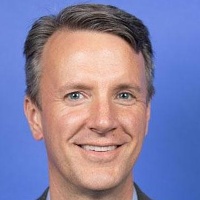
Ben Cline
Representative
VA
Ben Cline
Representative
VA
The Daughters of the American Revolution Membership Integrity Act amends the organization’s federal charter to formally define membership eligibility. The bill restricts membership to adult human females, establishing a biological definition for the term "female" based on reproductive system development.
The Advancing Water Research and Collaboration Act of 2025 updates the Water Resources Research Act to include the artificial intelligence sector in research partnerships and authorizes $16 million annually for interstate water resource studies through 2029.

Robert Wittman
Representative
VA
Robert Wittman
Representative
VA
The Advancing Water Research and Collaboration (AWRC) Act of 2025 updates the Water Resources Research Act of 1984 to formally integrate the artificial intelligence industry into national water research efforts. The bill authorizes $16 million annually from 2026 through 2029 to support regional and interstate water research initiatives. Additionally, it restructures funding allocations to prioritize collaborative projects that address complex, multi-state water challenges.
The Chloe Cole Act of 2026 establishes a private right of action allowing individuals to sue healthcare providers for damages resulting from gender-transition medical interventions performed on them as minors.
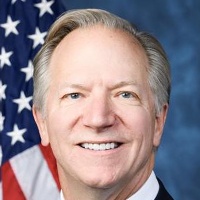
Robert Onder
Representative
MO
Robert Onder
Representative
MO
The Chloe Cole Act of 2026 establishes a federal private right of action allowing individuals to sue healthcare professionals and institutions for damages related to gender-transition medical interventions performed on them as minors. The bill permits lawsuits regardless of when the intervention occurred and sets a statute of limitations extending 25 years past the individual's 18th birthday. Additionally, it mandates strict liability for such interventions performed after the Act's enactment.
The Diesel Engine Flexibility (DEF) Act establishes a 10-year period of regulatory stability for on-road and nonroad diesel engines by freezing emission standards and providing a safe harbor for specific compliance and monitoring practices.
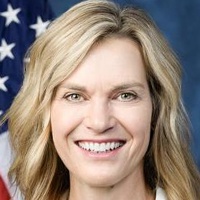
Julie Fedorchak
Representative
ND
Julie Fedorchak
Representative
ND
The Diesel Engine Flexibility (DEF) Act provides a 10-year period of regulatory stability for on-road and nonroad diesel engines by freezing emission standards at current levels. During this time, the bill establishes a safe harbor for manufacturers and operators following specific EPA guidance regarding diesel exhaust fluid monitoring and engine repair strategies. Additionally, it mandates that any future emission standards must include significant lead times and consider the operational and economic impacts on engine owners.
The Voter ID Act mandates photo identification for all federal elections while establishing a grant program to provide free identification to eligible voters who cannot afford the associated fees.
Bryan Steil
Representative
WI
Bryan Steil
Representative
WI
The Voter ID Act mandates that voters provide valid photo identification for both in-person and mail-in federal elections. To ensure accessibility, the bill requires states to provide free access to document-copying equipment and establishes a grant program to reimburse states and tribal governments that offer free photo IDs to individuals unable to afford them.
This bill prohibits Members of Congress, their spouses, and dependent children from trading on prediction markets based on information learned through congressional service, with associated financial penalties for violations.
Bryan Steil
Representative
WI
Bryan Steil
Representative
WI
This bill, the "Stop Lawmakers From Predicting Act," prohibits Members of Congress, their spouses, and dependent children from trading on prediction markets based on government policy, political outcomes, or information gained through congressional service. Violations result in significant financial penalties levied against the responsible Member, which cannot be paid using official or campaign funds. The supervising ethics office is tasked with issuing guidance and enforcing these new restrictions.
This bill, the Hydropower Licensing Affordability Act, modernizes the hydropower licensing process by expanding the Federal Energy Regulatory Commission's authority to require mitigation measures for adverse effects on federal reservations and fish populations.
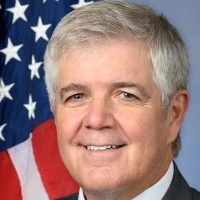
Cliff Bentz
Representative
OR
Cliff Bentz
Representative
OR
This bill, the Hydropower Licensing Affordability Act, modernizes the hydropower licensing process under the Federal Power Act. It expands the Federal Energy Regulatory Commission's authority to impose conditions on licenses to ensure hydropower projects reasonably mitigate direct adverse effects on federal reservations and local fish populations.
This act prohibits the federal government from mandating that qualified health plans maintain a provider network, while requiring greater transparency from plans that choose not to have one.
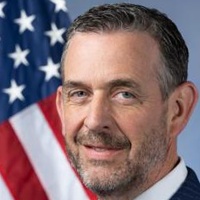
Michael Rulli
Representative
OH
Michael Rulli
Representative
OH
The Patient Choice and Access Act of 2026 removes the requirement for qualified health plans to maintain a provider network to be certified on the health insurance exchange. This change allows plans to operate without established networks starting in 2027. Plans choosing not to use a network must provide clear disclosures about potential out-of-pocket costs and balance billing to consumers.
This bill designates the America 250 flag as a national symbol to commemorate the 250th anniversary of the Declaration of Independence.
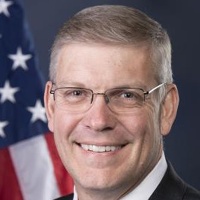
Barry Loudermilk
Representative
GA
Barry Loudermilk
Representative
GA
This bill officially designates the "America 250 flag" as a national symbol to commemorate the 250th anniversary of the Declaration of Independence. It authorizes this special flag, featuring the number 250 within the circle of stars, to be flown alongside the U.S. flag at government buildings worldwide during the Semiquincentennial celebration. The act recognizes the flag as a symbol of the nation's founding and commitment to liberty.
This resolution designates specific dates to honor law enforcement officers killed in the line of duty and expresses support for all officers.
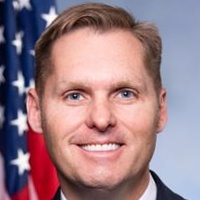
Michael Guest
Representative
MS
Michael Guest
Representative
MS
This resolution officially designates May 15, 2026, as Peace Officers Memorial Day and the week of May 10-16, 2026, as National Police Week. It honors the service and sacrifice of law enforcement officers killed in the line of duty, specifically recognizing 363 officers lost in 2025. The bill expresses unwavering support for law enforcement and acknowledges the need for proper resources to ensure officer safety.
This bill authorizes the President to design and build a new ballroom on White House grounds, granting them sole approval authority over the project.
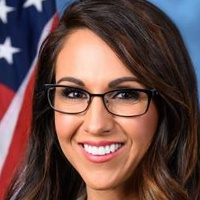
Lauren Boebert
Representative
CO
Lauren Boebert
Representative
CO
This act, the TRUMP Ballroom Act, authorizes the President to design and construct a new ballroom on the White House grounds. The President is granted sole authority to approve the design and construction, overriding any existing legal restrictions.
This bill condemns the multiple assassination attempts against President Donald J. Trump and recognizes the critical mission of the Department of Homeland Security.
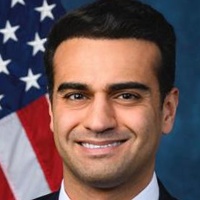
Abraham Hamadeh
Representative
AZ
Abraham Hamadeh
Representative
AZ
This bill strongly condemns the multiple attempted assassinations against President Donald J. Trump, including the attack on April 25, 2026. It commends the heroism of law enforcement and recognizes the critical mission of the Department of Homeland Security. Furthermore, the resolution calls for unity against political violence and the full funding of essential security agencies.
This Act repeals the federal beneficial ownership information reporting requirements for domestic persons and entities, limiting them only to foreign individuals and foreign-connected companies, and mandates the deletion of existing domestic data.
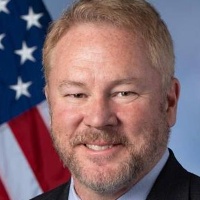
Warren Davidson
Representative
OH
Warren Davidson
Representative
OH
The Repealing Big Brother Overreach Act significantly narrows the federal beneficial ownership information reporting requirements. This legislation limits reporting obligations exclusively to foreign individuals and foreign-connected companies. Furthermore, it mandates the deletion of all previously collected data pertaining to domestic persons and entities.