
Legislative Activity
Track Valerie's sponsored bills, co-sponsored legislation, and voting record
The Insurance Fraud Accountability Act establishes significant civil and criminal penalties for agents and brokers who commit health insurance enrollment fraud and mandates new verification and auditing systems to ensure consumer protection.
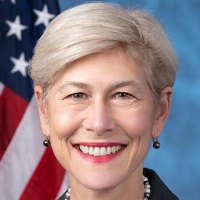
Deborah Ross
Representative
NC
Deborah Ross
Representative
NC
The Insurance Fraud Accountability Act aims to significantly curb fraudulent enrollment in qualified health plans by imposing severe civil and criminal penalties on negligent or knowingly dishonest agents and brokers. It mandates new federal verification systems to confirm consumer consent and track commissions for enrollments assisted by agents. Furthermore, the bill establishes comprehensive regulations for the entire enrollment chain, requiring agents to act in consumers' best interests and mandating regular audits to ensure compliance.
The Stop Comstock Act streamlines federal statutes by removing outdated and redundant language concerning "indecent" or "immoral" materials, focusing legal definitions on "obscene materials."
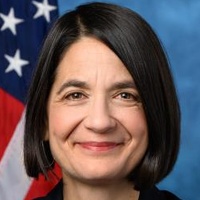
Becca Balint
Representative
VT
Becca Balint
Representative
VT
The Stop Comstock Act aims to modernize and streamline federal statutes concerning obscene materials. It revises several sections of federal law, including those related to crimes, transportation, and importation, by removing outdated or redundant language like "indecent" or "immoral." This legislative cleanup focuses the legal definitions to center specifically on "obscene materials."
The Medicare Dental, Vision, and Hearing Benefit Act of 2025 adds comprehensive dental, vision, and hearing care, including hearing aids, to Medicare coverage starting in 2026 while also mandating the inclusion of an oral health professional on the U.S. Preventive Services Task Force.

Lloyd Doggett
Representative
TX
Lloyd Doggett
Representative
TX
The Medicare Dental, Vision, and Hearing Benefit Act of 2025 significantly expands Medicare coverage to include comprehensive dental, vision, and hearing services starting in 2026. This legislation outlines specific payment schedules, frequency limits, and coverage percentages for routine exams, procedures, eyeglasses, contact lenses, and hearing aids. Furthermore, the bill mandates the inclusion of an oral health professional on the United States Preventive Services Task Force.
This act amends the tax code to give businesses the option to immediately deduct or amortize (spread out over at least five years) their research and experimental expenditures.
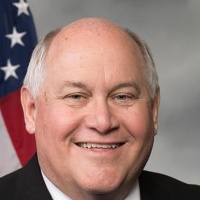
Ron Estes
Representative
KS
Ron Estes
Representative
KS
The American Innovation and R&D Competitiveness Act of 2025 revises how businesses treat research and experimental (R&E) expenditures for tax purposes. Taxpayers can now choose between immediately deducting R&E costs or amortizing them over a period of at least 60 months. This legislation also makes technical adjustments to ensure consistency between immediate deductions and claiming the research tax credit.
The American Teacher Act establishes federal grants to incentivize states to set a minimum annual teacher salary of $60,000 and provide inflation adjustments for teacher pay.
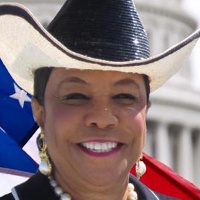
Frederica Wilson
Representative
FL
Frederica Wilson
Representative
FL
The American Teacher Act aims to address critical teacher shortages by establishing federal grants to help states raise the minimum annual salary for full-time teachers to \$60,000, adjusted for inflation. States must submit sustainability plans to ensure these minimums continue after the initial four-year grant period ends. The bill also provides funds for cost-of-living adjustments and a national campaign to enhance the value and diversity of the teaching profession.
This act mandates that the U.S. Treasury must begin printing new twenty-dollar bills featuring Harriet Tubman on the front after December 31, 2028, with a preliminary design reveal by the end of 2026.
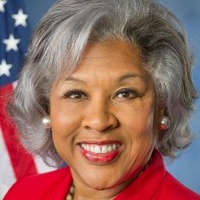
Joyce Beatty
Representative
OH
Joyce Beatty
Representative
OH
The Woman on the Twenty Act of 2025 mandates that Harriet Tubman must be featured on the front of the twenty-dollar bill. This legislation sets a firm deadline, requiring that no new $20 notes can be printed without her portrait after December 31, 2028. Furthermore, the Secretary of the Treasury must publicly reveal the preliminary design for the new note by the end of 2026.
This Act resets the probationary period for certain federal employees unfairly separated between January 20, 2025, and January 20, 2029, by crediting them for time already served.
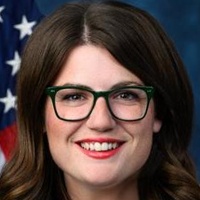
Sarah Elfreth
Representative
MD
Sarah Elfreth
Representative
MD
The Protect Our Probationary Employees Act resets the probationary period for certain federal employees who were involuntarily separated between January 20, 2025, and January 20, 2029. If these employees are rehired into a similar role at the same agency, their new probationary period will be reduced by the time they already served previously. This provision is temporary and will expire on January 20, 2029.
This Act requires the Department of Defense to seek stricter stormwater discharge permits mandating quarterly PFAS testing and cleanup actions at its facilities, dedicating at least 1% of annual PFAS cleanup funds to this testing.
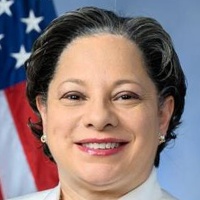
Jennifer McClellan
Representative
VA
Jennifer McClellan
Representative
VA
This Act mandates that the Department of Defense (DoD) immediately seek to update its stormwater discharge permits to require quarterly testing for PFAS chemicals at all facilities. Furthermore, the DoD must implement necessary cleanup measures to reduce these discharges. At least one percent of annual PFAS cleanup funding must be dedicated specifically to this required stormwater testing.
The Farewell to Foam Act of 2025 bans the sale and distribution of expanded polystyrene food service ware, loose fill packaging, and coolers starting January 1, 2028, with escalating fines for non-compliance.
Lloyd Doggett
Representative
TX
Lloyd Doggett
Representative
TX
The Farewell to Foam Act of 2025 bans the sale and distribution of expanded polystyrene (Styrofoam) food service ware, loose fill packaging, and coolers starting January 1, 2028. The bill clearly defines these targeted foam products and the roles of manufacturers, distributors, and retailers involved in their supply chain. Enforcement begins with a written warning for first-time violations, followed by escalating fines for repeat offenses. The Administrator of the EPA is granted the authority to issue necessary regulations to implement the Act.
The "U.S. Engagement in Sudanese Peace Act" aims to address the crisis in Sudan by authorizing sanctions on those involved in human rights abuses and conflict, establishing a comprehensive strategy for peace, and empowering Sudanese women and youth in conflict resolution.
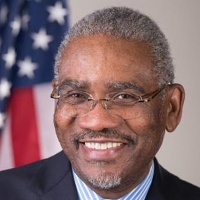
Gregory Meeks
Representative
NY
Gregory Meeks
Representative
NY
The U.S. Engagement in Sudanese Peace Act aims to address the crisis in Sudan by mandating the President to investigate and sanction those involved in human rights abuses and obstruction of humanitarian aid. It requires a comprehensive strategy to protect civilians, provide humanitarian aid, and foster peace, with an emphasis on empowering Sudanese women and youth in conflict resolution. The act also seeks to prevent the flow of weapons to conflict parties and ensures accountability for human rights abuses. Ultimately, the goal is to promote a sustainable peace through diplomatic and multilateral efforts.
The Richard L. Trumka Protecting the Right to Organize Act of 2025 strengthens protections for workers' rights to organize and collectively bargain by modernizing labor laws, addressing unfair labor practices, and enhancing enforcement mechanisms.
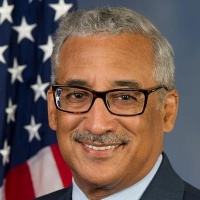
Robert Scott
Representative
VA
Robert Scott
Representative
VA
This bill, the Richard L. Trumka Protecting the Right to Organize Act of 2025, seeks to amend the National Labor Relations Act and other labor laws to strengthen protections for workers' rights to organize and collectively bargain. It aims to modernize labor regulations by clarifying definitions, addressing unfair labor practices, enhancing enforcement, and increasing transparency in labor-management relations. The bill introduces measures such as electronic voting in union elections, strengthens whistleblower protections, and mandates studies on collective bargaining practices. Ultimately, the goal is to ensure fair treatment of workers and promote equitable labor practices.
The "Keeping Our Field Offices Open Act" prevents the Social Security Administration from closing or limiting access to field offices, hearing offices, and resident stations, ensuring continued service availability for the public.
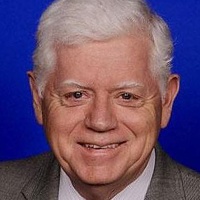
John Larson
Representative
CT
John Larson
Representative
CT
The "Keeping Our Field Offices Open Act" prevents the Social Security Administration (SSA) from closing or consolidating field offices, hearing offices, and resident stations, ensuring continued access to services. It requires the SSA Commissioner to justify any planned closures to Congress with detailed analysis and cost-benefit assessments, considering the impact on vulnerable populations. The bill mandates public notice, hearings, and a final report to Congress before any changes, allowing appeals and maintaining the number of offices at or above the January 20, 2025 level, excluding temporary emergency closures.
The John R. Lewis Voting Rights Advancement Act of 2025 aims to strengthen and update the Voting Rights Act of 1965 by addressing vote dilution and denial, establishing updated criteria for federal oversight of states and political subdivisions with a history of voting rights violations, and promoting transparency in election-related changes.
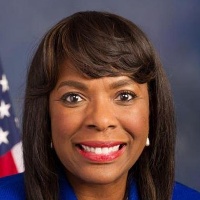
Terri Sewell
Representative
AL
Terri Sewell
Representative
AL
The John R. Lewis Voting Rights Advancement Act of 2025 amends the Voting Rights Act of 1965 to address vote dilution, denial, and abridgment claims, and to update which states and political subdivisions are subject to federal oversight based on a history of voting rights violations. It broadens the types of violations that allow a court to retain jurisdiction over a case, clarifies the Attorney General's authority to assign observers, and ensures transparency in voting-related changes. The Act also authorizes the Attorney General to demand documents and information to enforce voting rights and provides grants to small jurisdictions to assist with notification requirements.
The MERIT Act mandates the reinstatement of federal probationary employees affected by mass terminations occurring between January 20, 2025, and the Act's enactment, providing back pay and benefits.
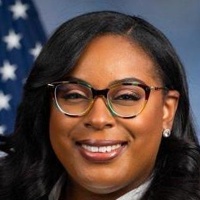
LaMonica McIver
Representative
NJ
LaMonica McIver
Representative
NJ
The MERIT Act requires federal agencies to reinstate probationary employees who were terminated as part of a mass termination event between January 20, 2025, and the Act's enactment date, providing them with back pay and benefits. The Act also mandates reports on government employee terminations and the reinstatement process. It defines key terms such as "affected probationary employee" and "mass termination" to clarify the scope and applicability of the Act. This act ensures that affected employees are treated as involuntarily separated without cause and outlines the process for determining back pay and providing notice to eligible employees.
This resolution affirms the judiciary's authority and calls on the President and his administration to immediately comply with all federal court orders to uphold the rule of law and the separation of powers.
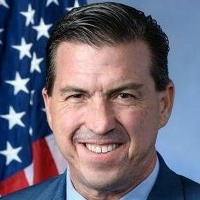
Kevin Mullin
Representative
CA
Kevin Mullin
Representative
CA
This resolution reaffirms the judiciary's constitutional authority to serve as a check on executive power and emphasizes the obligation of the President to comply with all federal court orders. It calls on the Trump administration to immediately adhere to existing judicial rulings, asserting that defiance of these orders undermines the rule of law and the separation of powers.
The "Roberto Clemente Commemorative Coin Act" directs the Treasury to mint coins in 2027 honoring Roberto Clemente, with surcharges benefiting the Roberto Clemente Foundation.
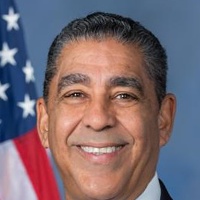
Adriano Espaillat
Representative
NY
Adriano Espaillat
Representative
NY
The Roberto Clemente Commemorative Coin Act directs the Department of Treasury to mint and issue gold, silver, and half-dollar coins in 2027 to commemorate the life and legacy of Roberto Clemente. The coins' designs will represent Clemente's life, including his baseball achievements and humanitarian work. Surcharges from the coin sales will benefit the Roberto Clemente Foundation, supporting their educational programs, youth sports initiatives, disaster relief efforts, and historic preservation projects. The Act ensures that the coin program will not incur any net cost to the United States government.
The "Safe Schools Improvement Act" amends the Elementary and Secondary Education Act of 1965, requiring states to establish policies that prevent and prohibit bullying and harassment in schools based on protected characteristics, ensuring a safe and inclusive learning environment for all students.

Linda Sánchez
Representative
CA
Linda Sánchez
Representative
CA
The Safe Schools Improvement Act aims to reduce bullying and harassment in schools by requiring states to establish policies prohibiting such conduct based on various characteristics, including race, sex, religion, and disability. It mandates annual notifications, data collection on incidents, biennial evaluations of programs, and regular reports to Congress to ensure accountability and effectiveness. This act does not infringe on existing nondiscrimination laws or freedom of speech but seeks to create a safer, more inclusive learning environment for all students.
The MEME Act prohibits elected and high-ranking federal officials, as well as their families, from using their positions for personal financial gain by promoting or benefiting from financial instruments like stocks, commodities, and digital assets, with penalties including fines, imprisonment, and civil lawsuits.
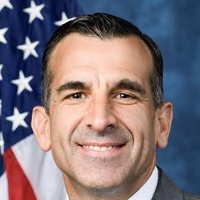
Sam Liccardo
Representative
CA
Sam Liccardo
Representative
CA
The MEME Act prohibits elected and other high-ranking federal officials, as well as their families, from promoting financial assets, including securities, commodities, and digital assets, for personal gain. It allows the Attorney General, private parties, and others to sue violators. Violators may face civil penalties up to $250,000, be required to return profits to the Treasury, and may face criminal penalties including fines and imprisonment. The Act aims to prevent public officials from using their positions for personal financial benefit, addressing bribery, insider trading, and corrupt foreign influence.
This bill officially renames the Robert E. Lee Memorial as the Arlington House National Historic Site.
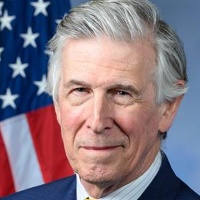
Donald Beyer
Representative
VA
Donald Beyer
Representative
VA
This bill officially redesignates the site currently known as the Robert E. Lee Memorial as the "Arlington House National Historic Site." It mandates that all official U.S. records, maps, and documents be updated to reflect this new name and repeals the previous joint resolutions that established the former designation.
This bill regulates large capacity ammunition feeding devices, making it illegal to import, sell, manufacture, transfer, or possess them, with certain exceptions for law enforcement and other entities, and allows for Byrne grants to be used for buy-back programs.

Diana DeGette
Representative
CO
Diana DeGette
Representative
CO
The "Keep Americans Safe Act" aims to regulate large capacity ammunition feeding devices by making it illegal to import, sell, manufacture, transfer, or possess magazines holding more than 15 rounds, with exceptions for law enforcement, government entities, and devices lawfully possessed before the law's enactment. It also permits the use of Byrne grants for buy-back programs of these devices and mandates that newly manufactured devices be marked with identifying information. Violators of this Act will face penalties under existing provisions of Title 18 of the U.S. Code.