Legislative Activity
Track Maxwell's sponsored bills, co-sponsored legislation, and voting record
This Act restores overtime pay protections by phasing in higher minimum salary thresholds and tightening the duties test for executive, administrative, and professional employees exempt from federal overtime requirements.
Mark Takano
Representative
CA
Mark Takano
Representative
CA
The Restoring Overtime Pay Act of 2026 significantly updates overtime exemptions under the Fair Labor Standards Act. It establishes a phased-in, rising minimum salary threshold for executive, administrative, and professional employees to qualify for overtime exemption, eventually tying it to national earnings data. Additionally, the bill tightens the "duties test," reducing the amount of non-exempt work an employee can perform while remaining exempt from overtime pay. These changes aim to restore overtime eligibility to more salaried workers.
The **Protecting Our Democracy Act** imposes sweeping restrictions on presidential power, enhances congressional oversight, strengthens ethics and anti-corruption laws, and bolsters accountability for federal officials.
Jamie Raskin
Representative
MD
Jamie Raskin
Representative
MD
The **Protecting Our Democracy Act** imposes sweeping reforms across the executive branch to strengthen accountability and restore checks and balances. It restricts presidential pardon power, closes loopholes to ensure no President is above the law, and enforces constitutional emoluments clauses to prevent self-enrichment. Furthermore, the Act enhances congressional oversight by strengthening subpoena enforcement, increasing transparency around White House visitors and tax returns, and protecting federal whistleblowers from retaliation.
This act establishes universal free breakfast and lunch programs in schools, eliminates meal debt, and updates poverty metrics across various federal education and nutrition programs.

Ilhan Omar
Representative
MN
Ilhan Omar
Representative
MN
The Universal School Meals Program Act of 2026 establishes permanent, universal free breakfast and lunch programs for all enrolled students at participating schools, eliminating income tests and meal debt collection. The bill significantly updates federal funding mechanisms by replacing reliance on free and reduced-price lunch data with new measures for identifying economically disadvantaged students across various education and social programs. Furthermore, it expands access to summer and afterschool meals while making technical amendments across several federal education and nutrition laws.
The TREE Act prohibits the import and sale of deforestation goods in U.S. commerce starting in 2029, requiring due diligence statements and imposing civil penalties based on country risk categorization.

Lloyd Doggett
Representative
TX
Lloyd Doggett
Representative
TX
The Trade Responsibly for Environmental Emissions (TREE) Act prohibits the import and sale of "deforestation goods"—commodities linked to deforestation or forest degradation after December 31, 2020—starting in 2029. Importers must submit detailed due diligence statements to Customs and Border Protection, with violations resulting in significant civil penalties, including fines up to 4% of U.S. revenue and potential import bans. The bill also mandates a risk-based country categorization system to guide increased border inspections.
This bill prohibits the use of "Buy Now, Pay Later" loans for the purchase of specified semiautomatic assault weapons, imposing significant penalties for violations.
John Larson
Representative
CT
John Larson
Representative
CT
This bill, the Assault Weapon Financing Accountability Act, prohibits the use of "Buy Now, Pay Later" loans for the purchase of semiautomatic assault weapons. It makes it illegal for lenders to issue these loans and for gun dealers to knowingly accept them for these specific firearm sales. Violations carry a significant civil penalty of $100,000 per offense.
This resolution commends U.S. public servants for their dedication to defending the Constitution, delivering essential services, and supporting the economy, particularly during Public Service Recognition Week.
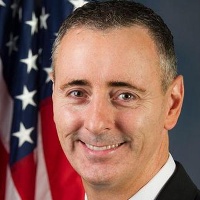
Brian Fitzpatrick
Representative
PA
Brian Fitzpatrick
Representative
PA
This resolution expresses the sense of the House of Representatives commending public servants for their dedication to defending the Constitution and delivering essential services to the American people. It specifically designates the week of May 3 through May 9, 2026, as Public Service Recognition Week. The bill honors the millions of federal, state, and local employees and uniformed service members who support the economy and democratic foundations of the nation.
This resolution designates the week of May 4 through May 8, 2026, as Teacher Appreciation Week while recognizing the critical role and priorities of the nation's public school teachers.
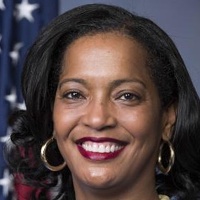
Jahana Hayes
Representative
CT
Jahana Hayes
Representative
CT
This resolution officially designates the week of May 4 through May 8, 2026, as Teacher Appreciation Week. It recognizes the vital role of public school teachers and highlights their key priorities, including support for existing federal protections and funding. Furthermore, the bill encourages leaders to engage directly with teachers to ensure their expertise informs education policy.
The CHARTER Act prohibits federally funded charter schools from contracting with for-profit entities to operate, oversee, or manage the school's core administration, ensuring public funds serve educational needs rather than generate private profit.

Rosa DeLauro
Representative
CT
Rosa DeLauro
Representative
CT
The CHARTER Act ensures that federally funded charter schools adhere to nonprofit requirements by prohibiting them from contracting with for-profit entities to operate or manage the school's core operations. This legislation aims to prevent public education funds from being diverted as profit for private entities. It clarifies that while core management must remain nonprofit, charters can still contract for specific support services like food or transportation.
The Housing FIRST Act amends the Fair Credit Reporting Act to establish specific rules and limitations for using consumer reports in tenant screening, particularly by restricting the inclusion of certain criminal and resolved case information.
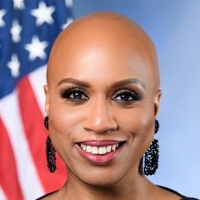
Ayanna Pressley
Representative
MA
Ayanna Pressley
Representative
MA
The Housing FIRST Act amends the Fair Credit Reporting Act to establish formal standards for tenant screening reports, treating them similarly to employment reports. This bill strictly limits the types of criminal and financial history landlords can use when evaluating rental applicants. Furthermore, it mandates specific disclosure and adverse action notification requirements for landlords using these reports.
This bill nullifies three specific Department of State rules regarding foreign assistance, effectively voiding their implementation and preventing enforcement of similar future policies.

Grace Meng
Representative
NY
Grace Meng
Representative
NY
This Act nullifies three specific Department of State rules concerning foreign assistance, effectively treating them as if they never existed. It prohibits any federal agency from implementing or enforcing these rules, or any substantially similar future policies. The legislation aims to prevent the enforcement of rules related to "Protecting Life," "Discriminatory Equity Ideology," and "Gender Ideology" in foreign aid.
This resolution directs the House Oversight Committee Chair to sue Pamela J. Bondi to compel her testimony regarding the federal government's enforcement of sex trafficking laws related to the Jeffrey Epstein investigation.
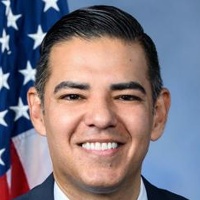
Robert Garcia
Representative
CA
Robert Garcia
Representative
CA
This resolution directs the House Oversight Committee Chair to initiate or intervene in a federal lawsuit within 30 days. The legal action must compel Pamela J. Bondi to comply with a committee subpoena for testimony regarding the DOJ's handling of records related to Jeffrey Epstein and sex trafficking law enforcement.
This bill mandates stricter federal and state regulation of utility rate-setting by establishing lower return-on-equity ranges and banning numerous non-operational costs from being passed on to consumers.
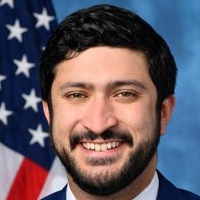
Gregorio Casar
Representative
TX
Gregorio Casar
Representative
TX
The Lowering Utility Bills Act aims to reduce consumer energy costs by establishing stricter federal and state guidelines for how electric transmission providers and investor-owned utilities calculate their allowed rate of return. The bill mandates using the lowest reasonable return on equity based on market data and explicitly bans passing numerous lobbying, administrative, and political expenses onto customers. Furthermore, it requires utilities to prioritize lower-cost, grid-enhancing technologies when planning new capital expenditures.
The "Timely and Accurate Benefits Act" mandates states to utilize an Enhanced Income Verification Platform for federal funding eligibility in benefit programs, aiming to improve income verification accuracy and reduce improper payments.
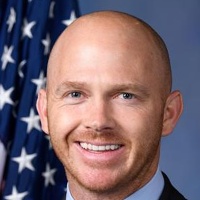
William Timmons
Representative
SC
William Timmons
Representative
SC
The "Timely and Accurate Benefits Act" mandates states to implement an Enhanced Income Verification Platform to receive federal funding for benefit programs. This platform will use real-time data matching and analytics to verify income, including wages, self-employment earnings, and other sources, ensuring accurate eligibility determinations. The goal is to reduce improper payments and ensure timely benefit distribution. The act defines key terms such as "Enhanced Gross Income" and "Enhanced Income Verification Platform" to provide a clear framework for implementation.
This Act establishes a phased-in increase of the federal minimum wage, ultimately tying it to two-thirds of the national median hourly wage while also reforming wages for tipped workers, youth workers, and incarcerated workers, and phasing out subminimum wages for workers with disabilities.
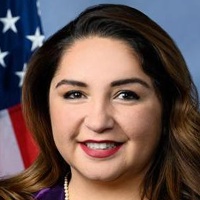
Delia Ramirez
Representative
IL
Delia Ramirez
Representative
IL
The Living Wage For All Act establishes a phased increase of the federal minimum wage, ultimately aiming to tie it to two-thirds of the national median hourly wage. It creates differentiated wage schedules, requiring large corporations to reach higher minimums sooner than other employers. Furthermore, the bill phases out subminimum wages for tipped workers and workers with disabilities, and extends federal wage protections to incarcerated workers.
The HELP Act of 2026 establishes a program to strengthen nationwide access to and coordination of 211 health and human services referral systems through federal funding and administrative oversight.
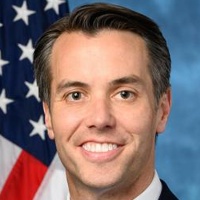
Morgan McGarvey
Representative
KY
Morgan McGarvey
Representative
KY
The HELP Act of 2026 establishes a program within HHS to strengthen nationwide access to 211 services for health and human services information and referrals. This initiative aims to increase 211 capacity, improve coordination with 911 and 988 crisis lines, and raise public awareness. The Act authorizes $250 million annually through 2032 to provide grants to local 211 providers to expand and improve service accessibility across all states.
This bill establishes emergency grants to provide hazardous duty pay and safety measures for essential health care workers during declared emergencies or disasters.
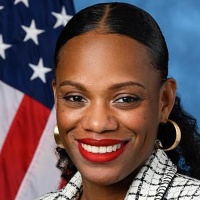
Summer Lee
Representative
PA
Summer Lee
Representative
PA
This bill, the Hazard Pay for Health Care Heroes Act, establishes a grant program to help health care facilities protect essential workers during declared emergencies or disasters. Funds can be used to provide eligible, non-remote health care workers with hazardous duty pay, up to $13 per hour, when their work or commute is deemed hazardous. Additionally, grants can cover safety measures like PPE and alternative transit for these essential personnel.
This resolution affirms housing as a fundamental human right and opposes policies that would force families with mixed immigration status to separate or lose federal housing assistance.
Delia Ramirez
Representative
IL
Delia Ramirez
Representative
IL
This resolution affirms that stable housing is a fundamental human right essential for all families, regardless of immigration status. It strongly condemns a proposed rule that would force families with mixed immigration status to separate or lose vital housing assistance. The bill calls for protecting families in federal housing programs and demands increased investment to address the national housing crisis.
This resolution expresses the House's view that the Department of Justice must refuse to administratively settle President Trump's personal legal claims against the U.S. government due to the Domestic Emoluments Clause.
Jamie Raskin
Representative
MD
Jamie Raskin
Representative
MD
This resolution expresses the sense of the House that the Department of Justice must comply with the Domestic Emoluments Clause. It specifically calls for the DOJ to refuse to administratively settle the billions of dollars in legal claims filed against the United States by President Donald Trump. The bill asserts that allowing the President to settle his own personal claims against the government constitutes an unconstitutional conflict of interest.
This resolution censures President Trump and Special Envoy Witkoff for violating the Foreign Emoluments Clause by accepting undisclosed payments from the UAE and demands they divest from related foreign business interests.
Jamie Raskin
Representative
MD
Jamie Raskin
Representative
MD
This resolution expresses the sense of the House that President Trump and Special Envoy Witkoff violated the Foreign Emoluments Clause by accepting undisclosed payments linked to a secret deal with an entity substantially funded by the UAE. It demands they immediately turn over all such payments to the Treasury and divest from any business interests connected to foreign governments. The bill cites specific financial transactions and subsequent U.S. policy actions favoring the UAE as evidence of a grave conflict of interest.
This bill establishes a competitive grant program to fund training, recruitment, and retention efforts aimed at addressing critical workforce shortages in the public transportation industry.
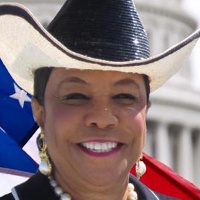
Frederica Wilson
Representative
FL
Frederica Wilson
Representative
FL
The Transit Workforce Development Act establishes a competitive grant program through the Department of Transportation to address critical workforce shortages in public transit maintenance. This funding supports training, recruitment, and retention efforts for essential transit workers like mechanics and technicians. The bill also expands existing funding flexibility, allowing transit agencies to use more federal bus and facility funds specifically for broader workforce development training.