Legislative Activity
Track Chuck's sponsored bills, co-sponsored legislation, and voting record
This bill authorizes the creation and sale of commemorative coins for the 2028 Los Angeles and 2034 Salt Lake City Olympic and Paralympic Games to help fund the events, with all surcharges going to the respective organizing committees after covering production costs.
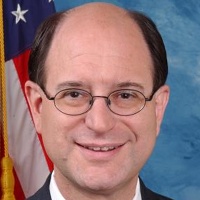
Brad Sherman
Representative
CA
Brad Sherman
Representative
CA
This Act authorizes the Secretary of the Treasury to mint and sell special commemorative coins for the 2028 Los Angeles Olympic and Paralympic Games and the 2034 Salt Lake City Winter Olympic and Paralympic Games. The coins will feature designs celebrating American athletes and the Games themselves. All surcharges collected from the sale of these coins will be directed to the respective organizing committees to help fund the events and related youth sports programs. The entire program must be conducted at no cost to the U.S. Government.
The PBM Reform Act of 2025 mandates sweeping changes to increase transparency, ensure fair pharmacy access in Medicare, and prohibit abusive spread pricing in Medicaid by holding Pharmacy Benefit Managers accountable for their financial dealings.
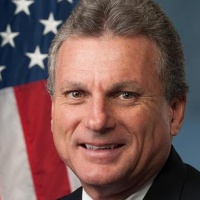
Earl Carter
Representative
GA
Earl Carter
Representative
GA
The Pharmacy Benefit Manager Reform Act of 2025 aims to increase transparency and accountability across the prescription drug supply chain. It mandates fairer pharmacy network access for Medicare beneficiaries and imposes strict new financial reporting and service fee requirements on Pharmacy Benefit Managers (PBMs) working with Medicare and private health plans. Furthermore, the bill establishes new federal mechanisms to accurately track drug acquisition costs in Medicaid and explicitly bans the practice of "spread pricing" in state Medicaid contracts.
This resolution commends Petty Officer 3d Class Scott Ruskan for his heroic rescue of 165 people during the devastating central Texas floods and thanks all first responders involved.
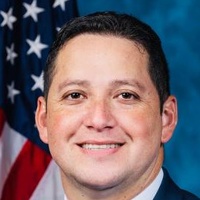
Ernest Gonzales
Representative
TX
Ernest Gonzales
Representative
TX
This resolution officially commends Petty Officer 3d Class Scott Ruskan for his heroic actions during the devastating central Texas floods of July 2025. It specifically recognizes him for personally rescuing 165 individuals and coordinating triage efforts under hazardous conditions. Furthermore, the bill extends deep gratitude to all federal, state, and volunteer responders who risked their lives during this major natural disaster.
This bill mandates a comprehensive report detailing the current and future state of the U.S.-Greece security cooperation, focusing on basing rights and strategic investments.

Grace Meng
Representative
NY
Grace Meng
Representative
NY
This bill mandates a comprehensive report from the Secretary of Defense detailing the current state and future potential of the U.S.-Greece security relationship. The report must specifically address basing rights, investments made under the 2021 Mutual Defense Cooperation Agreement, and analyze options for expanding U.S. military presence in Greece. This oversight ensures Congress is fully informed about strategic cooperation in the Eastern Mediterranean.
The FADS Act of 2025 clarifies the authority to dispose of certain foreign-origin radiological materials, like Russian-made americium-241, at the Waste Isolation Pilot Plant (WIPP) for national security reasons.
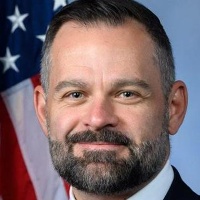
Cory Mills
Representative
FL
Cory Mills
Representative
FL
The FADS Act of 2025 clarifies the authority for the Department of Energy to dispose of certain foreign-origin radiological materials, specifically Russian-made Americium-241, at the Waste Isolation Pilot Plant (WIPP). This change addresses a current regulatory gap that prevents the safe and efficient disposal of these materials alongside similar U.S.-origin waste. The legislation ensures that these proliferation-attractive sources can be quickly removed from circulation.
The SAFER at the Border Act restricts the Secretary of Homeland Security's authority to parole certain individuals, including known or suspected terrorists and special interest aliens, into the United States.
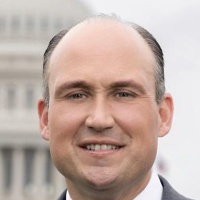
Nicholas Langworthy
Representative
NY
Nicholas Langworthy
Representative
NY
The Safeguarding Americans From Extremist Risk (SAFER) at the Border Act aims to enhance national security by establishing clear definitions for "known terrorist," "special interest alien," and "suspected terrorist." This legislation significantly restricts the Secretary of Homeland Security's authority to use parole for individuals arriving at the border. Specifically, it prohibits parole for anyone identified as a terrorist, a national security risk, or inadmissible due to terrorism-related activities.
This resolution officially honors the life, achievements, and legacy of FedEx founder Frederick W. Smith.
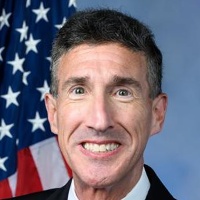
David Kustoff
Representative
TN
David Kustoff
Representative
TN
This resolution serves as a formal tribute honoring the life, achievements, and enduring legacy of Frederick W. Smith, the visionary founder of FedEx. It officially recognizes his pioneering role in revolutionizing the global logistics industry and his deep commitment to the Memphis community. The bill does not enact any new laws but instead places his biography and contributions into the official Congressional record.
The Nuclear REFUEL Act amends the definition of a "production facility" under the Atomic Energy Act to exempt spent nuclear fuel reprocessing that does not separate plutonium from other transuranic elements.
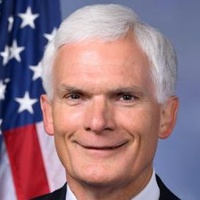
Robert Latta
Representative
OH
Robert Latta
Representative
OH
The Nuclear REFUEL Act amends the Atomic Energy Act to clarify regulations surrounding nuclear fuel processing. Specifically, it excludes the reprocessing of spent nuclear fuel from the definition of a "production facility" if the process does not separate plutonium from other transuranic elements. This change aims to streamline regulatory oversight for certain fuel recycling activities.
This bill repeals the Freedom of Access to Clinic Entrances (FACE) Act, effectively removing federal criminal penalties for obstructing access to reproductive health clinics.

Chip Roy
Representative
TX
Chip Roy
Representative
TX
The FACE Act Repeal Act of 2025 seeks to eliminate federal protections that currently prohibit the obstruction of reproductive health clinic entrances, the use of force or threats against patients and providers, and the intentional damage of clinic property. If enacted, this legislation would immediately repeal these federal criminal prohibitions and apply to all pending or future prosecutions.
This resolution strongly condemns the rise in ideologically motivated attacks against Jewish individuals in the U.S., including the recent Boulder assault, and reaffirms the House's commitment to combating antisemitism and political violence.
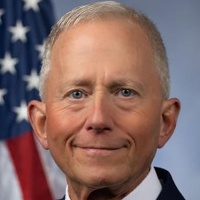
Jefferson Van Drew
Representative
NJ
Jefferson Van Drew
Representative
NJ
This resolution strongly condemns the recent rise in ideologically motivated attacks targeting Jewish individuals and institutions across the United States, including the violent assault in Boulder, Colorado. The House of Representatives reaffirms its commitment to combating antisemitism and politically motivated violence in all its forms. It calls for thorough investigation and prosecution of such incidents and urges all sectors of society to speak out against hate.
The Weather Act Reauthorization Act of 2025 comprehensively updates federal weather programs to prioritize public safety, modernize infrastructure through AI and commercial data integration, and improve forecasting for severe weather, agriculture, and emerging threats like heat and landslides.

Frank Lucas
Representative
OK
Frank Lucas
Representative
OK
The Weather Act Reauthorization Act of 2025 is a comprehensive bill designed to significantly enhance U.S. weather forecasting, research, and public safety capabilities. It mandates that public safety be the absolute top priority for NOAA, authorizes funding for modernization across computing and radar systems, and establishes new programs to improve forecasts for severe weather like tornadoes and hurricanes. Furthermore, the legislation focuses on integrating commercial data, improving risk communication through social science, and enhancing predictions crucial for agriculture and water management.
This resolution expresses support for designating the month of July as "American Patriotism Month" to honor the nation's history, values, and sacrifices.
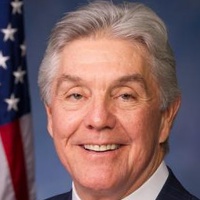
Roger Williams
Representative
TX
Roger Williams
Representative
TX
This resolution expresses support for officially designating the month of July as "American Patriotism Month." It recognizes the historical significance of American patriotism and encourages citizens and groups to observe the month with appropriate ceremonies celebrating U.S. history and values. The bill further asks the President to issue a yearly proclamation supporting this designation.
This act mandates that FHA loan disclosures include comparable VA loan information and requires lenders to ask about military service on standard loan applications.
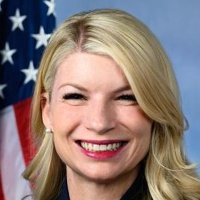
Brittany Pettersen
Representative
CO
Brittany Pettersen
Representative
CO
The VA Loan Informed Disclosure Act of 2025 (VALID Act) aims to increase awareness of VA loan options among homebuyers. It requires lenders to include comparative information about potential VA loan terms on standard FHA disclosure forms. Furthermore, the Act mandates that the Uniform Residential Loan Application include a prominent question regarding the applicant's military service.
This resolution officially designates the Friday before Memorial Day as National Poppy Day to honor veterans and encourage the wearing of the poppy as a symbol of remembrance.

André Carson
Representative
IN
André Carson
Representative
IN
This resolution officially designates the Friday before Memorial Day as **National Poppy Day** to honor U.S. veterans. It recognizes the poppy as a long-standing symbol of remembrance for those who died in service, inspired by World War I. The bill encourages all citizens to wear a red poppy on this day to show appreciation for our fallen service members.
This Act establishes a comprehensive U.S. strategy to promote the export of advanced civil nuclear energy technology and cooperation with allied and developing nations while countering the influence of competitors like Russia and China.
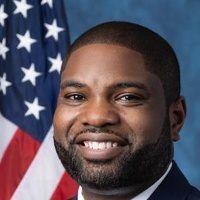
Byron Donalds
Representative
FL
Byron Donalds
Representative
FL
The International Nuclear Energy Act of 2025 aims to significantly boost the global competitiveness and export of U.S. civil nuclear technology, particularly advanced reactors. It establishes new White House coordination roles and working groups to develop a comprehensive 10-year trade strategy for nuclear exports. The bill also authorizes initiatives to provide financial and technical assistance to developing nations starting nuclear programs, while promoting cooperation with allied nations on next-generation reactor development. Finally, it mandates regular high-level conferences to advance international standards for nuclear safety, security, and sustainability.
This resolution calls upon all Americans to observe Memorial Day 2025 by honoring the service members who died defending freedom and peace.
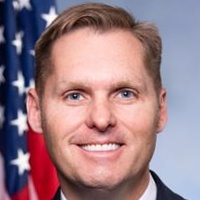
Michael Guest
Representative
MS
Michael Guest
Representative
MS
This resolution calls upon all Americans to observe Memorial Day, 2025, as a solemn occasion to honor the men and women of the Armed Forces who made the ultimate sacrifice in the pursuit of freedom and peace. Congress recognizes the profound debt owed to these patriots who have died defending American values globally. The bill encourages a national expression of respect, pride, and gratitude for their service and sacrifice.
This resolution strongly condemns the rise of antisemitism in the United States and honors the memory of Yaron Lischinsky and Sarah Milgrim, who were murdered while promoting peace.
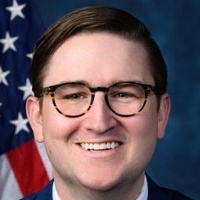
Addison McDowell
Representative
NC
Addison McDowell
Representative
NC
This resolution strongly condemns the rise of antisemitism in the United States and around the world. It specifically honors the memory of Yaron Lischinsky and Sarah Milgrim, who were tragically murdered while promoting peace. Ultimately, Congress reaffirms its commitment to combating all forms of hate and ensuring the vigorous enforcement of laws protecting religious freedom.
This bill mandates that funeral honors details recite the "13 Folds of Honor" during the flag folding ceremony for deceased service members or veterans, unless the next of kin opts out.
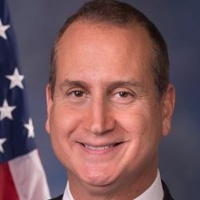
Mario Diaz-Balart
Representative
FL
Mario Diaz-Balart
Representative
FL
This bill mandates that funeral honors details recite a specific statement detailing the symbolism of the 13 Folds of Honor during the presentation of the U.S. flag for a deceased service member or veteran. This ceremony is dedicated to the 13 service members killed in Kabul in 2021. However, the next of kin retains the right to opt out of this specific recitation.
This resolution commemorates the National Science Foundation's 75th anniversary by recognizing its vital contributions to U.S. science, engineering, and education while reaffirming Congress's commitment to its future support.
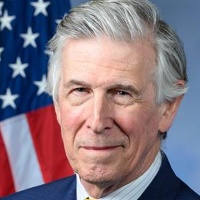
Donald Beyer
Representative
VA
Donald Beyer
Representative
VA
This resolution commemorates the 75th anniversary of the National Science Foundation (NSF), recognizing its vital role in advancing U.S. science, engineering, and education since 1950. Congress acknowledges the NSF's foundational support for groundbreaking innovations, including the internet and advancements in medical technology. The bill reaffirms Congress's commitment to ensuring the NSF continues to lead in scientific discovery for decades to come.
This act, also known as the COUNTER Act, updates the Department of Defense's authority and procedures for neutralizing drone threats to U.S. assets while ensuring related security information remains confidential.
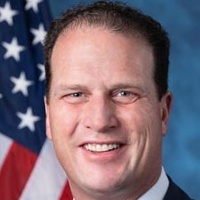
August Pfluger
Representative
TX
August Pfluger
Representative
TX
The COUNTER Act enhances the Department of Defense's authority to neutralize threats from unmanned aircraft systems targeting U.S. assets. This legislation delegates specific response powers and updates mitigation rules for drone threats. Crucially, it exempts sensitive information regarding these counter-drone technologies and procedures from public disclosure under the Freedom of Information Act. The bill also adjusts several deadlines and clarifies the applicability of certain federal laws when operating overseas to counter these threats.