Legislative Activity
Track Dwight's sponsored bills, co-sponsored legislation, and voting record
This bill establishes an Office of Gun Violence Prevention within the Department of Justice to coordinate gun violence prevention efforts, evaluate related programs and policies, recommend evidence-based strategies, and assist communities affected by gun violence.
Maxwell Frost
Representative
FL
Maxwell Frost
Representative
FL
The "Office of Gun Violence Prevention Act of 2025" establishes an Office of Gun Violence Prevention within the Department of Justice, led by a Director appointed by the Attorney General, to coordinate gun violence prevention efforts, evaluate related laws and programs, and recommend evidence-based policies to Congress and the President. The Director will also convene an advisory council comprising various officials and at least 12 additional individuals representing gun violence survivors, community violence intervention service providers, and other relevant groups. The Office will also assist communities affected by gun violence with crisis response activities, such as providing access to mental health services and suicide prevention resources. Finally, the act authorizes the appropriation of necessary funds to carry out the provisions of the bill.
The "Ending DOGE Conflicts Act" mandates financial disclosures for special government employees who own or lead companies contracting with the federal government, ensuring transparency and preventing conflicts of interest.
John Larson
Representative
CT
John Larson
Representative
CT
The "Ending DOGE Conflicts Act" mandates that special government employees with financial ties to companies contracting with the federal government must adhere to strict financial disclosure requirements. It requires the Director of the Office of Government Ethics to certify these employees' financial reports and prohibits them from performing official duties until compliance is confirmed.
Reauthorizes the Delaware River Basin Restoration Program through 2032, expanding its scope to include Maryland and prioritizing projects benefiting underserved communities.
Brian Fitzpatrick
Representative
PA
Brian Fitzpatrick
Representative
PA
The "Delaware River Basin Restoration Program Reauthorization Act of 2025" reauthorizes and modifies the Delaware River Basin Conservation Program. It broadens the definition of the Basin to include Maryland, allows prioritization of funding for projects benefiting small, rural, or disadvantaged communities, and extends the program's operation until 2032.
This resolution expresses Congressional opposition to imposing new performance fees or royalties on local radio stations and businesses for broadcasting or playing music.
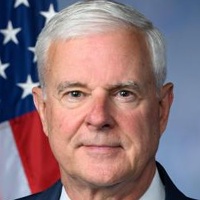
Steve Womack
Representative
AR
Steve Womack
Representative
AR
The Local Radio Freedom Act expresses Congressional opposition to imposing new performance fees, taxes, or royalties on local radio stations and businesses for playing music. It argues that the current system of free airplay provides essential promotional value to artists and that new fees would threaten the financial viability of local broadcasters and the vital community services they provide.
The "More Homes on the Market Act" increases the tax exclusion for profit from the sale of a primary residence, incentivizing homeowners to sell and increasing housing supply.
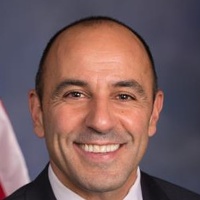
Jimmy Panetta
Representative
CA
Jimmy Panetta
Representative
CA
The "More Homes on the Market Act" increases the tax exclusion for profit from the sale of a primary residence, raising it to $500,000 for single filers and $1,000,000 for married couples filing jointly. These amounts will be adjusted for inflation starting in 2025. This change encourages homeowners to sell their properties, thereby increasing the availability of homes on the market.
This bill provides additional funding for scholarships to students at 1890 institutions, including both bachelor's and graduate programs, with mandatory funding starting in 2025.
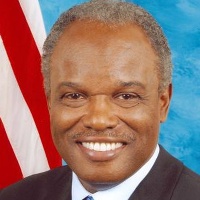
David Scott
Representative
GA
David Scott
Representative
GA
This bill amends the National Agricultural Research, Extension, and Teaching Policy Act of 1977 to expand scholarship opportunities at 1890 institutions to both bachelor's and graduate students. It provides mandatory funding of $15 million per fiscal year, starting in 2025, through the Commodity Credit Corporation, and makes discretionary funding available from fiscal year 2020 onward. The scholarships will be available each academic year that funding is available.
The "All Access Act of 2025" grants Members of Congress access to any public building during regular hours with their official ID and requires advance notice for access outside of those hours.
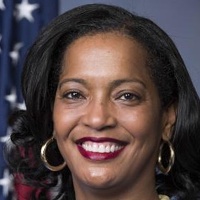
Jahana Hayes
Representative
CT
Jahana Hayes
Representative
CT
The "All Access Act of 2025" ensures Members of Congress can access any public building during regular hours by showing their official ID. Access outside of normal business hours requires a 12-hour advance notice to the building head. This act defines "Member of Congress" as a Representative or Senator.
This resolution celebrates the vital contributions of immigrants to the United States while condemning discriminatory policies and calling for humane, comprehensive immigration reform.
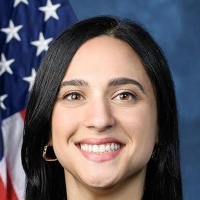
Yassamin Ansari
Representative
AZ
Yassamin Ansari
Representative
AZ
This resolution celebrates the foundational role and invaluable contributions of immigrants to the prosperity, culture, and security of the United States. It formally condemns discriminatory immigration practices—such as family separation and profiling—while urging the adoption of humane policies that prioritize human rights and family unity. Ultimately, the bill advocates for comprehensive reform that reflects American values of compassion, fairness, and opportunity for all.
Prohibits federal funds from being used to eliminate the United States Agency for International Development (USAID) as an independent entity, requiring the Secretary of State to certify compliance.
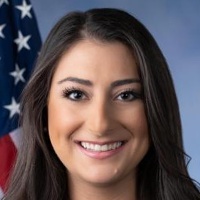
Sara Jacobs
Representative
CA
Sara Jacobs
Representative
CA
The "Protect US National Security Act" ensures that federal funds cannot be used to eliminate the United States Agency for International Development (USAID) as an independent entity. It asserts that only an act of Congress can eliminate USAID. The Secretary of State must certify compliance with this requirement to Congress within 30 days of the act's enactment and annually for 5 years.
This bill directs the Secretary of Labor to award grants to community colleges for high-quality workforce development programs in high-skill, high-wage, or in-demand sectors.
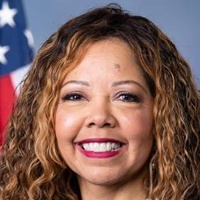
Lucy McBath
Representative
GA
Lucy McBath
Representative
GA
This bill amends the Workforce Innovation and Opportunity Act to establish a grant program through the Department of Labor, awarding funds to community colleges for the development of high-quality workforce programs that lead to credentials in high-skill, high-wage, or in-demand jobs. These grants require partnerships with employers and a focus on serving individuals with barriers to employment, with the aim of improving program quality, accessibility, and alignment with workforce needs. The bill authorizes appropriations of $65,000,000 annually from 2026 through 2031 for this purpose.
This resolution formally declares racism a public health crisis in the United States and calls for immediate, coordinated government action to dismantle the systemic inequities that drive severe health disparities among people of color.
Jahana Hayes
Representative
CT
Jahana Hayes
Representative
CT
This resolution formally declares racism a national public health crisis, recognizing it as a fundamental driver of severe health inequities and systemic disparities across the United States. It calls for immediate, coordinated government action to dismantle the structural policies and social determinants that perpetuate these harms. By acknowledging this crisis, the bill commits to a comprehensive strategy aimed at ensuring equitable health outcomes and justice for all communities.
The Protect Our Letter Carriers Act of 2025 authorizes $7 billion to upgrade postal security infrastructure while mandating dedicated federal prosecutors for postal crimes and increasing sentencing guidelines for assaults against postal employees.
Brian Fitzpatrick
Representative
PA
Brian Fitzpatrick
Representative
PA
The Protect Our Letter Carriers Act of 2025 aims to enhance the safety of postal workers by funding high-security infrastructure upgrades, including electronic mailbox keys. The bill also mandates the appointment of dedicated federal prosecutors for postal crimes in every judicial district and requires stricter sentencing guidelines for those who assault or rob postal employees.
The Scientific Integrity Act mandates federal agencies to establish and enforce scientific integrity policies that protect scientific research from political interference, ensure open communication of scientific findings, and provide whistleblower protection for scientists.
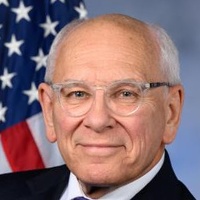
Paul Tonko
Representative
NY
Paul Tonko
Representative
NY
The Scientific Integrity Act mandates that federal agencies that fund, conduct, or oversee scientific research establish and enforce scientific integrity policies. These policies aim to protect scientists from political interference, ensure the open communication of scientific findings, and establish clear processes for reporting and addressing scientific misconduct. The Act requires agencies to appoint Scientific Integrity Officers, provide regular training, and report on misconduct complaints, with oversight from the Office of Science and Technology Policy and Congress. It also protects the rights of federal employees and contractors to share their findings and prevents the suppression or distortion of scientific data.
The "Taxpayer Data Protection Act" limits access to the Treasury Department's payment systems to authorized personnel and requires investigation and reporting of unauthorized access.
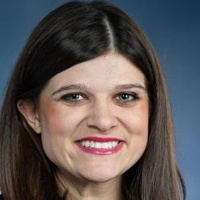
Haley Stevens
Representative
MI
Haley Stevens
Representative
MI
The Taxpayer Data Protection Act limits access to the Treasury Department's payment systems to Treasury employees or contractors with satisfactory performance reviews and security clearances. It sets specific criteria for individuals accessing the system, including conflict of interest restrictions, training, and ethics agreements. The Act also mandates the Treasury Department's Inspector General to investigate and report to Congress on any unauthorized system use.
The CARGO Act of 2025 prohibits the NIH from funding any research using live animals outside of the United States.
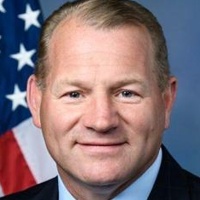
Troy Nehls
Representative
TX
Troy Nehls
Representative
TX
The CARGO Act of 2025 prohibits the National Institutes of Health (NIH) from funding research or programs involving live animals outside of the United States. This bill addresses concerns over the lack of oversight and potential mistreatment of animals in foreign research projects funded by American taxpayers. The Act ensures that NIH funding for animal research is restricted to projects conducted within the U.S. and its territories.
The Disaster Resiliency and Coverage Act of 2025 aims to increase disaster preparedness and insurance coverage by providing grants for home mitigation, tax exclusions for disaster relief payments, and a tax credit for disaster mitigation expenditures.
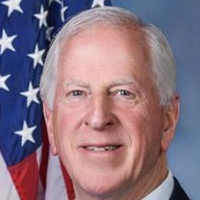
Mike Thompson
Representative
CA
Mike Thompson
Representative
CA
The Disaster Resiliency and Coverage Act of 2025 aims to increase household disaster resilience through a grant program for pre-disaster mitigation activities, tax exclusions for state-based catastrophe loss mitigation payments and certain emergency agricultural assistance, and a tax credit for disaster mitigation expenditures. The grant program will provide funds to states and tribal governments for mitigation activities on individual homes in high-risk disaster areas, while the tax exclusions and credit offer financial relief and incentives for individuals and agricultural producers affected by disasters. This act seeks to encourage proactive measures to protect homes and businesses from the impact of future disasters.
The "Protecting Sensitive Locations Act" restricts immigration enforcement actions at sensitive locations like schools and places of worship, requiring discretion and oversight.
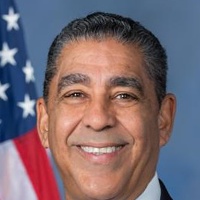
Adriano Espaillat
Representative
NY
Adriano Espaillat
Representative
NY
The "Protecting Sensitive Locations Act" amends the Immigration and Nationality Act to restrict immigration enforcement actions within 1,000 feet of sensitive locations like schools, hospitals, and places of worship, except in exigent circumstances. It mandates training, reporting, and oversight for enforcement activities near these locations, and invalidates evidence obtained in violation of the Act. The Act aims to ensure discretion and limit enforcement impact on sensitive community spaces, while also requiring annual reports to Congress on enforcement actions taken in sensitive locations.
The WARN Act directs the Comptroller General to study and report on the effectiveness of weather alert systems to improve community emergency response plans and public safety.
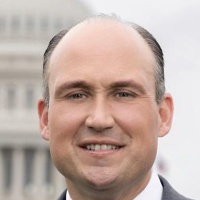
Nicholas Langworthy
Representative
NY
Nicholas Langworthy
Representative
NY
The WARN Act aims to improve community safety during weather emergencies by directing the Comptroller General to study the effectiveness of local, state, territory, and federal emergency alert systems. The study will assess alert dissemination methods, evaluate the clarity and actionability of alert content, and explore improvements to public alerting systems. A report on the study's findings will be submitted to Congress within 18 months, with the goal of enhancing emergency response plans and public safety.
This resolution expresses the House of Representatives' formal disapproval of granting pardons to individuals convicted of assaulting Capitol Police officers.
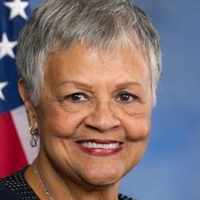
Bonnie Watson Coleman
Representative
NJ
Bonnie Watson Coleman
Representative
NJ
This resolution expresses the formal disapproval of the House of Representatives regarding the granting of pardons to individuals convicted of assaulting Capitol Police officers. It serves as a clear statement of opposition toward clemency for those who committed violent acts against law enforcement during the attack on the U.S. Capitol.
The No Tax Breaks for Outsourcing Act amends the Internal Revenue Code to eliminate tax incentives for offshoring by reforming international corporate taxation, tightening interest deduction rules, and closing loopholes used by inverted and foreign-managed corporations.
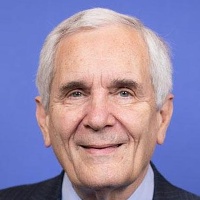
Lloyd Doggett
Representative
TX
Lloyd Doggett
Representative
TX
The **No Tax Breaks for Outsourcing Act** amends the Internal Revenue Code to discourage corporations from shifting profits and operations overseas. The bill replaces the current global intangible low-taxed income (GILTI) regime with a "net CFC tested income" system, implements country-by-country tax reporting, and limits interest deductions for large international groups. Additionally, it strengthens rules to prevent corporate inversions and treats foreign corporations managed within the United States as domestic entities for tax purposes.