Legislative Activity
Track Jeff's sponsored bills, co-sponsored legislation, and voting record
The SAVE Moms and Babies Act of 2025 prohibits the FDA from approving new abortion drugs and imposes strict federal restrictions on the distribution, usage, and reporting requirements for existing abortion medications.
Robert Latta
Representative
OH
Robert Latta
Representative
OH
The SAVE Moms and Babies Act of 2025 prohibits the FDA from approving new abortion drugs and restricts the use of existing ones. The bill mandates strict safety protocols, including in-person administration requirements, expanded adverse event reporting, and limitations on gestational age for drug use.
The Main Street Tax Certainty Act makes the 20% pass-through business income deduction permanent by removing its scheduled expiration after 2025.
Lloyd Smucker
Representative
PA
Lloyd Smucker
Representative
PA
The Main Street Tax Certainty Act makes the 20% pass-through business income deduction permanent. By removing the current 2025 expiration date, this legislation ensures long-term tax relief for owners of qualified pass-through entities.
This bill prohibits federal funding for abortions and for health insurance plans that cover abortions, clarifies these prohibitions under the Affordable Care Act, and requires health plans to disclose the extent of their abortion coverage and any related surcharges.
Christopher Smith
Representative
NJ
Christopher Smith
Representative
NJ
The "No Taxpayer Funding for Abortion and Abortion Insurance Full Disclosure Act of 2025" seeks to prohibit the use of federal funds for abortions and for health plans that cover abortions, while allowing individuals and entities to purchase separate abortion coverage with non-federal funds. It clarifies that premium tax credits and cost-sharing reductions under the Affordable Care Act (ACA) cannot be used for health plans that include abortion coverage. The Act also revises notice requirements for health plans, mandating clear disclosure of abortion coverage and any associated premium surcharges to enrollees. Exceptions to the funding restrictions are included for cases of rape, incest, or when the mother's life is in danger.
This bill reclassifies silencers under federal tax law, removes federal registration requirements for legally transferred silencers, preempts state taxation and registration of silencers in commerce, and mandates the destruction of existing federal silencer registration records.

Ben Cline
Representative
VA
Ben Cline
Representative
VA
The Hearing Protection Act aims to remove silencers from the purview of the National Firearms Act (NFA) by treating them similarly to standard firearms under federal tax law. This legislation preempts certain state and local taxes and registration requirements related to silencers involved in interstate commerce. Furthermore, the bill mandates the destruction of existing federal silencer registration records and updates federal marking requirements for manufacturers.
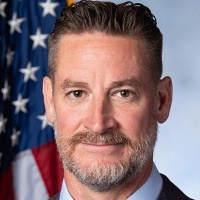
This bill amends Title IX to prohibit schools receiving federal funds from allowing males to participate in female athletic programs, defining "sex" as determined at birth, while allowing males to train with female teams if it doesn't deprive females of opportunities or benefits. It also requires a study on the impact of male participation in female sports.
W. Steube
Representative
FL
W. Steube
Representative
FL
The "Protection of Women and Girls in Sports Act of 2025" amends Title IX to prohibit schools receiving federal funds from allowing males to participate in female athletic programs. Sex is defined as based on reproductive biology and genetics at birth. The bill allows males to train with female teams if it doesn't deprive females of opportunities. It also requires a study on the benefits lost to women when males participate in female sports.
The SAGA Act prohibits state and local governments from imposing firearm regulations, taxes, or licensing requirements on rifles and shotguns that are stricter than federal law.

Claudia Tenney
Representative
NY
Claudia Tenney
Representative
NY
The Second Amendment Guarantee Act (SAGA Act) prohibits state and local governments from imposing firearm regulations, taxes, or licensing requirements on rifles and shotguns that are stricter than federal law. Any existing or future local ordinances that exceed these federal standards would be rendered null and void. Additionally, the bill allows individuals to recover attorney’s fees if they successfully challenge non-compliant state or local regulations in court.
The REMAIN in Mexico Act of 2025 mandates the implementation of the Migrant Protection Protocols, requiring asylum seekers to wait in Mexico while their claims are processed.

Brandon Gill
Representative
TX
Brandon Gill
Representative
TX
The REMAIN in Mexico Act of 2025 mandates that the Secretary of Homeland Security reinstate the Migrant Protection Protocols (MPP). This legislation requires that asylum seekers be returned to Mexico to await their U.S. immigration proceedings, effectively codifying the 2019 policy guidance into law.
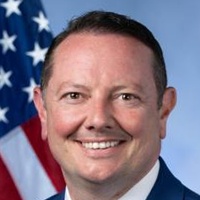
This bill mandates the formal abolishment of the Bureau of Alcohol, Tobacco, Firearms and Explosives (ATF).
Eric Burlison
Representative
MO
Eric Burlison
Representative
MO
The Abolish the ATF Act is a legislative proposal that mandates the immediate dissolution of the Bureau of Alcohol, Tobacco, Firearms and Explosives. This bill seeks to formally terminate the agency and eliminate its federal oversight functions.
This bill proposes a constitutional amendment to limit members of the House of Representatives to three terms and Senators to two terms, with specific provisions for partial terms. Terms served before the amendment's ratification would not be counted towards these limits, and the amendment must be ratified within seven years to be valid.

Ralph Norman
Representative
SC
Ralph Norman
Representative
SC
This bill proposes a constitutional amendment to limit the number of terms a member of Congress can serve. Representatives would be limited to 3 terms and Senators to 2 terms, with specific rules for partial terms. Terms served before the amendment's ratification would not be counted. The amendment must be ratified by three-fourths of the states within seven years to be valid.
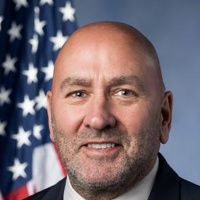
The Finish the Wall Act mandates the immediate resumption and completion of U.S.-Mexico border wall construction by September 2026 while ensuring full compliance with federal DNA collection requirements for detained individuals.
Clay Higgins
Representative
LA
Clay Higgins
Representative
LA
The "Finish the Wall Act" mandates the immediate resumption of border wall construction along the U.S.-Mexico border, requiring completion by September 30, 2026, using previously appropriated funds. The bill directs the Department of Homeland Security to execute comprehensive infrastructure and technology plans while honoring existing construction contracts. Additionally, it requires the agency to certify full compliance with federal DNA collection requirements for individuals in Customs and Border Protection custody.
The FIND Act prohibits federal agencies from contracting with entities that discriminate against the firearm and ammunition industry, ensuring fair access to government contracts for these businesses. Contractors must certify they do not discriminate against firearm entities, with violations leading to contract termination.

Jack Bergman
Representative
MI
Jack Bergman
Representative
MI
The FIND Act prohibits federal agencies from contracting with entities that discriminate against the firearm and ammunition industry. It requires federal contractors to certify they do not discriminate against firearm entities and prohibits them from awarding subcontracts to entities that do not provide a similar certification. Violations of these clauses will result in contract termination. The act defines "discriminate" as making judgments or refusing/limiting services based on biased criteria, rather than case-by-case evaluations, empirical data, financial risk, or legal non-compliance.
The Regulations from the Executive in Need of Scrutiny (REINS) Act of 2025 increases congressional accountability by requiring federal agencies to obtain legislative approval for all "major" rules before they can take effect.

Katherine Cammack
Representative
FL
Katherine Cammack
Representative
FL
The Regulations from the Executive in Need of Scrutiny (REINS) Act of 2025 aims to increase federal regulatory accountability by requiring Congress to approve any "major" rule before it can take effect. Under this legislation, rules with a significant economic impact require a joint resolution of approval from both chambers of Congress to become law. By shifting this authority back to the legislative branch, the Act seeks to ensure greater transparency and oversight of the federal rulemaking process.