Legislative Activity
Track John's sponsored bills, co-sponsored legislation, and voting record
The ROTOR Act reforms transparency and oversight for rotorcraft operations by narrowing exceptions to ADS-B Out requirements, mandating ADS-B In installation on certain aircraft, and establishing new FAA-DOD safety coordination and reporting mechanisms.
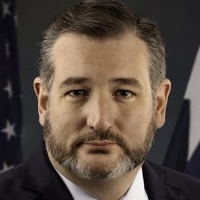
Ted Cruz
Senator
TX
Ted Cruz
Senator
TX
The ROTOR Act focuses on enhancing aviation safety and transparency, primarily by reforming exceptions that allow aircraft to disable their ADS-B Out tracking systems. It mandates that the FAA require most aircraft to install and use ADS-B In technology for improved situational awareness. Furthermore, the bill establishes new coordination offices and requires comprehensive safety reviews of airspace operations, particularly around major airports, involving both civil and military aviation.
This resolution commemorates the fourth anniversary of Russia's invasion of Ukraine, reaffirms U.S. support for Ukrainian sovereignty, and stresses the need for robust, transatlantic security guarantees.

Jeanne Shaheen
Senator
NH
Jeanne Shaheen
Senator
NH
This resolution marks the fourth anniversary of Russia's invasion of Ukraine, reaffirming unwavering U.S. support for Ukraine's sovereignty and territorial integrity. It condemns Russia's ongoing aggression, including attacks on civilians and the forced abduction of children. Furthermore, the resolution emphasizes the critical need for robust, sustained U.S. and transatlantic security guarantees to ensure Ukraine's long-term defense and stability.
This bill mandates updates to the FAA's type certification process to increase transparency, establish clear timelines, refine issue paper criteria, and provide updated guidance on delegation to support new technologies.
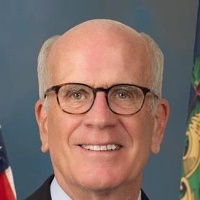
Peter Welch
Senator
VT
Peter Welch
Senator
VT
This bill aims to modernize the Federal Aviation Administration's (FAA) aircraft type certification process to better support new technologies. It mandates increased transparency, establishes standard timelines for key certification steps, and updates criteria for technical issue papers. Furthermore, the legislation requires updated guidance on the FAA's delegation of certification authority to industry stakeholders.
This Act establishes a joint U.S.-Israel initiative to accelerate and expand cooperation in defense technology research, development, and integration across critical domains.
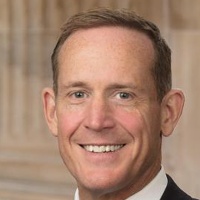
Ted Budd
Senator
NC
Ted Budd
Senator
NC
The FUTURES Act of 2026 establishes a joint initiative between the U.S. and Israeli defense departments to accelerate and expand cooperation on defense technology research, development, and industrial integration. This program focuses on rapidly incorporating jointly developed and Israeli-origin technologies into U.S. military systems across critical domains like AI, counter-drone systems, and directed energy. The Act authorizes funding for these efforts and mandates regular reporting to Congress on progress and technology transition.
This bill directs Small Business Development Centers to assist small businesses in establishing and improving work-based learning, apprenticeship, pre-apprenticeship, and job training programs.

Jacky Rosen
Senator
NV
Jacky Rosen
Senator
NV
The Small Business Workforce Pipeline Act of 2026 directs Small Business Development Centers to assist small businesses in establishing and improving various workforce development initiatives. This includes providing guidance on work-based learning, registered apprenticeships, pre-apprenticeships, and job training programs. The goal is to help small businesses build stronger talent pipelines.
The CLEAR Act requires companies using copyrighted works to train generative AI models to notify the U.S. Copyright Office and face penalties for non-compliance.
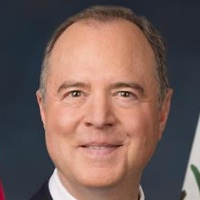
Adam Schiff
Senator
CA
Adam Schiff
Senator
CA
The CLEAR Act establishes new transparency requirements for companies developing generative AI models. It mandates that developers must notify the U.S. Copyright Office about copyrighted works used in their training datasets before releasing or commercially using the model. This legislation also creates a public database of these notices and establishes civil penalties for non-compliance.
The Historic Roadways Protection Act prohibits the use of federal funds to finalize or implement specific travel management plans in Utah until all pending R.S. 2477 right-of-way lawsuits are adjudicated.
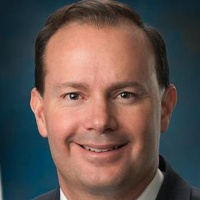
Mike Lee
Senator
UT
Mike Lee
Senator
UT
The Historic Roadways Protection Act prohibits the Secretary of the Interior from using federal funds to finalize or implement specific travel management plans in Utah. This funding restriction will remain in effect until all pending R.S. 2477 right-of-way lawsuits involving the state have been fully adjudicated.
This Act establishes U.S. policy and authorizes sanctions to combat illegal, unreported, or unregulated fishing through international collaboration and accountability measures.
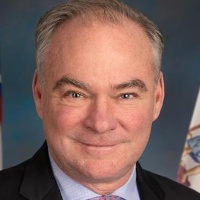
Timothy Kaine
Senator
VA
Timothy Kaine
Senator
VA
The Protecting Global Fisheries Act of 2026 establishes a U.S. policy to combat illegal, unreported, or unregulated (IUU) fishing through international collaboration and technology deployment. It authorizes the President to impose strict sanctions, including asset blocking and visa denials, on foreign persons and entities involved in IUU fishing or the trade of endangered species. Furthermore, the Act mandates regular briefings and detailed annual reports to Congress regarding global efforts and China's role in these illicit activities.
This bill strengthens U.S. sanctions against Russia by targeting its "shadow fleet" and energy infrastructure while increasing funding and oversight for countering Russian influence and supporting Ukraine.

James Risch
Senator
ID
James Risch
Senator
ID
The Sanctioning Harborers And Dodgers Of Western Sanctions Act of 2026 significantly tightens U.S. sanctions against Russia to cut off war funding by targeting its "shadow fleet" and entities evading oil price caps. The bill imposes penalties on foreign ports and individuals in countries like China and India that facilitate sanctioned Russian energy trade. Furthermore, it enhances U.S. sanctions enforcement capabilities and streamlines military assistance reporting to Ukraine.
This act establishes the Taiwan Allies Fund to provide financial assistance to countries facing Chinese pressure for maintaining or strengthening ties with Taiwan.

Chris Van Hollen
Senator
MD
Chris Van Hollen
Senator
MD
This bill establishes the Taiwan Allies Fund to counter diplomatic and economic pressure from the People's Republic of China against nations supporting Taiwan. It authorizes $40 million annually from 2026 through 2028 to support eligible countries that maintain or strengthen ties with Taiwan. Funds will be used for initiatives promoting alternatives to Chinese influence in areas like health, development, and supply chains. The Secretary of State will coordinate the program, which also encourages Taiwan to provide commensurate assistance.
This bill mandates that individuals must provide documentary proof of U.S. citizenship when registering to vote in federal elections and requires photo identification containing a citizenship indicator for voting in those elections.
Mike Lee
Senator
UT
Mike Lee
Senator
UT
This bill, the Safeguard American Voter Eligibility Act (SAVE America Act), mandates that individuals must provide documentary proof of U.S. citizenship when registering to vote in federal elections. It also establishes a federal requirement for voters to present a photo ID containing a citizenship indicator when casting a ballot in federal elections. Furthermore, the legislation requires states to implement ongoing programs to verify and remove non-citizens from voter rolls.
This resolution officially designates the week of January 25 through January 31, 2026, as National School Choice Week to promote awareness of diverse K-12 educational options.
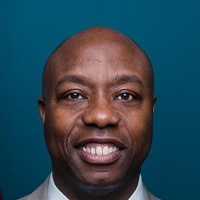
Tim Scott
Senator
SC
Tim Scott
Senator
SC
This resolution officially designates the week of January 25 through January 31, 2026, as "National School Choice Week." It expresses support for the week, recognizing the importance of diverse K-12 education options for empowering parents. The bill encourages all Americans to learn more about the educational choices available to families.
This Act requires the Secretary of State to determine if Hong Kong Economic and Trade Offices merit existing U.S. privileges and imposes restrictions on U.S. government promotion of Hong Kong autonomy if it is deemed insufficiently autonomous from China.

Jeff Merkley
Senator
OR
Jeff Merkley
Senator
OR
This Act requires the Secretary of State to annually determine whether Hong Kong Economic and Trade Offices (HKETOs) deserve their current privileges and immunities. If the Secretary finds they do not, the offices must terminate operations within 180 days, subject to Congressional review. Furthermore, the bill places new restrictions on U.S. government contracting with HKETOs and limits the promotion of Hong Kong as an autonomous entity if it lacks sufficient autonomy from China.
This resolution honors the life, achievements, and legacy of former Senator Ben Nighthorse Campbell, recognizing his military service, athletic career, and significant legislative contributions.

Michael Bennet
Senator
CO
Michael Bennet
Senator
CO
This resolution honors the life, achievements, and legacy of former Senator Ben Nighthorse Campbell. It recognizes his distinguished service in the Air Force, his Olympic athletic career, and his historic tenure in the U.S. Congress. The resolution specifically highlights his landmark legislative accomplishments, including establishing the National Museum of the American Indian. The Senate expresses its sorrow and will recess as a mark of respect for his memory.
This bill extends and reforms federal transportation financing programs (TIFIA and RRIF) to accelerate the development of housing, especially affordable housing, near transit hubs.
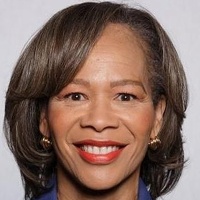
Lisa Blunt Rochester
Senator
DE
Lisa Blunt Rochester
Senator
DE
The Build Housing, Unlock Benefits and Services Act, or Build HUBS Act, aims to address the housing crisis by streamlining federal financing for housing development near transit. It extends and reforms the TIFIA and RRIF loan programs to encourage transit-oriented development, especially for attainable housing. Key changes include creating alternative creditworthiness assessments and establishing delegated loan processing systems to speed up approvals. The bill explicitly preserves all existing state and local zoning and land use laws.
This Act establishes educational programs within the Department of State to address the U.S. critical mineral mining workforce shortage through scholarships, fellowships, and international exchanges.
Jacky Rosen
Senator
NV
Jacky Rosen
Senator
NV
The Critical Mineral Mining Education Act of 2026 establishes programs within the Department of State to address the U.S. shortage of skilled mining professionals. It creates educational opportunities through scholarships, internships, and international exchanges focused on critical minerals. The Act also establishes fellowship programs to send U.S. students abroad and bring foreign experts to the U.S. to build domestic mining education capacity. These initiatives are authorized through fiscal year 2030 (for one program) and funded through 2035 (for the fellowship programs).
This resolution commends the successful military operation that resulted in the capture of Nicolás Maduro and Cilia Flores in Venezuela.
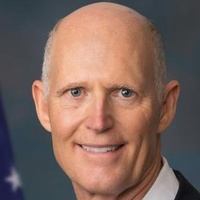
Rick Scott
Senator
FL
Rick Scott
Senator
FL
This resolution commends the successful execution of Operation Absolute Resolve, which resulted in the capture and transport of Nicolás Maduro and Cilia Flores to the U.S. to face federal charges. It praises the operation for its precision, lack of American casualties, and its role in promoting liberty and democratic transition in Venezuela. The bill further recognizes the action's positive impact on regional stability in Latin America.
This resolution affirms the importance of preserving and strengthening Social Security and establishes August as Social Security Awareness Month.
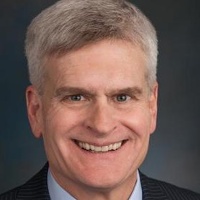
Bill Cassidy
Senator
LA
Bill Cassidy
Senator
LA
This Senate resolution affirms the critical importance of the Social Security program to the American people and expresses the Senate's commitment to preserving and strengthening it for all generations. It establishes August as Social Security Awareness Month to promote public education on the program's history and financial future. Furthermore, the resolution calls for bipartisan action to ensure the long-term solvency of Social Security and prevent benefit cuts.
This act reauthorizes and extends funding for federal programs supporting the resilience and sustainability of both clean water and drinking water infrastructure through fiscal year 2031.
Lisa Blunt Rochester
Senator
DE
Lisa Blunt Rochester
Senator
DE
The Water Infrastructure Resilience and Sustainability Act of 2026 focuses on securing the nation's water systems. This legislation reauthorizes and extends critical federal programs dedicated to improving the resilience and sustainability of both clean water and drinking water infrastructure through fiscal year 2031. It specifically ensures continued funding for programs supporting clean water systems and those serving midsize and large drinking water systems.
This bill reauthorizes and extends key funding and project authorities under the Secure Rural Schools Act through 2026, while also making technical corrections.

Michael Crapo
Senator
ID
Michael Crapo
Senator
ID
The Secure Rural Schools Reauthorization Act of 2025 extends critical funding programs for counties containing federal lands through fiscal year 2026. This legislation ensures the continuation of secure payments and resource advisory committee authorities established under the original 2000 Act. It also streamlines payment elections for fiscal years 2024 and 2025 by carrying over the previous year's choice. Finally, the bill includes technical corrections to improve the administration of these rural support programs.