This resolution commends the successful military operation that resulted in the capture of Nicolás Maduro and Cilia Flores in Venezuela.
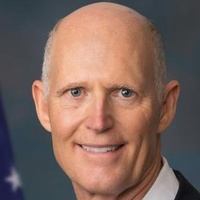
Rick Scott
Senator
FL
This resolution commends the successful execution of Operation Absolute Resolve, which resulted in the capture and transport of Nicolás Maduro and Cilia Flores to the U.S. to face federal charges. It praises the operation for its precision, lack of American casualties, and its role in promoting liberty and democratic transition in Venezuela. The bill further recognizes the action's positive impact on regional stability in Latin America.
Resolution Commends Military Action Capturing Venezuelan Leaders: What It Means for Foreign Policy
This resolution is a straightforward statement from the Senate, purely focused on commending a specific military action called “Operation Absolute Resolve.” According to the text, this operation took place on January 3, 2026, and successfully resulted in the capture of Venezuelan leaders Nicolás Maduro and Cilia Flores in Caracas. They were then transported to the U.S. to face federal charges, including narco-terrorism and conspiracy. The resolution praises the operation for its precision, efficiency, and for achieving its goal without American casualties or prolonged occupation, suggesting it paves the way for democracy in Venezuela and stability in Latin America.
The Commendation: Celebrating the Unilateral Move
Unlike most bills that set policy or allocate funds, this is a resolution—a formal expression of legislative opinion. It doesn't change any law or create a new program; it simply puts the Senate on record supporting a specific, high-stakes military action taken by the executive branch. The text specifically congratulates President Trump, his administration, and the military for the successful execution of the mission. For those of us who follow foreign policy, this is a big deal because it’s the legislative branch officially celebrating a unilateral military intervention that resulted in the capture and rendition of the head of a sovereign state to face U.S. charges.
Sovereignty and the Real-World Precedent
When we talk about “precision” and “efficiency” in this context, we are talking about military action inside another country’s capital city to remove their leadership. While the resolution frames this as providing a “path to liberty and prosperity” for Venezuelans, the core action is the U.S. military physically entering a sovereign nation, seizing its leaders, and bringing them back to the U.S. to stand trial. This is where the rubber meets the road on international norms. If you’re a business owner or a worker whose livelihood depends on stable international trade, this kind of action sets a powerful, and potentially volatile, precedent for how the U.S. interacts with other nations. It essentially endorses the idea that the U.S. can use military force to execute arrests abroad when it deems necessary.
The Impact on International Stability
The resolution argues that this “bold action” will promote regional stability in the Western Hemisphere. However, the immediate real-world effect of a military-led regime change is often the opposite: instability. While the resolution notes the lack of American casualties, it doesn't address the potential for internal conflict or a power vacuum in Venezuela following the capture of its leaders. For everyday people, this kind of foreign policy move can lead to unpredictable consequences, from refugee crises to disruptions in global markets. Ultimately, this resolution is less about future policy and more about the Senate giving a massive, formal thumbs-up to a highly aggressive, non-diplomatic foreign intervention, setting a clear tone for future U.S. engagement abroad.