
Legislative Activity
Track Catherine's sponsored bills, co-sponsored legislation, and voting record
This bill mandates the Treasury Secretary to direct the U.S. Executive Director at the IMF to advocate for increased transparency in China's exchange rate policies.
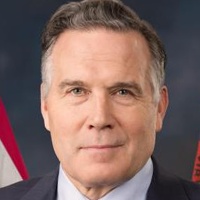
Dave McCormick
Senator
PA
Dave McCormick
Senator
PA
The China Exchange Rate Transparency Act of 2025 mandates the Treasury Secretary to direct the U.S. Executive Director at the IMF to advocate for greater transparency from the People's Republic of China regarding its exchange rate policies. This advocacy includes pushing for IMF surveillance of potential indirect foreign exchange interventions by Chinese entities. The requirements terminate when China meets specific conditions of compliance with IMF obligations or after seven years.
This bill ensures uninterrupted Supplemental Nutrition Assistance Program (SNAP) benefits for fiscal year 2026 by automatically appropriating necessary funds if Congress fails to pass the Department of Agriculture budget.
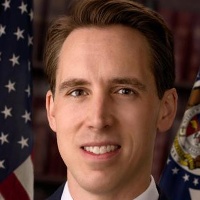
Joshua Hawley
Senator
MO
Joshua Hawley
Senator
MO
The Keep SNAP Funded Act of 2025 ensures that Supplemental Nutrition Assistance Program (SNAP) benefits continue without interruption, even if Congress fails to pass the Department of Agriculture's budget for fiscal year 2026. This legislation authorizes automatic funding from the Treasury to maintain payments and cover any retroactive benefits missed due to the delay. This temporary funding mechanism remains active until the regular fiscal year 2026 appropriations are officially enacted.
This bill modifies the Medicare Drug Price Negotiation Program to adjust the financial threshold for drugs designated for rare diseases (orphan drugs).
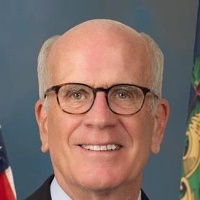
Peter Welch
Senator
VT
Peter Welch
Senator
VT
The No Big Blockbuster Bailouts Act amends the Medicare Drug Price Negotiation Program to adjust the treatment of certain orphan drugs. Specifically, it raises the negotiation threshold for drugs exclusively treating rare diseases from \$200 million to \$400 million. These changes will apply to initial price applicability years beginning on or after January 1, 2028.
This bill updates the Water Resources Research Act of 1984 to specifically include the AI industry in water research collaboration and authorizes funding through 2029, prioritizing interstate water challenges.

John Boozman
Senator
AR
John Boozman
Senator
AR
The Advancing Water Research and Collaboration Act of 2025 updates existing water research law to explicitly include the artificial intelligence industry in federal water research initiatives. The bill authorizes $16 million annually through 2029 for Water Resources Research Institutes. Furthermore, it mandates that 20% of these funds must be dedicated to research addressing water problems that cross state boundaries.
This resolution officially recognizes the 250th birthday of the United States Navy, celebrating its history, vital role in national security and global affairs, and expressing profound gratitude to all who have served.

Roger Wicker
Senator
MS
Roger Wicker
Senator
MS
This resolution officially recognizes and celebrates the 250th birthday of the United States Navy, honoring its long history since the Continental Navy. It expresses deep appreciation for the courage and service of all Navy personnel, past and present, who have defended the nation. Furthermore, the resolution reaffirms Congress's commitment to supporting the Navy's vital role in global security, humanitarian aid, and technological advancement.
This Act temporarily halts certain legal and administrative actions that could harm the civil rights of federal employees and contractors during a government shutdown.
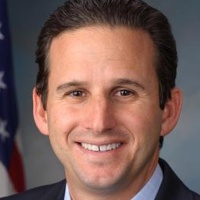
Brian Schatz
Senator
HI
Brian Schatz
Senator
HI
The Federal Employees Civil Relief Act temporarily halts certain legal and administrative actions that could negatively affect the civil rights of federal employees and contractors during a government shutdown. This protection includes pausing evictions, foreclosures, lien enforcement, and providing relief for student loan and income tax obligations. The law also ensures that seeking these protections will not negatively impact an employee's credit or future financial standing.
This Act mandates federal agencies to compensate contractors for employee costs incurred due to funding lapses and appropriates necessary funds to cover resulting contract price adjustments.

Tina Smith
Senator
MN
Tina Smith
Senator
MN
The Fair Pay for Federal Contractors Act of 2025 ensures federal agencies compensate contractors for employee costs incurred due to government funding lapses or shutdowns. This act mandates contract price adjustments to cover reasonable expenses for furloughed or impacted contractor employees, up to a specified weekly limit. The law also provides necessary appropriations to cover these adjustments and requires public reporting on the compensation provided.
This bill prohibits the use of the Exchange Stabilization Fund to provide any financial assistance to Argentina's financial markets until December 10, 2027.

Elizabeth Warren
Senator
MA
Elizabeth Warren
Senator
MA
This Act prohibits the use of the U.S. Treasury Department's Exchange Stabilization Fund to provide any financial assistance or bailout to Argentina's financial markets. Congress asserts that these funds should instead protect American jobs and stability against foreign currency manipulation. The prohibition on using the fund to aid Argentina remains in effect until December 10, 2027.
This bill waives the 10% early withdrawal tax penalty for federal workers taking up to \$30,000 from their Thrift Savings Plan during a government shutdown and adjusts TSP loan rules during such lapses in appropriations.
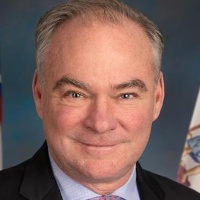
Timothy Kaine
Senator
VA
Timothy Kaine
Senator
VA
The Emergency Relief for Federal Workers Act of 2025 provides financial relief to federal employees affected by government shutdowns. This bill waives the 10% early withdrawal penalty on Thrift Savings Plan (TSP) distributions up to \$30,000 taken due to a shutdown. Furthermore, it establishes rules allowing furloughed or non-paid employees to take TSP loans and prevents missed loan payments during a shutdown from being treated as a taxable distribution.
This joint resolution seeks to disapprove and nullify the recent CMS rule concerning the Patient Protection and Affordable Care Act's Market Integrity and Affordability.

Mark Warner
Senator
VA
Mark Warner
Senator
VA
This joint resolution seeks to disapprove and nullify a specific rule published by the Centers for Medicare & Medicaid Services concerning the "Patient Protection and Affordable Care Act; Market Integrity and Affordability." If enacted, this measure would prevent the CMS rule from having any legal force or effect.
This resolution recognizes October 2025 as Filipino American History Month to celebrate the community's deep history, significant contributions to the United States, and ongoing cultural impact.

Mazie Hirono
Senator
HI
Mazie Hirono
Senator
HI
This resolution formally recognizes October 2025 as Filipino American History Month to celebrate the rich history and culture of Filipino Americans. It highlights their significant and long-standing contributions across all sectors of American life, including military service, healthcare, and public office. The measure encourages all Americans to observe the month with appropriate programs to promote the study of this vital community's heritage.
The Safe Step Act establishes mandatory exceptions processes and timelines for group health plans that use step therapy protocols for prescription drugs.

Lisa Murkowski
Senator
AK
Lisa Murkowski
Senator
AK
The Safe Step Act establishes mandatory exception processes for group health plans and insurance issuers that utilize step therapy protocols for prescription drugs. This ensures patients and doctors have a clear, timely pathway to request coverage for medically necessary alternatives when required initial treatments are inappropriate or ineffective. Plans must provide rapid decisions for urgent requests and adhere to specific reporting requirements detailing exception outcomes.
This bill reauthorizes and updates federal programs for traumatic brain injury surveillance, prevention, state grants, and long-term study, extending funding through fiscal year 2030.
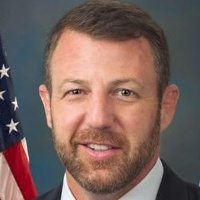
Markwayne Mullin
Senator
OK
Markwayne Mullin
Senator
OK
The Dennis John Benigno Traumatic Brain Injury Program Reauthorization Act of 2025 renames and updates the national TBI surveillance program, expanding data collection to focus on high-risk populations and long-term outcomes. The bill extends funding authorizations for federal TBI programs and state grant initiatives through fiscal year 2030. It also mandates a comprehensive report to Congress on TBI risk factors and requires a new study on the long-term symptoms and conditions following a brain injury.
This bill directs the U.S. Trade Representative to negotiate with Canada and Mexico to establish national security-based foreign investment review frameworks similar to the U.S. system, with the goal of coordinating against harmful investments from nonmarket economy countries like China.
Dave McCormick
Senator
PA
Dave McCormick
Senator
PA
This Act mandates that the U.S. Trade Representative actively push Canada and Mexico to establish national security-based foreign investment review systems similar to the U.S. CFIUS framework. The goal is to align North American defenses against harmful investments, particularly from nonmarket economy countries like China. This effort includes offering technical assistance to neighboring countries to help them build these review mechanisms.
This bill tightens regulations on the manufacturing, sale, and transport of pill presses and their critical components by mandating serial numbers and enhanced recordkeeping under the Controlled Substances Act.

John Cornyn
Senator
TX
John Cornyn
Senator
TX
The Fight Illicit Pill Presses Act aims to combat illegal drug manufacturing by tightening regulations on equipment used to make counterfeit pills. This bill expands the definition of regulated persons to include those dealing in specific pill-making machinery and their critical parts. It mandates permanent serial numbers on these machines and parts, requiring transaction reporting to the Attorney General. Furthermore, the Act prohibits the removal or alteration of these required identification numbers.
This bill establishes five Regional Agriculture Cybersecurity Centers to research, develop, and train the agricultural sector against cyber threats, with a specific focus on adversaries like China and Russia.
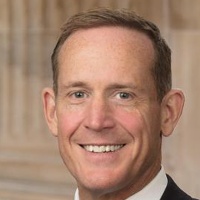
Ted Budd
Senator
NC
Ted Budd
Senator
NC
The Cybersecurity in Agriculture Act of 2025 establishes a program to enhance cybersecurity across the agricultural sector by creating five Regional Agriculture Cybersecurity Centers. These centers, hosted by eligible land-grant universities, will focus on research, threat monitoring, tool development, and training specific to farming and the food supply chain. The initiative is specifically tasked with developing defenses against cyber threats originating from adversarial nations.
This Act nullifies specific executive orders related to federal labor relations and ensures that existing federal collective bargaining agreements remain in effect until their expiration date.
Mark Warner
Senator
VA
Mark Warner
Senator
VA
The Protect America’s Workforce Act nullifies two specific Executive Orders related to federal labor-management programs and prohibits the use of federal funds to enforce them. Furthermore, the Act ensures that all existing collective bargaining agreements between the federal government and labor organizations remain fully in effect until their original expiration dates. This legislation solidifies current federal union contracts while removing the authority of the voided orders.
This Act amends foreign assistance to explicitly recognize the provision of HIV medication, including PrEP, and risk reduction efforts as core life-saving humanitarian assistance, guided by WHO data for targeting at-risk groups.

Jacky Rosen
Senator
NV
Jacky Rosen
Senator
NV
The HIV Medication Access Act officially recognizes the provision of HIV prevention tools, including PrEP medication, as core life-saving humanitarian assistance. This legislation updates how the U.S. approaches HIV/AIDS prevention aid under existing foreign assistance laws. Furthermore, it mandates that the identification of at-risk populations for aid must align with scientific guidance from the World Health Organization (WHO).
This Act mandates that all states allow eligible citizens to register to vote at the polling place on Election Day for federal elections, with limited exceptions and transition timelines.

Amy Klobuchar
Senator
MN
Amy Klobuchar
Senator
MN
The Same Day Registration Act mandates that all states allow eligible citizens to register to vote or update their registration at the polling place on Election Day for any federal election. This ensures that individuals can register and cast their ballot simultaneously, provided the state does not already have a no-registration requirement. States must ensure registration forms are available at all polling locations, with full compliance generally required starting with the November 2026 general election.
This Act prohibits Federal Reserve officials and directors from simultaneously holding any other position requiring a Presidential appointment to safeguard the central bank's independence from political influence.

Ruben Gallego
Senator
AZ
Ruben Gallego
Senator
AZ
The Fed Integrity and Independence Act of 2025 aims to safeguard the Federal Reserve's crucial role in economic stability by reinforcing its independence from political influence. This legislation explicitly prohibits current Federal Reserve officials, including Board of Governors members and Federal Reserve Bank staff and directors, from simultaneously holding any other position requiring a Presidential appointment. The core purpose is to eliminate potential conflicts of interest and ensure monetary policy decisions remain free from partisan pressures.