Legislative Activity
Track Tom's sponsored bills, co-sponsored legislation, and voting record
This resolution honors the Yell County Wildlife Federation for its long history and significant contributions to conservation efforts in Arkansas.
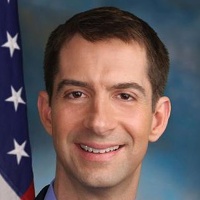
Tom Cotton
Senator
AR
Tom Cotton
Senator
AR
This resolution formally honors the Yell County Wildlife Federation for its long history of dedicated conservation work in Arkansas since 1946. It recognizes the group's significant contributions, including supporting student scholarships and leading vital habitat improvement projects. The bill serves as a commendation from Congress recognizing the Federation's service to the community and the state.
This Act significantly restructures the Intelligence Community by reforming the DNI's office, transferring key centers to the FBI and CIA, eliminating several offices, and restricting the use of intelligence funds for certain DEI programs and entities.
Tom Cotton
Senator
AR
Tom Cotton
Senator
AR
The Intelligence Community Efficiency and Effectiveness Act of 2025 enacts sweeping reforms across the U.S. Intelligence Community (IC). This legislation modifies the authorities of the Director of National Intelligence (DNI), restructures key centers by transferring the National Counterintelligence and Security Center to the FBI, and renames the National Counterterrorism Center. Furthermore, the bill terminates the National Intelligence University, eliminates several offices and programs, restricts the use of National Intelligence Program funds for certain entities, and bans specific Diversity, Equity, and Inclusion (DEI) practices within the IC.
This bill eases the tax burden on Intelligence Community employees by expanding moving expense deductions and excluding related reimbursements from taxable income following required relocations.
Tom Cotton
Senator
AR
Tom Cotton
Senator
AR
The Intelligence Community Workforce Agility Protection Act of 2025 aims to support intelligence community personnel by simplifying the tax treatment of required relocations. This bill allows intelligence community employees and appointees to utilize specific moving expense deductions when changing duty stations. Furthermore, it ensures that reimbursements for qualified moving expenses related to these official relocations are excluded from taxable income.
This act updates and clarifies federal penalties for participating in riots, with increased severity for acts involving violence or the assault of an officer.
Tom Cotton
Senator
AR
Tom Cotton
Senator
AR
The Mitigating Extreme Lawlessness and Threats Act updates federal penalties for participating in riots under U.S. Code. This legislation clarifies sentencing guidelines based on the severity of the actions committed, including specific enhancements for violence or the assault of a federal officer. The bill aims to establish a clearer and more structured system for punishing riot-related offenses.
This act mandates the deportation and immediate visa cancellation for non-citizens convicted of specific violent or destructive crimes committed during protests.
Tom Cotton
Senator
AR
Tom Cotton
Senator
AR
The No Visas for Violent Criminals Act establishes new grounds for the deportation of non-citizens convicted of certain crimes committed during protests, specifically those involving property destruction or blocking critical infrastructure. Conviction under these provisions results in the immediate cancellation of any existing visa. Furthermore, the bill mandates the swift removal of the individual from the United States within 60 days of the conviction.
This Act prohibits federal funding for agricultural research centers and laboratories where nationals from designated "countries of concern" are conducting research.
Tom Cotton
Senator
AR
Tom Cotton
Senator
AR
The Bioweapon Prevention Act of 2025 prohibits federal funding for any research center or laboratory conducting agricultural research if a national from a designated "country of concern" is employed there. This measure specifically targets facilities where citizens from China, Iran, Russia, Cuba, Venezuela, and North Korea are involved in agricultural research. The goal is to prevent the potential misuse of agricultural science by these nations.
This Act establishes an Energy Non-Procurement List to blacklist entities posing national security risks and prohibits federal energy contracts with companies that procure from those listed entities, while also requiring a study to consolidate existing federal restricted entity lists.
Tom Cotton
Senator
AR
Tom Cotton
Senator
AR
The Securing Energy Supply Chains Act establishes an "Energy Non-Procurement List" managed by the Secretary of Energy to blacklist entities posing risks to U.S. national or economic security, prioritizing those involved in critical materials or batteries. This Act prohibits the Department of Energy from contracting with companies that procure from or partner with entities on this new list, with limited exceptions requiring detailed reporting. Finally, the bill mandates a study to consolidate and harmonize existing federal lists of concerning foreign entities to improve consistency in government procurement.
The PILLS Act establishes new tax credits to incentivize the domestic production and investment in facilities for manufacturing generic drugs and biosimilars.
Tom Cotton
Senator
AR
Tom Cotton
Senator
AR
The PILLS Act introduces two new tax incentives designed to boost domestic manufacturing of essential generic drugs and biosimilars. It establishes a production credit rewarding companies for manufacturing eligible drug components within the U.S., with bonuses for using American-sourced materials. Additionally, the Act creates an investment credit to encourage building and equipping U.S. facilities dedicated to producing these vital medicines. Both credits offer options for direct payment or transferability, ensuring their utility for businesses.
The SAFE FOOD Act of 2025 mandates a study on consolidating federal food safety agencies and requires a report with recommendations to Congress within one year.
Tom Cotton
Senator
AR
Tom Cotton
Senator
AR
The SAFE FOOD Act of 2025 mandates a comprehensive study on consolidating federal food safety agencies into a single entity. The Secretary of Agriculture is responsible for initiating this study within 60 days of enactment. A final report, including recommendations on whether to proceed with consolidation, must be submitted to Congress within one year.
The COUNTER Act delegates authority and clarifies methods for the Department of Defense to neutralize unmanned aircraft system threats outside the U.S., while exempting related operational details from public disclosure.
Tom Cotton
Senator
AR
Tom Cotton
Senator
AR
The COUNTER Act grants the Department of Defense (DoD) expanded authority to neutralize threats from unmanned aircraft systems (drones) operating outside of the United States. This legislation delegates response authority, clarifies mitigation methods like remote identification, and exempts security details regarding these operations from public disclosure. Furthermore, it limits the application of certain criminal and security laws to authorized DoD and Coast Guard activities aimed at countering these aerial threats overseas.
This bill establishes a mandatory, science-based national organization to standardize health, safety, and medication rules across participating state horse racing commissions.
Tom Cotton
Senator
AR
Tom Cotton
Senator
AR
The Racehorse Health and Safety Act of 2025 creates a mandatory national organization, the Racehorse Health and Safety Organization (RHSO), to standardize health, safety, and medication rules across participating states. This body will establish uniform, science-based regulations for medication control and racetrack safety, enforced through a comprehensive disciplinary framework. The legislation also mandates the creation of expert committees to continuously update these standards for specific horse breeds. Participation requires states to adopt specific anti-deceptive sales laws and adhere to the RHSO's overriding rules.
This bill repeals numerous Diversity, Equity, and Inclusion (DEI) mandates across federal science and technology programs while restricting executive agencies from imposing non-statutory policy requirements on federal funding recipients.
Tom Cotton
Senator
AR
Tom Cotton
Senator
AR
This bill primarily repeals and modifies numerous existing requirements across federal science and technology acts, specifically targeting and eliminating mandates related to Diversity, Equity, and Inclusion (DEI) in STEM programs and research funding. It also restricts federal agencies from imposing policy requirements on funding recipients that are not explicitly established in law. The legislation streamlines various programs while maintaining specific encouragement for Historically Black Colleges and Universities (HBCUs) and Tribal Colleges or Universities (TCUs).
The Chip Security Act mandates security mechanisms on advanced integrated circuit products exported from the U.S. to protect national security and prevent unauthorized use.
Tom Cotton
Senator
AR
Tom Cotton
Senator
AR
The Chip Security Act mandates the implementation of security mechanisms on advanced integrated circuit products before they are exported to protect U.S. national security interests. This requires the Secretary of Commerce to ensure chips include features verifying location and reporting unauthorized use or tampering. Furthermore, the Act calls for an assessment and potential rollout of secondary security features to enhance export control compliance and prevent misuse by adversaries. The goal is to maintain the U.S. competitive edge by securing sensitive hardware sent to allies and partners.
The ABC Safe Drug Act restricts federal health programs from purchasing drugs with active ingredients sourced from China and provides a temporary 100% tax deduction for domestic pharmaceutical and medical device manufacturing investments.
Tom Cotton
Senator
AR
Tom Cotton
Senator
AR
The ABC Safe Drug Act aims to secure the U.S. drug supply chain by restricting federal health programs from purchasing prescription drugs with active ingredients sourced from China, phasing in a 100% requirement by 2030. To encourage domestic production, the bill also provides a temporary 100% immediate tax deduction for U.S. investments in pharmaceutical and medical device manufacturing property through 2030. Furthermore, it mandates clear labeling of the country of origin for all active drug ingredients.
The Stephen Hacala Poppy Seed Safety Act establishes federal limits for morphine and codeine contamination in poppy seeds, classifying overly contaminated seeds as adulterated food banned from interstate sale.
Tom Cotton
Senator
AR
Tom Cotton
Senator
AR
The Stephen Hacala Poppy Seed Safety Act aims to prevent deaths and adverse effects linked to morphine contamination in poppy seeds. This legislation directs the Secretary of Health and Human Services to establish maximum allowable limits for morphine and codeine in poppy seeds within two years. Poppy seeds exceeding these federal safety limits will be deemed adulterated food and banned from interstate commerce. Furthermore, the Act clarifies that contaminated poppy seeds remain subject to controlled substance regulations.
This Act expands the federal authority for lake and pond managers in specified states to control double-crested cormorants preying on commercially raised fish.
Tom Cotton
Senator
AR
Tom Cotton
Senator
AR
The Cormorant Relief Act of 2025 updates federal regulations to allow for the control of destructive double-crested cormorants at aquaculture facilities. This update expands the scope of the existing depredation order to include lake and pond managers in twelve additional states. The Secretary of the Interior must reissue these updated rules within one year of the Act's passage.
This Act repeals the federal transfer tax on certain firearms and clarifies that it does not grant the Consumer Product Safety Commission authority over firearms.
Tom Cotton
Senator
AR
Tom Cotton
Senator
AR
The Repealing Illegal Freedom and Liberty Excises (RIFLE) Act eliminates the federal transfer tax previously imposed on certain firearms. This legislation repeals Section 5811 of the Internal Revenue Code and updates related tax provisions accordingly. The Act explicitly clarifies that it does not grant the Consumer Product Safety Commission any new oversight authority over firearms.
This Act limits the FCC's authority to stop state and federal correctional facilities from using approved, localized cellphone jamming systems to block contraband communications, provided they meet specific operational and notification requirements.
Tom Cotton
Senator
AR
Tom Cotton
Senator
AR
The Cellphone Jamming Reform Act of 2025 limits the FCC's authority to prohibit state and federal correctional facilities from using signal jamming systems within their housing areas. This legislation permits prisons to deploy jammers specifically to block communications involving contraband devices or incarcerated individuals. Any facility choosing to use this technology must adhere to strict operational rules, including location limitations and pre-approval notification to local public safety officials and the Bureau of Prisons.
The GATE Act of 2025 prohibits National Laboratories from admitting foreign nationals from China, Russia, Iran, North Korea, or Cuba, with narrow exceptions requiring high-level certification of U.S. benefit.
Tom Cotton
Senator
AR
Tom Cotton
Senator
AR
The Guarding American Technology from Exploitation (GATE) Act of 2025 prohibits U.S. National Laboratories from granting access to foreign nationals from China, Russia, Iran, North Korea, or Cuba, regardless of the length of their intended visit. This immediate ban applies to both current and future visitors and assignees from these specified countries. Exceptions can only be granted by the Secretary of Energy if they certify that the benefit to the U.S. outweighs the national security risks, following consultation with the FBI. Any granted waiver must be reported to Congress within 30 days.
This act prohibits individuals convicted of campus protest-related crimes from receiving federal student loan forgiveness or taking out new federal student loans.
Tom Cotton
Senator
AR
Tom Cotton
Senator
AR
The "No Student Loans for Campus Criminals Act" prohibits individuals convicted of any federal or state crime related to on-campus protests from receiving federal student loan forgiveness or cancellation. Furthermore, these convicted individuals are barred from taking out any new federal student loans. This restriction applies to most existing federal student loan programs.