Legislative Activity
Track Christopher's sponsored bills, co-sponsored legislation, and voting record
This Act mandates the immediate public release of all unclassified Department of Justice records related to Jeffrey Epstein and Ghislaine Maxwell, with limited exceptions for victim privacy and active investigations.

Jeff Merkley
Senator
OR
Jeff Merkley
Senator
OR
The Epstein Files Transparency Act mandates the Attorney General to release all unclassified Department of Justice records related to Jeffrey Epstein and Ghislaine Maxwell within 30 days of enactment. This sweeping requirement covers investigations, travel logs, and communications, with limited exceptions primarily focused on protecting victim privacy and active cases. Any redactions must be publicly justified, and the Attorney General must report the details of the release and any withheld information to Congress.
This Act mandates that employers provide employees with at least two hours of paid leave to vote in federal elections.

Mazie Hirono
Senator
HI
Mazie Hirono
Senator
HI
The Time Off to Vote Act mandates that employers provide employees with at least two consecutive hours of paid leave to vote in federal elections. Employers retain control over the timing of this leave, which cannot result in the loss of existing benefits. This federal requirement supplements, but does not override, any state or local laws that offer greater employee protections.
This Act repeals previous health subtitle changes and permanently extends enhanced, uncapped premium tax credits to lower the cost of health insurance.
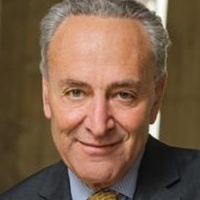
Charles Schumer
Senator
NY
Charles Schumer
Senator
NY
The Protecting Health Care and Lowering Costs Act primarily repeals previous health subtitle changes and permanently extends enhanced premium tax credits for marketplace health insurance. This extension removes the income cap for receiving enhanced credits and updates the calculation method for determining an individual's required premium contribution. The bill aims to simplify the tax code related to health insurance affordability.
The Servicemembers and Veterans Empowerment and Support Act of 2025 aims to improve VA reporting on technology-facilitated military sexual trauma, streamline disability compensation claims by strengthening evidence standards and communication, and expand healthcare access for all eligible MST survivors.
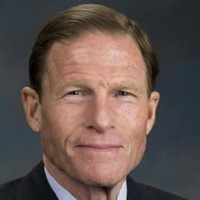
Richard Blumenthal
Senator
CT
Richard Blumenthal
Senator
CT
The Servicemembers and Veterans Empowerment and Support Act of 2025 aims to significantly improve support for veterans who have experienced military sexual trauma (MST). It mandates a VA report on technology-facilitated MST and overhauls the disability claims process to be more sensitive and evidence-flexible for survivors. Furthermore, the bill expands access to necessary healthcare and support services for a broader range of former service members affected by MST.
The SAVES Act of 2025 establishes a five-year VA pilot program to award competitive grants, up to \$2 million each, to nonprofits providing service dogs and necessary veterinary insurance to eligible veterans with specific disabilities.
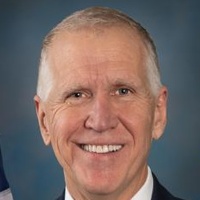
Thom Tillis
Senator
NC
Thom Tillis
Senator
NC
The SAVES Act of 2025 establishes a five-year pilot program within the VA to award competitive grants to nonprofits providing service dogs to eligible veterans with disabilities like PTSD or mobility issues. These grants, capped at $2 million per recipient, will cover the cost of training the dog and veteran, and the VA will also provide veterinary insurance for each service dog. The goal is to ensure veterans receive necessary support dogs without incurring any personal fees.
This Act establishes national, standardized phrases—"BEST If Used By" for quality and "USE By" for discard—for food date labeling to clarify product freshness and safety.
Richard Blumenthal
Senator
CT
Richard Blumenthal
Senator
CT
The Food Date Labeling Act of 2025 establishes national standards for food date labeling, requiring manufacturers to use specific phrases like "BEST If Used By" for quality dates and "USE By" for discard dates. This legislation clarifies the meaning of these dates for consumers and prevents states from creating conflicting terminology. The new labeling requirements will take effect two years after the bill is enacted.
The Chief Herbert D. Proffitt Act of 2025 expands eligibility for the Public Safety Officers Death Benefits program to include certain retired law enforcement officers targeted due to their past service, effective retroactively to January 1, 2012.

Catherine Cortez Masto
Senator
NV
Catherine Cortez Masto
Senator
NV
The Chief Herbert D. Proffitt Act of 2025 expands eligibility for the Public Safety Officers Death Benefits program to include certain retired law enforcement officers. This legislation provides benefits to retired officers, or their families, if their injury or death resulted from a targeted attack directly related to their prior service. These changes are effective immediately and apply retroactively to qualifying incidents occurring on or after January 1, 2012.
This Act repeals the previous ban preventing Medicaid payments to certain entities and validates retroactive payments for services provided during the prohibition period.

Tina Smith
Senator
MN
Tina Smith
Senator
MN
The Restoring Essential Healthcare Act repeals a previous ban that prohibited Medicaid payments to certain healthcare entities. This legislation retroactively validates and ensures payment for essential healthcare services provided by these now-unbanned organizations during the period the prohibition was in effect.
This bill establishes federal standards for trauma kits, requiring agencies receiving certain federal funding to purchase kits that meet specific life-saving bleeding control requirements.

John Cornyn
Senator
TX
John Cornyn
Senator
TX
The Improving Police CARE Act establishes federal standards for trauma kits purchased by law enforcement agencies receiving specific federal funding. This ensures that these kits, which must include essential bleeding control equipment, meet defined performance criteria set by the Bureau of Justice Assistance. The bill also mandates consultation with medical and law enforcement experts to develop these required standards within 180 days of enactment.
The John R. Lewis Voting Rights Advancement Act of 2025 strengthens federal protections against voting discrimination by updating oversight criteria, establishing new standards to challenge discriminatory practices, and creating federal penalties for interfering with election workers and processes.

Richard Durbin
Senator
IL
Richard Durbin
Senator
IL
The John R. Lewis Voting Rights Advancement Act of 2025 significantly strengthens the Voting Rights Act by establishing new standards to challenge discriminatory voting practices and updating federal oversight criteria for states. It mandates greater transparency for all changes to voting rules and implements "practice-based preclearance" for certain jurisdictions. Additionally, the bill creates new federal criminal penalties for using force or threats to intimidate voters or election workers.
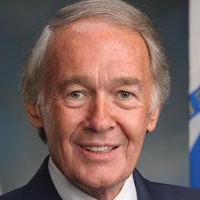
This act authorizes \$50 million annually for the CDC to conduct research on firearms safety and gun violence prevention from fiscal years 2026 through 2031.
Edward Markey
Senator
MA
Edward Markey
Senator
MA
The Gun Violence Prevention Research Act of 2025 authorizes $50 million annually for fiscal years 2026 through 2031 to be appropriated to the Centers for Disease Control and Prevention (CDC). This funding is specifically designated for conducting or supporting research on firearms safety and gun violence prevention. This appropriation is in addition to any existing funds allocated for this purpose.
This resolution recognizes the impact of the Americans with Disabilities Act and calls for strengthened federal action to expand healthcare and community support services, ensuring full independence and economic self-sufficiency for individuals with disabilities.

Tammy Duckworth
Senator
IL
Tammy Duckworth
Senator
IL
This resolution recognizes the foundational importance of the Americans with Disabilities Act (ADA) in promoting independent living and economic self-sufficiency for individuals with disabilities. It calls for strengthened federal action to dismantle remaining barriers, particularly by expanding vital community-based health care and support services. The bill urges various federal agencies to actively improve access to employment, housing, telecommunications, and emergency preparedness for this community. Ultimately, it declares that fulfilling the ADA's promise requires a committed, ongoing effort to ensure full inclusion.
This bill establishes a program to add 2,000 new Medicare-funded residency positions annually through 2033, prioritizing rural, high-need, and newly established medical school-affiliated hospitals, while also mandating a study on strategies to increase workforce diversity.

John Boozman
Senator
AR
John Boozman
Senator
AR
The Resident Physician Shortage Reduction Act of 2025 aims to address physician shortages by adding 2,000 new Medicare-funded residency positions annually from 2027 through 2033. These new slots are distributed through an application process, prioritizing hospitals serving rural areas, Health Professional Shortage Areas (HPSAs), and those supporting new medical schools. Additionally, the bill mandates a study and report on effective strategies for increasing diversity within the healthcare workforce.
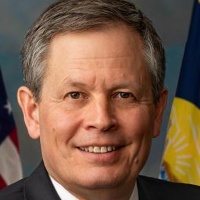
This Act promotes private employee ownership by extending tax deferrals for S corporation ESOP sales, establishing Treasury and Labor support offices, and ensuring ESOP-owned businesses retain small business eligibility.
Steve Daines
Senator
MT
Steve Daines
Senator
MT
The Promotion and Expansion of Private Employee Ownership Act of 2025 aims to significantly boost employee ownership in S corporations through Employee Stock Ownership Plans (ESOPs). This bill extends crucial tax deferral benefits for stock sales to ESOPs and establishes new offices within the Treasury and Labor Departments to provide technical assistance and advocacy. Furthermore, it amends the Small Business Act to ensure ESOP-owned businesses do not automatically lose small business status when they transition to majority employee ownership.
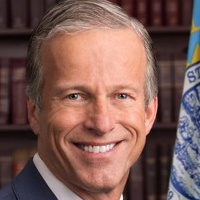
This act expands Medicare Part B coverage to include certain pharmacist services related to public health needs, effective January 1, 2026.
John Thune
Senator
SD
John Thune
Senator
SD
The Equitable Community Access to Pharmacist Services Act expands Medicare Part B coverage to include services provided by pharmacists starting in 2026. This legislation covers pharmacist services that align with state law and are provided in collaboration with a physician or approved practitioner. The bill specifies payment rates for these covered services, particularly enhancing reimbursement for services related to public health emergencies like COVID-19, flu, and RSV. Furthermore, it prohibits pharmacists from balance billing Medicare patients for these covered services.
This act enhances opioid overdose data collection by establishing a grant program for states, localities, and law enforcement to rapidly track fatal and nonfatal overdoses and naloxone administration using integrated digital platforms.

Maria Cantwell
Senator
WA
Maria Cantwell
Senator
WA
The Opioid Overdose Data Collection Enhancement Act aims to rapidly improve tracking of fatal and nonfatal drug overdoses and the use of reversal medications like naloxone. It amends the comprehensive opioid abuse grant program to fund states, localities, and law enforcement coalitions in creating instant, mobile-friendly systems for reporting overdose incidents. Grantees must use this data to coordinate public safety and health responses and ensure interoperability with existing federal and state data systems.
This resolution supports designating the week of August 25–29, 2025, as the third annual National Community Health Worker Awareness Week to recognize the vital role of Community Health Workers in public health.

Ron Wyden
Senator
OR
Ron Wyden
Senator
OR
This resolution supports the designation of the third annual "National Community Health Worker Awareness Week" to recognize the vital role of Community Health Workers (CHWs). It highlights how CHWs serve as trusted cultural bridges, connecting diverse communities to essential health and social services. The bill encourages federal, state, and local efforts to raise awareness and ensure sustainable support for this crucial public health workforce.
The LEAD Act of 2025 mandates that specific advanced, reusable unmanned aircraft systems be treated as manned aircraft for U.S. arms export control purposes, separating them from missile technology regulations.

Tom Cotton
Senator
AR
Tom Cotton
Senator
AR
The LEAD Act of 2025 revises U.S. arms export controls for specific advanced, reusable unmanned aircraft systems. This legislation mandates that these covered drones be treated identically to manned aircraft systems under export regulations, including those related to the Missile Technology Control Regime (MTCR). The goal is to separate the export review of these sophisticated drones from that of missile technology. The President is required to update relevant regulations within 180 days to reflect this new treatment.
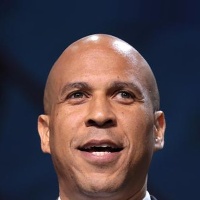
This Act mandates comprehensive fertility treatment coverage across most private health insurance plans, federal employee benefits, TRICARE, Medicaid, and Medicare, while establishing new benefits for veterans.
Cory Booker
Senator
NJ
Cory Booker
Senator
NJ
The Access to Fertility Treatment and Care Act mandates comprehensive fertility treatment coverage across most private health insurance plans, federal employee benefits (FEHB), TRICARE, and state Medicaid programs, provided obstetrical services are already covered. It broadly defines fertility treatment to include procedures like IVF, egg/sperm preservation, and related medications, ensuring cost-sharing for these services is no higher than for other medical benefits. Furthermore, the bill establishes new fertility treatment benefits for veterans and their families through the VA, and mandates that Medicare Part B cover these services with no patient deductible.
This bill restricts the use of federal law enforcement and military personnel for domestic crowd control, mandating clear identification and limiting their deployment to federal property unless specific conditions are met.
Jeff Merkley
Senator
OR
Jeff Merkley
Senator
OR
This Act restricts the deployment and actions of federal law enforcement and military personnel during domestic crowd control and protest situations. It mandates that all deployed personnel clearly display identifying information and prohibits the use of unmarked vehicles during civilian arrests at such events. Furthermore, the bill requires federal agencies to publicly report on the deployment of personnel for crowd control within 24 hours.