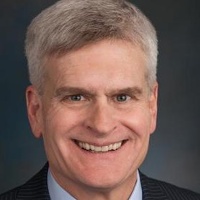
Legislative Activity
Track Bill's sponsored bills, co-sponsored legislation, and voting record
This resolution expresses support for designating October 14, 2025, as the "National Day of Remembrance for Charlie Kirk" to honor his advocacy for free speech, civic education, and individual liberty.
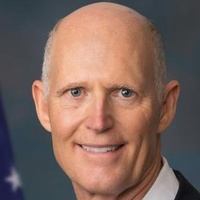
Rick Scott
Senator
FL
Rick Scott
Senator
FL
This resolution expresses support for designating October 14, 2025, as the "National Day of Remembrance for Charlie Kirk." It formally honors Kirk's legacy as a champion of free speech, civic education, and individual liberty through his work with Turning Point USA and his writing. The resolution encourages citizens and organizations nationwide to observe this day through activities promoting faith, liberty, and democracy.
This Act establishes a six-year pilot program for eligible hospitals to provide medically tailored, home-delivered meals and nutrition therapy to high-risk Medicare patients upon discharge to evaluate the impact on health outcomes.
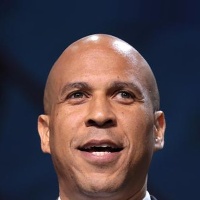
Cory Booker
Senator
NJ
Cory Booker
Senator
NJ
This Act establishes a six-year pilot program for eligible hospitals to provide medically tailored, home-delivered meals and nutrition therapy to certain high-risk Medicare patients upon discharge. The program aims to evaluate whether these specialized meals reduce hospital readmissions and improve patient health outcomes. Participating hospitals must screen patients, arrange for daily meals meeting specific nutritional needs, and report data to the Secretary of HHS. Funding for the meals will be offset by reducing payments to other hospitals to ensure the program is budget-neutral.
This resolution condemns the treatment of Dr. Gubad Ibadoghlu by the Government of Azerbaijan and urges his immediate release alongside all political prisoners.
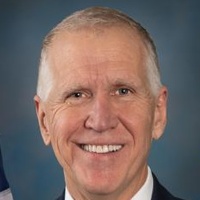
Thom Tillis
Senator
NC
Thom Tillis
Senator
NC
This resolution condemns the treatment of economist Dr. Gubad Ibadoghlu and other political prisoners by the Government of Azerbaijan. It urges the immediate and unconditional release of all wrongfully detained individuals. Furthermore, the resolution emphasizes that respecting human rights and academic freedom is essential for the success of ongoing peace efforts between Armenia and Azerbaijan.
This joint resolution honors the thirteen U.S. service members who made the ultimate sacrifice in the August 26, 2021, bombing at Abbey Gate during the withdrawal from Afghanistan and designates a National Day of Remembrance.
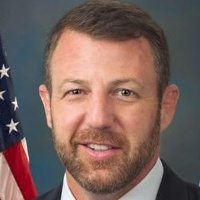
Markwayne Mullin
Senator
OK
Markwayne Mullin
Senator
OK
This joint resolution formally honors the thirteen U.S. service members who were killed in the August 26, 2021, bombing at Abbey Gate during the withdrawal from Afghanistan. It recognizes their ultimate sacrifice in service to the nation and expresses deep gratitude to their families. The resolution also designates a National Day of Remembrance to ensure their faithful service is never forgotten.
This resolution condemns the assassination of Charlie Kirk while honoring his life, legacy, and commitment to civil discourse on college campuses.
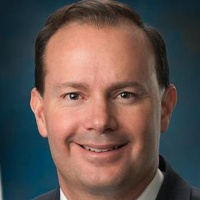
Mike Lee
Senator
UT
Mike Lee
Senator
UT
This resolution formally condemns the assassination of Charlie Kirk and honors his life and legacy as a devoted husband, father, and founder of Turning Point USA. It recognizes his commitment to encouraging civil discourse on college campuses across the nation. The Senate also extends its deepest sympathies to his surviving family.
This resolution designates September 2025 as National Literacy Month to raise awareness about the importance of reading and promote evidence-based literacy initiatives nationwide.
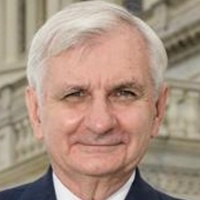
John Reed
Senator
RI
John Reed
Senator
RI
This resolution officially designates September 2025 as National Literacy Month to raise awareness about the critical importance of reading skills. It highlights the significant national challenges in literacy rates and the economic costs associated with low literacy. The measure calls upon all sectors of society to observe the month by promoting evidence-based reading programs and activities.
This Act amends existing law to expand research, mandate five-year action strategies, and enhance monitoring and response coordination across marine and freshwater systems to combat harmful algal blooms and hypoxia.
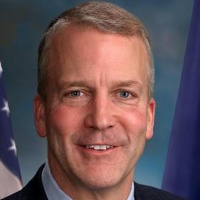
Dan Sullivan
Senator
AK
Dan Sullivan
Senator
AK
The Harmful Algal Bloom and Hypoxia Research and Control Amendments Act of 2025 significantly updates federal efforts to combat harmful algal blooms (HABs) and hypoxia across all U.S. waters, including freshwater systems. The bill expands the scope of the interagency Task Force, mandates the creation of a five-year national Action Strategy for HABs, and enhances monitoring and forecasting capabilities. It also clarifies agency roles, assigning EPA new duties for freshwater blooms while tasking NOAA with marine and Great Lakes response, and establishes a new incubator program for control technologies.
This bill prohibits the EPA from reallocating renewable fuel obligations from small refineries operating under an exemption extension and requires their produced volumes to be counted in total production calculations.
Mike Lee
Senator
UT
Mike Lee
Senator
UT
The Protect Consumers from Reallocation Costs Act of 2025 prohibits the EPA from reassigning the renewable fuel obligations of small refineries that have received an exemption extension. This ensures that the obligated volume remains with the exempt refinery rather than being shifted to other obligated parties. Furthermore, the fuel produced by these exempt small refineries must still be counted when calculating a company's total production for compliance purposes.
This bill temporarily enhances casualty loss deductions for major disasters declared after July 2025 and excludes certain wildfire relief payments from gross income through 2030.
Rick Scott
Senator
FL
Rick Scott
Senator
FL
The Federal Disaster Tax Relief Act of 2025 aims to provide enhanced tax relief for victims of major disasters and certain wildfires. It simplifies the deduction of casualty losses from major disasters occurring between mid-2025 and 2027 by lowering the deductible threshold and expanding what can be claimed. Additionally, the bill excludes certain compensation received for wildfire-related losses from gross income for tax years spanning from 2026 through 2030.
The RAISE Act of 2025 mandates that states incorporate specific academic standards for artificial intelligence and emerging technologies when developing or revising K-12 curriculum guidelines.
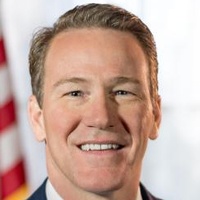
Jon Husted
Senator
OH
Jon Husted
Senator
OH
The RAISE Act of 2025 mandates that states incorporate specific academic standards for artificial intelligence and emerging technologies when developing or revising their K-12 curriculum guidelines. This ensures that AI literacy becomes a required component of state academic standards under federal education law.
This Act aims to improve patient access to innovative kidney disease treatments while ensuring fair labor cost adjustments for dialysis centers through Medicare payment reforms.

Marsha Blackburn
Senator
TN
Marsha Blackburn
Senator
TN
The Kidney Care Access Protection Act aims to improve patient access to innovative kidney disease treatments by refining Medicare payment systems for new drugs and equipment. It also ensures greater stability for dialysis centers by adjusting annual payment updates to accurately reflect actual labor cost increases. Specifically, the bill extends transitional payments for new therapies and mandates direct payments from Medicare Advantage plans for these innovations. Finally, it corrects past errors in Medicare's cost predictions for dialysis services starting in 2026.
This Act establishes a system of automatic, 14-day continuing appropriations to prevent government shutdowns while imposing travel and procedural restrictions on Congress and federal employees during funding lapses.

James Lankford
Senator
OK
James Lankford
Senator
OK
The Prevent Government Shutdowns Act of 2025 establishes an automatic, 14-day continuing funding mechanism to keep federal programs operational if Congress fails to pass a full budget by the start of the fiscal year. This automatic funding continues in two-week increments until a final budget is enacted, while simultaneously imposing strict travel and procedural limitations on Congress and federal employees during these lapses. The Act is designed to prevent government shutdowns by ensuring continuity of essential services while incentivizing timely budget passage.
This Act establishes a federal grant program to modernize and enhance the safety of community-owned natural gas distribution pipelines.

Jon Ossoff
Senator
GA
Jon Ossoff
Senator
GA
The American Energy Security Act of 2025 establishes a new federal grant program to modernize and improve the safety of community-owned natural gas distribution pipelines. These funds will help public utilities repair leaks, reduce accidents, and upgrade infrastructure to handle future energy sources. The Secretary of Transportation will award grants based on pipeline risk, job creation, and economic benefits, with $200 million authorized annually through fiscal year 2029.
The DC CRIMES Act lowers the age for youth offender status to 18 and under, mandates a public website for detailed juvenile crime statistics, and prohibits the D.C. Council from changing existing mandatory criminal sentences.
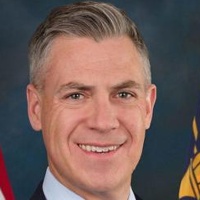
Jim Banks
Senator
IN
Jim Banks
Senator
IN
The DC CRIMES Act significantly revises the handling of youth offenders by lowering the age eligibility for youth offender status to 18 and under. It also mandates the creation of a public website managed by the Attorney General to display detailed, monthly statistics on juvenile crime and legal outcomes. Finally, the Act prohibits the D.C. Council from enacting changes to existing mandatory minimum sentences or current criminal sentencing guidelines.
This bill establishes a Veterans Experience Office within the VA, mandates quarterly budget briefings for Congress, and places new restrictions on executive bonuses.
Dan Sullivan
Senator
AK
Dan Sullivan
Senator
AK
The Protecting Regular Order for Veterans Act of 2025 mandates quarterly budget briefings for Congress by the VA Secretary and places new restrictions on critical skills bonuses for senior executives. Additionally, the bill establishes a new Veterans Experience Office, reporting directly to the Secretary, tasked with improving beneficiary satisfaction and reporting on customer feedback data to Congress. This new office will sunset on September 30, 2028, following a review by the Comptroller General.
This resolution commends the Caesars Superdome on its golden jubilee, recognizing its 50 years of hosting major sporting, cultural, and critical community service events for Louisiana and the nation.
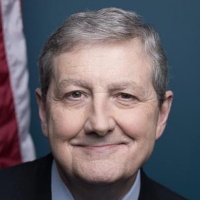
John Kennedy
Senator
LA
John Kennedy
Senator
LA
This resolution commends the Caesars Superdome on the occasion of its golden jubilee, celebrating 50 years of service to Louisiana and the United States. It recognizes the venue's history of hosting major sporting events, cultural performances, and serving as a vital shelter during numerous hurricanes. The resolution officially honors the facility's enduring legacy and recent modernizations.
This resolution officially commemorates the 50th anniversary of hip hop by designating specific days and months in 2025 to celebrate its culture, history, and impact.
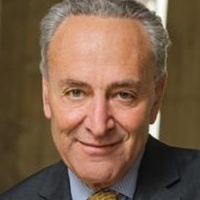
Charles Schumer
Senator
NY
Charles Schumer
Senator
NY
This resolution officially commemorates the 50th anniversary of hip hop culture by designating specific dates in 2025 for celebration. It recognizes August 11, 1973, as the birth of hip hop and acknowledges the genre's massive cultural and economic impact. The bill sets aside August 11, 2025, as "Hip Hop Celebration Day," August 2025 as "Hip Hop Recognition Month," and November 2025 as "Hip Hop History Month."
This Act extends the minimum holding period for bank merchant banking investments to 15 years.
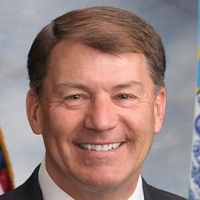
Mike Rounds
Senator
SD
Mike Rounds
Senator
SD
The Merchant Banking Modernization Act updates regulations for bank holding companies regarding their merchant banking investments. This legislation extends the minimum holding period for these investments to 15 years. This new minimum duration applies retroactively to investments already held by banks.
This resolution solemnly marks the anniversary of the attempted assassination of President Trump, condemns political violence, and honors the victims and first responders involved.
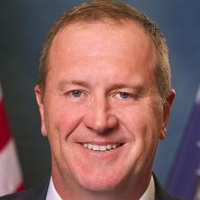
Eric Schmitt
Senator
MO
Eric Schmitt
Senator
MO
This resolution solemnly marks the one-year anniversary of the attempted assassination of former President Donald J. Trump. It condemns the multiple attempts against his life and other political officials, while honoring the victims and first responders involved in the July 2024 shooting. The measure further calls for an end to the incitement of political violence that threatens the democratic process.
This act terminates the U.S.-China income tax treaty if the People's Liberation Army initiates an armed attack against the Republic of China.

John Cornyn
Senator
TX
John Cornyn
Senator
TX
The No Tax Treaties for Foreign Aggressors Act mandates the termination of the U.S.-China Income Tax Convention if the President determines the People's Liberation Army has initiated an armed attack against the Republic of China. Upon this determination, the Secretary of the Treasury must notify China of the treaty's termination within 30 days. The President must also inform key Senate committees when this action is taken.