Legislative Activity
Track Tom's sponsored bills, co-sponsored legislation, and voting record
The Transportation Freedom Act incentivizes domestic auto manufacturing with tax breaks, repeals recent EPA emissions rules, eliminates state authority to set stricter emission standards, and mandates a feasibility-based process for setting future national fuel economy and greenhouse gas standards.
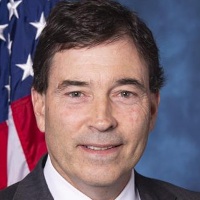
Troy Balderson
Representative
OH
Troy Balderson
Representative
OH
The Transportation Freedom Act seeks to bolster domestic auto manufacturing through significant tax incentives tied to high-wage American jobs and strong worker benefits. Simultaneously, the bill repeals recent EPA and NHTSA rules regarding multipollutant emissions and fuel economy standards for light, medium, and heavy-duty vehicles. Furthermore, it centralizes emission control by eliminating the authority of individual states to set standards stricter than the federal level. Finally, it mandates the establishment of new, feasibility-based fuel economy and greenhouse gas standards for future model years, explicitly prohibiting mandates for electric-only vehicle sales.
The Affordable Housing Credit Improvement Act of 2025 updates state allocation formulas, reforms tenant eligibility and credit determination rules, and enhances assistance for Native American and rural housing projects.
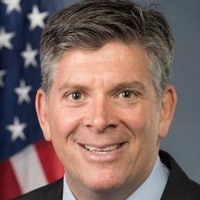
Darin LaHood
Representative
IL
Darin LaHood
Representative
IL
The Affordable Housing Credit Improvement Act of 2025 updates federal housing tax credit allocations to reflect current economic realities and boosts minimum state allotments. It reforms tenant eligibility rules to stabilize tenancy and enhance protections for vulnerable residents, including victims of abuse. The bill also provides disaster relief for property owners, increases incentives for housing the extremely low-income, and directs greater resources toward Native American and rural housing needs. Finally, it streamlines administrative processes and signals a future focus on data transparency and discouraging restrictive local zoning.
This bill establishes a non-legislative Select Committee in the House of Representatives to investigate the operations and networks of Mexican drug cartels and report findings and policy suggestions.
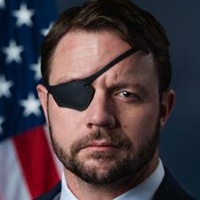
Dan Crenshaw
Representative
TX
Dan Crenshaw
Representative
TX
This bill establishes the Select Committee to Defeat the Mexican Drug Cartels, a non-legislative investigative body within the House of Representatives. The committee will be composed of up to 21 members tasked with investigating the operations and networks of Mexican drug cartels and the government responses to them. While it cannot pass laws, the committee must report its findings and policy suggestions to the House and relevant committees by specific deadlines, with final reports made public by the end of 2026.
This bill excludes certain veterinary student loan repayments and forgiveness amounts from taxable income to encourage veterinarians to practice in rural areas.
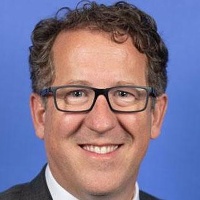
Adrian Smith
Representative
NE
Adrian Smith
Representative
NE
The Rural Veterinary Workforce Act aims to encourage more veterinarians to serve in underserved rural areas by making participation in certain loan repayment or forgiveness programs more financially appealing. This bill amends the tax code to exclude amounts received through qualifying state or federal veterinary student loan repayment programs from being counted as taxable income. This tax benefit applies to amounts received for taxable years beginning after December 31, 2025.
This bill permanently extends the exemption allowing school bus drivers to skip the engine compartment portion of the pre-trip vehicle inspection skills test for their CDL.
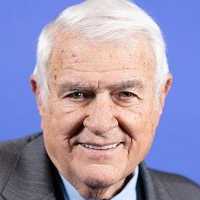
John Carter
Representative
TX
John Carter
Representative
TX
This bill permanently extends the existing exemption allowing qualified school bus drivers to skip the engine compartment portion of the commercial driver's license (CDL) skills test. It mandates the Secretary of Transportation to maintain this specific "under-the-hood" inspection waiver indefinitely. States utilizing this permanent exemption must still submit annual reports on the number of drivers licensed under it for the next six years.
This bill establishes national reciprocity for concealed carry permits, allowing individuals legally permitted to carry in their home state to carry a handgun in any other state that allows concealed carry.
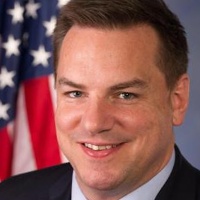
Richard Hudson
Representative
NC
Richard Hudson
Representative
NC
The Constitutional Concealed Carry Reciprocity Act of 2025 establishes a national standard for carrying concealed handguns across state lines. This act allows individuals legally permitted to carry in their home state to carry concealed in any other state that allows its residents to carry concealed firearms. The law does not override private property restrictions or prohibitions on government property, but it provides protections and legal recourse for those traveling in compliance with the new federal standard.
This bill restores protections to prevent private health insurance plans from discriminating against dialysis patients with End-Stage Renal Disease (ESRD) or shifting their treatment costs unfairly onto Medicare.
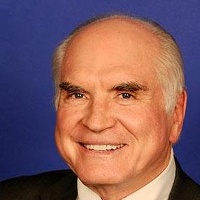
Mike Kelly
Representative
PA
Mike Kelly
Representative
PA
The Restore Protections for Dialysis Patients Act aims to prevent private health insurance plans from discriminating against patients with End-Stage Renal Disease (ESRD). This legislation clarifies that plans cannot offer worse benefits or unfairly limit coverage for dialysis treatments compared to other medical services. Furthermore, it stops these plans from shifting the primary financial responsibility for ESRD care onto Medicare. The bill maintains existing rules ensuring fair treatment while preserving a health plan's ability to select its network of dialysis providers.
The Fair and Open Competition Act of 2025 prohibits the federal government from requiring or penalizing bidders or contractors on federally funded construction projects based on their agreement or non-agreement with labor unions.
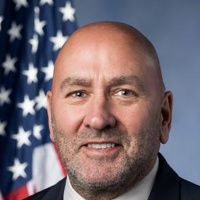
Clay Higgins
Representative
LA
Clay Higgins
Representative
LA
The Fair and Open Competition Act of 2025 ensures fair competition on federally funded construction projects by prohibiting the government from requiring or penalizing bidders based on union agreements. This legislation aims to keep federal agencies neutral in labor relations while promoting cost savings and opening opportunities for all businesses. Exceptions to this neutrality rule are strictly limited to specific public health, safety, or national security emergencies.
The Deliver for Democracy Act ties the Postal Service's ability to raise periodical rates to meeting specific on-time delivery performance targets and mandates annual reporting and a GAO study on USPS pricing strategies.
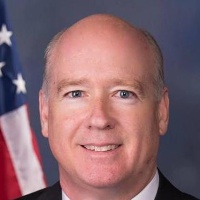
Robert Aderholt
Representative
AL
Robert Aderholt
Representative
AL
The Deliver for Democracy Act ties the Postal Service's ability to raise rates for periodicals to meeting specific on-time delivery performance targets. It mandates annual public reporting on newspaper delivery performance, requiring the Postmaster General to detail service metrics. Furthermore, the bill directs the GAO to study and report on strategies the USPS could use to improve the financial standing of underperforming mail products.
The Major Richard Star Act ensures that military retirees with combat-related disabilities can concurrently receive their full military retirement pay and VA disability compensation without reduction.

Gus Bilirakis
Representative
FL
Gus Bilirakis
Representative
FL
The Major Richard Star Act ensures that military retirees with combat-related disabilities can receive both their military retirement pay and VA disability compensation concurrently without reduction. This law removes previous restrictions that caused military retirement pay to be offset by VA disability payments for these specific cases. The changes take effect on the first day of the month following the Act's enactment.
This act expands the Work Opportunity Tax Credit to include employers who hire qualified military spouses.
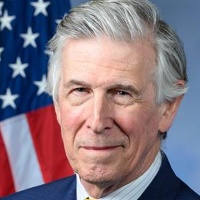
Donald Beyer
Representative
VA
Donald Beyer
Representative
VA
The Military Spouse Hiring Act amends the Internal Revenue Code to expand eligibility for the Work Opportunity Tax Credit (WOTC). This change allows employers to claim the tax credit for hiring qualified military spouses. A qualified military spouse is defined as someone certified as being married to a member of the U.S. Armed Forces.
This Act eliminates the waiting periods for Social Security disability benefits and Medicare coverage for individuals diagnosed with metastatic breast cancer.
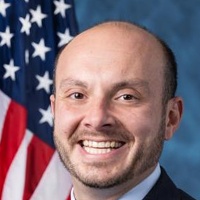
Andrew Garbarino
Representative
NY
Andrew Garbarino
Representative
NY
The Metastatic Breast Cancer Access to Care Act aims to improve support for individuals diagnosed with metastatic breast cancer. This bill eliminates the standard waiting period for receiving Social Security disability insurance benefits and waives the 24-month waiting period for Medicare coverage. These changes ensure immediate access to crucial financial and healthcare support upon diagnosis.
The Credit for Caring Act of 2025 establishes a new, partially refundable federal income tax credit for working family caregivers covering qualified expenses exceeding \$2,000, up to a \$5,000 annual limit.
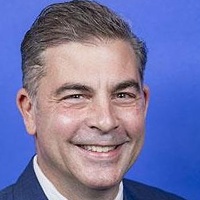
Mike Carey
Representative
OH
Mike Carey
Representative
OH
The Credit for Caring Act of 2025 establishes a new, non-refundable federal income tax credit for working family caregivers who incur significant expenses caring for a relative with long-term care needs. Eligible caregivers can claim a credit equal to 30% of qualified expenses exceeding \$2,000, up to a maximum annual credit of \$5,000. The bill specifies detailed requirements for the care recipient's needs, the types of allowable expenses, and includes income phase-out limits for claiming the benefit.
This bill supports the stepped-up basis, which helps family farms and small businesses pass on their operations to the next generation without facing higher taxes.
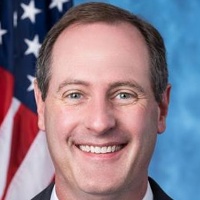
Tracey Mann
Representative
KS
Tracey Mann
Representative
KS
This bill expresses the House of Representatives' support for maintaining the stepped-up basis under section 1014 of the Internal Revenue Code, which allows inherited assets to be adjusted to their current market value, protecting family-owned farms and small businesses from increased taxes. It opposes any changes to the tax code that would negatively impact the ability of these businesses to pass their operations on to the next generation. The bill recognizes the importance of generational transfers for the continuation of family farms, ranches, agribusinesses, and small businesses.
The JUDGES Act of 2025 addresses judicial understaffing by creating new district judgeships in multiple states over the next decade, adjusting court organization in Texas and California, mandating GAO reports on workload measures and detention space, and ensuring public accessibility of judgeship recommendation reports.
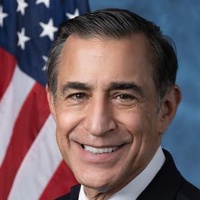
Darrell Issa
Representative
CA
Darrell Issa
Representative
CA
The JUDGES Act of 2025 aims to address the increasing caseloads in district courts by creating new judgeships in multiple states over the next decade, as well as a temporary judgeship in the Eastern District of Oklahoma. It also authorizes appropriations to support these new positions and adjusts the organization of district courts in Texas and California. Additionally, the Act mandates Government Accountability Office (GAO) reports to evaluate workload measures, judicial activities, and the effectiveness of policies regarding senior judges, as well as the needs and efforts to acquire federal detention space. Finally, the Act ensures public accessibility to the Judicial Conference's recommendations for Article III judgeships by requiring the Administrative Office of the U.S. Courts to publish these reports on its website.
To award a Congressional Gold Medal to the 761st Tank Battalion, the first Black soldiers to serve in an American armored unit, for their valor and crucial contributions to the Allied victory in Europe.
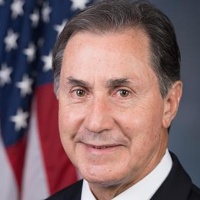
Gary Palmer
Representative
AL
Gary Palmer
Representative
AL
This bill authorizes the Speaker of the House and the President pro tempore of the Senate to award a Congressional Gold Medal to the 761st Tank Battalion, also known as the "Black Panthers," in recognition of their courageous service and crucial contributions during World War II. The medal will be given to the National Museum of African American History and Culture for display, honoring the 761st as the first Black soldiers to serve in an American armored unit and their significant role in the Allied victory in Europe. The bill also allows for the creation and sale of bronze duplicates of the medal to support the United States Mint Public Enterprise Fund.
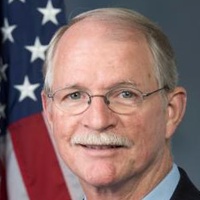
The "Protect and Serve Act of 2025" establishes federal penalties for intentionally causing serious harm or death to law enforcement officers because of their position, under certain circumstances, and requires Attorney General certification for federal prosecution in many cases.
John Rutherford
Representative
FL
John Rutherford
Representative
FL
The "Protect and Serve Act of 2025" creates federal offenses for intentionally causing serious injury or death to law enforcement officers because of their status as officers. It sets penalties including imprisonment and fines, with increased penalties if death results or if kidnapping or attempted killing is involved. Federal prosecution requires certification from the Attorney General, based on a request from the state or if it is in the public interest to ensure substantial justice. The act defines "law enforcement officer" and "State" for the purposes of the new offenses.
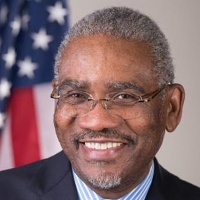
This bill repeals the 1991 and 2002 authorizations for the use of military force against Iraq.
Gregory Meeks
Representative
NY
Gregory Meeks
Representative
NY
This bill repeals the 1991 Authorization for Use of Military Force Against Iraq Resolution and the 2002 Authorization for Use of Military Force Against Iraq Resolution, formally ending the legal basis for military actions in Iraq under these authorizations.
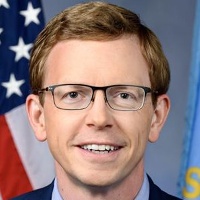
This bill ensures that Native American patients are not held liable for the cost of purchased/referred healthcare and mandates reimbursements for past out-of-pocket expenses.
Dusty Johnson
Representative
SD
Dusty Johnson
Representative
SD
The "Purchased and Referred Care Improvement Act of 2025" ensures that Native American patients are not liable for the cost of purchased/referred care, and mandates a process for reimbursing patients who have already paid for such services. It updates the Indian Health Care Improvement Act by replacing the term "contract health service" with "purchased/referred care" to modernize the language used in the Act. These changes aim to streamline the payment process and reduce the financial burden on patients.
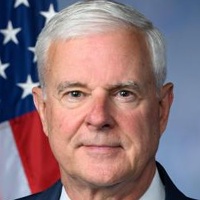
This resolution expresses Congressional opposition to imposing new performance fees or royalties on local radio stations and businesses for broadcasting or playing music.
Steve Womack
Representative
AR
Steve Womack
Representative
AR
The Local Radio Freedom Act expresses Congressional opposition to imposing new performance fees, taxes, or royalties on local radio stations and businesses for playing music. It argues that the current system of free airplay provides essential promotional value to artists and that new fees would threaten the financial viability of local broadcasters and the vital community services they provide.