
Legislative Activity
Track Robert's sponsored bills, co-sponsored legislation, and voting record
This Act establishes a pilot program to provide grants to states for creating electronic services that identify ticks, assess disease risk, and offer public guidance.
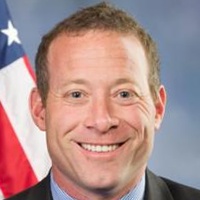
Josh Gottheimer
Representative
NJ
Josh Gottheimer
Representative
NJ
The Tick Identification Pilot Program Act of 2025 establishes a pilot program to provide grants to states for creating electronic tick identification services. These state programs will allow residents to submit photos of ticks for review by qualified biologists within 72 hours. The goal is to rapidly inform the public about the tick species, potential disease risk, and necessary next steps to combat tick-borne illnesses.
This Act establishes national, standardized phrases ("BEST If Used By" and "USE By") for voluntary quality and mandatory discard date labels on food packaging.

Chellie Pingree
Representative
ME
Chellie Pingree
Representative
ME
The Food Date Labeling Act of 2025 establishes national standards for food date labels, requiring manufacturers to use specific phrases like "**BEST If Used By**" for quality and "**USE By**" for discard dates, if they choose to include them. This legislation standardizes labeling language across different food products overseen by the USDA and FDA. The Act also ensures that non-compliant labeling is treated as misbranding under existing federal food laws. Manufacturers will have two years from enactment to comply with these new federal labeling requirements.
This Act directs the U.S. Postal Service to issue a special semipostal stamp to raise funds for Lyme disease and tick-borne illness research at the National Institute of Allergy and Infectious Diseases.
Josh Gottheimer
Representative
NJ
Josh Gottheimer
Representative
NJ
The Stamp Out Lyme Disease Act directs the U.S. Postal Service to issue a special semipostal stamp to raise funds for Lyme disease research. All proceeds from the sale of this stamp will be directed to the National Institute of Allergy and Infectious Diseases (NIAID). This measure aims to support research into tick-borne illnesses, acknowledging the significant public health and financial burden of Lyme disease in the United States.
The Don Young American Grown Act mandates that official decorations in high-level federal buildings must exclusively use flowers and greenery grown in the United States.
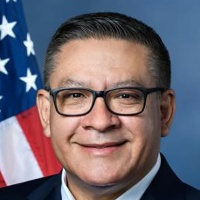
Salud Carbajal
Representative
CA
Salud Carbajal
Representative
CA
The Don Young American Grown Act mandates that official floral and greenery decorations in high-level federal buildings, including the Executive Office of the President, State, and Defense Departments, must be grown in the United States. This requirement applies to cut flowers and greens used for official displays, excluding personal decorations. The new rule will take effect one year after the Act is signed into law.
This Act eliminates age restrictions and simplifies premium requirements for adult children covered under the TRICARE Young Adult program.
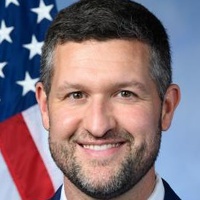
Patrick Ryan
Representative
NY
Patrick Ryan
Representative
NY
The Health Care Fairness for Military Families Act of 2025 significantly improves the TRICARE Young Adult (TYA) program for military dependents. This legislation eliminates the age restriction for TYA eligibility and removes the separate premium requirement for coverage. These changes aim to provide broader and simpler healthcare access for adult children of service members.
This bill establishes a federal grant program to help low-income households pay for their drinking water and sewer services.
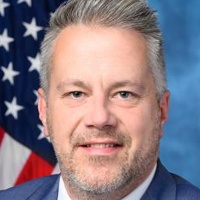
Eric Sorensen
Representative
IL
Eric Sorensen
Representative
IL
This bill establishes the Low-Income Household Water Assistance Program to provide grants to states and tribes. These funds will help public water systems cover the water and sewer bills for eligible low-income households. The program aims to supplement existing aid by assisting families whose income is at or below 150% of the poverty level or 60% of the state median income. Funding is authorized at $500 million annually from fiscal years 2026 through 2030.
This Act prioritizes federal research and development funding for controlling the invasive Spotted Lanternfly and extends key agricultural research programs through 2030.
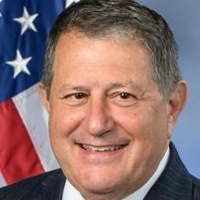
Joseph Morelle
Representative
NY
Joseph Morelle
Representative
NY
The Spotted Lanternfly Research and Development Act prioritizes federal funding for research and extension programs specifically aimed at controlling the invasive Spotted Lanternfly. This legislation ensures that developing effective tools and treatments against this pest becomes a high-priority initiative. Additionally, the Act extends the authorization for several existing high-priority agricultural research programs until 2030.
This bill establishes a new system for distributing up to 2,000 additional Medicare-funded residency positions annually from 2026 through 2032, prioritizing hospitals serving underserved areas, and mandates a study on strategies to increase workforce diversity.
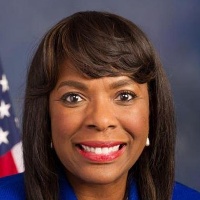
Terri Sewell
Representative
AL
Terri Sewell
Representative
AL
The Resident Physician Shortage Reduction Act of 2025 establishes a structured process for distributing up to 2,000 additional, federally funded residency positions annually between fiscal years 2026 and 2032. This distribution prioritizes hospitals serving in underserved areas, those already training above their limit, and those committed to primary care and general surgery training. The bill also mandates a study and report by the Comptroller General on effective strategies to increase diversity within the health professional workforce.
This Act mandates interim partial payments to small businesses for approved cost increases resulting from government-directed changes to existing construction contracts.
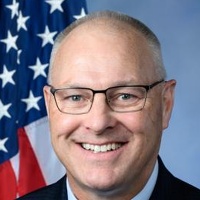
Pete Stauber
Representative
MN
Pete Stauber
Representative
MN
The Small Business Payment for Performance Act of 2025 ensures that small businesses receive prompt interim payments when the government mandates changes to their existing construction contracts. Upon requesting an equitable adjustment for contract modifications, the agency must issue an immediate partial payment covering at least 50% of the estimated additional costs. This legislation also mandates that prime contractors promptly pass these interim funds down to affected subcontractors.
Ally's Act mandates that certain private health insurance plans must cover auditory implant devices, related services, and upgrades for qualifying individuals without imposing stricter cost-sharing or treatment limitations than other medical benefits.
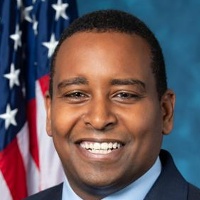
Joe Neguse
Representative
CO
Joe Neguse
Representative
CO
The Ally's Act mandates that certain private health insurance plans must cover auditory implant devices, related supplies, and necessary services for qualifying individuals. This coverage must be comparable to other medical and surgical benefits regarding cost-sharing and treatment limitations. Furthermore, plans cannot deny coverage if a physician or qualified audiologist determines the required hearing items or services are medically necessary. These new requirements take effect for plan years beginning on or after January 1, 2026.
This Act prohibits insurance companies from discriminating against living organ donors when issuing life, disability, or long-term care policies and mandates the updating of educational materials regarding donation risks and insurance implications.
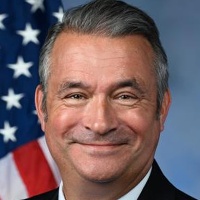
Don Bacon
Representative
NE
Don Bacon
Representative
NE
The Living Donor Protection Act of 2025 prohibits life, disability, and long-term care insurance companies from denying coverage or increasing premiums solely because an individual is a living organ donor. This legislation ensures that living donors are not financially penalized for their altruistic act. Additionally, the bill requires the Secretary of HHS to update educational materials to accurately reflect the insurance protections afforded to living donors.
This bill amends the Family and Medical Leave Act to explicitly qualify time taken for an employee's own organ donation surgery as a serious health condition.
Don Bacon
Representative
NE
Don Bacon
Representative
NE
This bill amends the Family and Medical Leave Act (FMLA) to explicitly clarify that time taken off for an employee's own organ donation surgery qualifies as a serious health condition. This ensures both private and federal sector workers receive FMLA protection for recovery from organ donation. The legislation also specifies how federal employees must substitute existing paid leave when taking FMLA time for this purpose.
The Supporting Apprenticeship Colleges Act of 2025 establishes grant programs to boost outreach for construction and manufacturing apprenticeships and to fund academic advising and student support services for apprentices in those fields.
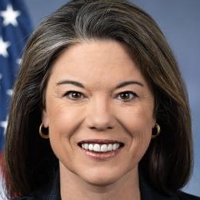
Angie Craig
Representative
MN
Angie Craig
Representative
MN
The Supporting Apprenticeship Colleges Act of 2025 establishes two grant programs totaling \$10 million annually to boost construction and manufacturing apprenticeships. The first program funds community outreach to recruit students and connect programs with local employers, particularly in rural areas. The second program provides funds for expanded academic advising and student support services to improve program retention and completion rates. The Act also formally defines specialized apprenticeship colleges and sets reporting requirements for grant recipients.
This Act establishes a competitive grant program to fund career pathway training for the forestry workforce in eligible low-income rural areas.

Marie Gluesenkamp Perez
Representative
WA
Marie Gluesenkamp Perez
Representative
WA
The Jobs in the Woods Act establishes a new competitive grant program administered by the Secretary of Agriculture to fund career pathway training in forestry. These grants aim to support workforce development in eligible rural areas by focusing on forestry operations and product processing industries. Priority will be given to programs that address aging workforces, retain young residents, and partner with educational institutions. Funding is authorized from Fiscal Year 2026 through 2030.
This Act prohibits the Federal Reserve from directly or indirectly issuing a Central Bank Digital Currency (CBDC) and bars the Fed from developing or using one for monetary policy without explicit Congressional authorization.
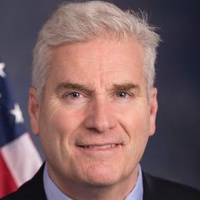
Tom Emmer
Representative
MN
Tom Emmer
Representative
MN
The Anti-CBDC Surveillance State Act strictly prohibits the Federal Reserve from directly or indirectly issuing a Central Bank Digital Currency (CBDC) to individuals. This legislation prevents the Fed from developing, testing, or implementing any digital currency that functions as a direct liability of the Federal Reserve. Furthermore, Congress asserts that any authority to create such a digital asset must explicitly come from Congress itself.
The Digital Asset Market Clarity Act establishes comprehensive regulatory frameworks for digital commodities under the CFTC and SEC, clarifies the status of digital assets, preserves self-custody rights, and explicitly prohibits the Federal Reserve from issuing a Central Bank Digital Currency (CBDC).

J. Hill
Representative
AR
J. Hill
Representative
AR
The Digital Asset Market Clarity Act establishes a comprehensive regulatory framework for digital assets, primarily focusing on defining and regulating "digital commodities" under the CFTC and SEC. It creates registration pathways for exchanges and intermediaries, clarifies rules for asset sales, protects individual self-custody rights, and explicitly prohibits the Federal Reserve from issuing a Central Bank Digital Currency (CBDC). Overall, the bill aims to bring clarity and consumer safeguards to the digital asset market while encouraging technological innovation.
The PRICE Act establishes a competitive grant program to fund improvements, resident services, and community enhancements in low- and moderate-income manufactured housing communities.
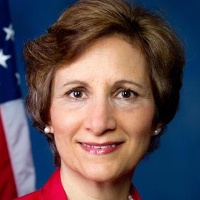
Suzanne Bonamici
Representative
OR
Suzanne Bonamici
Representative
OR
The Preservation and Reinvestment Initiative for Community Enhancement Act (PRICE Act) establishes a new competitive grant program to improve manufactured housing communities serving low- and moderate-income residents. These funds can be used for essential infrastructure repairs, resident health and safety upgrades, and community enhancement projects. Priority will be given to projects that ensure the long-term affordability and stability of the housing.
The Bridge Investment and Modernization Act of 2025 extends and modifies funding authorizations and streamlines the project selection criteria for the federal Bridge Investment Program through fiscal year 2031.
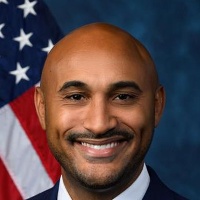
Shomari Figures
Representative
AL
Shomari Figures
Representative
AL
The Bridge Investment and Modernization Act of 2025 extends and specifies funding for the Bridge Investment Program through fiscal year 2031. This legislation allocates billions of dollars annually to support crucial bridge projects across the nation. Additionally, the Act streamlines the project selection process by removing a specific criterion for funding eligibility.
This resolution solemnly marks the one-year anniversary of the attempted assassination of President Trump, condemns ongoing political violence, and honors the victims and first responders.

Mike Kelly
Representative
PA
Mike Kelly
Representative
PA
This resolution solemnly marks the one-year anniversary of the attempted assassination of President Donald J. Trump, condemning the multiple violent attempts against the President's life. It honors the victims of the shooting, including the late Corey D. Comperatore, and recognizes the bravery of first responders. Furthermore, the resolution condemns all incitement of violence against elected officials and calls for national unity against political violence.
The PBM Reform Act of 2025 mandates sweeping changes to increase transparency, ensure fair pharmacy access in Medicare, and prohibit abusive spread pricing in Medicaid by holding Pharmacy Benefit Managers accountable for their financial dealings.
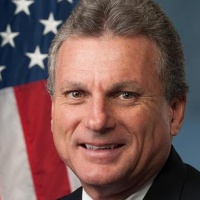
Earl Carter
Representative
GA
Earl Carter
Representative
GA
The Pharmacy Benefit Manager Reform Act of 2025 aims to increase transparency and accountability across the prescription drug supply chain. It mandates fairer pharmacy network access for Medicare beneficiaries and imposes strict new financial reporting and service fee requirements on Pharmacy Benefit Managers (PBMs) working with Medicare and private health plans. Furthermore, the bill establishes new federal mechanisms to accurately track drug acquisition costs in Medicaid and explicitly bans the practice of "spread pricing" in state Medicaid contracts.