
Legislative Activity
Track Tim's sponsored bills, co-sponsored legislation, and voting record
This bill repeals the Human Rights Sanctuary Amendment Act of 2022, restoring previous laws.
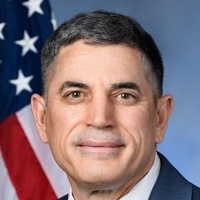
Andrew Clyde
Representative
GA
Andrew Clyde
Representative
GA
This bill, the D.C. Shield Law Repeal Act, seeks to repeal the Human Rights Sanctuary Amendment Act of 2022. By doing so, it will restore the laws and regulations that were in effect prior to the 2022 Act.
This act permanently establishes Tennessee's Medicaid disproportionate share hospital (DSH) funding allocation starting in fiscal year 2026, treating the state as a low DSH state thereafter.

Diana Harshbarger
Representative
TN
Diana Harshbarger
Representative
TN
This act establishes a permanent, fixed Medicaid Disproportionate Share Hospital (DSH) funding allocation for Tennessee beginning in fiscal year 2026, based on its 2015 allotment. The funding amount will increase annually based on the consumer price index. Furthermore, the bill designates Tennessee as a "low DSH state" for all fiscal years after 2026.
This Act establishes a new annual reporting requirement for federal agencies detailing the use, cost, and impact of official time spent by federal employees acting as union representatives.
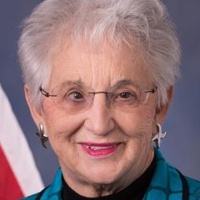
Virginia Foxx
Representative
NC
Virginia Foxx
Representative
NC
The Official Time Reporting Act establishes a new annual reporting requirement for federal agencies regarding the time their employees spend on union business while on the clock. The Office of Personnel Management (OPM) must compile and publicly release a detailed report analyzing this "official time" usage, costs, and impact across the government. This legislation mandates transparency by requiring agencies to submit detailed data, including explanations for any increases in time usage, to OPM for inclusion in the public report.
This bill establishes an Office of Public Participation within the TVA and mandates a more robust, transparent public engagement process for the agency's integrated resource planning.

Steve Cohen
Representative
TN
Steve Cohen
Representative
TN
The TVA Increase Rate of Participation Act establishes an Office of Public Participation within the Tennessee Valley Authority (TVA) to enhance public outreach and education. This legislation mandates a comprehensive and meaningful public engagement process for TVA's integrated resource planning. Furthermore, it sets specific requirements for the content and transparency of the integrated resource plans, ensuring public input directly informs resource decisions.
The Mikaela Naylon Give Kids a Chance Act primarily focuses on enhancing pediatric drug research, ensuring completion of pediatric study requirements, extending incentives for rare pediatric disease treatments, and making targeted updates to FDA and organ transplant network operations.
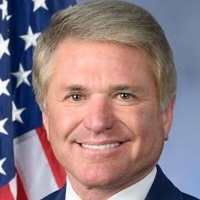
Michael McCaul
Representative
TX
Michael McCaul
Representative
TX
The Mikaela Naylon Give Kids a Chance Act focuses primarily on improving pediatric drug development and ensuring patient access to necessary treatments. This legislation mandates new research requirements for molecularly targeted pediatric cancer drugs, strengthens FDA enforcement of pediatric study completion, and extends incentives for developing drugs for rare pediatric diseases. Additionally, the bill updates organ transplant network functions and establishes an Abraham Accords Office within the FDA to enhance international regulatory cooperation.
This resolution formally denounces socialism based on its historical association with totalitarianism, mass death, and economic failure, affirming the foundational principles of individual liberty and property rights.

Maria Salazar
Representative
FL
Maria Salazar
Representative
FL
This Concurrent Resolution formally denounces the ideology of socialism based on its historical outcomes. It asserts that socialist principles have consistently led to totalitarian regimes, mass atrocities, and economic collapse worldwide. The resolution contrasts these failures with the founding principles of the United States, concluding with a statement opposing the implementation of socialist policies domestically.
This bill repeals the requirement for Senate offices to be notified regarding legal processes seeking the disclosure of Senate data.
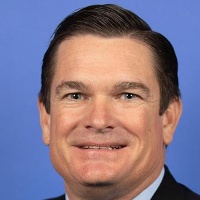
Austin Scott
Representative
GA
Austin Scott
Representative
GA
This bill repeals specific requirements for notifying Senate offices when legal processes seek the disclosure of Senate data. Essentially, it removes existing notification mandates related to legal requests for Senate information.
The CLEAN DC Act of 2025 largely repeals the Comprehensive Policing and Justice Reform Amendment Act of 2022, restoring prior law except for two specific subtitles.
Andrew Clyde
Representative
GA
Andrew Clyde
Representative
GA
The CLEAN DC Act of 2025 aims to repeal most provisions of the Comprehensive Policing and Justice Reform Amendment Act of 2022, effectively reverting policing and justice laws to their pre-2022 status. This legislation seeks to undo the majority of changes made by the previous act. However, it specifically preserves the effects of two distinct subtitles from the 2022 Act.
The LABEL Act mandates that abortion-inducing drugs must be labeled with the dispenser's name and address and the prescriber's name, preempting less strict state or local requirements.
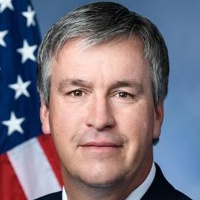
Barry Moore
Representative
AL
Barry Moore
Representative
AL
The LABEL Act proposes new federal labeling requirements for abortion-inducing drugs, mandating that the label include the dispenser's name and address, as well as the prescriber's name. This legislation also prohibits states or localities from enforcing labeling requirements for these drugs that are less strict than the new federal standard. The bill specifically defines which drugs fall under this labeling requirement, excluding those used for ectopic pregnancies or to remove a deceased fetus.
This act mandates that all national cemeteries remain open to visitors on legal public holidays.
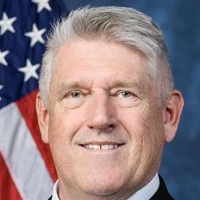
Troy Downing
Representative
MT
Troy Downing
Representative
MT
The National Cemetery Access Act mandates that all national cemeteries managed by the Department of Defense, the Department of Veterans Affairs, or the National Park Service must remain open to the public on all federal legal public holidays. This ensures continuous access for visitors to honor veterans and their families throughout the year.
This act mandates that military service academies accept the Classic Learning Test (CLT) for admissions and requires DoDEA and BIE schools to administer the CLT to eleventh graders.
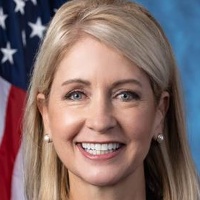
Mary Miller
Representative
IL
Mary Miller
Representative
IL
The Promoting Classical Learning Act of 2025 mandates that all U.S. Military Service Academies accept the Classic Learning Test (CLT) as an admissions option alongside the SAT and ACT. Furthermore, the bill requires the Department of Defense Education Activity (DoDEA) and the Bureau of Indian Education (BIE) to administer the CLT to all eleventh-grade students in their respective schools. This legislation aims to broaden testing options for prospective service members and introduce classical assessments in federal secondary education.
This bill ensures that essential firearm-related government operations, such as background checks and export license processing, continue during a government shutdown.

Ben Cline
Representative
VA
Ben Cline
Representative
VA
The Firearm Access During Shutdowns Act ensures that essential firearm-related government operations continue without interruption during a federal shutdown. This legislation specifically mandates the continuation of the FBI's NICS background check system and related processing at the ATF, Department of Commerce, and Department of State. By deeming these functions essential for protecting life and property, the bill prevents delays in firearm transfers and export licensing during lapses in appropriations.
This bill denies or revokes all immigration benefits for individuals adhering to Sharia law, making them inadmissible or deportable without judicial review.

Chip Roy
Representative
TX
Chip Roy
Representative
TX
The Preserving a Sharia-Free America Act aims to prohibit any individual who adheres to Sharia law from receiving immigration benefits, visas, or admission into the United States. This legislation mandates the denial or revocation of immigration status for adherents, making them inadmissible or deportable. Furthermore, any false statements regarding Sharia adherence to federal officials will result in severe immigration penalties, and all related determinations are explicitly barred from judicial review.
This resolution designates October 10, 2025, as "American Girls in Sports Day" to recognize the importance of protecting opportunities for biological females in women's sports.
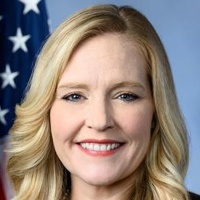
Erin Houchin
Representative
IN
Erin Houchin
Representative
IN
This resolution officially designates October 10, 2025, as "American Girls in Sports Day" to celebrate the achievements of women in athletics. It emphasizes the importance of Title IX while expressing concern over biological males competing in women's sports. The bill calls on all sports bodies to protect opportunities for female athletes.
This bill mandates the reinstatement of the 2011 safety protocols for mifepristone, bans its importation, and creates a federal cause of action for harm resulting from illegally distributed abortion drugs.
Mary Miller
Representative
IL
Mary Miller
Representative
IL
The Restoring Safeguards for Dangerous Abortion Drugs Act mandates that the FDA immediately revert the safety requirements for mifepristone to the 2011 Risk Evaluation and Mitigation Strategy (REMS). This legislation also establishes a new federal cause of action allowing individuals harmed by illegally imported abortion drugs to sue the responsible entities. Finally, the Act explicitly bans the importation of mifepristone into the United States.
This bill establishes a federal crime for knowingly providing certain gender-related medical treatments to minors, prohibits Medicare coverage for such treatments, and bans the use of federal funds for them.

Nancy Mace
Representative
SC
Nancy Mace
Representative
SC
The Childhood Genital Mutilation Prevention Act establishes a new federal crime prohibiting medical professionals from knowingly providing specific gender-related medical treatments to minors under 18, with penalties up to ten years in prison. This legislation also prohibits Medicare from covering these treatments for minors and bans the use of all federal funds for such care. Exceptions to the prohibition apply only when treating a diagnosed disorder of sex development.
The Fraud Accountability and Recovery Act requires the President to halt foreign aid to countries that refuse to extradite fraud convicts or fail to assist in recovering U.S. federal funds stolen through fraud.
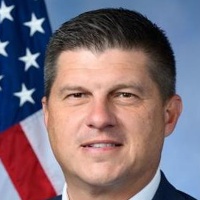
Brad Finstad
Representative
MN
Brad Finstad
Representative
MN
The Fraud Accountability and Recovery Act aims to combat large-scale fraud against the U.S. government by penalizing foreign countries that refuse to extradite convicted fraudsters or fail to assist in recovering stolen federal funds. This bill mandates the suspension of U.S. foreign assistance to non-cooperative nations, though the President retains a national security waiver. Furthermore, it requires the Secretary of State to annually report on noncompliant countries and the amount of lost U.S. funds tied to their inaction.
This resolution honors the life and legacy of Charles "Charlie" James Kirk, condemns his assassination as political violence, and calls for a renewed commitment to civil discourse and American founding principles.

Mike Johnson
Representative
LA
Mike Johnson
Representative
LA
This resolution honors the life and legacy of Charles "Charlie" James Kirk, founder of Turning Point USA. It strongly condemns his assassination as an act of political violence. The bill calls for a renewed national commitment to civil discourse and the founding principles of the United States.
This resolution supports designating the week of September 21 through September 27, 2025, as "Gold Star Families Remembrance Week" to honor the families of fallen service members.
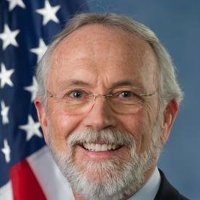
Dan Newhouse
Representative
WA
Dan Newhouse
Representative
WA
This resolution supports designating the week of September 21 through September 27, 2025, as "Gold Star Families Remembrance Week." The measure aims to officially recognize and honor the profound sacrifices made by families who have lost a loved one serving in the U.S. Armed Forces. It encourages communities nationwide to observe this week through acts of service and by celebrating the lives of these fallen service members.
This bill amends the Legislative Reorganization Act of 1946 to adjust the timing of the Congressional summer adjournment and related return dates, effective starting with the second session of the 119th Congress.
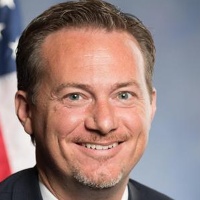
Michael Cloud
Representative
TX
Michael Cloud
Representative
TX
This bill amends the Legislative Reorganization Act of 1946 to adjust the timing of Congress's summer adjournment. It moves the end date of the summer break earlier, shifting key deadlines from July 31st to June 30th. Additionally, the legislation changes the required return date after Labor Day to the first Monday in August. These changes will take effect starting with the second session of the One Hundred Nineteenth Congress.