
Legislative Activity
Track Jack's sponsored bills, co-sponsored legislation, and voting record
This bill mandates the implementation of the Migrant Protection Protocols, requiring the Secretary of Homeland Security to return qualifying noncitizens arriving from contiguous countries to Mexico or Canada during their immigration proceedings.
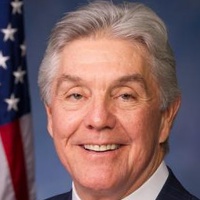
Roger Williams
Representative
TX
Roger Williams
Representative
TX
The Make the Migrant Protection Protocols Mandatory Act of 2025 amends the Immigration and Nationality Act to require, rather than permit, the return of certain noncitizens to Mexico or Canada while their immigration proceedings are pending. This legislation removes discretionary authority from the Department of Homeland Security, effectively mandating the implementation of the "Remain in Mexico" policy.
This bill streamlines and strengthens the disciplinary process for Department of Veterans Affairs supervisors and employees by establishing clear standards for removal, demotion, or suspension based on performance or misconduct.
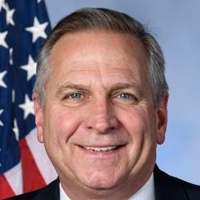
Mike Bost
Representative
IL
Mike Bost
Representative
IL
The Restore VA Accountability Act of 2025 streamlines the disciplinary process for Department of Veterans Affairs supervisors and senior executives by establishing clear standards for removal, demotion, or suspension based on performance or misconduct. The bill mandates that these personnel actions be supported by substantial evidence and limits the ability of external bodies to overturn or reduce imposed penalties. Additionally, it provides specific protections for whistleblowers while ensuring that disciplinary procedures take precedence over conflicting collective bargaining agreements.
The Critical Access Hospital Relief Act of 2025 eliminates the mandatory 96-hour physician certification requirement for Medicare inpatient services at rural critical access hospitals.

Adrian Smith
Representative
NE
Adrian Smith
Representative
NE
The Critical Access Hospital Relief Act of 2025 eliminates the Medicare requirement that physicians certify a patient will be discharged or transferred within 96 hours to receive inpatient payment. By removing this administrative barrier, the bill aims to reduce regulatory burdens on small, rural hospitals. This change is set to take effect for services furnished on or after January 1, 2026.
The Chiropractic Medicare Coverage Modernization Act of 2025 expands Medicare coverage to include all services provided by doctors of chiropractic that are within the scope of their state licensure.
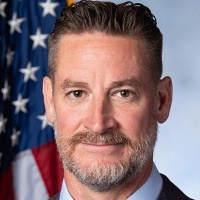
W. Steube
Representative
FL
W. Steube
Representative
FL
The Chiropractic Medicare Coverage Modernization Act of 2025 expands Medicare coverage to include all services legally authorized under a chiropractor’s state license, moving beyond the current restriction limited to manual spinal manipulation. This legislation aligns Medicare benefits with private insurance and other federal health programs to better reflect modern chiropractic practice. To provide these expanded services, chiropractors will be required to complete a one-time training program verified by the Secretary of Health and Human Services.
This bill reclassifies silencers under federal tax law, removes federal registration requirements for legally transferred silencers, preempts state taxation and registration of silencers in commerce, and mandates the destruction of existing federal silencer registration records.

Ben Cline
Representative
VA
Ben Cline
Representative
VA
The Hearing Protection Act aims to remove silencers from the purview of the National Firearms Act (NFA) by treating them similarly to standard firearms under federal tax law. This legislation preempts certain state and local taxes and registration requirements related to silencers involved in interstate commerce. Furthermore, the bill mandates the destruction of existing federal silencer registration records and updates federal marking requirements for manufacturers.
This Act directs the Secretary of the Treasury to mint commemorative coins in 2028 to honor the diverse women who served on the Home Front during World War II, with proceeds supporting the Rosie the Riveter WWII Home Front National Historical Park.

John Garamendi
Representative
CA
John Garamendi
Representative
CA
The Rosie the Riveter Commemorative Coin Act directs the Secretary of the Treasury to mint and issue a series of commemorative coins in 2028 to honor the diverse women who served on the Home Front during World War II. Proceeds from the sale of these coins will support the Rosie the Riveter Trust in its efforts to maintain the Rosie the Riveter/WWII Home Front National Historical Park and fund educational programs. This initiative ensures the legacy of these essential workers is preserved and recognized through a national numismatic program.
This bill expands the security-related grounds for inadmissibility to the United States and restricts the government's authority to grant waivers for individuals involved in espionage, illegal exports, or activities aimed at undermining the U.S. government.
Ben Cline
Representative
VA
Ben Cline
Representative
VA
The Protecting America From Spies Act strengthens national security by expanding the grounds for which foreign nationals can be deemed inadmissible to the United States. It targets individuals involved in espionage, illegal technology exports, or activities aimed at undermining the U.S. government. Additionally, the bill restricts the government's authority to grant waivers for these security-related offenses, ensuring stricter enforcement of immigration entry requirements.
The States’ Education Reclamation Act of 2025 proposes the abolition of the federal Department of Education, transferring its remaining responsibilities to other agencies while providing direct, state-controlled block grants for education funding.
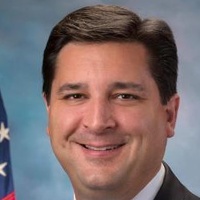
David Rouzer
Representative
NC
David Rouzer
Representative
NC
The States’ Education Reclamation Act of 2025 proposes the abolition of the federal Department of Education to return primary authority over schooling to states and local communities. The bill replaces current federal education programs with direct block grants to states, ensuring funding remains available for elementary, secondary, and postsecondary education while mandating strict fiscal accountability. Certain essential programs would be transferred to other federal agencies, and the legislation requires a formal plan for the Department’s closure.
The Disaster Reforestation Act amends the tax code to allow timber owners to claim larger casualty loss deductions for destroyed timber, provided they commit to replanting the affected land within five years.

Earl Carter
Representative
GA
Earl Carter
Representative
GA
The Disaster Reforestation Act amends the Internal Revenue Code to provide tax relief for timber owners whose uncut timber is destroyed by natural disasters, pests, or disease. It allows owners to deduct the appraised value of lost timber—including pre-merchantable stands—provided they commit to reforesting the land within five years. This measure supports active timber businesses by ensuring tax deductions more accurately reflect the economic loss caused by casualty events.
This bill authorizes the President to initiate formal negotiations with the Government of Panama to reacquire the Panama Canal.

Dusty Johnson
Representative
SD
Dusty Johnson
Representative
SD
The Panama Canal Repurchase Act of 2025 authorizes the President to initiate formal negotiations with the Government of Panama to reacquire the Panama Canal. The legislation also mandates that the President provide Congress with a progress report on these negotiations within 180 days of enactment.
The Amputation Reduction and Compassion (ARC) Act of 2025 aims to reduce preventable amputations by establishing a national peripheral artery disease (PAD) education program and mandating cost-free PAD screening for at-risk Medicare and Medicaid beneficiaries.

LaMonica McIver
Representative
NJ
LaMonica McIver
Representative
NJ
The Amputation Reduction and Compassion (ARC) Act of 2025 aims to reduce avoidable amputations caused by peripheral artery disease (PAD) through increased public awareness and improved access to care. The bill establishes a national PAD education program and mandates that Medicare and Medicaid cover essential screening tests for at-risk beneficiaries with no out-of-pocket costs. Additionally, it directs the development of clinical quality measures and launches a pilot program to improve early detection and treatment, ultimately prioritizing limb preservation over amputation.
The REMAIN in Mexico Act of 2025 mandates the implementation of the Migrant Protection Protocols, requiring asylum seekers to wait in Mexico while their claims are processed.

Brandon Gill
Representative
TX
Brandon Gill
Representative
TX
The REMAIN in Mexico Act of 2025 mandates that the Secretary of Homeland Security reinstate the Migrant Protection Protocols (MPP). This legislation requires that asylum seekers be returned to Mexico to await their U.S. immigration proceedings, effectively codifying the 2019 policy guidance into law.
The Great Lakes Restoration Initiative Act of 2025 authorizes $500 million annually from 2027 through 2031 to support ongoing restoration efforts for the Great Lakes.

David Joyce
Representative
OH
David Joyce
Representative
OH
The Great Lakes Restoration Initiative (GLRI) Act of 2025 reauthorizes critical funding for the protection and restoration of the Great Lakes ecosystem. This legislation secures $500 million annually from fiscal years 2027 through 2031 to support ongoing environmental recovery efforts.
The Regulations from the Executive in Need of Scrutiny (REINS) Act of 2025 increases congressional accountability by requiring federal agencies to obtain legislative approval for all "major" rules before they can take effect.

Katherine Cammack
Representative
FL
Katherine Cammack
Representative
FL
The Regulations from the Executive in Need of Scrutiny (REINS) Act of 2025 aims to increase federal regulatory accountability by requiring Congress to approve any "major" rule before it can take effect. Under this legislation, rules with a significant economic impact require a joint resolution of approval from both chambers of Congress to become law. By shifting this authority back to the legislative branch, the Act seeks to ensure greater transparency and oversight of the federal rulemaking process.
The Finish the Wall Act mandates the immediate resumption and completion of U.S.-Mexico border wall construction by September 2026 while ensuring full compliance with federal DNA collection requirements for detained individuals.
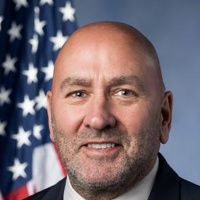
Clay Higgins
Representative
LA
Clay Higgins
Representative
LA
The "Finish the Wall Act" mandates the immediate resumption of border wall construction along the U.S.-Mexico border, requiring completion by September 30, 2026, using previously appropriated funds. The bill directs the Department of Homeland Security to execute comprehensive infrastructure and technology plans while honoring existing construction contracts. Additionally, it requires the agency to certify full compliance with federal DNA collection requirements for individuals in Customs and Border Protection custody.