Legislative Activity
Track Brian's sponsored bills, co-sponsored legislation, and voting record
This bill amends the Immigration and Nationality Act to deem aliens convicted of or admitting to committing sex offenses, domestic violence, stalking, child abuse, or violating protection orders as inadmissible and deportable. It broadens the definition of crimes against children to include domestic violence, regardless of grant funding status.
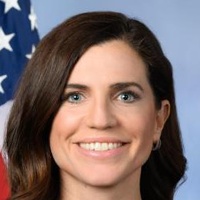
Nancy Mace
Representative
SC
Nancy Mace
Representative
SC
The "Preventing Violence Against Women by Illegal Aliens Act" amends the Immigration and Nationality Act to deem aliens inadmissible and deportable if they have committed or admitted to acts constituting sex offenses, domestic violence, stalking, child abuse, or violating protection orders. It broadens the definition of crimes against children to include any crime constituting domestic violence.
This bill increases the railroad track maintenance tax credit, introduces annual inflation adjustments, and extends the eligibility period for qualifying expenditures.
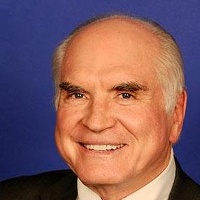
Mike Kelly
Representative
PA
Mike Kelly
Representative
PA
This bill amends the Internal Revenue Code to expand the railroad track maintenance credit by increasing the per-mile tax credit to $6,100 and implementing annual inflation adjustments starting in 2026. It also extends the eligibility window for qualifying maintenance expenditures to include costs incurred through 2023. These updates aim to provide greater financial support for ongoing railroad infrastructure improvements.
The Security First Act strengthens border security by increasing funding for state and local law enforcement, mandating a review of foreign terrorist organization designations for major cartels, and requiring comprehensive technology and workforce assessments.
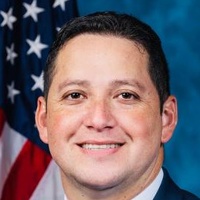
Ernest Gonzales
Representative
TX
Ernest Gonzales
Representative
TX
The Security First Act aims to strengthen U.S. border security by increasing funding for state and local law enforcement through the Operation Stonegarden grant program and a new dedicated trust fund. The bill also mandates a formal review to determine if major Mexican drug cartels and criminal gangs should be designated as foreign terrorist organizations. Additionally, it requires the Department of Homeland Security to conduct comprehensive technology needs assessments and report on its recent hiring practices to improve operational capacity.
This bill mandates the implementation of the Migrant Protection Protocols, requiring the Secretary of Homeland Security to return qualifying noncitizens arriving from contiguous countries to Mexico or Canada during their immigration proceedings.
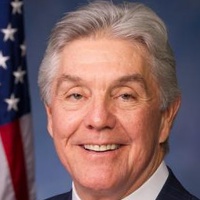
Roger Williams
Representative
TX
Roger Williams
Representative
TX
The Make the Migrant Protection Protocols Mandatory Act of 2025 amends the Immigration and Nationality Act to require, rather than permit, the return of certain noncitizens to Mexico or Canada while their immigration proceedings are pending. This legislation removes discretionary authority from the Department of Homeland Security, effectively mandating the implementation of the "Remain in Mexico" policy.
The Chiropractic Medicare Coverage Modernization Act of 2025 expands Medicare coverage to include all services provided by doctors of chiropractic that are within the scope of their state licensure.
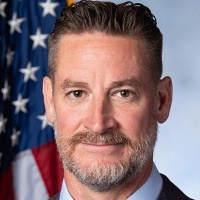
W. Steube
Representative
FL
W. Steube
Representative
FL
The Chiropractic Medicare Coverage Modernization Act of 2025 expands Medicare coverage to include all services legally authorized under a chiropractor’s state license, moving beyond the current restriction limited to manual spinal manipulation. This legislation aligns Medicare benefits with private insurance and other federal health programs to better reflect modern chiropractic practice. To provide these expanded services, chiropractors will be required to complete a one-time training program verified by the Secretary of Health and Human Services.
Affirms states' rights to defend against invasion, citing the influx of cartels and criminal elements across the southern border and criticizing the Biden administration's border security policies.
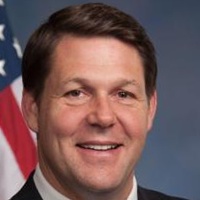
Jodey Arrington
Representative
TX
Jodey Arrington
Representative
TX
This bill asserts the constitutional right of states to defend themselves against invasion, citing the situation at the southern border from 2021-2024 as an invasion by cartels, terrorists, and criminal elements. It criticizes the Biden administration's border policies and claims the federal government failed to protect southern border states, thus empowering states to take defensive action.
The FAITH in Small Business Act codifies equal access for faith-based organizations to participate in Small Business Administration loan and disaster assistance programs.
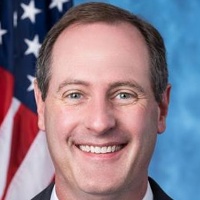
Tracey Mann
Representative
KS
Tracey Mann
Representative
KS
The FAITH in Small Business Act codifies into law the Small Business Administration’s 2021 rule ensuring equal access to loan and disaster assistance programs for faith-based organizations. This legislation guarantees that these entities can participate in federal support programs without compromising their religious character or independence.
The Border Security Investment Act imposes a 37-percent fee on certain international remittance transfers to fund border security technology, infrastructure, and state reimbursement programs.
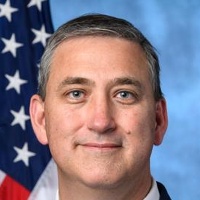
Nathaniel Moran
Representative
TX
Nathaniel Moran
Representative
TX
The Border Security Investment Act establishes a 37-percent fee on remittance transfers sent to countries with high rates of unlawful entry into the U.S. The revenue generated from these fees is split equally into two trust funds dedicated to reimbursing border states for security expenditures and financing federal border security initiatives, such as technology, physical barriers, and personnel. Any combined fund balance exceeding $50 billion will be permanently redirected toward federal deficit reduction.
Formally apologizes to Vietnam War veterans and their families for the mistreatment they faced, urging increased education on their sacrifices and lack of support upon returning home.
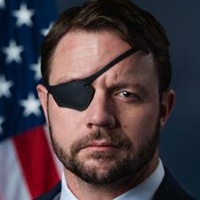
Dan Crenshaw
Representative
TX
Dan Crenshaw
Representative
TX
This bill formally acknowledges the sacrifices and courage of Vietnam War veterans, recognizing their service and the challenges they faced, including exposure to Agent Orange and the loss of over 58,000 American lives. It urges the President to address the mistreatment of these veterans and issues a formal apology on behalf of the American people for the lack of support they received both during and after the war. The bill also supports enhanced education in schools to accurately reflect the experiences of Vietnam War veterans.
This bill reclassifies silencers under federal tax law, removes federal registration requirements for legally transferred silencers, preempts state taxation and registration of silencers in commerce, and mandates the destruction of existing federal silencer registration records.
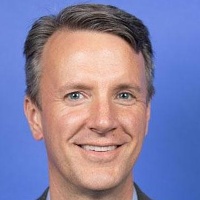
Ben Cline
Representative
VA
Ben Cline
Representative
VA
The Hearing Protection Act aims to remove silencers from the purview of the National Firearms Act (NFA) by treating them similarly to standard firearms under federal tax law. This legislation preempts certain state and local taxes and registration requirements related to silencers involved in interstate commerce. Furthermore, the bill mandates the destruction of existing federal silencer registration records and updates federal marking requirements for manufacturers.
The FORCE Act prohibits the removal of Cuba from the State Sponsors of Terrorism list until the country meets specific democratic and human rights requirements.
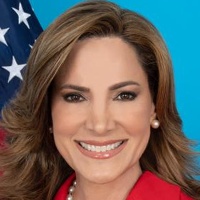
Maria Salazar
Representative
FL
Maria Salazar
Representative
FL
The FORCE Act prohibits the President and the Secretary of State from removing Cuba from the State Sponsors of Terrorism list. This restriction remains in effect until the administration certifies that Cuba has met the specific democratic and human rights requirements outlined in the LIBERTAD Act of 1996.
This bill mandates federal reimbursement for states that have spent over $2.5 billion on border security and enforcement efforts over the preceding decade.
Dan Crenshaw
Representative
TX
Dan Crenshaw
Representative
TX
The State Border Security Reimbursement Act of 2025 mandates that the federal government reimburse states for significant expenditures made on border security and enforcement. This legislation aims to alleviate the financial burden on states that have spent over $2.5 billion on these federal responsibilities over the preceding decade. Eligible states may apply for full reimbursement of these non-federally funded costs within a specified timeframe.
This bill amends Title IX to prohibit schools receiving federal funds from allowing males to participate in female athletic programs, defining "sex" as determined at birth, while allowing males to train with female teams if it doesn't deprive females of opportunities or benefits. It also requires a study on the impact of male participation in female sports.
W. Steube
Representative
FL
W. Steube
Representative
FL
The "Protection of Women and Girls in Sports Act of 2025" amends Title IX to prohibit schools receiving federal funds from allowing males to participate in female athletic programs. Sex is defined as based on reproductive biology and genetics at birth. The bill allows males to train with female teams if it doesn't deprive females of opportunities. It also requires a study on the benefits lost to women when males participate in female sports.
The DIRECT Act rescinds unspent IRS enforcement funds and immediately redirects that exact amount to Customs and Border Protection to hire new agents for southern border security.
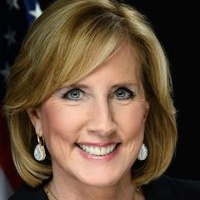
Claudia Tenney
Representative
NY
Claudia Tenney
Representative
NY
The DIRECT Act rescinds unspent enforcement funding previously allocated to the Internal Revenue Service (IRS). These withdrawn funds are immediately redirected to the U.S. Customs and Border Protection (CBP). This redirected money is specifically designated to cover the salaries and expenses for new agents hired to secure the southern border.
The Honor Inauguration Day Act mandates that the United States flag be flown at full staff on every presidential Inauguration Day.
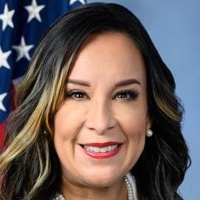
Mónica De La Cruz
Representative
TX
Mónica De La Cruz
Representative
TX
The Honor Inauguration Day Act mandates that the United States flag be flown at full staff on every presidential Inauguration Day. This legislation ensures that the flag remains at its highest peak to celebrate the democratic process and the expression of the people's will, regardless of any conflicting display regulations.
This bill authorizes the President to enter into negotiations with the Kingdom of Denmark to acquire Greenland, subject to a 60-day congressional review period.
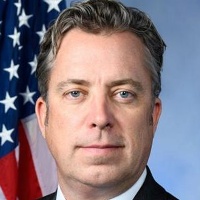
Andrew Ogles
Representative
TN
Andrew Ogles
Representative
TN
The "Make Greenland Great Again Act" authorizes the President to initiate negotiations with the Kingdom of Denmark to acquire Greenland for the United States. The bill establishes a formal process for congressional review, requiring any resulting acquisition agreement to be submitted to specific committees for a 60-day approval period.
This bill authorizes the President to initiate formal negotiations with the Government of Panama to reacquire the Panama Canal.
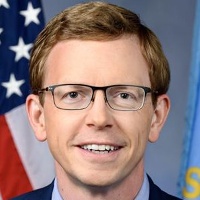
Dusty Johnson
Representative
SD
Dusty Johnson
Representative
SD
The Panama Canal Repurchase Act of 2025 authorizes the President to initiate formal negotiations with the Government of Panama to reacquire the Panama Canal. The legislation also mandates that the President provide Congress with a progress report on these negotiations within 180 days of enactment.
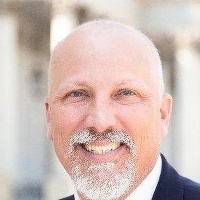
The Border Safety and Security Act of 2025 authorizes the Secretary of Homeland Security to suspend the entry of inadmissible aliens at U.S. borders when detention capacity is unavailable or operational control is compromised.
Chip Roy
Representative
TX
Chip Roy
Representative
TX
The Border Safety and Security Act of 2025 authorizes the Secretary of Homeland Security to suspend the entry of inadmissible aliens at U.S. borders to maintain operational control. It mandates a suspension of entry whenever the government lacks the capacity to properly detain or monitor these individuals. Additionally, the bill empowers state attorneys general to sue the federal government to enforce these border security requirements.
This bill officially designates the Department of Veterans Affairs community-based outpatient clinic in Lubbock, Texas, as the "General Bernie Mittemeyer VA Clinic."
Jodey Arrington
Representative
TX
Jodey Arrington
Representative
TX
This bill officially designates the Department of Veterans Affairs community-based outpatient clinic in Lubbock, Texas, as the "General Bernie Mittemeyer VA Clinic." All future federal references to this facility will reflect this new name.
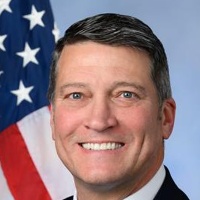
This bill designates the United States Postal Service facility located at 107 North Hoyne Avenue in Fritch, Texas, as the "Chief Zeb Smith Post Office."
Ronny Jackson
Representative
TX
Ronny Jackson
Representative
TX
This bill designates the United States Postal Service facility located at 107 North Hoyne Avenue in Fritch, Texas, as the "Chief Zeb Smith Post Office." All official references to this facility will henceforth bear this name in honor of Chief Zeb Smith.