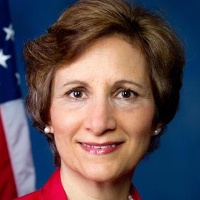
Legislative Activity
Track Suzanne's sponsored bills, co-sponsored legislation, and voting record
The Break the Cycle of Violence Act establishes federal frameworks within HHS and the Department of Labor to fund community-based violence intervention programs and provide job training for opportunity youth in high-violence areas.
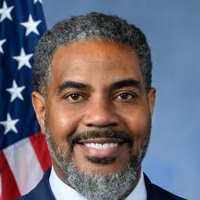
Steven Horsford
Representative
NV
Steven Horsford
Representative
NV
The Break the Cycle of Violence Act establishes federal frameworks within HHS and the Department of Labor to address community violence through prevention and economic opportunity. Title I creates grants for community-based violence intervention programs focused on evidence-based, trauma-responsive care, while Title II funds job training for opportunity youth in high-violence areas. Overall, the bill aims to reduce violence by investing in local services and creating pathways to employment rather than relying solely on incarceration.
The Women’s Health Protection Act of 2025 establishes a federal right to access abortion services before fetal viability and protects the right to travel for care, overriding state restrictions that place burdens on abortion access not imposed on comparable medical procedures.
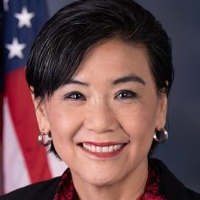
Judy Chu
Representative
CA
Judy Chu
Representative
CA
The Women’s Health Protection Act of 2025 establishes a federal statutory right to access abortion services, prohibiting medically unnecessary restrictions that impede care before fetal viability. This Act protects the right of patients to travel across state lines to receive reproductive healthcare and allows providers to offer services free from state interference that conflicts with established medical standards. It preempts conflicting state and local laws and provides robust enforcement mechanisms for individuals and the Attorney General to challenge violations.
This Act directs the Secretary of HHS to issue guidance on Medicaid/CHIP coverage for postpartum pelvic health services and establishes a national education campaign on the topic.
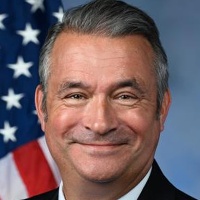
Don Bacon
Representative
NE
Don Bacon
Representative
NE
The Optimizing Postpartum Outcomes Act of 2025 aims to improve women's health after childbirth by clarifying Medicaid/CHIP coverage for essential pelvic health services. It mandates federal guidance for states on covering services like pelvic floor exams and physical therapy, alongside establishing a national education campaign for both providers and new mothers. The bill also directs the GAO to study existing coverage gaps for postpartum women under Medicaid.
This bill establishes a strict, last-resort framework requiring explicit Congressional approval for the President to deploy U.S. Armed Forces domestically to suppress insurrection or quell severe domestic violence.
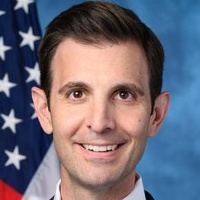
Chris Deluzio
Representative
PA
Chris Deluzio
Representative
PA
The Insurrection Act of 2025 completely rewrites the rules governing when the President can deploy the U.S. Armed Forces domestically to suppress insurrection or quell severe domestic violence. This deployment is strictly limited to being a last resort, requiring specific triggers such as overwhelming local failure or the denial of constitutional rights. Before acting, the President must issue a proclamation and provide a detailed report to Congress, whose approval is required to extend military authority beyond seven days. The Act also establishes expedited congressional procedures for reviewing and approving the deployment and allows for judicial review of the President's legal basis for action.
The MONARCH Act of 2025 establishes a dedicated fund and grant program to urgently restore habitat and implement conservation plans for the critically declining Western Monarch Butterfly population.
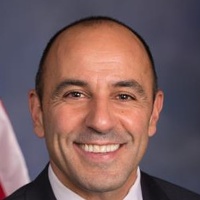
Jimmy Panetta
Representative
CA
Jimmy Panetta
Representative
CA
The MONARCH Act of 2025 addresses the critical decline of the western monarch butterfly population, which has dropped by over 99% in recent decades due to habitat loss and climate change. This bill establishes the Western Monarch Butterfly Rescue Fund to provide grants for habitat restoration projects led by local and Tribal entities. Furthermore, it mandates the implementation of the existing Western Monarch Butterfly Conservation Plan through a partnership with the National Fish and Wildlife Foundation. Finally, the Secretary of the Interior must submit an annual report to Congress detailing the status of the butterflies and the effectiveness of funded conservation efforts.
This bill updates federal ocean acidification research and monitoring to enhance collaboration with coastal communities, including mandated coordination and representation for Indian Tribes and Native Hawaiian organizations.

Chellie Pingree
Representative
ME
Chellie Pingree
Representative
ME
The Coastal Communities Ocean Acidification Act of 2025 amends existing federal law to significantly enhance collaboration on ocean acidification research and monitoring. This bill mandates increased input from diverse stakeholders, including industry, coastal networks, and Indigenous groups, in guiding federal research priorities. Furthermore, it restructures the Advisory Board to ensure stronger representation from Tribal entities and requires the development of specific coordination policies with affected Tribes. The legislation also directs NOAA to prioritize collaboration with State, local, and Tribal governments when conducting vulnerability assessments.
This Act establishes a comprehensive, federally funded grant program to support evidence-based violence prevention and trauma-informed support for high-risk youth in schools located in high-violence communities.
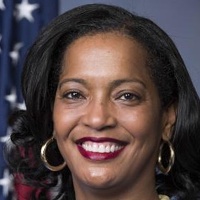
Jahana Hayes
Representative
CT
Jahana Hayes
Representative
CT
The School Violence Prevention Act establishes a new, comprehensive grant program to fund evidence-based violence prevention initiatives in high-risk communities. These grants will support partnerships between schools and community organizations to implement trauma-informed programs focused on youth development, social skills, and connecting students with mental health resources. The bill mandates rigorous evaluation of these programs to measure their impact on student success and overall community safety.
The FIGHT Act of 2025 strengthens federal prohibitions against animal fighting, enhances enforcement mechanisms, and allows citizens to sue violators of animal fighting provisions.
Don Bacon
Representative
NE
Don Bacon
Representative
NE
The FIGHT Act of 2025 significantly strengthens federal prohibitions against animal fighting ventures, specifically targeting the sponsorship, exhibition, and gambling associated with these events. This legislation clarifies the definition of a rooster for legal purposes and bans the interstate transport of roosters for fighting. Furthermore, it empowers private citizens to file lawsuits against violators, allowing for civil penalties and the potential seizure of property used to facilitate illegal animal fighting.
This bill significantly increases penalties for child labor and safety violations, establishes dedicated funding and advisory bodies for enforcement, modernizes hazardous work standards, and mandates expanded research and public education on youth worker safety.
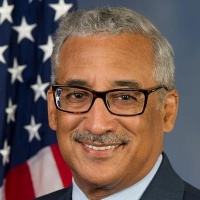
Robert Scott
Representative
VA
Robert Scott
Representative
VA
The Protecting Children Act significantly increases financial penalties and criminal consequences for employers who violate child labor and workplace safety laws, including potential life imprisonment for endangerment resulting in death. It establishes a dedicated fund, financed by these penalties, to support enforcement, education, and research initiatives aimed at protecting young workers. Furthermore, the bill mandates regular reviews of hazardous occupation standards and requires increased federal research and public reporting on child labor issues and enforcement capacity.
This bill establishes a comprehensive "Domestic Workers Bill of Rights" to extend federal labor protections, including overtime, paid sick leave, and anti-discrimination coverage, to domestic employees while creating a standards board to advise on future working conditions.
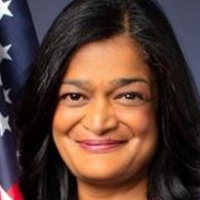
Pramila Jayapal
Representative
WA
Pramila Jayapal
Representative
WA
The Domestic Workers Bill of Rights Act seeks to significantly expand labor protections for domestic employees by bringing them under standard federal laws, including eligibility for overtime pay and mandated paid sick leave. The bill establishes written employment agreements, sets clear privacy boundaries for workers in private homes, and creates a Standards Board to recommend ongoing improvements to wages and benefits. Furthermore, it establishes enforcement mechanisms and temporarily increases federal Medicaid funding for in-home care services to help offset compliance costs.
This resolution urges the establishment of a United States Commission on Truth, Racial Healing, and Transformation to acknowledge historical racial injustices and promote national healing and equity.

Jasmine Crockett
Representative
TX
Jasmine Crockett
Representative
TX
This resolution urges the establishment of a United States Commission on Truth, Racial Healing, and Transformation to formally acknowledge the nation's history of systemic racial injustice. The proposed commission would memorialize this history and serve as a catalyst for eliminating persistent racial inequities. It is intended to complement, not replace, efforts focused on reparations.
This Act permanently protects inventoried roadless areas within the National Forest System from new road construction and logging, upholding existing federal "Roadless Rule" prohibitions.
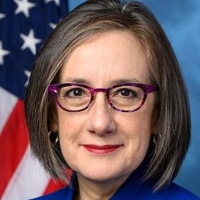
Andrea Salinas
Representative
OR
Andrea Salinas
Representative
OR
The Roadless Area Conservation Act of 2025 aims to provide lasting protection for inventoried roadless areas within the National Forest System. This legislation codifies existing federal regulations, known as the "Roadless Rule," which generally prohibits the construction of new roads or the cutting of timber in these sensitive zones. The purpose is to safeguard critical ecological benefits, clean water sources, and wildlife habitats while maintaining the Forest Service's multiple-use management mission.
The CLASS Act of 2025 prohibits mandatory arbitration in student enrollment agreements and stops colleges receiving federal aid from limiting students' right to sue them in court.
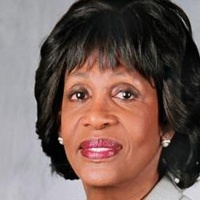
Maxine Waters
Representative
CA
Maxine Waters
Representative
CA
The CLASS Act of 2025 aims to protect students' rights in legal disputes with institutions of higher education. It prohibits mandatory arbitration clauses in student enrollment agreements and forbids colleges receiving federal aid from requiring students to waive their right to sue the institution. These provisions will take effect one year after the Act is officially enacted.
The My Body, My Data Act of 2025 establishes strict limits on the collection, use, and sharing of personal reproductive and sexual health information, while granting individuals robust rights to access, correct, and delete their sensitive data.
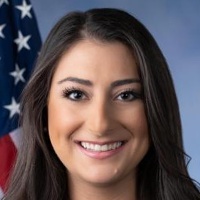
Sara Jacobs
Representative
CA
Sara Jacobs
Representative
CA
The My Body, My Data Act of 2025 establishes strict federal protections for personal reproductive and sexual health information held by regulated entities. This law limits data collection and sharing to only what is strictly necessary for providing requested services. It grants individuals the rights to access, correct, and delete this sensitive data, and requires clear public privacy policies detailing data handling practices. Finally, the Act prohibits retaliation against individuals who exercise these new privacy rights and grants enforcement authority to the FTC while allowing individuals to sue violators.
This Act mandates that most private firearm transfers must go through a licensed dealer to ensure background checks are performed on all purchasers.
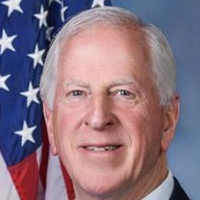
Mike Thompson
Representative
CA
Mike Thompson
Representative
CA
The Bipartisan Background Checks Act of 2025 aims to strengthen existing federal background check systems to prevent prohibited persons from acquiring firearms. This bill primarily mandates that most private firearm transfers must be facilitated through a licensed dealer who will conduct a background check. The legislation includes specific exceptions for family gifts, law enforcement, and temporary transfers under emergency circumstances.
This Act establishes new procedures for Federal Firearms Licensees when background checks are delayed, mandates reporting on delayed and denied transfers, and removes a specific time limit from existing background check law.

James Clyburn
Representative
SC
James Clyburn
Representative
SC
The Enhanced Background Checks Act of 2025 reforms federal firearm background check procedures, establishing a formal petition process for buyers when the system delays a decision beyond 10 business days. This bill removes the previous 10-day time limit on background checks under the Brady Act while mandating extensive reporting from the GAO and FBI on the effectiveness and outcomes of these delayed transfers. Furthermore, the Attorney General must report on the law's impact on domestic violence victims within 150 days of enactment.
The Weather Act Reauthorization Act of 2025 comprehensively updates federal weather programs to prioritize public safety, modernize infrastructure through AI and commercial data integration, and improve forecasting for severe weather, agriculture, and emerging threats like heat and landslides.

Frank Lucas
Representative
OK
Frank Lucas
Representative
OK
The Weather Act Reauthorization Act of 2025 is a comprehensive bill designed to significantly enhance U.S. weather forecasting, research, and public safety capabilities. It mandates that public safety be the absolute top priority for NOAA, authorizes funding for modernization across computing and radar systems, and establishes new programs to improve forecasts for severe weather like tornadoes and hurricanes. Furthermore, the legislation focuses on integrating commercial data, improving risk communication through social science, and enhancing predictions crucial for agriculture and water management.
The Farmers Feeding America Act of 2025 updates funding rules, increases financial support for storage and infrastructure, and provides flexible food procurement options for geographically isolated states within the Emergency Food Assistance Program.
Andrea Salinas
Representative
OR
Andrea Salinas
Representative
OR
The Farmers Feeding America Act of 2025 aims to strengthen the Emergency Food Assistance Program (TEFAP) by updating funding rules based on 2030 data and mandating $500 million in annual funding from 2026 through 2030. The bill doubles funding for food storage and distribution costs to $200 million and extends infrastructure grant eligibility until 2030. Furthermore, it establishes new flexibility for geographically isolated states, allowing them alternative methods for receiving or purchasing necessary food commodities.
The Pride In Mental Health Act of 2025 establishes grants and federal initiatives to improve mental health services and research specifically for LGBTQ+ youth while explicitly prohibiting the use of funds for conversion therapy.
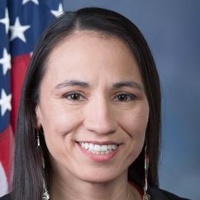
Sharice Davids
Representative
KS
Sharice Davids
Representative
KS
The Pride In Mental Health Act of 2025 establishes a new grant program to improve mental health and substance abuse outcomes for LGBTQ+ youth through culturally competent care and resource development. These grants strictly prohibit funding for conversion therapy practices. The bill also mandates federal data collection on LGBTQ+ youth mental health and requires a report on the needs of those in foster care.
This Act immediately repeals specific Executive Orders that harm LGBTQI+ individuals and prohibits the use of federal funds to enforce them, while preserving the President's constitutional authority.
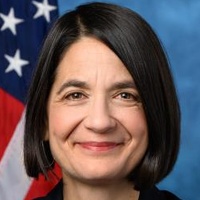
Becca Balint
Representative
VT
Becca Balint
Representative
VT
The No Place for LGBTQ+ Hate Act immediately repeals specific Executive Orders that reportedly targeted or limited the rights of LGBTQI individuals across federal areas like employment and healthcare. This legislation also prohibits the use of any federal funds to enforce or carry out these canceled orders. The bill includes a savings provision to ensure it does not infringe upon the President's existing constitutional authority.