Legislation
This Act rescinds billions of dollars in previously appropriated budget authority from various State Department, foreign aid, and international programs, as well as future funding for the Corporation for Public Broadcasting.
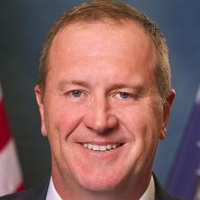
Eric Schmitt
Senator
MO
Eric Schmitt
Senator
MO
The Rescissions Act of 2025 immediately cancels previously allocated budget authority across various government accounts, primarily targeting State Department and foreign aid programs. This legislation rescinds billions of dollars designated for international organizations, global health initiatives, development assistance, and peacekeeping operations. Additionally, it cancels future funding set aside for the Corporation for Public Broadcasting in fiscal years 2026 and 2027.
This Act amends the Community Development Block Grant Program to explicitly allow federal funds to be used for the new construction of affordable housing while maintaining existing income eligibility requirements.
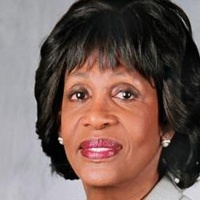
Maxine Waters
Representative
CA
Maxine Waters
Representative
CA
The Strengthening Housing Supply Act of 2025 amends the Community Development Block Grant (CDBG) Program to explicitly allow federal funds to be used for the **new construction of affordable housing**. This change broadens the eligible uses for CDBG funds while maintaining existing requirements that the housing benefits low- and moderate-income persons. These new provisions only apply to funds appropriated by Congress after the Act's enactment.
The INFORM Act of 2025 mandates that Homeland Security must notify the immediate family of a transferred immigration detainee within 24 hours, providing details about the relocation and the new facility's contact information.
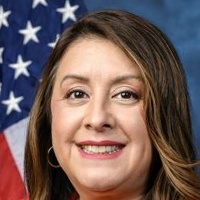
Luz Rivas
Representative
CA
Luz Rivas
Representative
CA
The INFORM Act of 2025 mandates that Homeland Security must notify the immediate family of any individual transferred between immigration detention facilities within 24 hours. This notification must include the reason for the transfer and contact information for the new location. The Act broadly defines "immediate family" to cover a wide range of relatives, including step- and foster-family members.
This act mandates a GAO review of federal disaster funding for water infrastructure failures and requires recommendations for proactive investment in at-risk systems.
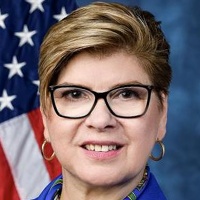
Nellie Pou
Representative
NJ
Nellie Pou
Representative
NJ
The Water Crisis Prevention Act of 2025 mandates a comprehensive review by the Government Accountability Office (GAO) of federal disaster funding available for water infrastructure failures. This review must assess FEMA resources for states, businesses, and individuals, both during and outside of declared emergencies. Ultimately, the GAO will report back to Congress with recommendations for interagency cooperation and future funding to proactively repair high-risk water systems.
This Act mandates the Center for Mental Health Services to develop and implement a national strategy addressing the impact of new technologies on children's mental health.
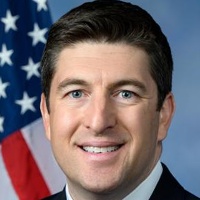
Bryan Steil
Representative
WI
Bryan Steil
Representative
WI
The Protecting Young Minds Online Act mandates the Center for Mental Health Services to develop and implement a national strategy. This strategy will specifically address the impact of new technologies, such as social media, on the mental health of children. The goal is to equip local communities with the resources needed to manage these effects.
The GRACE Act prohibits federal education funding for schools or agencies with vaccination requirements unless they provide an unconditional religious exemption without requiring documentation.
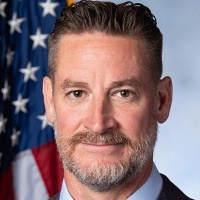
W. Steube
Representative
FL
W. Steube
Representative
FL
The GRACE Act prohibits federal education funding for any school or agency that mandates vaccinations unless they provide a religious exemption based solely on an individual's stated sincerely held religious beliefs. This exemption cannot require any proof or documentation to support the religious objection. Consequently, institutions requiring documentation for religious vaccine exemptions risk losing federal education funds.
This Act codifies Executive Order 14322 into law to provide statutory protection for college sports.
W. Steube
Representative
FL
W. Steube
Representative
FL
The Protection of College Sports Act officially codifies Executive Order 14322 into federal law. This action transforms the previous executive order into a legally binding statute with the full force of Congressional legislation. The bill essentially ensures the mandates and requirements of the original order are permanently established in law.
This resolution expresses the House's support for designating September 22nd as National Military and Veterans Suicide Awareness Day to highlight the mental health struggles of service members and veterans.
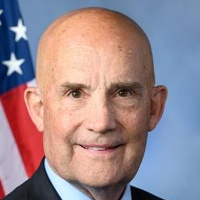
Keith Self
Representative
TX
Keith Self
Representative
TX
This resolution expresses the strong support of Congress for designating September 22nd as "National Military and Veterans Suicide Awareness Day." The goal is to formally recognize the sacrifices of service members and veterans while raising crucial awareness about the mental health challenges and suicide risks they face. By establishing this day, the resolution aims to reduce stigma and encourage greater focus on providing necessary support and resources to this population.
This resolution formally honors the victims and survivors of the August 27, 2025, mass shooting at Annunciation Catholic Church and School in Minneapolis while condemning the violence and commending the heroic response.

Ilhan Omar
Representative
MN
Ilhan Omar
Representative
MN
This resolution formally honors the victims and survivors of the tragic 2025 mass shooting at Annunciation Catholic Church and School in Minneapolis. It condemns the senseless violence and expresses deep sympathy for the affected community. Furthermore, the resolution commends the bravery of first responders, medical personnel, and community members who provided aid during the attack. Ultimately, it calls for safety in places of worship and schools while expressing hope for healing.
This resolution calls for prioritizing mental health equally with physical health to combat the national epidemics of suicide and drug overdose by expanding resources, enforcing parity, and reducing stigma.
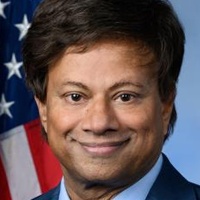
Shri Thanedar
Representative
MI
Shri Thanedar
Representative
MI
This resolution calls for prioritizing mental health with the same seriousness as physical health to combat rising suicide and overdose rates across the United States. It emphasizes the need to eliminate stigma, enforce mental health parity in insurance coverage, and significantly boost resources for prevention and treatment. Key actions include expanding the mental health workforce, improving crisis care, and supporting evidence-based strategies to address these national health crises.
This bill officially designates the United States Postal Service facility at 4551 East 52nd Street in Odessa, Texas, as the "Mary Granados Memorial Post Office Building."
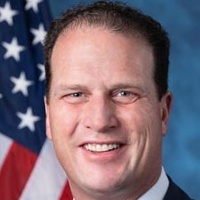
August Pfluger
Representative
TX
August Pfluger
Representative
TX
This bill officially designates the United States Postal Service facility located at 4551 East 52nd Street in Odessa, Texas, as the "Mary Granados Memorial Post Office Building." This action ensures that all official government records and documents will use this new name for the facility.
This bill reauthorizes and updates the Cybersecurity Act of 2015 to enhance information sharing, clarify definitions including AI, and improve outreach regarding critical infrastructure protection.
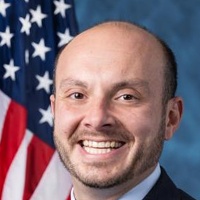
Andrew Garbarino
Representative
NY
Andrew Garbarino
Representative
NY
This Act reauthorizes and significantly updates the Cybersecurity Act of 2015 to enhance national cybersecurity defenses. It modernizes definitions to include artificial intelligence and critical infrastructure, while requiring agencies to update guidance on sharing cyber threat indicators and defensive measures. The bill also mandates new outreach efforts to protect smaller and rural critical infrastructure operators.
This resolution supports designating September 12th as "The Day of the Bible" to honor the historical significance of the first officially approved American printing of the Bible and its influence on U.S. values.
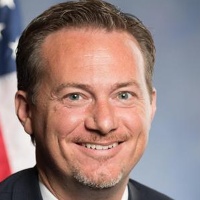
Michael Cloud
Representative
TX
Michael Cloud
Representative
TX
This joint resolution expresses support for designating September 12th annually as "The Day of the Bible" to honor the historical significance of the Bible in shaping American culture and values. The resolution specifically commemorates the anniversary of the 1782 Congressional approval for printing the first complete English Bible in the United States. If enacted, it would require the President to issue an annual proclamation encouraging citizens to observe the day.
This Act mandates statewide policies and training for K-12 school personnel on sexual abuse prevention and requires the Secretary of Education to report on the prevalence and solutions for student sexual abuse.
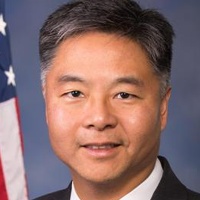
Ted Lieu
Representative
CA
Ted Lieu
Representative
CA
The Preventing Sexual Abuse of K–12 Students Act of 2025 aims to strengthen student safety by requiring states receiving federal funding to establish statewide policies mandating clear codes of conduct and comprehensive sexual abuse awareness training for all school personnel. This legislation addresses documented gaps in existing prevention efforts and staff training across the nation. Furthermore, the bill directs the Secretary of Education to conduct a study on the prevalence of sexual abuse in schools and report recommendations for prevention to Congress.
This bill mandates the deportation and permanent inadmissibility of non-citizens who commit acts of violence against law enforcement or public property during civil unrest, with enhanced enforcement during declared emergencies.

Dan Crenshaw
Representative
TX
Dan Crenshaw
Representative
TX
The Returning Illegals over Turmoil Act establishes new grounds for the deportation and permanent inadmissibility of non-citizens who incite or participate in violent acts against law enforcement or public property during civil unrest. This legislation mandates strict enforcement during declared emergencies and grants the Secretary of Homeland Security expedited removal authority under those conditions. Furthermore, individuals removed under these provisions are permanently barred from receiving any form of immigration relief or future DACA eligibility.
The Federal Police Camera and Accountability Act mandates body and in-car camera usage for federal officers, strictly prohibits the use of facial recognition technology on these devices, and establishes specific rules for footage retention and public access.

Eleanor Norton
Representative
DC
Eleanor Norton
Representative
DC
The Federal Police Camera and Accountability Act mandates strict requirements for federal law enforcement regarding the use of body-worn and in-car cameras, including when they must be activated and how footage must be retained and disclosed. The bill explicitly prohibits the use of facial recognition or other biometric surveillance technology on these recording devices. Furthermore, it establishes procedures for officer review of footage after serious incidents and mandates a GAO study on federal officer training.
This act mandates that the federal government reimburse states and local governments for disaster emergency work within 120 days of submission if 90% of the estimated costs are eligible for federal aid.
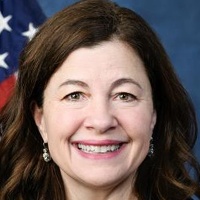
Kristen McDonald Rivet
Representative
MI
Kristen McDonald Rivet
Representative
MI
The Rapid Disaster Relief Act aims to speed up federal reimbursements to state and local governments for emergency disaster work. If initial estimates show high federal eligibility, the government must issue payment within 120 days of the request. This ensures faster financial support for immediate post-disaster recovery efforts.
This Act expands funding, streamlines requirements, and establishes new grant programs to increase the availability and training of service coordinators across various federally assisted housing programs and makes service coordinator employment eligible for Public Service Loan Forgiveness.
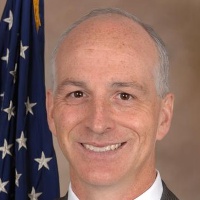
Adam Smith
Representative
WA
Adam Smith
Representative
WA
The Expanding Service Coordinators Act of 2025 aims to bolster support for residents in federally assisted housing by expanding and funding service coordinator programs across various housing types. It establishes new competitive grant programs through HUD and HRSA, mandates training requirements for existing coordinators, and ensures funding authorization through 2030. Furthermore, the bill expands eligibility for Public Service Loan Forgiveness to include service coordinator roles.
This Act establishes the "Local Farmers Feeding Our Communities" program to strengthen local food security by funding agreements that support local producers and distribute fresh food to communities.
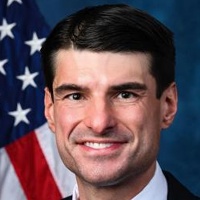
Robert Bresnahan
Representative
PA
Robert Bresnahan
Representative
PA
The Local Farmers Feeding our Communities Act establishes a new program to support local food producers and strengthen regional food security. This initiative requires the Secretary of Agriculture to fund agreements that ensure nutritious, locally sourced food is purchased and distributed widely, prioritizing small and beginning farmers. Funds must be used to buy minimally processed local products and provide technical assistance to producers. The program is backed by mandatory funding starting in Fiscal Year 2026.
The Safe Students Act repeals the Gun-Free School Zones Act of 1990, eliminating the federal ban on possessing firearms within 1,000 feet of a school.
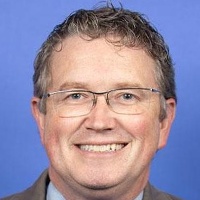
Thomas Massie
Representative
KY
Thomas Massie
Representative
KY
The Safe Students Act completely repeals the federal Gun-Free School Zones Act of 1990, eliminating the previous ban on possessing firearms within 1,000 feet of a school. This action removes the specific federal prohibition and cleans up related definitions and penalty structures within the U.S. Code.