Legislation
This resolution urges Congress to take immediate action to restore and strengthen voting rights protections and consider structural reforms to the Senate and Supreme Court to safeguard American democracy.

Gregorio Casar
Representative
TX
Gregorio Casar
Representative
TX
This resolution expresses the House's urgent call for Congress to restore and strengthen civil rights and fair political representation for all Americans. It specifically condemns recent Supreme Court decisions that have weakened the Voting Rights Act and enabled partisan gerrymandering. The bill asserts that Congress must act boldly, including considering Senate and Supreme Court reforms, to protect multiracial democracy.
This resolution celebrates the achievements of Title IX while condemning current executive actions that undermine its protections for all students, including transgender and nonbinary individuals.
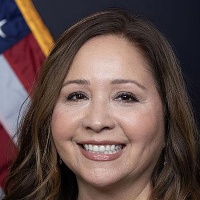
Adelita Grijalva
Representative
AZ
Adelita Grijalva
Representative
AZ
This resolution celebrates the 54th anniversary and historical achievements of Title IX in promoting educational equity for women and girls. It strongly criticizes recent executive actions that allegedly undermine the law's purpose by harming transgender and nonbinary students and neglecting core protections against sex discrimination. The bill calls for robust enforcement of Title IX to ensure fairness and safety for all students against all forms of sex-based discrimination and harassment.
This bill commemorates the one-year anniversary of the Working Families Tax Cuts, highlighting the enacted tax relief, investments, and policy changes benefiting workers, families, and businesses.
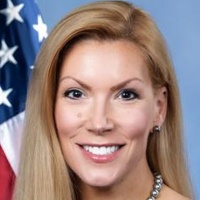
Beth Van Duyne
Representative
TX
Beth Van Duyne
Representative
TX
This bill commemorates the one-year anniversary of the Working Families Tax Cuts, highlighting the significant tax relief delivered to over 140 million Americans. It details major provisions, including tax cuts for workers and families, incentives for small businesses and manufacturing, and investments in healthcare and border security. The legislation aimed to prevent a massive tax increase while providing substantial financial benefits across various sectors of the economy.
This resolution asserts that monitoring and regulating water systems must not be used to surveil, restrict, or stigmatize access to medication abortion care.
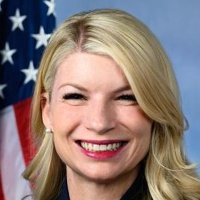
Brittany Pettersen
Representative
CO
Brittany Pettersen
Representative
CO
This resolution expresses the sense of the House that monitoring water systems should not be used to surveil or restrict access to medication abortion care. It asserts that mifepristone is safe, effective, and poses no environmental risk to water systems, citing FDA findings. The bill opposes using false environmental claims to politically interfere with reproductive healthcare access.
This bill expresses support for designating June as Portuguese National Heritage Month to recognize the significant contributions of Portuguese Americans to the United States.
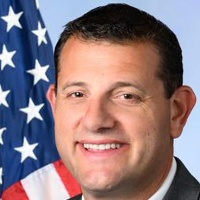
David Valadao
Representative
CA
David Valadao
Representative
CA
This resolution expresses the House of Representatives' support for designating June as Portuguese National Heritage Month. It recognizes the significant and diverse contributions of Portuguese Americans throughout U.S. history across various fields. The bill encourages Americans to observe the month with activities celebrating this rich heritage.
This bill mandates that mortgage lenders must consider specific, borrower-authorized alternative credit data, such as rent payments, to expand access to credit for those with thin credit files.
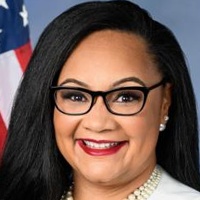
Nikema Williams
Representative
GA
Nikema Williams
Representative
GA
This bill, the "Expanding Access to Credit through Consumer-Permissioned Data Act," amends the Equal Credit Opportunity Act to require mortgage lenders to consider additional, consumer-permissioned credit information, such as rent payments, when evaluating loan applications. This aims to expand mortgage access for millions of consumers whose credit history is not fully reflected in traditional reports. Lenders must provide applicants with a notice explaining this right, and underwriting systems must be updated to process this alternative data.
This bill congratulates the Carolina Hurricanes on winning the 2026 Stanley Cup Final, their second championship, and recognizes the team's performance and community contributions.

Addison McDowell
Representative
NC
Addison McDowell
Representative
NC
This resolution congratulates the Carolina Hurricanes on winning the 2026 Stanley Cup Final, their second championship, twenty years after their first. It recognizes the team's dominant playoff performance, highlights key players like Captain Jordan Staal and Coach Rod Brind'Amour, and acknowledges the organization's community contributions.
This bill celebrates the Supreme Court's *Dobbs* decision, affirms the right to life as the foremost right, and commits the House to protecting unborn life and supporting families.
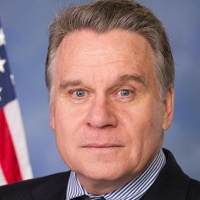
Christopher Smith
Representative
NJ
Christopher Smith
Representative
NJ
This resolution celebrates the anniversary of the Supreme Court's *Dobbs* decision, which overturned *Roe v. Wade* and returned authority over abortion to the states. It affirms the right to life as the foremost unalienable right and commits the House to protecting unborn lives. Furthermore, the resolution resolves to support families and uphold the authority of elected representatives to enact laws protecting unborn life.
This bill requires businesses to disclose when they use personalized algorithms to set different prices for individuals based on their personal data and grants consumers the right to opt out of such pricing.

Suhas Subramanyam
Representative
VA
Suhas Subramanyam
Representative
VA
This bill, the "SLASH Prices Act," requires businesses to disclose when they use personalized algorithms based on consumer data to set individual prices. Consumers must be given a clear, immediate way to opt out of this algorithmic pricing without penalty. The legislation grants the Federal Trade Commission (FTC) authority to enforce these transparency and anti-discrimination requirements.
This bill, the "Protect Local Funding Act," prohibits the finalization, implementation, or enforcement of the proposed "Regulation for Federal Financial Assistance" rule published on May 29, 2026, or any substantially similar rule.

Haley Stevens
Representative
MI
Haley Stevens
Representative
MI
This bill, the "Protect Local Funding Act," prohibits the finalization, implementation, or enforcement of the proposed "Regulation for Federal Financial Assistance" published on May 29, 2026, or any substantially similar rule. It prevents federal agencies from enacting this specific regulation concerning federal financial assistance.
This bill mandates a report assessing Eastern Frontier NATO allies' infrastructure readiness against Russian threats and prioritizes U.S. security assistance accordingly.
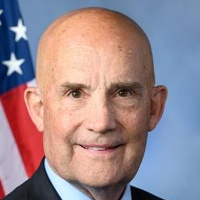
Keith Self
Representative
TX
Keith Self
Representative
TX
This bill mandates a comprehensive report detailing the infrastructure readiness of NATO's Eastern Frontier allies to meet defense requirements against potential Russian aggression. The report must assess progress across key areas like transportation, energy, and communications, identify critical shortfalls, and recommend U.S. actions to address them. Furthermore, the legislation authorizes prioritizing U.S. security assistance for these key allies based on the findings.
This bill streamlines the appointment of District of Columbia court judges by removing the Senate confirmation requirement, allowing direct presidential appointment or appointment by the Judicial Nomination Commission, subject to a 30-day Congressional disapproval window.

Eleanor Norton
Representative
DC
Eleanor Norton
Representative
DC
This bill, the "District of Columbia Courts Judicial Vacancy Reduction Act," changes how judges are appointed to D.C. courts by eliminating the requirement for Senate confirmation. The President will directly appoint judges from a list provided by the Judicial Nomination Commission, or the Commission itself can appoint if the President fails to act. Congress retains the power to block any appointment within 30 days through a joint resolution of disapproval.
This bill establishes the Center for AI Security and Innovation within NIST to measure AI risks, support information sharing, and ensure U.S. leadership in artificial intelligence research and evaluation.
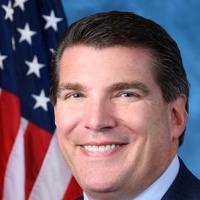
Jay Obernolte
Representative
CA
Jay Obernolte
Representative
CA
This bill, the "AI Security and Innovation Act," establishes a new Center for AI Security and Innovation within the National Institute of Standards and Technology (NIST). The Center will focus on measuring AI risks, supporting information sharing, and ensuring U.S. leadership in AI research and evaluation. It will specifically evaluate the security of advanced AI systems against threats from foreign adversaries. The legislation authorizes funding through fiscal year 2032 and explicitly prohibits the Center from having any regulatory or enforcement authority.
This bill, the GHOSTRUCK Act, authorizes motor carrier employees or agents in North America to edit or annotate electronic logging device records with the driver's approval.
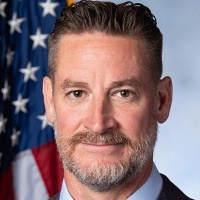
W. Steube
Representative
FL
W. Steube
Representative
FL
This bill, the GHOSTRUCK Act, amends federal law to allow motor carrier employees or authorized agents to edit or annotate electronic logging device (ELD) records. These edits are permitted only if the person making the change is physically located in North America and the driver must approve the final annotation.
This bill mandates the creation of a publicly accessible database by the Secretary of Homeland Security detailing information about criminal aliens released from custody.
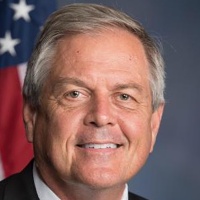
Ralph Norman
Representative
SC
Ralph Norman
Representative
SC
This bill, the "Worst of the Worst Act," mandates the Secretary of Homeland Security to create and maintain a publicly accessible online database. This database must list information for every criminal alien released from custody, including their photo, name, and release details. The information will be searchable by name and jurisdiction.
The Make More in America Act of 2026 expands the Export-Import Bank's authority to finance the domestic development, commercialization, and production of critical technologies to counter foreign competition, particularly from China.

Charles Schumer
Senator
NY
Charles Schumer
Senator
NY
The **Make More in America Act of 2026** fundamentally expands the mission of the Export-Import Bank to actively finance the domestic development, commercialization, and production of critical technologies, aiming to counter foreign competition, particularly from China. It establishes the new "Make More in America Program" to support U.S. manufacturing projects in strategic industries, requiring job creation commitments and prevailing wage standards. Furthermore, the bill creates an Investment Committee to develop a 10-year national investment roadmap and enhances interagency coordination to align federal resources supporting domestic industrial growth.
This resolution recognizes the critical role of pollinators in U.S. agriculture and ecosystems while expressing support for National Pollinator Week.
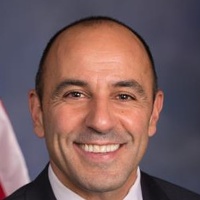
Jimmy Panetta
Representative
CA
Jimmy Panetta
Representative
CA
This resolution recognizes the critical role pollinators play in U.S. agriculture and ecosystem health, noting their contribution of over $18 billion annually to crop production. It highlights the severe decline of many native pollinator species, such as the Western monarch butterfly. The House of Representatives officially expresses support for National Pollinator Week to encourage conservation and public education efforts.
This resolution designates July 15, 2026, as Glioblastoma Awareness Day to promote public understanding of this aggressive brain cancer and support research for better treatments.

Lindsey Graham
Senator
SC
Lindsey Graham
Senator
SC
This resolution officially designates July 15, 2026, as "Glioblastoma Awareness Day." It seeks to raise public awareness about glioblastoma, the most aggressive and deadliest form of malignant brain tumor. The bill supports increased research efforts and better treatments to improve the outlook and quality of life for those affected by this devastating disease.
This resolution prohibits Senators from buying or selling publicly traded stocks or cryptocurrency starting January 1, 2027.

Jon Ossoff
Senator
GA
Jon Ossoff
Senator
GA
This resolution amends Senate rules to prohibit Senators from buying or selling publicly traded stocks or cryptocurrencies. This restriction on investment activity will take effect on January 1, 2027.
This bill mandates a biennial report from the VA assessing staffing, capacity, and wait times at all medical facilities, along with plans to address any identified deficiencies.
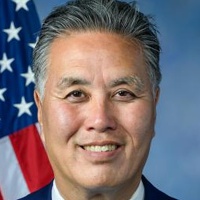
Mark Takano
Representative
CA
Mark Takano
Representative
CA
The VA Health Care Capacity Assessment Act mandates the Department of Veterans Affairs to conduct and report on comprehensive staffing assessments at all VA medical facilities every two years. This report must evaluate whether current staffing, space, and clinical panel sizes meet goals for timely veteran access to care. It also requires the VA to detail identified problems, present plans to fix them, and analyze current wait times and succession planning for key provider roles.