Legislative Activity
Track Derek's sponsored bills, co-sponsored legislation, and voting record
This bill restricts the transfer of specific offensive military articles and defense services to Israel until Congress authorizes their use for specified purposes and Israel provides written assurances of compliance with international law.
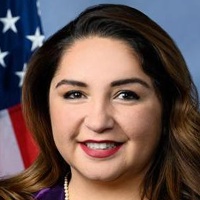
Delia Ramirez
Representative
IL
Delia Ramirez
Representative
IL
This bill imposes significant restrictions on the transfer of specific defense articles and services to Israel. Transfers of listed military equipment, such as certain bombs and ammunition, are prohibited unless Congress first passes a law detailing their specific authorized use. Furthermore, Israel must provide satisfactory written assurances that the items will only be used for those stated purposes and in compliance with international law.
This Act restricts the use of federal funds for a U.S. nuclear first strike unless the President deems it necessary and Congress is notified seven days prior, except in cases of declared war, prior nuclear attack, or launch-on-warning scenarios.
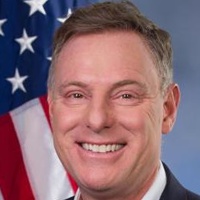
Scott Peters
Representative
CA
Scott Peters
Representative
CA
The Nuclear First-Strike Security Act of 2025 places strict limitations on the use of federal funds to initiate a nuclear attack. Under this Act, a first-use nuclear strike requires a presidential determination that it is in the U.S. best interest, followed by a mandatory seven-day notification to top Congressional leaders. This notification requirement is waived only in cases of a formal declaration of war, a prior nuclear attack on the U.S. or an ally, or during a confirmed launch-on-warning scenario.
This Act mandates the inclusion of Asian American, Native Hawaiian, and Pacific Islander history across federally supported K-12 American history and civics education programs and assessments.

Grace Meng
Representative
NY
Grace Meng
Representative
NY
This Act mandates the inclusion of Asian American, Native Hawaiian, and Pacific Islander (AANHPI) history across federally supported K-12 American history and civics education programs. It recognizes the vital, yet often omitted, contributions of AANHPI communities while addressing historical exclusion and systemic racism. The legislation directs educational programs to partner with the Smithsonian's Asian Pacific American Center to develop accurate and comprehensive curricula. This ensures AANHPI history is integrated into national assessments and teacher training.
This resolution expresses strong support for designating May 2025 as Mental Health Awareness Month to highlight the national mental health crisis and encourage greater action and access to care.
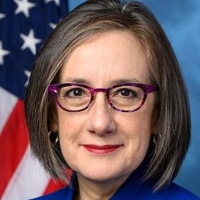
Andrea Salinas
Representative
OR
Andrea Salinas
Representative
OR
This resolution expresses strong support for designating May 2025 as Mental Health Awareness Month to combat a growing national crisis. It highlights alarming statistics regarding rising mental illness rates, significant barriers to accessing care, and disproportionate impacts on youth and marginalized communities. Ultimately, the bill declares mental health a national priority and encourages increased public awareness and support for mental health services.
The Mental Health in Schools Excellence Program Act of 2025 establishes a matching-funds program to help graduate schools reduce the cost of attendance for students who commit to working as school-based mental health service providers.
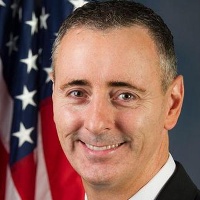
Brian Fitzpatrick
Representative
PA
Brian Fitzpatrick
Representative
PA
The Mental Health in Schools Excellence Program Act of 2025 establishes a new federal program designed to increase the number of mental health professionals working in schools. This program creates matching grants where the government helps cover graduate students' educational costs if their institutions agree to match the funding dollar-for-dollar. The goal is to incentivize graduate schools to support students who commit to careers in school-based mental health services, with specific outreach targeting low-income students.
This Act amends budget control laws to reinforce Congress's exclusive power of the purse, clarify when funds can be withheld, and establish legal remedies, including private lawsuits, for improper impoundments.
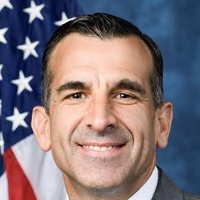
Sam Liccardo
Representative
CA
Sam Liccardo
Representative
CA
The Protecting Our Constitution and Communities Act aims to reassert Congress's exclusive constitutional authority over federal spending by clarifying that the President cannot unilaterally withhold appropriated funds. It strengthens the Comptroller General's oversight role and establishes new legal avenues for private citizens and governments to sue for damages if funds are improperly impounded. Furthermore, the bill tightens the definition of budgetary "contingencies" and ensures that judicial review of these spending disputes remains robust.
This act, also known as the COUNTER Act, updates the Department of Defense's authority and procedures for neutralizing drone threats to U.S. assets while ensuring related security information remains confidential.
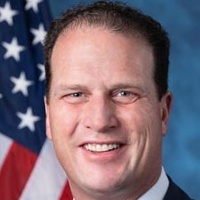
August Pfluger
Representative
TX
August Pfluger
Representative
TX
The COUNTER Act enhances the Department of Defense's authority to neutralize threats from unmanned aircraft systems targeting U.S. assets. This legislation delegates specific response powers and updates mitigation rules for drone threats. Crucially, it exempts sensitive information regarding these counter-drone technologies and procedures from public disclosure under the Freedom of Information Act. The bill also adjusts several deadlines and clarifies the applicability of certain federal laws when operating overseas to counter these threats.
The GHOST Act of 2025 establishes a federal system requiring advance registration and delivery confirmation for the interstate shipment of firearm barrels, slides, and bolts.
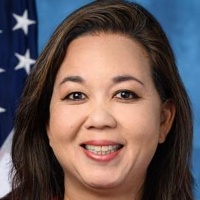
Jill Tokuda
Representative
HI
Jill Tokuda
Representative
HI
The GHOST Act of 2025 establishes a new Federal Interstate Firearm Parts Reporting System to track the shipment of specific gun components, including barrels, slides, and bolts, across state or international lines. Shippers must pre-register these covered components with the Attorney General, detailing sender, recipient, and shipping method, and later confirm delivery. The system allows for retroactive registration but imposes significant penalties for knowingly circumventing these tracking requirements.
This resolution supports designating May 10, 2025, as "National Asian American, Native Hawaiian, and Pacific Islander Mental Health Day" to raise awareness and encourage action to address the mental health crisis in these communities.
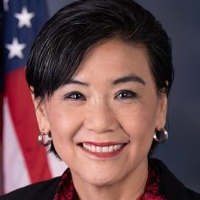
Judy Chu
Representative
CA
Judy Chu
Representative
CA
This resolution supports designating May 10, 2025, as "National Asian American, Native Hawaiian, and Pacific Islander Mental Health Day." It highlights the severe mental health disparities and lack of access to care within AANHPI communities. The bill encourages federal agencies to improve culturally and linguistically appropriate services to better address the unique needs of these diverse populations.
This bill prohibits the use of federal funds to implement Executive Order 14160, which sought to limit birthright citizenship guaranteed by the Fourteenth Amendment.
Delia Ramirez
Representative
IL
Delia Ramirez
Representative
IL
The Born in the USA Act of 2025 declares that Executive Order 14160, which attempted to restrict birthright citizenship, is unconstitutional and contrary to the 14th Amendment. This Act prohibits the use of any federal funds to implement or enforce that Executive Order. It affirms the established constitutional right to birthright citizenship for nearly everyone born on U.S. soil.
This Act establishes a national strategy to combat mental health stigma and improve behavioral health services, research, and workforce diversity within Asian American, Native Hawaiian, and Pacific Islander (AANHPI) communities.
Judy Chu
Representative
CA
Judy Chu
Representative
CA
The Stop Mental Health Stigma in Our Communities Act of 2025 aims to address the significant mental health disparities and high suicide rates within Asian American, Native Hawaiian, and Pacific Islander (AANHPI) communities. The bill mandates the creation of a national behavioral health outreach strategy tailored to the diverse AANHPI population to reduce stigma and increase culturally competent care. Furthermore, it requires comprehensive systematic reviews and reports on the AANHPI youth mental health crisis and strategies to increase the number of AANHPI behavioral health professionals.
The SERVICE Act of 2025 establishes a pilot program to fund local law enforcement grants for creating specialized Veterans Response Teams to better assist veterans in crisis.
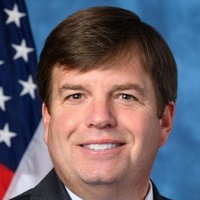
Dale Strong
Representative
AL
Dale Strong
Representative
AL
The SERVICE Act of 2025 establishes a five-year pilot program to create specialized Veterans Response Teams within local law enforcement agencies through federal grants. These teams will focus on improving interactions between law enforcement and veterans in crisis by fostering collaboration with the VA and providing specialized training. The teams will also establish 24/7 volunteer response networks and track outcomes to better serve the veteran community.
This Act mandates that health plans cover medically necessary treatment for congenital anomalies or birth defects affecting the eyes, ears, teeth, mouth, or jaw to restore normal function and appearance.
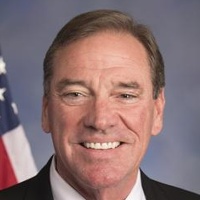
Neal Dunn
Representative
FL
Neal Dunn
Representative
FL
The Ensuring Lasting Smiles Act mandates that group health plans and insurance policies provide comprehensive coverage for medically necessary treatment related to congenital anomalies or birth defects affecting the eyes, ears, teeth, mouth, or jaw. This coverage must include services needed to restore normal function and appearance, including necessary dental and orthodontic support. Plans must apply cost-sharing rules no more restrictive than those for other medical benefits, excluding purely cosmetic procedures.
This act establishes a federal grant program to help law enforcement officers afford and access childcare during their off-hours.
Scott Peters
Representative
CA
Scott Peters
Representative
CA
The Providing Child Care for Police Officers Act of 2025 establishes a new federal grant program to help law enforcement officers secure childcare during non-traditional hours. Administered by HHS, these competitive grants will fund local agencies to offer subsidies, start new facilities, or cover operational costs for officers. The program requires state agencies to apply and secure matching funds, with a sunset date of September 30, 2030.
This bill mandates that federal research entities report detailed, categorized data on the number of animals used in research based on pain and distress levels, making this information publicly accessible through an NIH database.
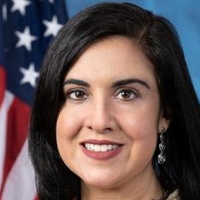
Nicole Malliotakis
Representative
NY
Nicole Malliotakis
Representative
NY
The Federal Animal Research Accountability Act of 2025 mandates that entities using animals in NIH-funded research must annually report detailed data on animal use, broken down by the level of pain or distress experienced. This comprehensive information, including the number of animals bred or housed but not yet used, will be made publicly available in a searchable database by the NIH. These new transparency requirements are set to begin two years after the bill's enactment.
This resolution officially recognizes and celebrates Asian American, Native Hawaiian, and Pacific Islander Heritage Month to honor their significant contributions to U.S. history while acknowledging past hardships and ongoing challenges.
Grace Meng
Representative
NY
Grace Meng
Representative
NY
This resolution officially recognizes and celebrates Asian American, Native Hawaiian, and Pacific Islander (AANHPI) Heritage Month every May. It highlights the significant historical contributions of these communities to the United States, while also acknowledging past hardships and ongoing challenges. The bill encourages the nation to observe this month to appreciate the diversity and strength AANHPI individuals bring to the country.
This bill expands the definition of "law enforcement officer" for federal retirement purposes under FERS and CSRS to include specific IRS, Postal Inspection, and VA police employees, and establishes rules for how current employees can count prior service under the new designation.
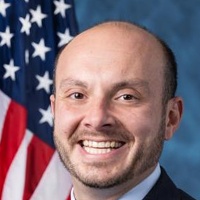
Andrew Garbarino
Representative
NY
Andrew Garbarino
Representative
NY
The Law Enforcement Officers Equity Act expands the definition of "law enforcement officer" for federal retirement purposes under both the Federal Employees Retirement System (FERS) and the Civil Service Retirement System (CSRS). This change adds specific IRS, Postal Inspection Service, and VA police roles to those eligible for enhanced retirement benefits. The bill also establishes procedures for current officers to elect to have their prior service counted under these new definitions, which may require a payment from the employee and their employing agency.
Violet's Law mandates that federal research facilities establish procedures to place retired dogs, cats, nonhuman primates, guinea pigs, hamsters, and rabbits with approved rescue organizations, sanctuaries, shelters, or individuals.
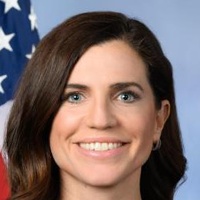
Nancy Mace
Representative
SC
Nancy Mace
Representative
SC
Violet's Law mandates that federal research facilities establish procedures to place retired research animals, including dogs, cats, and primates, into new homes. These facilities must adhere to the Animal Welfare Act standards and ensure animals are certified healthy by a veterinarian before adoption. Eligible placements include registered animal rescue organizations, sanctuaries, shelters, or private individuals.
The HABLA Act of 2025 mandates that federal agencies develop and implement plans to ensure Limited English Proficiency (LEP) individuals can access federally conducted and assisted programs and activities.
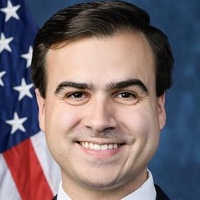
Pablo José Hernández Rivera
Representative
PR
Pablo José Hernández Rivera
Representative
PR
The HABLA Act of 2025 mandates that all federal agencies develop and implement detailed plans to ensure individuals with limited English proficiency (LEP) can access federally conducted programs. Furthermore, the bill requires agencies distributing federal funds to issue specific guidance to their recipients on providing language access to avoid national origin discrimination. Throughout this process, agencies must consult with LEP individuals and stakeholders to create practical, fiscally responsible implementation strategies.
This Act officially renames the "Taipei Economic and Cultural Representative Office" to the "Taiwan Representative Office" to align U.S. policy with treating Taiwan with the courtesies afforded to other nations, without altering the official U.S. stance on Taiwan's status.
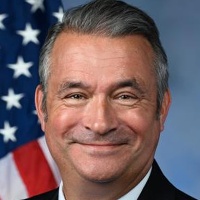
Don Bacon
Representative
NE
Don Bacon
Representative
NE
This Act officially renames Taiwan's primary diplomatic office in the U.S. from the "Taipei Economic and Cultural Representative Office" to the "Taiwan Representative Office." It directs the U.S. government to treat this office with the diplomatic courtesies afforded to other foreign nations, consistent with existing U.S. policy. This renaming does not alter the official U.S. stance on Taiwan's international status or restore full diplomatic relations.