Legislative Activity
Track Ritchie's sponsored bills, co-sponsored legislation, and voting record
This act establishes a dedicated unit within the Department of Justice to enhance the investigation and prosecution of international trade-related crimes, such as smuggling, money laundering, and duty evasion.
Ashley Hinson
Representative
IA
Ashley Hinson
Representative
IA
The Protecting American Industry and Labor from International Trade Crimes Act of 2026 establishes a dedicated unit within the Department of Justice to investigate and prosecute criminal trade activities, such as smuggling, duty evasion, and trade-based money laundering. This legislation aims to bolster enforcement capacity through increased staffing, interagency collaboration, and the development of multi-jurisdictional responses. Additionally, it mandates annual reporting to Congress to ensure transparency and accountability in the government's efforts to protect American industry and labor.
The Green New Deal for Public Housing Act provides federal grants to modernize, decarbonize, and expand public housing while creating workforce development opportunities and strengthening resident participation.

Alexandria Ocasio-Cortez
Representative
NY
Alexandria Ocasio-Cortez
Representative
NY
The Green New Deal for Public Housing Act aims to modernize the nation’s public housing stock by investing in deep energy retrofits, sustainability upgrades, and climate resilience. The bill establishes grant programs to transition public housing to zero-carbon, energy-efficient homes while simultaneously fostering economic empowerment through workforce development and resident-led management. By repealing restrictive caps on housing units and prioritizing tenant participation, the legislation seeks to improve living standards, ensure long-term habitability, and expand the availability of safe, affordable housing.
This bill designates the United States Postal Service facility located at 114 John Street in New York, New York, as the "Jack Greenberg Post Office."

Dan Goldman
Representative
NY
Dan Goldman
Representative
NY
This bill officially designates the United States Postal Service facility located at 114 John Street in New York, New York, as the "Jack Greenberg Post Office." All official federal records and documents will be updated to reflect this new name.
The TPS Review Act strengthens judicial oversight and establishes congressional review for decisions to terminate Temporary Protected Status, ensuring that such actions are evidence-based and subject to legal challenge.
Debbie Wasserman Schultz
Representative
FL
Debbie Wasserman Schultz
Representative
FL
The Temporary Protected Status (TPS) Review Act strengthens oversight of government decisions to terminate TPS designations by reinstating judicial review and requiring that such decisions be supported by a comprehensive administrative record. The bill also subjects TPS terminations to congressional review under the Congressional Review Act, ensuring these decisions are subject to greater accountability. Additionally, it provides legal protections for beneficiaries by automatically staying terminations during the pendency of any legal challenges.
The Right to IVF Act of 2026 establishes a nationwide right to fertility care, mandates comprehensive insurance coverage for reproductive services, and expands access to fertility treatments for veterans and federal employees.
Lori Trahan
Representative
MA
Lori Trahan
Representative
MA
The Right to IVF Act of 2026 establishes a nationwide statutory right to access assisted reproductive technology (ART) and intrauterine insemination (IUI) while prohibiting states from imposing restrictive barriers. The bill further expands family-building support by mandating comprehensive fertility coverage across private insurance, Medicare, Medicaid, and federal employee health plans. Additionally, it guarantees expanded access to fertility services and preservation for military service members and veterans.
This bill reauthorizes the Accelerating Access to Critical Therapies for ALS Act through 2031 while enhancing grant oversight, safety reporting requirements, and FDA strategic planning for rare neurodegenerative diseases.

Mike Quigley
Representative
IL
Mike Quigley
Representative
IL
The Accelerating Access to Critical Therapies for ALS Reauthorization Act of 2026 extends vital funding for ALS research and clinical trial programs through 2031. This legislation strengthens oversight by enhancing grant review processes, improving safety reporting requirements, and mandating a comprehensive five-year FDA action plan to accelerate the development of treatments for rare neurodegenerative diseases.
This bill officially renames the United States Postal Service facility at 80 Atlantic Avenue in Oceanside, New York, as the "Detective Luis G. Alvarez Post Office."
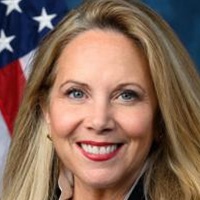
Laura Gillen
Representative
NY
Laura Gillen
Representative
NY
This bill officially renames the United States Postal Service facility located at 80 Atlantic Avenue in Oceanside, New York, in honor of Detective Luis G. Alvarez. The designation will now be used in all official records and documents pertaining to that post office.
The Tuskegee Airmen Memorial Act of 2026 authorizes the establishment of a privately funded commemorative work in Washington, D.C., to honor the Tuskegee Airmen of World War II.
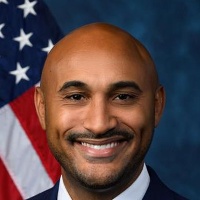
Shomari Figures
Representative
AL
Shomari Figures
Representative
AL
The Tuskegee Airmen Memorial Act of 2026 authorizes Tuskegee Airmen, Inc. to establish a commemorative work on federal land in Washington, D.C., to honor the original Tuskegee Airmen of World War II. The project will be funded entirely through private donations, with no federal funds permitted for its construction or maintenance.
The AADAPT Act expands grant eligibility and funding to integrate dementia care services into health centers through 2031.
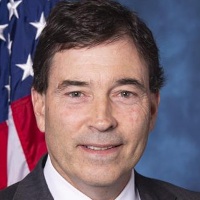
Troy Balderson
Representative
OH
Troy Balderson
Representative
OH
The AADAPT Act expands access to specialized dementia care by authorizing grants for public and nonprofit health centers to integrate these services into their programs. Additionally, the bill extends federal funding authorization through 2031 to ensure the continued growth and sustainability of these critical health outcomes.
This bill mandates electronic prior authorization, increases transparency through required data reporting, and establishes faster decision timelines for Medicare Advantage plans to improve timely access to care for seniors.
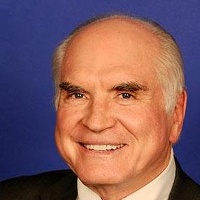
Mike Kelly
Representative
PA
Mike Kelly
Representative
PA
The Improving Seniors’ Timely Access to Care Act of 2025 aims to streamline and modernize the prior authorization process within Medicare Advantage plans. This bill mandates the adoption of electronic prior authorization systems and significantly increases transparency regarding approval rates and decision times starting in 2027. Furthermore, it establishes new enrollee protections and grants the Secretary authority to enforce faster decision timeframes for medical services.
This bill mandates the use of facial recognition technology to verify that users of wagering and prediction market platforms are at least 18 years old while establishing comprehensive consumer protections and regulatory oversight for event contracts.
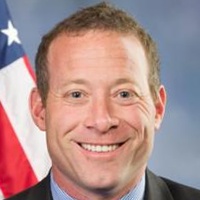
Josh Gottheimer
Representative
NJ
Josh Gottheimer
Representative
NJ
The Facial Recognition to Protect Children Act mandates that wagering and prediction market platforms use facial recognition technology to verify that all users are at least 18 years old. The bill also establishes a comprehensive regulatory framework for event contracts, tasking the Commodity Futures Trading Commission (CFTC) with enforcing strict consumer protections, anti-money laundering standards, and marketing restrictions. Additionally, it creates an Advisory Council on Consumer Protection and an Office of the Retail Advocate to oversee market integrity and safeguard retail participants.
The High Court Gift Ban Act prohibits federal judicial officers from accepting gifts exceeding $50 per instance or $100 annually from a single source, with specific exceptions and enforcement penalties.
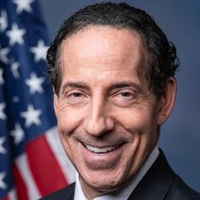
Jamie Raskin
Representative
MD
Jamie Raskin
Representative
MD
The High Court Gift Ban Act establishes strict limits on gifts accepted by federal judicial officers, prohibiting any gift valued over $50 or exceeding $100 in total annual value from a single source. The bill includes specific exemptions for personal hospitality, professional events, and family gifts, while mandating enforcement through the Judicial Conference and potential civil or criminal penalties for violations.
This resolution designates July 10th as Journeyman Lineworkers Recognition Day to honor the essential service and sacrifices of the professionals who maintain our nation’s power grid.
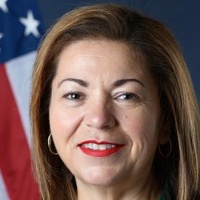
Linda Sánchez
Representative
CA
Linda Sánchez
Representative
CA
This resolution designates July 10th as Journeyman Lineworkers Recognition Day to honor the essential, high-risk work performed by these skilled professionals. It pays tribute to the lineworkers who provide critical service during emergencies and recognizes those who have made the ultimate sacrifice in the line of duty.
The **21st Century ROAD to Housing Act** aims to significantly increase housing supply and affordability through regulatory reforms, new financing tools, increased transparency, and restrictions on large institutional home purchases.

J. Hill
Representative
AR
J. Hill
Representative
AR
The **21st Century ROAD to Housing Act** is a comprehensive bill designed to significantly increase housing supply, improve affordability, and modernize federal housing programs. It tackles issues from streamlining construction regulations and incentivizing local zoning reform to restricting large corporate home purchases and enhancing financing for manufactured homes. Ultimately, the Act aims to create more pathways to homeownership and ensure safer, more stable rental conditions across the country.
This resolution formally congratulates the New York Knicks on their historic 2026 NBA championship victory and recognizes the team for their grit, excellence, and impact on the city.
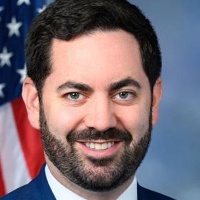
Michael Lawler
Representative
NY
Michael Lawler
Representative
NY
This resolution formally congratulates the New York Knicks on their historic 2026 NBA Championship victory. It recognizes the team’s remarkable season, record-breaking playoff performance, and the spirit of resilience that united fans across New York and the world.
The Original LGBTQIA+ Pride Month Resolution of 2026 honors the history, contributions, and ongoing civil rights struggles of the LGBTQIA+ community while reaffirming Congress's commitment to equality and human rights.

Al Green
Representative
TX
Al Green
Representative
TX
The Original LGBTQIA+ Pride Month Resolution of 2026 honors the history, contributions, and ongoing struggles of the LGBTQIA+ community. The resolution reaffirms that LGBTQIA+ rights are human rights and emphasizes the necessity of ensuring equality for all citizens. By documenting key civil rights milestones and current challenges, it encourages the nation to celebrate Pride Month as a time to reflect on the progress made and the work still required to achieve full equality.
This bill supports the goals of Alzheimer's and Brain Awareness Month by encouraging education, advocacy for research and care, and support for those affected by Alzheimer's disease.
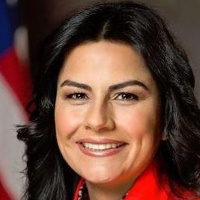
Nanette Barragán
Representative
CA
Nanette Barragán
Representative
CA
This resolution officially designates June as Alzheimer's and Brain Awareness Month. It highlights the widespread impact of Alzheimer's disease, including rising prevalence, significant caregiver strain, and health disparities. The measure encourages public education, advocacy for research and support services, and support for those affected by the disease.
This bill establishes a comprehensive federal framework to regulate, protect consumers using, and clarify the tax treatment of outcomes-based student financing tools tied to future income.
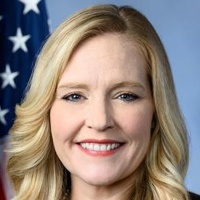
Erin Houchin
Representative
IN
Erin Houchin
Representative
IN
This bill establishes a comprehensive framework to support the growth of outcomes-based student financing (OBF) tools. It creates new consumer protections, mandates standardized disclosures to ensure borrowers understand the terms, and updates federal tax laws regarding these income-contingent repayment products. The legislation aims to make OBF a safer and more transparent option for workforce training and postsecondary education.
This Act prohibits the executive branch from indefinitely suspending the entire Diversity Visa Program, requiring transparency and congressional notification for any narrower, temporary limitations.

Yvette Clarke
Representative
NY
Yvette Clarke
Representative
NY
This bill, the Diversity Visa Protection and Modernization Act, aims to prevent the executive branch from indefinitely or broadly suspending the Diversity Immigrant Visa Program. It reaffirms that only Congress can halt the entire program, while allowing for narrowly tailored, temporary, or country-specific restrictions under strict transparency and notification requirements. The Act protects eligible visa selectees from losing their opportunities due to unexplained administrative pauses.
The LIFT the BAR Act restores federal public benefit eligibility, including SNAP, Medicaid, and housing assistance, for many lawfully present noncitizens by repealing restrictions from the 1996 welfare law and updating terminology.
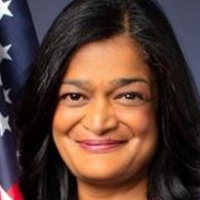
Pramila Jayapal
Representative
WA
Pramila Jayapal
Representative
WA
The LIFT the BAR Act repeals decades-old restrictions that barred many lawfully present noncitizens from accessing essential federal public benefits. This legislation restores eligibility for programs like SNAP, Medicaid, CHIP, and housing assistance for qualified noncitizens. The bill also updates terminology, replacing "alien" with "noncitizen" throughout relevant statutes.