Legislative Activity
Track Claudia's sponsored bills, co-sponsored legislation, and voting record
This Act establishes federal penalties for assaulting hospital personnel and creates a grant program to help medical facilities improve workforce safety.
Madeleine Dean
Representative
PA
Madeleine Dean
Representative
PA
The Save Healthcare Workers Act aims to protect hospital personnel by making assault against them a federal crime with severe penalties. It also establishes a new federal grant program to help hospitals implement crucial safety measures, such as violence prevention training and physical security upgrades. This legislation seeks to reduce workplace violence in healthcare settings across the nation.
The Emergency Care Improvement Act establishes Medicare and Medicaid coverage for specified emergency services provided by qualifying freestanding emergency centers, treating them similarly to hospital emergency departments under EMTALA.
Jodey Arrington
Representative
TX
Jodey Arrington
Representative
TX
The Emergency Care Improvement Act officially brings qualifying Freestanding Emergency Centers (FECs) into the standard Medicare and Medicaid coverage systems. This legislation ensures that these state-licensed facilities, which operate as full emergency departments, are reimbursed for providing specified emergency services. Furthermore, the Act explicitly includes FECs under the requirements of the Emergency Medical Treatment and Labor Act (EMTALA).
The Child Care for American Families Act increases the employer tax credit for providing child care, establishes new spending limits, mandates guidance for multi-employer facilities, requires a public awareness campaign, and commissions a study on regulatory barriers.
David Kustoff
Representative
TN
David Kustoff
Representative
TN
The Child Care for American Families Act significantly increases the federal tax credit available to employers who provide child care facilities or benefits. It establishes tiered credit percentages, reaching up to 60% for eligible small businesses in designated areas, and sets new spending and credit caps. Furthermore, the bill mandates guidance on multi-employer facilities and requires the Treasury Department to launch a public awareness campaign about these enhanced tax incentives. Finally, it directs the GAO to study and report on regulatory barriers affecting employer-provided child care.
This bill extends key tax credits for biodiesel, renewable diesel, and alcohol fuels through 2026 while preventing taxpayers from claiming overlapping credits with the new clean fuel production credit.
Mike Carey
Representative
OH
Mike Carey
Representative
OH
This bill extends key federal tax credits for biodiesel and renewable diesel production and mixtures through 2026. It ensures that these older credits will not be claimed concurrently with the newer clean fuel production credit (Section 45Z(a)). The legislation also extends the tax credit for second-generation alcohol fuels, coordinating its expiration with the new clean fuel rules.
This resolution expresses support for designating May as "Fallen Heroes Memorial Month" to honor the more than 1.3 million service members who died protecting American liberty and requests a Presidential proclamation to encourage national remembrance.
Barry Moore
Representative
AL
Barry Moore
Representative
AL
This resolution expresses strong support for designating the month of May as "Fallen Heroes Memorial Month." It honors the more than 1.3 million service members who have died protecting American liberty throughout history. Furthermore, the bill urges the President to issue a proclamation encouraging all Americans to reflect upon and honor the ultimate sacrifice made by these heroes.
This bill designates the United States Postal Service facility located at 216 Cumberland Street in Rochester, New York, as the "Minister Franklin Florence Memorial Post Office."
Joseph Morelle
Representative
NY
Joseph Morelle
Representative
NY
This bill officially designates the United States Postal Service facility located at 216 Cumberland Street in Rochester, New York, as the "Minister Franklin Florence Memorial Post Office." All official government records and documents will reflect this new name moving forward.
This Act permits qualified and retired law enforcement officers to carry and discharge concealed firearms in school zones under existing authorization.
Randy Weber
Representative
TX
Randy Weber
Representative
TX
The Police Officers Protecting Children Act amends federal law to allow qualified active and retired law enforcement officers to carry and discharge concealed firearms within a school zone, provided they meet existing authorization requirements. This legislation clarifies exceptions to the general prohibition on firearms in school zones for these specific personnel.
This Act promotes private employee ownership by extending tax deferrals for S corporation ESOP sales, ensuring ESOP-owned businesses retain small business status, and establishing new Treasury and Labor offices to provide assistance and advocacy.
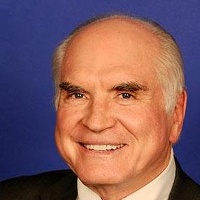
Mike Kelly
Representative
PA
Mike Kelly
Representative
PA
The Promotion and Expansion of Private Employee Ownership Act of 2025 aims to significantly boost employee ownership in S corporations through Employee Stock Ownership Plans (ESOPs). The bill extends key tax deferral benefits for stock sales to ESOPs and removes a major restriction on this tax treatment. Furthermore, it establishes new government offices and an Advocate for Employee Ownership to provide technical assistance and resolve disputes, while ensuring ESOP-owned businesses retain small business status for federal programs.
This bill directs the Department of Energy to research and develop novel technologies for the rapid detection of fentanyl vapor or particles for use in mail screening, prisons, and at U.S. borders.
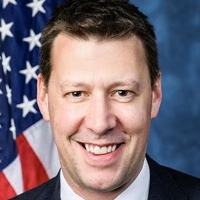
Josh Riley
Representative
NY
Josh Riley
Representative
NY
This bill directs the Department of Energy to establish a research program focused on developing novel technologies to rapidly detect fentanyl vapor or particles. The Secretary of Energy must coordinate this research with the Departments of Justice and Homeland Security, as well as the Postal Service. The goal is to support rapid screening efforts in high-risk areas such as mail facilities, prisons, and U.S. borders.
This bill establishes a special visitor category for qualifying Canadian retirees to stay in the U.S. for up to 240 days annually and grants them non-resident alien tax status.
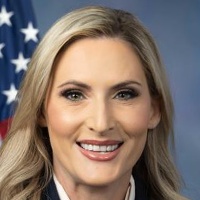
Laurel Lee
Representative
FL
Laurel Lee
Representative
FL
The Canadian Snowbird Act creates a special visitor status for qualifying Canadian retirees, allowing them to stay in the U.S. for up to 240 days per year while maintaining their Canadian residency. This legislation also ensures that these Canadian visitors are treated as non-resident aliens for U.S. tax purposes, preventing them from being taxed like U.S. residents. The bill aims to simplify entry and tax obligations for long-term seasonal visitors from Canada.
This Act establishes significant tax incentives for medical manufacturing in economically distressed zones while also expanding federal authority to develop and prioritize medical countermeasures for vulnerable populations during health crises.
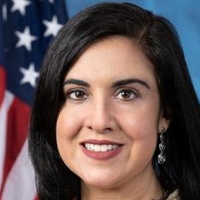
Nicole Malliotakis
Representative
NY
Nicole Malliotakis
Representative
NY
The Medical Manufacturing, Economic Development, and Sustainability Act of 2025 (MMEDS Act) aims to revitalize domestic medical production by offering significant tax incentives for manufacturing in designated economically distressed zones. The bill establishes a 40% tax credit on wages and expenses for medical manufacturers operating in these areas, with higher rates for facilities repatriating production or focusing on population health products. Furthermore, it expands government authority to prioritize the research, development, and stockpiling of medical countermeasures specifically designed to protect vulnerable populations during public health emergencies.
This Act mandates that group health plans and insurers must cover diagnostic and supplemental breast examinations without any out-of-pocket cost-sharing requirements for plan years beginning on or after January 1, 2026.
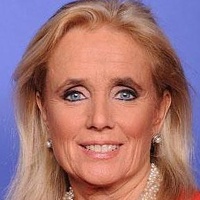
Debbie Dingell
Representative
MI
Debbie Dingell
Representative
MI
The Access to Breast Cancer Diagnosis Act of 2025 ensures that group health plans and insurers must cover diagnostic and supplemental breast examinations with no out-of-pocket costs for patients. This means no deductibles, copayments, or coinsurance will apply to these necessary exams. These provisions take effect for plan years beginning on or after January 1, 2026.
This act prohibits federal funding for colleges and universities that mandate COVID-19 vaccinations for students or employees.
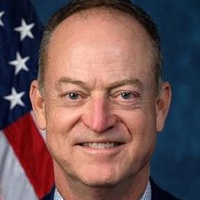
Mark Messmer
Representative
IN
Mark Messmer
Representative
IN
The No Vaccine Mandates in Higher Education Act prohibits the federal government from providing funds to colleges and universities that require students or employees to receive a COVID-19 vaccine. This measure ensures that institutions of higher education cannot mandate vaccination for enrollment, employment, or access to services without risking the loss of federal funding.
This Act repeals the federal ban on mailing concealable firearms and prohibits the U.S. Postal Service from creating rules that restrict the mailing of firearms or require the disclosure of customer records as a condition of mailing.
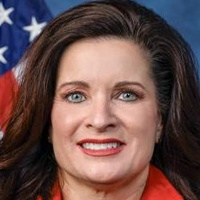
Sheri Biggs
Representative
SC
Sheri Biggs
Representative
SC
The Protecting the Mailing of Firearms Act repeals the federal ban on mailing certain concealable firearms. This legislation also prohibits the U.S. Postal Service from enacting rules that would block or unduly restrict the mailing of firearms, ammunition, or their components. Furthermore, the USPS cannot require sellers to disclose customer records or firearm serial numbers as a condition for mailing these items.
This Act clarifies the duty treatment of whiskies by updating the Harmonized Tariff Schedule and requiring the USITC to add statistical tracking codes for imported whiskies.
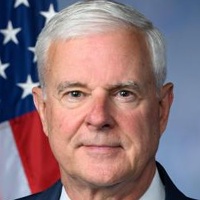
Steve Womack
Representative
AR
Steve Womack
Representative
AR
The Duty Drawback Clarification Act updates the U.S. tariff schedule to standardize the classification of whiskies under Chapter 22. This legislation removes an outdated whiskey classification code and requires the U.S. International Trade Commission to add new statistical tracking codes for imports. These changes will take effect 15 days after the Act is officially enacted.
This bill prohibits landlords of federally assisted rental housing from banning tenants from lawfully possessing firearms within their private dwelling units.
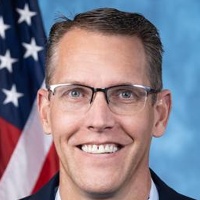
Randy Feenstra
Representative
IA
Randy Feenstra
Representative
IA
This bill, the PROTECT the Second Amendment Act, prevents landlords of federally assisted rental housing from banning tenants who lawfully possess firearms within their private dwelling units. It ensures residents in subsidized housing can legally keep their firearms inside their apartments. The legislation also permits the transportation of firearms through common areas only when moving directly to or from the unit.
The Historic Tax Credit Growth and Opportunity Act of 2025 modifies rehabilitation tax credits by increasing rates for small projects, eliminating basis adjustments, and changing eligibility rules for various building improvements.
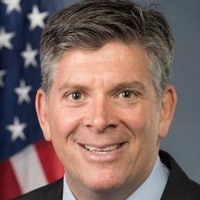
Darin LaHood
Representative
IL
Darin LaHood
Representative
IL
The Historic Tax Credit Growth and Opportunity Act of 2025 significantly enhances historic rehabilitation tax incentives. It establishes a permanent 20% credit rate for qualified expenditures and introduces an optional 30% credit for smaller projects, which includes the ability to transfer the credit. Furthermore, the bill simplifies calculations by eliminating the requirement to reduce the property's basis when claiming the credit.
The Fight Fentanyl Act strengthens federal efforts against fentanyl trafficking by mandating detailed reporting from HIDTA programs, increasing their funding and purpose to target fentanyl interdiction, and requiring the Attorney General to assign additional prosecutors to these cases.
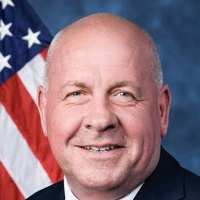
David Taylor
Representative
OH
David Taylor
Representative
OH
The Fight Fentanyl Act strengthens federal efforts to combat the fentanyl crisis by updating the High Intensity Drug Trafficking Areas (HIDTA) program. This legislation mandates increased reporting on fentanyl investigations, sets dedicated funding levels through 2030, and expands HIDTA purposes to prioritize fentanyl interdiction. Furthermore, it requires the Attorney General to ensure sufficient prosecutorial resources are dedicated to fentanyl trafficking cases through temporary AUSA assignments.
This Act establishes a 30% tax credit for businesses investing in qualifying on-site or municipal water reuse projects to encourage the use of recycled water.
Darin LaHood
Representative
IL
Darin LaHood
Representative
IL
The Advancing Water Reuse Act establishes a new "qualifying water reuse project credit" to incentivize businesses to recycle water. This credit offers a 30% tax break on qualified investments in on-site water recycling systems or infrastructure that supports industrial or commercial water reuse. The tax incentive is designed to encourage the adoption of water conservation technologies until the end of 2032.
This act officially recognizes accounting education as part of a well-rounded curriculum to improve access to accounting programs, especially for underrepresented students.
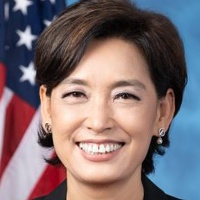
Young Kim
Representative
CA
Young Kim
Representative
CA
The Accounting STEM Pursuit Act of 2025 officially recognizes accounting education as a vital component of a well-rounded K-12 curriculum. This legislation amends federal education law to ensure accounting is counted within core curriculum planning frameworks. The Act specifically directs states and districts to improve access to quality accounting programs, with a focus on increasing opportunities for underrepresented students.